
The Right to Freedom of Religion is one of the fundamental rights guaranteed by the Constitution of India. It ensures that every individual has the liberty to follow, practice, and propagate the faith of their choice. This right is the foundation for harmony and coexistence in a diverse country like India, home to multiple religions, cultures, and traditions.
India is a secular democracy, meaning the State does not favor one religion but treats all religions equally. This principle safeguards individual dignity while preventing discrimination based on faith. The Right to Freedom of Religion is enshrined under Articles 25 to 28 of the Indian Constitution, which collectively guarantee freedom of conscience, free profession, practice, and propagation of religion, along with provisions related to religious institutions, education, and taxes for spiritual purposes.

In today’s context, where religious tolerance and inclusivity remain crucial for social unity, this right is vital in protecting India’s secular ethos and promoting peaceful coexistence among its citizens.
The Right to Freedom of Religion is rooted in Part III of the Indian Constitution, which guarantees Fundamental Rights to protect personal liberty and dignity. Articles 25 to 28 specifically safeguard religious freedom, allowing individuals to freely profess, practice, and propagate their faith while ensuring public order, morality, and health.
This right is closely linked to the principle of secularism in the Preamble. By declaring India a secular republic, the Constitution ensures that the State remains neutral toward all religions, preventing majoritarian dominance and protecting minority rights.
The applicability of this right varies: Article 25 extends to all persons, including non-citizens, whereas Articles 26–28, dealing with religious institutions, education, and taxation, broadly apply to citizens and organized religious denominations.

Articles 25 to 28 of the Indian Constitution comprehensively safeguard the Right to Freedom of Religion, covering individual faith, religious institutions, education, and taxation. These provisions protect religious liberty while maintaining public order, morality, and the State’s secular character.
Article 25 guarantees freedom of conscience and the right to freely profess, practice, and propagate religion. This means that every person in India, regardless of faith, is free to hold personal beliefs, follow religious practices, and share their religion with others. It reflects India’s secular and pluralistic ethos, where faith is an individual choice.
The scope of Article 25 is broad but not absolute. The Constitution imposes certain restrictions in the interests of public order, morality, health, and other Fundamental Rights. For instance, the State can regulate harmful practices such as human or animal sacrifice, untouchability, or practices that harm public order.
Case laws:
Thus, Article 25 ensures a delicate balance between personal religious freedom and broader societal interests. It protects genuine faith practices while empowering the State to regulate harmful or coercive religious activities.
Article 26 grants religious denominations or sections of a denomination the right to manage their own affairs in matters of religion. This includes the rights to establish and maintain institutions, manage property, and decide rituals and practices according to their faith.
However, like Article 25, these rights are subject to public order, morality, and health. The State cannot interfere in purely religious matters, but it can regulate secular activities associated with religion. For example, while the rituals inside a temple are protected, the administration of temple finances can be controlled by law.
Case law:
In essence, Article 26 empowers religious communities with autonomy while ensuring accountability in their secular dealings.
Article 27 protects individuals from being compelled to pay taxes whose proceeds are specifically used to promote or maintain any particular religion or religious denomination. This provision upholds the principle of secularism by ensuring that the State does not force citizens to fund religious activities through taxation.
However, it does not prevent the State from imposing general taxes that may indirectly benefit religious institutions. For example, suppose the government maintains public roads that lead to a temple or provides electricity subsidies to all institutions (including religious ones). In that case, this is not considered a violation of Article 27.
Case references:
Thus, Article 27 ensures that taxpayers are not forced to directly fund religion, while allowing the State to spend public money for broader welfare programs that may include religious communities.
Article 28 deals with religious instruction in educational institutions, striking a balance between secularism and freedom of choice. It makes the following distinctions:
Case reference:
Therefore, Article 28 ensures neutrality in State institutions while respecting the autonomy of private or religious institutions, safeguarding both secularism and choice.
While the Right to Freedom of Religion is fundamental but not absolute, the Constitution allows for reasonable restrictions to ensure that individual religious freedom does not compromise public welfare or other constitutional rights.
Religious practices can be regulated in the interests of public order, morality, and health. Practices that threaten peace, cause social unrest, or endanger lives may be curtailed. For example, harmful rituals, human or animal sacrifices, and practices promoting discrimination can be legally restricted.
Religious freedom can sometimes clash with other Fundamental Rights, such as equality (Article 14), freedom of expression (Article 19), and women’s rights (Articles 15 & 21). In such situations, courts balance competing rights to protect constitutional values.
The Constitution, therefore, maintains a delicate balance, safeguarding religious liberty while ensuring public welfare, equality, and secular principles. These restrictions reinforce that religion is a matter of personal conscience, not a justification for practices that harm society or violate fundamental rights.
The Indian judiciary has played a crucial role in interpreting and defining the scope of the Right to Freedom of Religion. Over the years, several landmark cases have clarified the balance between individual religious liberty and societal interests.
In recent years, the Right to Freedom of Religion has been central to several legal and social debates in India. One primary focus is religious conversion laws. Several states have enacted “anti-conversion” laws requiring individuals to notify authorities before converting, aiming to prevent coercion or fraud. However, these laws have raised concerns about limiting genuine personal choice and potentially violating Article 25.
Another key issue is the Uniform Civil Code (UCC) debate, which proposes a standard set of personal laws for all citizens. Advocates argue that a UCC would promote equality and gender justice. At the same time, opponents caution that it may interfere with religious freedom and cultural diversity, especially in marriage, inheritance, and adoption matters.
The judiciary plays a vital role in balancing religious liberty with other rights. Recent Supreme Court and High Court rulings, such as those on religious attire in schools and temple entry, reflect the tension between personal faith, equality, and secular principles.
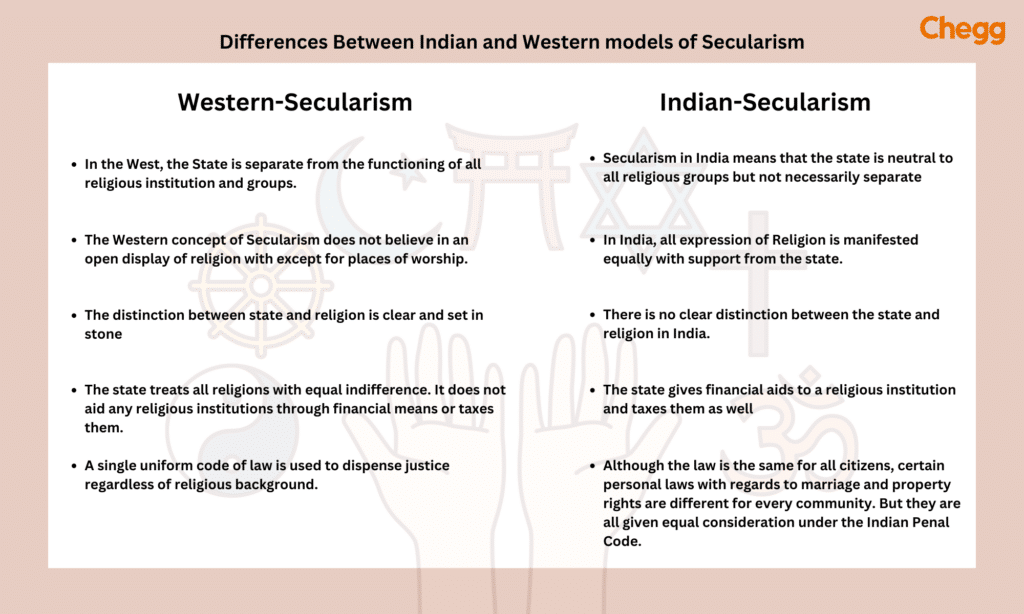
The Right to Freedom of Religion in India can be better understood by comparing it with provisions in other democratic nations. In the United States, the First Amendment guarantees freedom of religion, prohibiting Congress from establishing a religion or restricting religious exercise. Similarly, the United Kingdom upholds freedom of religion under common law and human rights legislation, though it recognizes the Church of England as the state religion.
India’s approach, however, is unique in balancing religion and secularism. Unlike the US or UK, India’s Constitution explicitly enshrines the freedom of religion and the principle of secularism in the Preamble and Fundamental Rights. Articles 25–28 protect individual religious liberty and regulate religious institutions, taxation, and education, ensuring that personal faith does not override public interest, equality, or social reform.
This model allows India to accommodate its pluralistic society, where multiple religions coexist, while maintaining state neutrality and safeguarding citizens’ rights. The Indian framework demonstrates a nuanced attempt to harmonize individual freedom, social justice, and secular governance, making it a distinctive example in the global context.
The Right to Freedom of Religion is a cornerstone of India’s democracy. It ensures that everyone can follow and practice their faith freely. It is vital in promoting social harmony, equality, and the nation’s pluralistic character.
The Right to Freedom of Religion is fundamental to maintaining India’s unity in diversity. With a population adhering to multiple faiths, cultures, and traditions, this right ensures that every individual can practice their religion freely, fostering mutual respect and social harmony. It prevents majoritarian dominance and allows diverse communities to coexist peacefully, strengthening the nation’s social fabric.
This right is crucial for protecting minorities. By guaranteeing freedom of conscience and religious practice, Articles 25–28 empower minority communities to preserve their traditions, institutions, and beliefs without fear of discrimination or interference. Such protections promote inclusivity and prevent marginalization in a democratic setup.
In a secular democracy like India, the right ensures that the State remains neutral toward all religions. It prevents government favoritism, supports equal treatment of all faiths, and upholds the constitutional ideal that religion should be a matter of personal choice, not state control. Moreover, by balancing individual liberty with public interest, this right promotes social justice, equality, and respect for human dignity.
The Right to Freedom of Religion is a constitutional guarantee and cornerstone of India’s pluralistic democracy. It enables peaceful coexistence, equality, and national unity.
The Right to Freedom of Religion, enshrined in Articles 25–28 of the Indian Constitution, guarantees individuals the freedom to follow, practice, and propagate their faith, while regulating the management of religious institutions, taxation for religious purposes, and religious instruction in educational institutions. These provisions protect personal liberty, ensure minority rights, and preserve India’s diverse cultural heritage.
At the same time, the Constitution allows reasonable restrictions in the interests of public order, morality, health, and other Fundamental Rights. Landmark judgments like Shirur Mutt, Rev. Stanislaus, Bijoe Emmanuel, Sabarimala, and recent hijab cases illustrate the careful balance between individual religious freedom and societal welfare.
Ultimately, this right is central to India’s secular democracy, ensuring that religion remains a matter of personal conscience while the State maintains neutrality. Harmonizing freedom with responsibility strengthens social cohesion, protects minorities, and upholds the nation’s pluralistic and inclusive ethos.
Read More :-
The right to Frееdom of Rеligion is a fundamеntal and constitutionally protеctеd libеrty in India. It еnsurеs that еvеry citizеn can follow thеir rеligious bеliеfs without discrimination or coеrcion, creating an inclusivе and pluralistic sociеty.
Articles 25 to 28 of the Indian Constitution protect the fundamental right to freedom of religion, granting individuals the liberty to profess, practice, and propagate their faith without external interference.
Religious freedom benefits everyone equally, Christians, Muslims, Jews, agnostics, and atheists, allowing people of diverse faiths and beliefs to coexist peacefully without fear of government interference.
Yes, the Right to Freedom of Religion is a fundamental human right in India, guaranteed by Articles 25 to 28 of the Constitution, ensuring religious freedom and equality.
The Free Exercise Clause protects citizens’ right to practice their religion as they please, so long as the practice does not violate “public morals” or a “compelling” governmental interest.