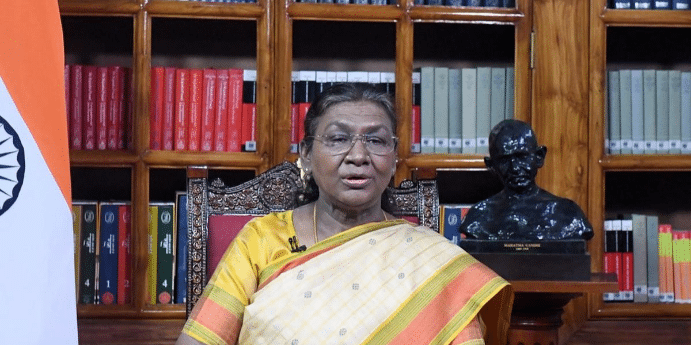
The President of India is the constitutional head and the highest authority in the country, symbolizing the nation’s unity and democratic values. While executive powers are exercised mainly by the Prime Minister and the Council of Ministers, understanding the powers of President of India is crucial to grasp the governance framework. These powers cover executive functions like appointing the Prime Minister, governors, and key officials; legislative roles such as giving assent to bills and addressing Parliament; and judicial responsibilities, including pardoning offenders.
The President also has special powers during national emergencies, ensuring the Constitution is upheld even in critical times. Exploring these powers provides insight into how the President acts as a guardian of democracy, balancing authority with constitutional accountability, and plays a pivotal role in maintaining the stability and integrity of India’s governance system.

The constitutional powers of President of India are grounded in the Articles of Constitution, mainly Articles 52 to 78. Article 52 establishes the President as the head of the nation, while Article 53 vests the Union’s executive powers in the office. Article 54 outlines the election process: the President is elected by an electoral college consisting of Members of Parliament and state Legislative Assemblies, ensuring representation across India. To qualify, a candidate must be an Indian citizen, at least 35 years old, and meet eligibility criteria under Article 55.
Once elected, the President serves a five-year term (Article 56) and takes the oath of office as prescribed in the Third Schedule, pledging to uphold, defend, and protect the Constitution.
The Articles of Constitution define the President’s powers across executive, legislative, judicial, and emergency domains. Executive powers include appointing the Prime Minister, Union ministers, governors, and other key officials. Legislative powers allow summoning and proroguing Parliament, giving assent to bills, and addressing the legislature. Judicial powers enable the President to grant pardons, reprieves, and commutations. Emergency powers under Articles 352, 356, and 360 in extraordinary situations empower the President to act decisively to maintain constitutional governance.
The President’s constitutional powers ensure a balance between authority and accountability by clearly outlining responsibilities and limitations. These provisions make the President a vital guardian of democracy, maintaining the integrity of governance while safeguarding the nation during emergencies, strengthening India’s democratic framework.
Who is the President of India?
Droupadi Murmu is an Indian politician who has served as the president of India since 2022. She won the 2022 presidential election with the backing of the Bharatiya Janata Party. She is the first person to belong to a tribal community and the second woman, after Pratibha Patil, to hold office.
The Powers of President of India are broadly classified into executive, legislative, judicial, financial, diplomatic, military, and emergency powers. These powers define the President’s role as the constitutional head while ensuring smooth governance and upholding democratic principles.
The executive powers of President of India enable the office to appoint key officials, including the Prime Minister, Union ministers, governors of states, Supreme Court and High Court judges, and ambassadors. The President also supervises the administration of Union territories and oversees civil services, ensuring that the government machinery operates smoothly.
While most executive decisions are taken on the advice of the Council of Ministers, the President has discretionary powers in certain situations. For instance, when no party secures a clear majority in Parliament, the President decides on the appointment of the Prime Minister, as seen in 2004 with Dr. Manmohan Singh. Governors are also appointed to uphold constitutional governance, especially during political instability.
Additionally, the President sanctions significant administrative policies and can issue ordinances when Parliament is not in session. These constitutional powers of President maintain checks and balances, support efficient governance, and uphold the integrity of India’s democratic framework, ensuring that executive authority is exercised responsibly and within constitutional limits.
The legislative powers of President of India include summoning and proroguing sessions of Parliament and dissolving the Lok Sabha when necessary. Every bill passed by Parliament must receive the President’s assent to become law. The President can give consent, withhold it, or return a bill for reconsideration, except for money bills, ensuring proper scrutiny of legislation.
Under Article 123, the President can issue ordinances when Parliament is not in session, allowing immediate legal action on urgent matters. A notable example is the Right to Education Ordinance of 2009, which paved the way for the RTE Act. Occasionally, the President has returned bills for reconsideration, emphasizing careful legislative review and constitutional compliance.
While these powers are principally exercised on the advice of the Council of Ministers, they make the President a guardian of democracy. The constitutional powers of President in legislation help maintain a balance between authority and accountability, preventing hasty law-making and ensuring Parliament functions within constitutional limits.
Under Article 72, the judicial powers of President of India include granting pardons, reprieves, commutations, and remissions of sentences. These powers are primarily exercised in cases involving death sentences, life imprisonment, or other serious offenses. They allow the President to show mercy and correct potential judicial errors, reflecting the humanitarian aspect of the office. Notable examples include clemency petitions from death-row convicts, where the President intervenes to review sentences and ensure justice is tempered with compassion.
In practice, most decisions are made on the advice of the Union Cabinet, but theoretically, these powers provide an independent safeguard within the constitutional framework. They allow the President to exercise discretion in extraordinary circumstances, such as cases with procedural lapses or mitigating factors not fully considered by the courts.
These constitutional powers of President highlight the balance between law and mercy, ensuring that while the judiciary functions independently, there remains a mechanism for review and clemency in exceptional cases, upholding justice and humanity.
The financial powers of President of India primarily involve money bills and the approval of the Union Budget. All money bills passed by Parliament must receive the President’s assent before becoming law. Still, these powers are exercised on the advice of the Prime Minister and the Council of Ministers. This ensures financial legislation aligns with the government’s policies while maintaining constitutional procedures.
The President formally sanctions the annual Union Budget after Parliament passes it and signs supplementary and appropriation bills, providing the legal authority for government expenditure. Although these powers are largely ceremonial, they are crucial in maintaining the formal oversight and legality of India’s financial governance.
By exercising these constitutional powers of President, the office ensures that all financial legislation follows proper constitutional processes, balancing ceremonial responsibilities with essential procedural authority, and reinforcing the integrity of India’s parliamentary democracy.
The diplomatic powers of President of India involve approving treaties, receiving foreign delegations, and appointing ambassadors to represent India abroad. While the conduct of foreign policy is primarily managed by the Ministry of External Affairs and the Cabinet, the President plays a ceremonial yet significant role in ensuring India’s diplomatic presence is respected internationally.
In addition to formal treaty approvals, the President hosts visiting heads of state, participates in state functions, and formally endorses international agreements, reflecting the nation’s unity and constitutional protocol. Though mostly ceremonial, these acts uphold the dignity of India’s foreign relations and strengthen diplomatic ties.
By exercising these constitutional powers of President, the office ensures continuity, protocol, and formal authorization in international affairs. The President’s role in diplomacy reinforces India’s global image while supporting government-led policy decisions, maintaining both ceremonial significance and constitutional oversight in the country’s international engagements.
As per Article 53, the President of India is the Supreme Commander of the Armed Forces, holding key military powers. These powers include the authority to declare war, mobilize troops, and oversee defense operations, although all actions are carried out on the advice of the Cabinet. This ensures that civilian control over the military is maintained, while the President acts as the constitutional head of the armed forces.
During significant conflicts, such as the 1971 war with Pakistan, the President formally approved troop movements and other strategic military decisions, demonstrating the office’s ceremonial yet essential role. The President also appoints Army, Navy, and Air Force chiefs, providing formal authorization for command structures.
By exercising these constitutional powers of President, the office balances authority and accountability, symbolizing national unity and civilian supremacy over the military. These powers reinforce the President’s role as a constitutional figurehead and a guardian of India’s defense framework.
The emergency powers of President of India are provided under Articles 352, 356, and 360 of the Constitution. National Emergency under Article 352 allows the President to act decisively in situations threatening the nation’s security. State Emergency, per Article 356, enables the President to assume direct control over a state if its constitutional machinery fails. Financial Emergency under Article 360 empowers the President to regulate state finances to maintain economic stability and ensure proper governance.
Historical instances, such as the National Emergency from 1975 to 1977, demonstrate the extent of these powers, where the President’s authority expanded to protect constitutional order. Despite their breadth, these powers are subject to parliamentary oversight and judicial review, preventing potential misuse.
By exercising these constitutional powers of President, the office plays a crucial role in safeguarding the Constitution during crises. These powers ensure continuity of governance, uphold democratic principles, and maintain stability during extraordinary situations, balancing authority with accountability.
The discretionary powers of President of India refer to situations where the President is not bound by the advice of the Council of Ministers and can act independently. These powers are crucial in maintaining the balance of democracy, especially during political uncertainty or constitutional crises.
One key instance is a hung Parliament, where no party secures a clear majority. In such cases, the President decides who to invite to form the government. For example, in 1996, following the general elections, the President appointed Atal Bihari Vajpayee as Prime Minister for a short tenure despite no party having a majority. Similarly 2004, the President invited Dr. Manmohan Singh to form the government after coalition negotiations.
The President can also exercise discretionary authority in refusing assent to a bill or dismissing a Prime Minister in exceptional circumstances where constitutional provisions are at risk. These powers are exercised rarely but serve as an essential safeguard. By using these constitutional discretionary powers of President, the office ensures that India’s parliamentary system functions smoothly, even in moments of political ambiguity, protecting the integrity of the Constitution.
While the President of India holds extensive constitutional powers, the office is mainly ceremonial, with absolute executive authority resting with the Prime Minister and the Council of Ministers. The fundamental principle of a parliamentary democracy ensures that the President generally acts on ministerial advice, limiting independent decision-making in day-to-day governance.
Additionally, the President’s powers are constrained by multiple constitutional checks. Parliament plays a critical role by approving legislation, budgets, and emergency proclamations, preventing unilateral actions. The judiciary can review presidential actions to ensure compliance with the Constitution, safeguarding against misuse of authority. Public opinion and democratic norms also act as informal checks, reinforcing accountability.
These limitations maintain a balance between ceremonial and functional authority, ensuring that the President serves as a guardian of the Constitution rather than a source of unchecked power. By combining symbolic leadership with constitutional oversight, the office strengthens India’s democratic framework while preserving the rule of law.
In India’s parliamentary democracy, the President and Prime Minister hold distinct roles. The president serves as the ceremonial head of state, while the Prime Minister exercises real executive authority. While the President’s powers are mostly constitutional and formal, the Prime Minister leads government functioning and policy-making.
| Type of Power | President of India | Leads executive functions, implements policies, directs ministries, and controls administration |
|---|---|---|
| Executive Powers | Appoints PM, ministers, governors, judges, and ambassadors; oversees administration ceremonially | Summons/prorogues Parliament, gives assent to bills, can return bills for reconsideration, and issues ordinances |
| Legislative Powers | Advises the President on emergency proclamations, executes emergency measures in practice | Proposes bills, guides legislative agenda, controls parliamentary majority |
| Emergency Powers | Declares national/state/financial emergencies under Articles 352, 356, 360; mostly on Cabinet advice | Advises President on emergency proclamations, executes emergency measures in practice |
| Judicial Powers | Grants pardons, reprieves, commutations, and remissions (Article 72); ceremonial discretion | No direct judicial role; influences judicial appointments through executive recommendations |
While the President’s powers are largely ceremonial, they act as constitutional safeguards. In contrast, the Prime Minister exercises practical authority, implementing policies and decisions. This distinction ensures a balance of symbolic leadership with effective governance, maintaining the integrity of India’s parliamentary system.
The Powers of President of India encompass executive, legislative, judicial, financial, diplomatic, military, and emergency authorities, all defined within the framework of the Constitution. While many of these powers are exercised ceremonially, they are vital for upholding constitutional governance, ensuring checks and balances, and maintaining the integrity of India’s democratic system.
The President’s role complements that of the Prime Minister and Parliament. Executive and legislative functions are largely guided by ministerial advice, ensuring that real political power rests with the elected government. The president serves as a constitutional safeguard during crises or unusual political situations. Emergency powers, discretionary authority, and judicial clemency highlight the office’s unique capacity to protect the Constitution and uphold democratic principles.
Looking ahead, the constitutional powers of President will continue to play a crucial role in Indian democracy. By balancing ceremonial authority with legal and moral responsibility, the President ensures stability, continuity, and accountability in governance, reinforcing the framework that allows the Prime Minister and Parliament to function effectively while safeguarding the nation’s democratic ethos.
Read More:-
The President of India has many powers, including appointing the Prime Minister and Council of Ministers, issuing ordinances when Parliament is not in session, representing India internationally, commanding the armed forces, and appointing judges. The president can also summon or dissolve Parliament, enact laws with Parliament’s assent, and grant pardons and reprieves.
The president is expressly given the authority under the Constitution to sign or veto laws, order the military forces, request a written opinion from their Cabinet, call a meeting of Congress, issue pardons and reprieves, and accept ambassadors.
The prime minister of India is the head of state, in charge of executive power. Article 60 states that the president’s constitutional duty is to uphold, defend, and maintain the law and the Constitution.
The duties of the President of India include: appointing the Prime Minister and Council of Ministers, summoning and proroguing sessions of Parliament, and addressing it; appointing judges of the Supreme Court and High Courts; serving as the Supreme Commander of the Indian Armed Forces; and representing India in international affairs and treaties.
Smt. Droupadi Murmu was sworn in as the 15th President of India on 25 July 2022.