The Parts of Indian Constitution refer to the broad divisions or segments into which the Constitution is systematically organized. Each Part focuses on a specific aspect of governance, rights, or administration, such as citizenship, fundamental rights, the Parliament, the judiciary, and the States. When the Constitution came into force on January 26, 1950, it originally consisted of 22 Parts. Over the years, through various constitutional amendments, this number has increased to 25 Parts, reflecting India’s dynamic political and administrative evolution.
These Parts form the backbone of the Constitution, ensuring clarity, organization, and coherence in defining the powers, responsibilities, and relationships among different organs of government. They collectively uphold the democratic framework of India, balancing individual freedoms with national unity.
Understanding the Parts of Indian Constitution is crucial for anyone studying Indian polity, as it provides a structured overview of how the nation functions. This topic is frequently asked in competitive exams like UPSC, SSC, and State PSCs, making it an essential area of focus for aspirants aiming to master the fundamentals of Indian governance.
The Constitution of India, adopted on 26 November 1949 and enforced on 26 January 1950, is the supreme law of the land. It lays down the framework that defines the political principles, procedures, and powers of various government institutions and citizens’ fundamental rights and duties. It is often described as the world’s longest written Constitution and reflects India’s vast diversity and complex administrative structure.
The Constitution is systematically divided into Parts, Articles, and Schedules to ensure clarity and comprehensiveness. Initially, it contained 395 Articles, under 22 Parts and 8 Schedules. However, through successive constitutional amendments, it has expanded to 470 Articles, 25 Parts, and 12 Schedules.

Each Part of the Constitution deals with a specific aspect of governance, from citizenship and fundamental rights to the functioning of the Parliament, judiciary, and states. The Articles provide detailed legal provisions, while the Schedules supplement these with lists and administrative details, such as the division of powers between the Union and States.
Interestingly, the Indian Constitution contains 25 Parts, each meticulously crafted to address vital areas of governance, justice, and administration. This extensive structure ensures the Constitution remains adaptable yet stable, making it a cornerstone of India’s democratic and federal system.
When the Constitution of India came into effect in 1950, it was divided into 22 Parts. Over the years, various constitutional amendments of the Indian Constitution have modified this structure to reflect the nation’s evolving political, social, and economic landscape. Today, the Constitution consists of 25 Parts.
Several key amendments contributed to this evolution:
| Stage | No. of Parts | Initial structure of enforcement |
|---|---|---|
| 1950 (Original) | 22 | After the 7th Amendment (1956) |
| After the 42nd Amendment (1976) | 21 | Part VII repealed |
| After the 97th Amendment (2011) | 22 | Part IVA added (Fundamental Duties) |
| After 97th Amendment (2011) | 25 | Part IXB added (Cooperative Societies) |
The Parts of Indian Constitution form the structural backbone of India’s governance and legal system. Each Part is systematically arranged to cover specific themes such as rights and duties, the functioning of the Union and States, and other key administrative areas. Initially, there were 22 Parts, but today, the Constitution comprises 25 Parts spanning Articles 1 to 395 (and beyond through amendments).
Below is a complete and updated table listing all 25 Parts of Indian Constitution, their Articles, Subjects, and Key Notes for exam preparation (UPSC, SSC, and State PSCs).
| Part | Articles Covered | Subject / Description | Key Notes |
|---|---|---|---|
| Part I | Articles 1–4 | Union and its Territory | Defines India’s name, territory, formation of new states, and alteration of boundaries. |
| Part II | Articles 5–11 | Citizenship | Deals with citizenship at the commencement of the Constitution. |
| Part III | Articles 12–35 | Fundamental Rights | Guarantees six categories of Fundamental Rights, known as the “Magna Carta of India.” |
| Part IV | Articles 36–51 | Directive Principles of State Policy (DPSPs) | Guidelines for governance aimed at establishing a welfare state. |
| Part IVA | Article 51A | Fundamental Duties | Defines the structure and powers of the Union Government – President, Parliament, and Supreme Court. |
| Part V | Articles 52–151 | The Union (Executive, Parliament, Judiciary) | Defines structure and powers of the Union Government – President, Parliament, and Supreme Court. |
| Part VI | Articles 152–237 | The States | Describes the State Government – Governor, State Legislature, and High Courts. |
| Part VII | — | States in Part B of the First Schedule (Repealed) | Removed by the 7th Amendment (1956). |
| Part VIII | Articles 239–242 | Union Territories | Covers administration of Union Territories; includes special provisions for Delhi, Puducherry, etc. |
| Part IX | Articles 243–243O | Panchayati Raj | Added by the 73rd Amendment (1992); deals with local self-government in rural areas. |
| Part IXA | Articles 243P–243ZG | Municipalities | Added by the 74th Amendment (1992); governs urban local bodies. |
| Part IXB | Articles 243ZH–243ZT | Cooperative Societies | Added by the 97th Amendment (2011); focuses on autonomous functioning of cooperatives. |
| Part X | Articles 244–244A | Scheduled and Tribal Areas | Provides for administration of Scheduled Areas and Tribal Areas. |
| Part XI | Articles 245–263 | Relations between the Union and the States | Defines legislative, administrative, and financial relations. |
| Part XII | Articles 264–300A | Finance, Property, Contracts, and Suits | Covers financial provisions, property of the Union and States, and the right to property (Article 300A). |
| Part XIII | Articles 301–307 | Trade, Commerce, and Intercourse within India | Ensures freedom of trade and commerce throughout India. |
| Part XIV | Articles 308–323 | Services under the Union and the States | Deals with Public Service Commissions and service conditions of government employees. |
| Part XIVA | Articles 323A–323B | Tribunals | Added by the 42nd Amendment (1976); provides for Administrative and other tribunals. |
| Part XV | Articles 324–329A | Elections | Establishes the Election Commission and governs the conduct of elections. |
| Part XVI | Articles 330–342 | Special Provisions for Certain Classes | Provides safeguards for SCs, STs, and Anglo-Indians. |
| Part XVII | Articles 343–351 | Official Language | Defines the official language of the Union and provisions for regional languages. |
| Part XVIII | Articles 352–360 | Emergency Provisions | Describes three types of emergencies – National, State, and Financial. |
| Part XIX | Articles 361–367 | Miscellaneous | Contains provisions like privileges of the President and Governors, and interpretation of the Constitution. |
| Part XX | Articles 368 | Amendment of the Constitution | Describes the procedure for constitutional amendments. |
| Part XXI | Articles 369–392 | Temporary, Transitional, and Special Provisions | Provides temporary provisions for certain States and regions (e.g., J&K before 2019). |
| Part XXII | Articles 393–395 | Short Title, Commencement, and Repeals | Final provisions marking the adoption and enforcement of the Constitution. |
Exam Tip: Part III is often called the “Magna Carta of India,” while Part IV and IVA balance citizens’ rights and duties.
These Parts outline the machinery of governance:
Exam Tip: These Parts reflect India’s federal character with a unitary bias, ensuring power-sharing between the Center and States
Exam Tip: The 44th Amendment (1978) moved Article 300A (Right to Property) from Part III to Part XII.
Exam Tip: Article 343 designates Hindi in the Devanagari script as the official language of the Union.
Exam Tip:
The 25 Parts of Indian Constitution collectively define India’s democratic structure, citizen rights, and administrative balance, making them a must-know topic for UPSC, SSC, and State PSC aspirants.
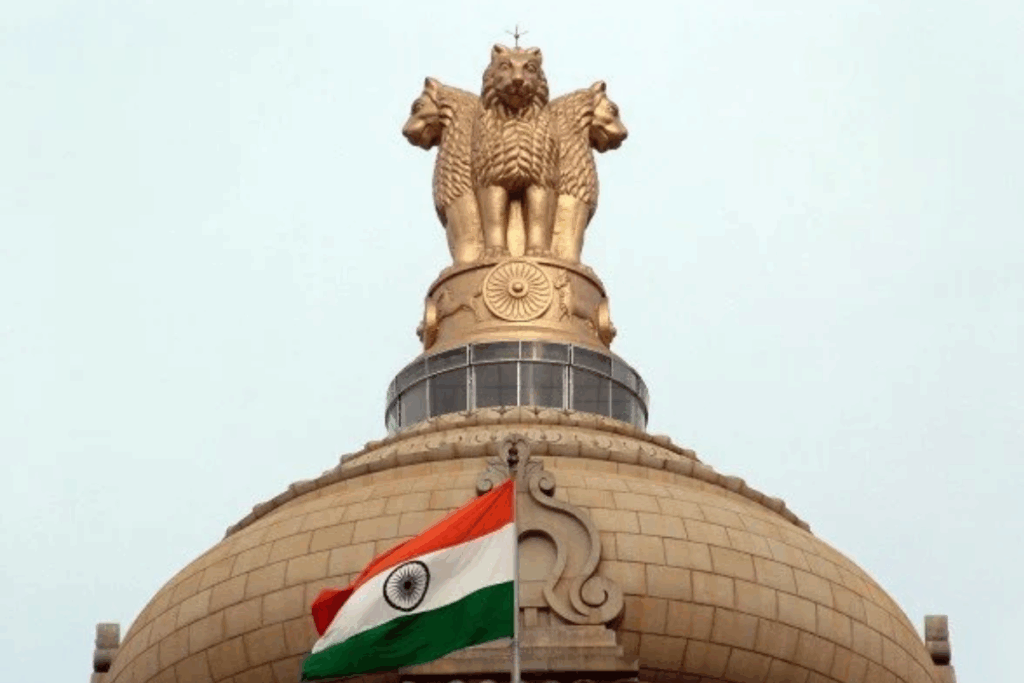
Over time, the Indian Constitution has evolved to reflect the nation’s changing political and social landscape. While one Part was repealed, several others were added through necessary amendments to address emerging governance needs.
In the decades that followed, new Parts were introduced to strengthen democratic participation, promote civic responsibility, and modernize administration:
These additions reflect India’s commitment to strengthening grassroots democracy and ensuring citizens’ participation in governance. Together, they mark a journey of constitutional evolution from 22 Parts in 1950 to 25 Parts today, making the Constitution more inclusive and adaptive.
The Parts of Indian Constitution collectively shape India’s political, legal, and administrative framework. Each Part deals with a distinct theme ranging from rights and duties to governance and federal relations.
The Constitution has 25 Parts, 470+ Articles, and 12 Schedules, making it the longest written Constitution in the world.
The Indian Constitution is organized in a structured hierarchy of Parts, Articles, and Schedules, each serving a distinct but interconnected role.
For example:
To learn more about each Schedule’s detailed structure and purpose, refer to Chegg’s article on Schedules of the Indian Constitution.
Understanding the Parts of Indian Constitution is crucial for both competitive exams and general awareness. Topics like citizenship, Fundamental Rights, Directive Principles of State Policy (DPSPs), Panchayati Raj, and Fundamental Duties frequently appear in UPSC, SSC, Railways, and State PSC exams.
Knowing the Parts helps aspirants quickly locate relevant Articles and understand the context of constitutional amendments, saving time during preparation and enhancing answer accuracy. For instance, recognizing that Part III covers Fundamental Rights or Part IX deals with Panchayati Raj institutions allows candidates to link provisions, landmark judgments, and amendment details efficiently.
Moreover, a clear grasp of the Constitution’s structure fosters civic literacy, enabling citizens to understand their rights, duties, and the functioning of government institutions. In essence, studying the Parts not only aids exam success but also strengthens one’s knowledge of India’s democratic and legal framework, making it an indispensable aspect of both academic and practical learning.
The Parts of Indian Constitution form the backbone of India’s democratic, legal, and administrative framework. They organize the Constitution into clear segments, covering everything from citizenship and Fundamental Rights to governance, local self-government, and cooperative societies. Originally consisting of 22 Parts, the Constitution has evolved to 25 Parts through various amendments, reflecting India’s dynamic political and social landscape.
A thorough understanding of these Parts helps aspirants excel in UPSC, SSC, and State PSC exams. It enhances civic awareness, enabling citizens to comprehend their rights, duties, and the functioning of government institutions.
Read More:-

The Indian Constitution, adopted on 26 November 1949 and effective from 26 January 1950, is divided into 25 Parts comprising 448 Articles, including all amendments to date.
Part VII was repealed by the 7th Amendment Act, 1956 to abolish the Part A, B, C state classification and implement the States Reorganisation Act, reorganizing states on linguistic lines.
Part IV of the Indian Constitution contains the Directive Principles of State Policy (Articles 36–51), providing guidelines for establishing a welfare state, promoting socio-economic justice, and ensuring citizens’ welfare, though not enforceable by courts.
A commonly used mnemonic for remembering the 25 Parts of the Indian Constitution is: “U Can Fly Directly From US to UP to Meet Child of Shyam and Ram; Fruits Taste Sweet To Eat So Only Eat Maggi As Tasty Snack”, with each word representing a Part.
Article 370 granted special autonomous status to Jammu and Kashmir, allowing it to have its own Constitution and laws, except in matters of defense, foreign affairs, finance, and communications.