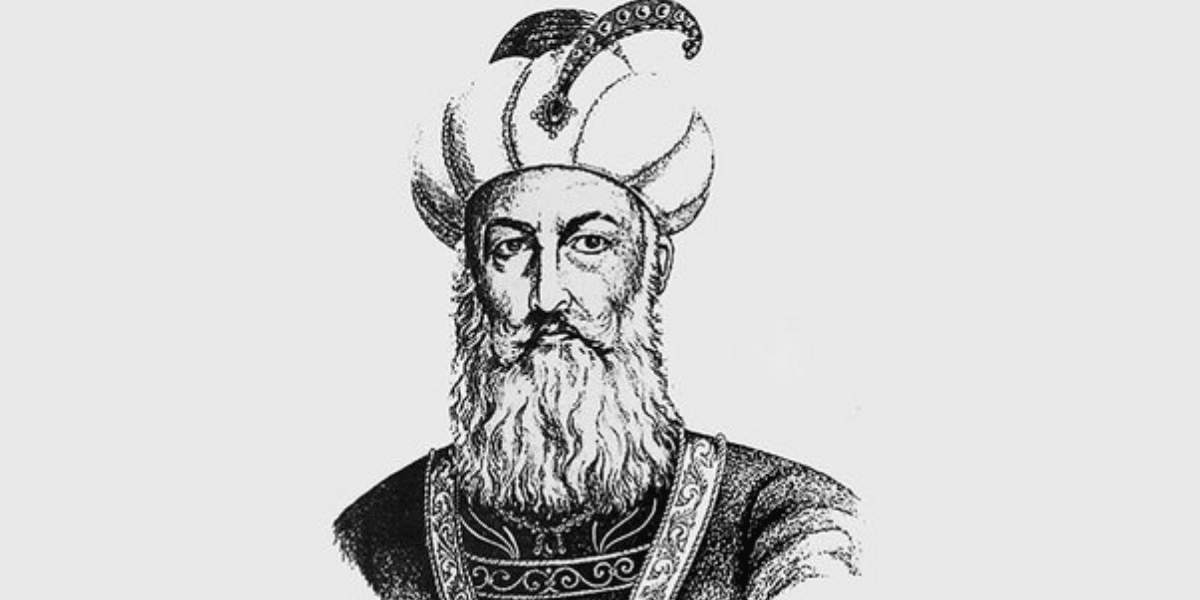
Originally named Mu’izz ad-Din Muhammad ibn Sam, Muhammad Ghori was a prominent ruler from the Ghurid Dynasty based in Ghor, Afghanistan. From 1173 to 1206, Muhammad Ghori administered the eastern territories while his brother managed the western regions. He is a key historical figure, often debated as a sultan or an invader. His legacy includes the foundation of the Delhi Sultanate, a series of military conquests, strategic governance, and lasting cultural influence on the Indian subcontinent.
His empire stretched across present-day India, Pakistan, Afghanistan, Iran, Bangladesh, Tajikistan, and Turkmenistan. Though of debated Persian ethnicity, his legacy laid the groundwork for later empires like the Mughals. Despite facing multiple setbacks, Muhammad Ghori proved his military mettle, using religious unity to command loyalty. His repeated invasions exploited India’s fragmented political landscape, enabling Turkish dominance in medieval India for nearly six centuries.
| Event | Details |
|---|---|
| Reign in India | 1173 – 1206 |
| First Battle of Tarain | 1191 – Muhammad Ghori is defeated by Prithviraj III |
| Second Battle of Tarain | 1192 – Muhammad Ghori defeats Prithviraj III, consolidating power in North India |
| Sole Ruler of the Region | 1202 – Death of Ghiyath al-Din Muhammad, Muhammad Ghori’s elder brother, leaving Muhammad as the sole ruler |
| Conquest of Multan and Uch | 1175 – Muhammad Ghori captures Multan and Uch, expanding his territory |
| Siege of Gwalior | 1196 – Successful siege and capture of Gwalior |
| Capture of Delhi | 1193 – Establishment of Muslim rule in Delhi |
| Battle of Chandawar | 1194 – Defeats Jaichand of Kannauj, further consolidating his control |
| Death of Muhammad Ghori | 1206 – Assassinated by local tribes in the Punjab region |
Muhammad Ghori, born in 1149, was the son of Baha al-Din Sam I and hailed from the Persianate Tajik Ghurid dynasty. He had two brothers, Ghayasuddin and Ghiyasuddin Mahmud. In the late 12th century, the Ghurids sought political expansion as the Ghaznavids weakened during their struggles with the Seljuk Empire. Inspired by the military successes of Mahmud of Ghazni, Mohd Ghori began strategizing campaigns aimed at the Indian subcontinent.
After the death of his brother Ghiyasuddin Mahmud, Muhammad Ghori became the sole ruler in 1202, having co-ruled with him from 1173 earlier. He distinguished himself among Muslim invaders in India through his organized military, strategic brilliance, and persistent conquests. His early victories in regions like Upper Multan and Sindh marked the beginning of a series of invasions that would eventually lay the foundation for Islamic rule in medieval India.
Muhammad Ghori, also known as Muhammad of Ghor, was a prominent figure in the history of South Asia during the late 12th century. Here are some key points about him:
In a fight on Mount Abu, the ruler of Gujarat soundly defeated Muhammad Ghori, and Muizzuddin Muhammad was fortunate to escape unharmed. He thus understood that before attempting to conquer India, he needed to establish a suitable foothold in Punjab.
Chauhan’s power steadily increased. The Chauhan monarchs routed and murdered a significant number of Turks who attempted to attack Rajasthan, most likely from the Punjab side. Around the middle of the century, they also took Delhi from the Tomars. Muhammad Ghori’s conflicts with Indian rulers were primarily driven by his ambitions for territorial expansion and the establishment of Muslim dominance in the region.

During his rule, Muhammad of Ghor launched several expansion-based campaigns. This led to proud victories and brave attempts.
Before Muhammad of Ghor could attack, Multan was invaded in the early 11th century. The Qarmatians of Multan barely sustained the brunt of this. Muhammad Ghori took the convenient route through the Gomal Pass into Gujarat. In 1175, Muhammad of Ghor captured Multan in a battle against the Qarmatians.
Uch straddles the Chenab and Jhelum rivers. The truth of this conquest is buried in two distinct accounts. The contemporary version dwells on the supposed reign of the Bhati Rajputs. It includes a twisted marriage proposal to the queen of Uch. The proposal was derailed when the queen asked the Sultan to wed her daughter instead. It also holds the queen accountable for allegedly killing her husband, Ibn al-Athir.
Muhammad of Ghor moved to today’s parts of Gujarat and Rajasthan in Anhilwara. Mahmud of Ghaznavid attacked Anhilwara back in 1026. He also debased the Somnath temple. The Solankis restored their forces under Kumarapala’s leadership. What escaped Muhammad Ghori’s anticipation was the combined powers of various rulers. The Ghurids were already worn out from their long trip. Muhammad of Ghori’s troops were overwhelmed.
Muhammad of Ghor engaged in combat with Gahadavala family member Jaichand of Kannauj in the Battle of Chandawar in 1194. The location was Chandawar, now Chandawal, at Firozabad on the Yamuna River, close to Agra.
After winning this battle, Muhammad conquered most of northern India. The fight was hotly contested until Jaichand’s death and his army’s destruction. Following his triumphant battles, Muhammad gave his governor, Qutubuddin Aibak, full authority to consolidate the conquests in India.
The Battle of Andkud or Andkhui took place in 1204. The riverbank of the Oxus in Andkhoy’s periphery in modern-day Afghanistan bore witness to it. Muhammad Ghori’s opponent in this battle was the Qara Khitai forces, the Khwarazmian Empire’s subsidiary. Only Uthman of the Qarakhanids’ intervention made Muhammad of Ghor’s escape possible.
Another general of Ghori, Muhammad-bin-Baktiyar Khilji, led an expedition against Bihar and Bengal between 1202 and 1205, attacking Odantapuri and pillaging Buddhist Monasteries, demolishing the universities of Nalanda and Vikramasila, and defeating Lakshamansena of Bengal. His goal was to expand eastward, so he embarked on an expedition into the Brahmaputra valley.
The narrative surrounding who invited Mohammad Ghori to India is complex and often debated. A common belief is that Maharaja Jaichand of Kannauj invited Ghori to attack his rival, Prithviraj Chauhan. However, some historians argue that this claim lacks solid evidence and may have been popularized in later accounts to explain Ghori’s invasions.
Prithviraj Chauhan was the young heir to the Ajmer throne. Until he turned 18, his mother and the Prime Minister administered the kingdom. Simultaneously, Muhammad of Ghor already had a long list of successful invasions. When Ghori returned to Solanki for another strike, it ended in defeat for him.
Where Ghori conspired against the Ghaznavids in Punjab, Prithviraj’s neighbors kept him preoccupied. By 1186, the Ghurids overtook Punjab from under the Ghaznivids’ noses. Two caliber-worthy battles arose between Ghori and Chauhan. The epicenter of their rivalry was the hunger for political expansion. Another point of conflict was the territory of Tabarhinda.
Ghori’s undertaking of India’s most crucial fort, Bathinda, sparked the first battle. Prithviraj Chauhan III prepared his troops to march into the battlefield. Ghurid started strong with their archers pelting widely scattered arrows. Prithviraj Chauhan’s full-throttle move caught Ghori off guard. Prithviraj Chauhan strategized in pure Rajput candor of close-quarter battling. Ghori’s ranks, formation, and commanders collapsed. He lost the first battle of Tarain in the Mohammad Ghori and Prithviraj Chauhan war.

Muhammad of Ghor did not let his first defeat hinder him. He used the Rajput’s offer of a truce to deceive them. He attacked Prithviraj Chauhan’s troops at daybreak. In this battle, Ghori switched combat tactics. He feigned retreat. The Rajputs diverted their attention and forces to the retreating units. The Ghurids sprung the element of surprise and defeated Prithviraj Chauhan.
In 1192, he vanquished the Rajputs with an army of over 1 Lakh soldiers. This victory simplified the course of future Mughal rule in India. Tarain joined his previous accomplishments of capturing Delhi and Ajmer. He proceeded to claim Bulandshahr, Aligarh, and Meerut. In 1193, he captured the city of Delhi.
Rani Naiki Devi defeated Muhammad Ghori. She was a Chalukya queen and former Goan princess of the Kadamba dynasty, served as regent for her young son in Gujarat. When Muhammad Ghori attempted to invade Anhilwara Patan, underestimating her ability as a woman ruler, she rose with remarkable courage. Strategically allying forces and choosing the rugged battlefield of Gadaraghatta, she turned the terrain to her advantage. Leading her troops while carrying her son, she inspired unmatched bravery, securing a decisive victory that forced Ghori to retreat and abandon Gujarat.
Muhammad Ghori had several trusted slaves who later played significant roles in shaping medieval Indian history. The four most notable among them were:
Among these, Qutub-ud-din Aibak founded the Slave Dynasty after the death of Muhammad Ghori.
Here comes the most sought-after and dead-end question revolving around Ghori. Anonymous assassins killed Ghori. He was retreating to Ghanzi when a group of assassins ambushed him. Muhammad Ghori’s death date is March 15, 1205. Retreat to Ghanzi was one of the many possible scenarios in which it is believed he died. According to this, he was killed while praying to his faith after sunset. This supposedly took place in Dhamiad, present-day Pakistan. A less popular version suggests that he was stabbed in his bed.
The death of Muhammad Ghori in 1206 remains shrouded in mystery, with multiple theories surrounding his assassination. One account attributes it to the Khokar Jats, who, after years of humiliation and vengeance, attacked and killed him near Lahore following the battle of Dhamyak. Another theory points to the Nizari Ismailis, often confused with Jat leadership, who may have had political motives. The most popular yet unlikely version credits Prithviraj Chauhan, though he had died earlier. Thus, Ghori’s death remains unresolved, leaving historians with conflicting narratives rather than a definitive answer.
Ghori, who both conquered and kept most of the Hindu homeland, is credited as India’s real founder of Muslim dominion. A Muslim dynasty was established in Delhi thanks to the achievements of Qutub-ud-din Aibak, his slave and viceroy, and his successors in extending Islam’s sway across India.
His empire was split among his slaves upon his murder:
| Slave of Muhammad Ghori | Territory | Significance |
|---|---|---|
| Qutubuddin Aibak | Established the Delhi Sultanate, the center of the Islamic Empire in India | Maintained control over the Ghazni region |
| Tajuddin Yaldoz | Ghazni area | Established Delhi Sultanate, the center of the Islamic Empire in India |
| Nasiruddin Kubacha | Uchchh and Sindh (Pakistan) | Conquered and ruled the Bengal region |
| Muhammad ibn Bakhtyar | Bengal | Established the Delhi Sultanate, the center of the Islamic Empire in India |
Muhammad Ghori formed a powerful duo with his sibling. The two ruled harmoniously to create one of the major eastern Islamic forces. Their political expansion achievements peaked at a 3000 km-wide territory covering land from Nishapur to Benares and Bengal. The extension ceased at Sindh from the southern foothills of the Himalayas.
Andkud’s tragedy and Genghis Khan’s emergence shook the Ghurids. However, this does not overrule his successful reign in the Indian Subcontinent. The second battle of Tarain made the Ganga basin highly accessible. He is remembered for his unyielding pursuit of political expansion.
Political expansion drove Muhammad of Ghor’s motives. The Ghori’s first invasion of modern-day Pakistan was into Multan, which, with its geographical strength and wealth, attracted the Ghur Dynasty.
Prithviraj Chauhan fought against Muhammad of Ghori seventeen times. The Ghurids finally won the seventeenth battle against the Rajputs. The second battle of Tarain gained him Multan. Ghori embarked on his empire’s expansion there.
Muhammad of Ghor ruled the Ghurids with his brother from 1173 to 1202 and alone from 1202 to 1205. He was a significant factor in the centuries-long Muslim rule in India.
Ghori’s first defeat in India was in 1178, when Bhima II of Gujarat, a powerful Solanki ruler, defeated him.
Prithviraj Chauhan lost the Second Battle of Tarain primarily because he lacked support and allies among the Hindu community. Following his defeat, Muhammad Ghori enslaved many Hindus, destroyed the city and its temples, and established Islamic rule in the region.
Muhammad Ghori faced defeats at the hands of Bhimdev Solanki II in 1178 and Prithviraj Chauhan in 1191. Bhimdev Solanki II, the Chalukya ruler of Gujarat, decisively defeated Ghori at the Battle of Kayadara near Mount Abu. Years later, as per sources like Testbook and Doubtnut, Ghori suffered another setback when Prithviraj Chauhan defeated him in the First Battle of Tarain in 1191.
Queen Naikidevi, a legendary Solanki queen, is remembered for her remarkable victory over Muhammad Ghori in 1178 CE. Both Hindu and Muslim chroniclers of the time document this triumph. She led the charge on behalf of her young son and commanded the Solanki forces. She decisively repelled Ghori’s invasion near Mount Abu—cementing her legacy as one of India’s earliest warrior queens.