
The monsoon season in India is the annual cycle of rainfall brought by seasonal winds, usually lasting from June to September. More than just a climatic phenomenon, it plays a decisive role in shaping the country’s environment, economy, and way of life. Rain replenishes rivers and groundwater, regulates temperatures, and sustains forests and biodiversity. At the same time, they serve as the backbone of agriculture, on which a large share of India’s population depends for food and livelihood.
A good monsoon season ensures water security, boosts crop yields, and strengthens rural incomes, while a weak or erratic monsoon can lead to droughts, food shortages, and economic stress. In many ways, the monsoon season in India is the country’s lifeline, influencing agriculture, water supply, climate, and livelihoods across the nation. For students and readers wanting to know about monsoon season, it is essential to understand its role in shaping India’s economy and environment.

The monsoon season in India does not arrive everywhere at once but advances in a gradual, predictable sequence, followed by a systematic withdrawal. Its onset and retreat patterns have been studied for centuries and remain crucial for planning agriculture and water management.
Traditionally, the monsoon enters the Indian subcontinent in early June, first hitting the Kerala coast around 1st June, which is considered the official onset date. From there, it advances north and west:
This staged progression ensures that most of the country receives rainfall within about a month.
The monsoon retreat from Rajasthan and northwest India begins in September and gradually withdraws southward, usually completed by mid-October. The withdrawal is more erratic than the onset, influenced by local temperatures, moisture conditions, and atmospheric pressure patterns. A delayed retreat often leads to extended rains and flooding, while early withdrawal can cause drought-like conditions.
Historical records and IMD (India Meteorological Department) data suggest that regional variations have become more common, while the onset date over Kerala has remained relatively stable around early June. Climate studies indicate:
These shifts are often linked to broader climate variability, including El Niño and La Niña cycles, and long-term global warming, making monsoon timing less predictable than in the past.
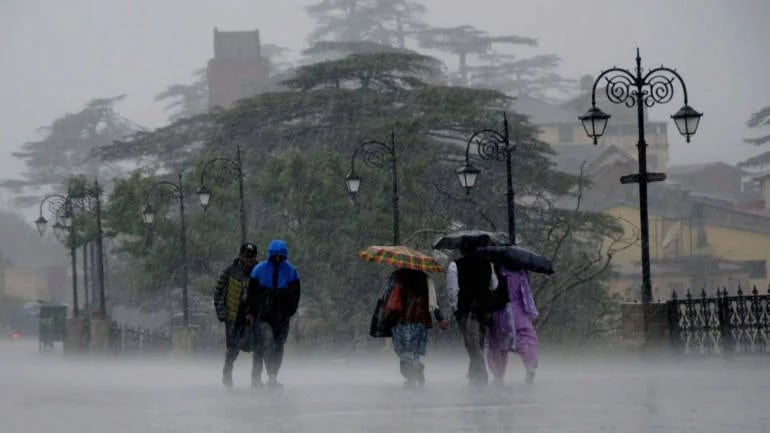
The monsoon season in India, which lasts from June to September, is revolutionary. It’s as if the natural world is generously replenishing our water supply for agriculture and industry. Rain is more than simply a change in the weather; it keeps our crops alive and strengthens our economy. The monsoon celebrates the vital water that keeps our country alive and well, not merely a shift in the weather. It is an essential component of our agriculture and a driver of economic expansion, not a catastrophe.
Also Read: Seasons in India
The monsoon delivers nearly 75–80% of India’s annual rainfall, making it the most important climatic event for the subcontinent. However, its distribution varies greatly by month, region, and year, leading to abundance and scarcity.
The southwest monsoon spans from June to September, during which rainfall is unevenly spread:
Regional patterns are equally diverse. The Western Ghats, Northeast India, and Himalayan foothills receive high rainfall, often exceeding 2,000–3,000 mm annually. At the same time, Rajasthan, Gujarat, and the Deccan plateau interiors may get less than 500 mm annually.
Despite its apparent regularity, the monsoon is far from uniform. Year-to-year fluctuations can lead to excess rainfall (above normal monsoon) or deficient rainfall (drought years). Phenomena like El Niño are often associated with weak monsoons and droughts in India, while La Niña tends to enhance rainfall. This variability directly impacts food production, rural incomes, and GDP growth.
In recent decades, the monsoon has shown an increasing tendency toward extremes.
Together, these features highlight the monsoon’s dual character as a provider of life-sustaining water and a trigger for some of India’s most challenging natural disasters.
India’s vast geography ensures that the monsoon is not uniform but marked by sharp regional contrasts in timing, intensity, and duration. These variations define local climates, agricultural practices, and even lifestyles across states.
The Southwest Monsoon (June–September) is the primary rainy season, accounting for nearly 75% of India’s rainfall. It enters from the Arabian Sea and the Bay of Bengal, bringing widespread showers to most of the country. In contrast, the Northeast Monsoon (October–December) primarily affects Tamil Nadu, coastal Andhra Pradesh, and parts of Kerala, as retreating monsoon winds pick up moisture from the Bay of Bengal. This makes Tamil Nadu unique, while most of India depends on the southwest monsoon, the state receives nearly half its annual rainfall from the northeast monsoon.
Coastal areas, especially along the Western Ghats, Konkan, and Malabar coasts, experience intense and continuous rainfall due to orographic lifting of moisture-laden winds. In contrast, inland regions such as Madhya Pradesh, Telangana, and interior Karnataka receive more moderate rainfall, often interrupted by dry spells. The northwestern states like Rajasthan and parts of Gujarat are in the rain-shadow zone, making them among the driest regions of India despite the seasonal rains.
These regional variations underline the complex character of the Indian monsoon, where abundance in one region often contrasts with scarcity in another, influencing settlement patterns, cropping systems, and disaster preparedness.
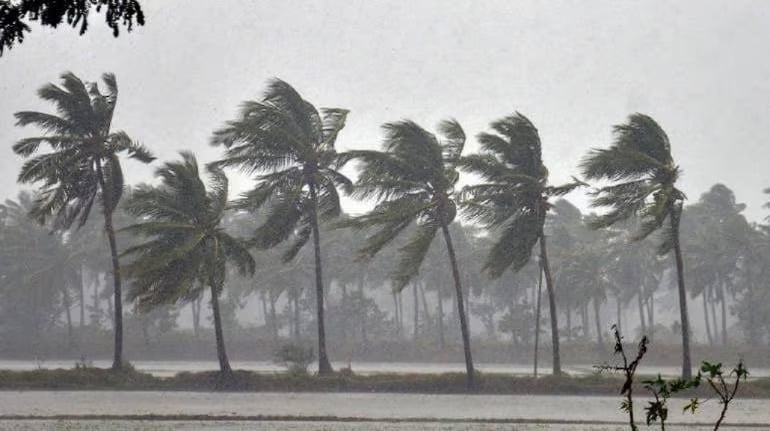
The Indian monsoon is one of the world’s most complex weather systems, driven by a delicate balance of winds, ocean temperatures, and pressure differences. Large-scale climate phenomena and regional geographical factors further influence its behavior.
The monsoon develops due to the differential heating of land and ocean. During summer, the Indian subcontinent heats rapidly, creating a low-pressure zone over northwestern India. In contrast, the Indian Ocean remains relatively cooler, with higher pressure. This pressure gradient pulls in moisture-laden winds from the Indian Ocean, which rise, cool, and condense to form the monsoon rains. The Himalayas act as a barrier, trapping the moisture and intensifying rainfall across northern India.
Several large-scale ocean-atmosphere interactions shape the strength and timing of the monsoon:
Thus, the Indian monsoon is not a single factor but an interconnected atmospheric and oceanic process, making it vital and unpredictable.
For 2025, the India Meteorological Department (IMD) has predicted an above-normal monsoon, estimating rainfall at about 106% of the Long Period Average (LPA) for the June–September season. June itself was expected to record rainfall above 108% of its LPA. Above-normal rain has also been forecast for the latter half of the monsoon (August–September). However, some regions in the East, Northeast, and parts of South India may face mild deficits.
The monsoon arrived over Kerala on May 24, 2025, around eight days earlier than its expected onset date of June 1. It then advanced swiftly and covered the entire country by June 29, nearly nine days ahead of schedule.
So far, cumulative rainfall from June to September has been about 8% above the long-term average. June, July, and August each recorded slightly above-normal rainfall. However, rainfall distribution has been uneven: while central and western India received excess rains, the Northeast and parts of peninsular India reported below-normal rainfall.
The withdrawal of the monsoon began from western Rajasthan slightly earlier than usual, though the pace of retreat is expected to vary across regions.
The monsoon is often described as India’s season of hope and hazard. It brings life-sustaining rainfall essential for agriculture and water supply, but also triggers some of the country’s most severe natural disasters. Its influence extends across the environment, economy, and society.
A normal monsoon is a blessing for India. It fuels agriculture by providing irrigation for water-intensive crops like rice and sugarcane, ensuring food security for millions. Reservoirs, rivers, and groundwater recharge during this season, strengthening the country’s water reserves for domestic use, irrigation, and industry. The rains also feed hydroelectric dams, enabling power generation, while forests and ecosystems thrive with the renewed moisture.
When excessive, the same rains can become destructive. Floods submerge villages and farmlands, destroying homes, crops, and infrastructure. Landslides in hilly regions like the Himalayas and Western Ghats often cause loss of life and connectivity breakdowns. Soil erosion depletes fertility, while stagnant water encourages outbreaks of diseases such as malaria, dengue, and cholera. Urban areas face additional challenges, including waterlogging, drainage failures, and transport disruption.
Since agriculture employs a significant share of India’s workforce, the monsoon’s performance directly affects rural incomes and the demand for the broader economy. A good monsoon lowers food inflation, boosts crop production, and stabilizes energy supplies through hydropower. Conversely, weak or erratic rains can trigger droughts, raise food prices, disrupt transport and logistics, and increase public health costs due to water-borne diseases.
The monsoon is both a lifeline and a liability; its balance determines India’s agricultural output, economic growth, and social well-being each year.
The monsoon affects nearly every aspect of daily life in India, from farming cycles to city commutes and even travel plans. With timely preparation, its benefits can be maximized while its risks are minimized.
The monsoon decides sowing patterns for major crops. Farmers should align planting schedules with regional onset dates to ensure better yields and avoid crop loss. Building farm ponds and checking dams helps store excess rainwater during dry spells. Drought-resistant or short-duration crop varieties can also reduce risks in areas prone to rainfall uncertainty. Crop insurance schemes and weather advisory services provide additional safeguards.
Urban residents often face waterlogging, traffic disruption, and health risks during the monsoon. Simple steps like keeping drains unclogged, storing safe drinking water, and stocking basic medicines can make a big difference. Families in flood-prone regions should prepare emergency kits and stay updated with local weather alerts. Commuters are advised to plan extra travel time, avoid low-lying routes, and use protective gear like raincoats and waterproof footwear.
The monsoon lends a unique charm to India, with lush greenery, flowing waterfalls, and cooler weather in many regions. Popular destinations include Kerala’s backwaters, Goa’s coastal beauty, the Western Ghats’ hill stations, and Meghalaya’s waterfalls. However, travelers should avoid landslide-prone Himalayan stretches during heavy rains. Packing essentials like light rain jackets, waterproof shoes, insect repellent, and quick-dry clothing ensures a more comfortable trip. Flexible itineraries are recommended since weather disruptions are common.
The monsoon season in India is a lifeline that sustains agriculture, replenishes reservoirs, and drives the economy, yet it also brings floods, landslides, and health risks. Over the decades, shifts in onset and withdrawal and extreme rainfall events have made the monsoon increasingly unpredictable. Regional disparities are widening, with some areas facing drought while others endure excess rainfall. Climate change will likely intensify variability, demanding stronger forecasting, water management, and disaster preparedness.
Farmers need adaptive cropping strategies, citizens require safety measures, and policymakers must invest in sustainable infrastructure. Staying updated through IMD forecasts and climate research is vital. Ultimately, the monsoon remains both a boon and a challenge, and India’s resilience will depend on how effectively it adapts to its evolving rhythm.
Read More:-
The monsoon months in India mainly span from June to September. The Southwest Monsoon delivers heavy rainfall across much of the country. A secondary, less intense Northeast Monsoon, influencing specific regions, occurs between October and December.
India has four official seasons defined by the IMD: Winter (Dec–Apr), Summer or pre-monsoon (Apr–Jun), Monsoon (Jun–Sep), and Post-monsoon (Oct–Dec). Though some traditions note six, this system highlights the nation’s key climatic phases and weather patterns.
August is the peak of India’s monsoon season, which lasts from June to September. The month brings widespread rainfall across the country, though intensity differs regionally some areas witness heavy downpours, while others experience comparatively lighter or drier conditions.
India experiences two monsoons: the Southwest Monsoon (June–September), the primary rainy season delivering most annual rainfall, and the Northeast Monsoon (October–December), a drier “winter” monsoon affecting the eastern coast with winds blowing from land to sea.
Cherrapunji, in Meghalaya, is known as India’s monsoon capital, receiving some of the world’s highest annual rainfall. Its intense and prolonged monsoon rains make it famous for extreme precipitation, attracting attention from meteorologists and tourists alike.