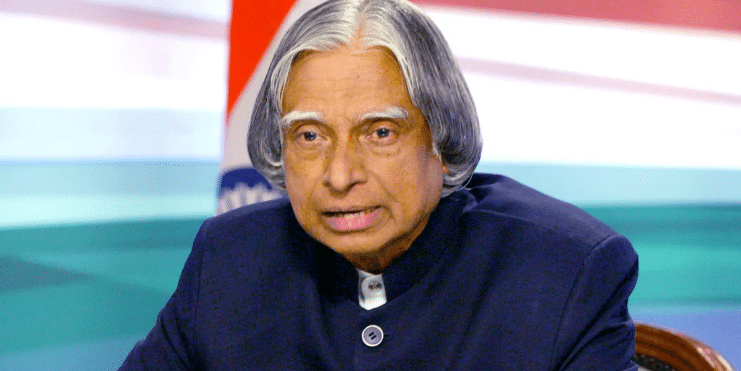
Dr. APJ Abdul Kalam, fondly remembered as the “Missile Man of India,” was a distinguished aerospace scientist and the 11th President of India (2002–2007). He received this title for his remarkable role in advancing India’s missile and space technology through his work at the Indian Space Research Organisation (ISRO) and the Defence Research and Development Organisation (DRDO).
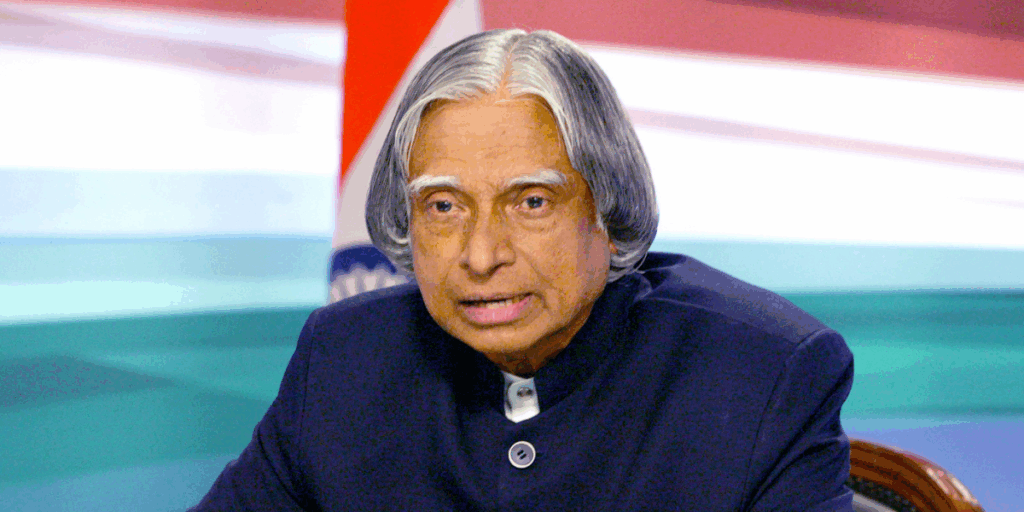
In early science books, the question seldom raised is, “Who is the missile man of India?” Dr. Kalam, the “Missile Man of India,” led ISRO and missile development programs to show the potential of homegrown technology. But he was also a visionary, an educator, and an inspiration.
Kalam: The Missile Man of India received adoration and love from people nationwide because of his dedication to fostering a stronger nation and his passionate desire to inspire young people. His legacy extends beyond scientific achievements; he symbolizes realized dreams against adversity, offering hope.
Dr. A.P.J. Abdul Kalam, known as the “Missile Man of India,” played a key role in building India’s missile and space programs. He was a famous scientist, engineer, author, and served as India’s 11th President.
| Category | Details |
|---|---|
| Full Name | Dr. A.P.J. Abdul Kalam |
| Date of Birth | October 15, 1931 |
| Profession | Scientist, Engineer, Former President of India |
| Notable Roles | 11th President of India, Lead in Missile & Space Programs |
| Key Achievements | Developed India’s nuclear and missile programs |
| Famous Book | Wings of Fire: An Autobiography |
| Awards & Honors | Bharat Ratna (1997), Padma Bhushan, Padma Vibhushan |
| Death | July 27, 2015 |
| Memorial Location | Rameswaram, Tamil Nadu |
| Legacy | Inspirational figure, who Promoted education & technology |

Dr. A P J Abdul Kalam, the Missile Man of India, was born into a modest Tamil Muslim family in Rameswaram, Tamil Nadu, the temple city. His father, Jainulabdeen, was both a boat owner and an imam at the local mosque, while his mother, Ashiamma, managed the household. Kalam, the youngest of five siblings, faced financial hardship when his family’s business, ferrying pilgrims and trading groceries, suffered losses due to the opening of the Pamban Bridge. To support his family, Kalam began selling newspapers at a young age.
Throughout his academic career, Kalam, well-known for his unflinching dedication to education, personified a tireless quest for knowledge. He was a conscientious learner who showed a strong desire to learn from a young age. After finishing school, he enrolled in St. Joseph’s College to study the physics of the subject matter in depth. He studied the subject matter assiduously and graduated in 1954.
Unfazed by the obstacles, Kalam pursued his academic journey at the Madras Institute of Technology. Here, amid the demands of university education, his fortitude shone through. At a pivotal moment, he encountered a crucial project deadline that jeopardized his scholarship. But instead of giving in to the pressure, he accepted the challenge and showed incredible tenacity and will. Rather than succumbing to the pressure, he embraced the challenge head-on, displaying remarkable determination and fortitude in ensuring the timely completion of his task.
This pivotal instance underscored Kalam’s unwavering resolve and illuminated his ability to navigate adversity with grace and determination. It served as a testament to his character, showcasing a steadfast commitment to his academic pursuits despite the obstacles threatening his path. Through perseverance and dedication, Kalam’s journey exemplified the transformative power of education and the indomitable spirit of a true scholar.
Sir Kalam assumed the esteemed position of the 11th President of India after securing a landslide victory in the 2002 presidential election. His tenure, spanning from July 25, 2002, to July 25, 2007, earned him the endearing title of the “president of the people” owing to his myriad contributions to the welfare of the populace and the nation. Notably, he garnered endorsements from the Samajwadi Party and the National Congress Party, bolstering the National Democratic Alliance’s presidential nomination.
Sir Kalam fearlessly tackled complex and contentious decisions during his presidency, demonstrating remarkable courage and resolve. Among these was the challenging task of signing the “Office of Profit” Act, which held significant implications under the English Settlement Act of 1701.
In 2005, Sir Kalam attracted widespread attention for his role in enforcing the President’s Rule in Bihar, showcasing his commitment to upholding constitutional integrity. Following his retirement from office, he engaged in academia, serving as a visiting professor at the Indian Institute of Management in Shillong and imparting knowledge in Aerospace Engineering at Anna University, Tamil Nadu. Notably, he assumed the role of chancellor at the Indian Institute of Space Science and Technology in Thiruvananthapuram.
Dr. APJ Abdul Kalam’s career has left an indelible mark on India’s scientific and military realms, marked by groundbreaking achievements and lasting contributions.
| Missile System | Role/Contribution | Key Significance | First Test |
|---|---|---|---|
| Agni Series | Program Director | India’s first intermediate-range ballistic missile capability | 1989 |
| Prithvi | Technical Leadership | First indigenous surface-to-surface tactical missile | 1988 |
| SLV-III | Project Director | First satellite launch vehicle developed by India | 1980 |
| Pokhran-II | Chief Coordinator | Nuclear tests establishing India as nuclear power | 1998 |
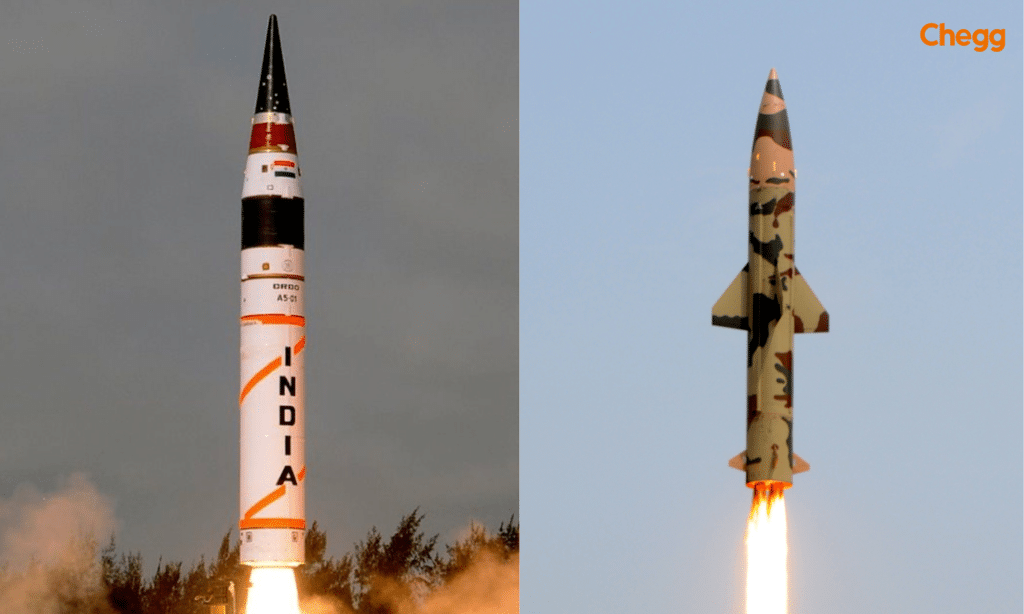
The Integrated Guided Missile Development Program (IGMDP) was the brainchild of Dr. Kalam. The program produced a variety of missiles under his inspiring leadership, most notably the Agni and Prithvi. These ballistic missiles’ successful development and introduction improved India’s strategic defense capabilities and earned Dr. Kalam’s well-deserved moniker “Missile Man of India.”
Dr. A.P.J. Abdul Kalam, known as the Missile Man of India, contributed significantly to space research before taking on a crucial role in developing missiles. He played a significant role in creating the Satellite Launch Vehicle-III (SLV-III) while working for the Indian Space Research Organization (ISRO). Under his leadership, India’s fledgling space program made history by successfully launching the Rohini satellite into orbit. Innovative solutions, indigenization of technology, and a relentless pursuit of excellence were hallmarks of his time at ISRO.

Outside of his professional endeavors, Dr. Kalam, the Missile Man of India, penned his life’s journey in the autobiography “Wings of Fire.” This memoir offers an intimate look into the life of the Rameswaram boy whose dreams transcended his modest beginnings. It details his childhood, challenges, and mentors. “Wings of Fire” is more than an autobiography; it inspires readers to pursue their goals despite obstacles.
Beyond his roles as a scientist and technocrat, Dr. A.P.J. Abdul Kalam, known as the Missile Man of India, was India’s beacon of inspiration, a bold leader, and a true national treasure. His achievements instilled pride and self-confidence in every Indian, showcasing the potential of homegrown talent and innovation in the fields of science and technology.
After transitioning back to civilian life, Kalam maintained his dedication to leveraging science and technology for India’s development, delivering lectures at various universities. Tragically, he suffered a fall while speaking at the Indian Institute of Management Shillong on July 27, 2015, and passed away shortly thereafter due to cardiac arrest. Throughout his life, Kalam authored numerous books, notably including “Wings of Fire,” an autobiography published in 1999. Among his extensive list of accolades, Kalam received two of India’s highest honors: the Padma Vibhushan in 1990 and the Bharat Ratna in 2001, recognizing his exceptional contributions to the nation.

The following is a list of accolades given to India’s missile expert, A.P.J. Abdul Kalam:
| Year | Awards |
|---|---|
| 1981 | Padma Bhushan |
| 1990 | Padma Vibhushan |
| 1994 | Distinguished Fellow |
| 1995 | Honorary Fellow |
| 1997 | Bharat Ratna |
| 1997 | Indira Gandhi Award for National Integration |
| 1998 | Veer Savarkar Award |
| 2000 | Ramanujan Award |
| 2007 | Honorary Doctorate of Science |
| 2007 | King Charles II Medal |
| 2007 | Honorary Doctorate of Science and Technology |
| 2008 | Doctor of Science |
| 2008 | Doctor of Engineering |
| 2008 | Hoover Medal |
| 2008 | Doctor of Science |
| 2009 | International Von Karman Wings Award |
| 2010 | Doctor of Engineering |
| 2011 | IEEE Honorary Membership |
| 2012 | Doctor of Laws |
| 2013 | Von Braun Award |
| 2014 | Doctor of Science |
| 2014 | Honorary Professor |
A.P.J. Abdul Kalam, the former President of India, was not only a renowned scientist but also a prolific writer. His books, filled with wisdom, inspiration, and a deep understanding of human potential, have left a lasting impact. Here are some of his notable works:
| Book Title | Year of Publication |
|---|---|
| Wings of Fire: An Autobiography | 1999 |
| India 2020: A Vision for the New Millennium | 1998 |
| Ignited Minds: Unleashing the Power Within India | 2002 |
| Naa Jeevana Gamanam | 2013 |
| Turning Points: A Journey Through Challenges | 2012 |
| Indomitable Spirit | 2006 |
| You Are Born to Blossom | 2007 |
These books explore a wide range of topics, including his personal journey, his vision for India’s future, and his insights into leadership, science, and spirituality. Kalam’s writings continue to inspire and motivate readers around the world.
In addition to his works, several authors have written books about A.P.J. Abdul Kalam, including:
These books delve into Kalam’s life, achievements, and philosophy, offering further insights into the life and legacy of this extraordinary individual.
Some Inspirational Quotes by Dr. A.P.J. Abdul Kalam

Dr. APJ Abdul Kalam, the “Missile Man of India” and “People’s President,” is remembered for more than science and technology. His life shows that anyone can make a difference with enthusiasm and determination. His progressive vision and unwavering dedication to India’s youth inspire many. The countless lives he touched will remind us to never give up on our dreams and limitless potential. His innovation, patriotism, and drive to change the world are honored in the legacy of Dr Kalam.
Read More:-
Dr. Tessy Thomas is known as the “Missile Woman of India.” She was the Project Director for the Agni-IV missile and played a crucial role in the Agni-V project, becoming one of the first women to lead a major missile program in India.
Dr. APJ Abdul Kalam is the first and original Missile Man of India. He earned the title in the 1980s for pioneering the Integrated Guided Missile Development Programme (IGMDP), which developed India’s first indigenous missiles like Agni and Prithvi.
Dr. Kalam is called the Missile Man for his foundational role in developing India’s missile systems. As the chief architect of the IGMDP, he oversaw the creation of strategic missiles like Agni and Prithvi, achieving self-reliance in defense technology and establishing India as a space and nuclear power.
India’s first “Missile Man” was Dr. A. P. J. Abdul Kalam.
The title “Missile Man of India” remains posthumously with Dr. APJ Abdul Kalam. No other scientist has been officially bestowed this iconic title. However, Dr. Tessy Thomas, leading modern missile projects, is often called the “Missile Woman of India.”