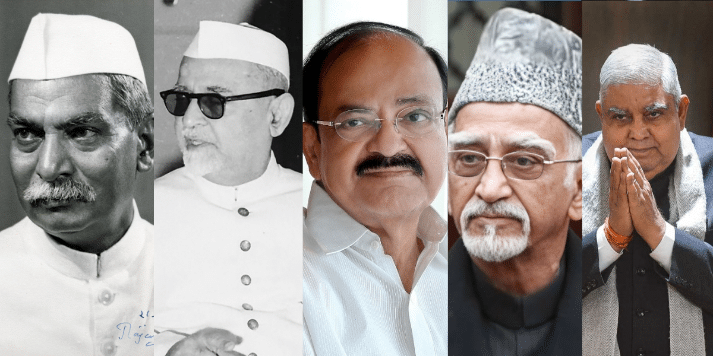
The Vice President of India holds a crucial role within the constitutional framework, serving as both a legislative authority and a vital link in executive continuity. Often referred to as the ‘second citizen’ of the country, the Vice President ensures parliamentary functionality and serves as a guardian of the Constitution when needed. The position is not merely ceremonial; it serves as a stabilizing pillar in India’s complex democratic system. When we look at the list of Vice President of India over the years, we can see how each individual has contributed to preserving this balance and safeguarding democratic values.
The importance of the office also lies in its versatility. The Vice President represents the nation at various forums, presides over the Rajya Sabha, resolves parliamentary disputes, and maintains decorum and discipline in the upper house. Through decades, the office has evolved to reflect India’s political and social shifts, representing a blend of intellectual leadership, ethical authority, and constitutional guardianship. Just as seen in the list of Vice President of India, the role ensures that key constitutional mechanisms never come to a halt, even during transitions of power or national emergencies.
The institution of the Vice President was established when the Indian Constitution came into effect in 1950. The early decades saw scholars and philosophers occupy the post, signifying a period where intellectual and moral guidance was valued at the highest levels of governance. The first Vice President, Dr. Sarvepalli Radhakrishnan, set a high benchmark by promoting education, philosophy, and cultural diplomacy. His tenure laid down the precedent that vice presidents could shape not just parliamentary debates but national values.
Over time, the role evolved in response to India’s political needs. As politics became more dynamic, Vice Presidents with political and legal careers began to fill the office, bringing with them a better understanding of parliamentary processes. In recent decades, the role has taken on more public outreach, with Vice Presidents engaging in global conferences, representing India overseas, and promoting diplomatic goodwill. This evolution reflects how the vice president of india list mirrors the country’s political maturity and socio-cultural growth.
The vice president list provides a fascinating timeline of diverse personalities, from philosophers and judges to social reformers and experienced politicians. Some vice presidents later became Presidents of India, demonstrating the office’s proximity to the apex of Indian governance. Each tenure tells a story of leadership unique to the challenges of its era. For instance, Dr. Zakir Husain’s tenure symbolized educational reform and communal harmony, whereas Venkaiah Naidu’s term focused on parliamentary modernization and public engagement.
Here is a table of the tenure vice president list of India:
| S.No. | Vice-President | Tenure (From) | Tenure (To) | President |
| 1 | Dr. Sarvepalli Radhakrishnan | 13 May 1952 | 12 May 1962 | Dr. Rajendra Prasad |
| 2 | Dr. Zakir Hussain | 13 May 1962 | 12 May 1967 | Dr. Sarvepalli Radhakrishnan |
| 3 | Varahagiri Venkata Giri | 13 May 1967 | 20 July 1969 | Dr. Zakir Hussain |
| 4 | Gopal Swarup Pathak | 31 August 1969 | 30 August 1974 | V. V. Giri |
| Dr. Fakhruddin Ali Ahmed | ||||
| 5 | Basappa Danappa Jatti | 31 August 1974 | 30 August 1979 | Dr. Fakhruddin Ali Ahmed |
| Neelam Sanjiva Reddy | ||||
| 6 | Justice Muhammad Hidayatullah | 31 August 1979 | 30 August 1984 | Neelam Sanjiva Reddy |
| Giani Zail Singh | ||||
| 7 | Ramaswamy Venkataraman | 31 August 1984 | 24 July 1987 | Giani Zail Singh |
| 8 | Shankar Dayal Sharma | 7 September 1987 | 24 July 1992 | Ramaswamy Venkataraman |
| 9 | Kocheril Raman Narayanan | 21 August 1992 | 24 July 1997 | Shankar Dayal Sharma |
| 10 | Krishan Kant | 21 August 1997 | 27 July 2002 | Kocheril Raman Narayanan |
| A. P. J. Abdul Kalam | ||||
| 11 | Bhairon Singh Shekhawat | 19 August 2002 | 21 July 2007 | A. P. J. Abdul Kalam |
| 12 | Mohammad Hamid Ansari | 11 August 2007 | 10 August 2017 | Pratibha Patil |
| Pranab Mukherjee | ||||
| Ram Nath Kovind | ||||
| 13 | M Venkaiah Naidu | 11 August 2017 | 11 August 2022 | Ram Nath Kovind |
| 14 | Jagdeep Dhankhar | 11 August 2022 | Droupadi Murmu |
In a significant development, current Vice President Jagdeep Dhankhar has reportedly resigned from office for health-related reasons. His resignation has created a sudden vacancy in the second-highest constitutional post. As per news reports and constitutional experts, the Deputy Chairman of the Rajya Sabha will temporarily oversee the functioning of the Upper House until a new Vice President is elected. This mid-term resignation has surprised political circles and accelerated the need for a fresh election.
According to Article 68(2) of the Indian Constitution, a new Vice President must be elected immediately after the office falls vacant. The Election Commission of India is likely to conduct the Vice-Presidential election in early September 2025, with official notification and nomination filing to take place in August. The electoral college for this process will include members of both the Lok Sabha and the Rajya Sabha.
The ruling NDA alliance has named C. P. Radhakrishnan, the current Governor of Maharashtra and a senior BJP leader, as its official candidate for the post. Radhakrishnan is widely expected to win the election with the NDA holding a majority in Parliament. Political observers view his nomination as part of the NDA’s strategy to retain regional balance and reward loyal administrative leaders. Meanwhile, the opposition INDIA bloc is still deciding whether to field a joint candidate, making the upcoming poll both politically charged and symbolically important.
Dr. Sarvepalli Radhakrishnan was the first Vice President of India and a prominent figure in philosophy and education. His tenure from 1952 to 1962 was significant for India’s developing democracy. Dr. Radhakrishnan’s role went beyond a formality; it reflected his intellectual capacity and profound understanding of the country’s cultural ethos. His influence as a scholar and philosopher added a unique dimension to his position.
Beyond being Vice President, Dr. Radhakrishnan had an impact. Knowledge is essential to a healthy society, so he promoted education and culture. He dedicated himself to becoming India’s president. Dr. Radhakrishnan said the vice president shaped national values. By examining the list of Vice Presidents of India, one can appreciate the evolution of the role and its impact on Indian democracy.

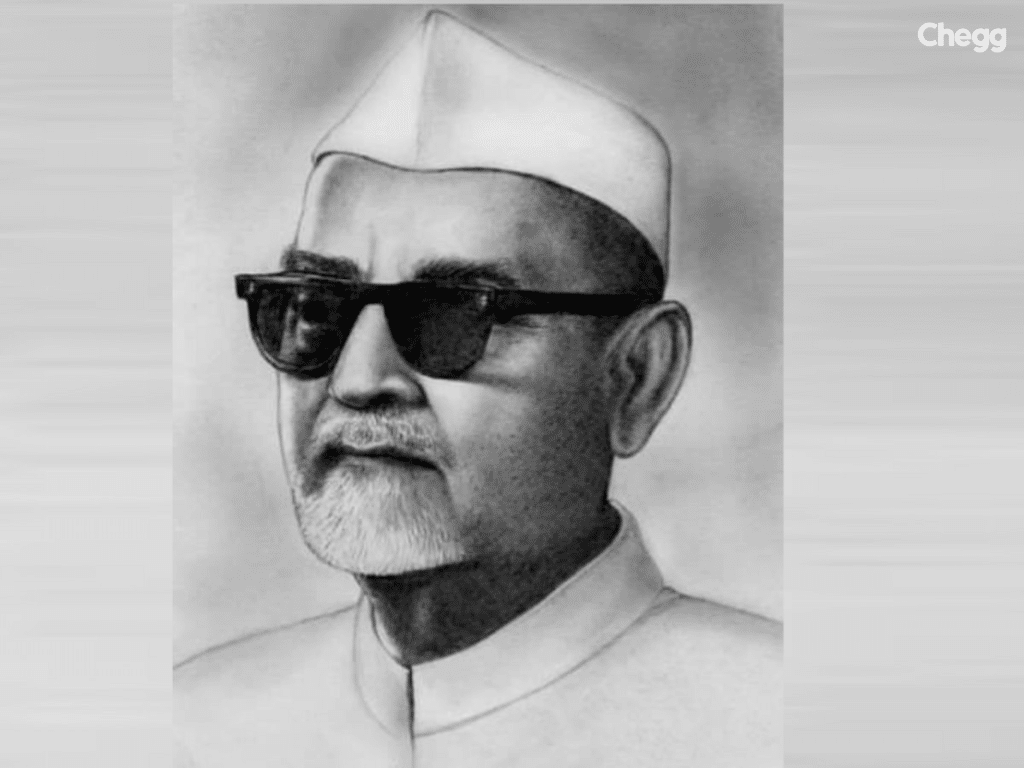
One of the most well-known figures in Indian history was Dr. Zakir Husain, who was born on February 8, 1897, and died on May 3, 1969. He made a big impact on the nation while holding several prestigious positions that made history in 1967 when he became the first Muslim to lead India as president. He was the governor of the state of Bihar from 1957 until this point. Furthermore, Dr. Husain’s election as India’s vice president in 1962 demonstrated the public’s broad recognition and confidence in him.
His influence went beyond politics. In the field of education, Dr. Husain was important in the founding of the Muslim National University in Aligarh, which subsequently moved to New Delhi. He acted as its vice-chancellor from 1926 until 1948, directing and influencing its expansion. The list of Vice Presidents of India highlights how the position has been filled by distinguished individuals from various fields.
The primary function of the Vice President is to act as the ex officio Chairman of the Rajya Sabha. This means they preside over parliamentary sessions, regulate debates, enforce discipline, and ensure the rules of procedure are followed. This role is crucial because the Rajya Sabha often handles complex legislative debates that require strong leadership to prevent political deadlock.
Equally important is the Vice President’s role in presidential succession. Under Article 65 of the Constitution, if the President of India is unable to discharge their duties due to absence, illness, resignation, impeachment, or death, the Vice President steps in as Acting President. This ensures continuity of governance, protecting the nation from a constitutional vacuum. Additionally, the Vice President sometimes represents India at international events and diplomatic gatherings, helping strengthen foreign relations. Although not directly involved in executive decision-making, the Vice President remains a symbol of national unity and a watchdog of constitutional values.
The Vice President of India is elected for a term of five years, but can be re-elected for multiple terms since there is no constitutional limit on tenure. The election is conducted indirectly through an Electoral College that includes members of both the Lok Sabha and the Rajya Sabha. The process follows proportional representation by means of a single transferable vote, ensuring that the elected candidate receives wide support across political parties and regions.
This system enhances democratic legitimacy and reflects political consensus. The voting takes place through a secret ballot to maintain integrity and impartiality. Once elected, the Vice President takes an oath to uphold, protect, and defend the Constitution of India. The structured and detailed election process shows how seriously the country treats this position, balancing representation with constitutional responsibility.
To qualify for the post, a candidate must be at least 35 years old, a citizen of India, and meet all eligibility criteria required to become a member of the Rajya Sabha. This includes being of sound mind and not disqualified under any law. Additionally, they must not hold any profit-based office under the central government, state government, or any public authority; this ensures impartiality.
These qualification criteria maintain the integrity of the office and ensure that only experienced, respected, and constitutionally aware individuals occupy it. Requiring eligibility for Rajya Sabha membership emphasizes legislative understanding, which is essential since the Vice President presides over the upper house. These provisions ensure that India’s vice presidents are recognized for their wisdom, experience, and constitutional spirit.
It is noteworthy that three Vice Presidents have gone on to become Presidents of India, a testimony to the leadership potential this office holds. Dr. Sarvepalli Radhakrishnan, the first Vice President, later became President in 1962, maintaining his intellectual influence over national growth. Dr. Zakir Husain, with his deep commitment to education and national unity, became President after serving as Vice President, symbolizing inclusion and diversity.
V. V. Giri also made the transition, moving from Vice President to Acting President, and then being officially elected as President. His term reflected labor reforms and social justice. These cases show how the office of the Vice President acts as a training ground for future Heads of State, allowing individuals to develop a balanced understanding of the Constitution, governance, and public expectations. Notable Contributions by India’s Vice Presidents
Vice Presidents have contributed significantly to areas like education, social justice, foreign diplomacy, and parliamentary reforms. Dr. Radhakrishnan advanced India’s reputation as a nation that respects scholarship and philosophy. Dr. Zakir Husain promoted holistic education based on Gandhian values. V. V. Giri championed labor rights and played a pivotal role in India’s trade union movement.
Later vice presidents like Bhairon Singh Shekhawat focused on integrating rural leadership and grassroots governance. M. Hamid Ansari emphasized minority rights, global diplomacy, and constitutional secularism. Venkaiah Naidu, being a powerful orator, promoted Indian languages and cultural pride in Parliament. Together, their contributions reflect a strong legacy that underlines how vice presidents have gone beyond ceremonial functions to actively shape India’s social and political journey.
Vice Presidents have contributed significantly to areas like education, social justice, foreign diplomacy, and parliamentary reforms. Dr. Radhakrishnan advanced India’s reputation as a nation that respects scholarship and philosophy. Dr. Zakir Husain promoted holistic education based on Gandhian values. V. V. Giri championed labor rights and played a pivotal role in India’s trade union movement.
Later vice presidents like Bhairon Singh Shekhawat focused on integrating rural leadership and grassroots governance. M. Hamid Ansari emphasized minority rights, global diplomacy, and constitutional secularism. Venkaiah Naidu, being a powerful orator, promoted Indian languages and cultural pride in Parliament. Together, their contributions reflect a strong legacy that underlines how vice presidents have gone beyond ceremonial functions to actively shape India’s social and political journey.
The List of Vice President of India reflects a rich history of leadership, ethics, and constitutional dedication. Each Vice President has brought unique strengths to the office, some served during turbulent political phases, while others advanced national development through reforms and diplomacy. From academic scholars to grassroots politicians, the vice president India list showcases diversity, unity, and a shared commitment to India’s democratic systems.
As a bridge between Parliament and the Presidency, the Vice President continues to play a vital role in maintaining constitutional balance. Understanding this vice president list also helps answer common questions like “who is the 14 vice president of India list?” and “vice president of India 2017” while emphasizing the broader significance of this prestigious office in India’s democratic architecture.
Read More:-
India’s first Vice President was Dr. Sarvepalli Radhakrishnan. He served from May 13, 1952, to May 12, 1962, and later became the second President.
Jagdeep Dhankhar is an Indian politician and lawyer, serving as the Vice President of India since 2022. Before this, he was the Governor of West Bengal from 2019 to 2022.
The former union minister and governor was elected as the vice president of India, defeating the candidate Margaret Alva of the INC.
The Vice President of India tenders his resignation to the President of India, as per Article 67(b) of the Indian Constitution. The resignation must be submitted in writing, and it becomes effective upon acceptance by the President.
The Vice President is chosen by an electoral college comprised of Rajya Sabha and Lok Sabha members.
Jagdeep Dhankhar is the 14th Vice President of India, having assumed office on August 11, 2022. He succeeded M. Venkaiah Naidu and also serves as the ex officio Chairman of the Rajya Sabha.
India has had 14 Vice Presidents since the inception of the post in 1950. The current Vice President, Jagdeep Dhankhar, is the 15th Vice President of India. There hasn’t been a 22nd Vice President yet. Let me know if you’d like more details!
The US Constitution is the source for the position of Vice President in India.
The current vice president of India is Shri Jagdeep Dhankhar. He has resigned from his position of the Vice president as of 21st July 2025.