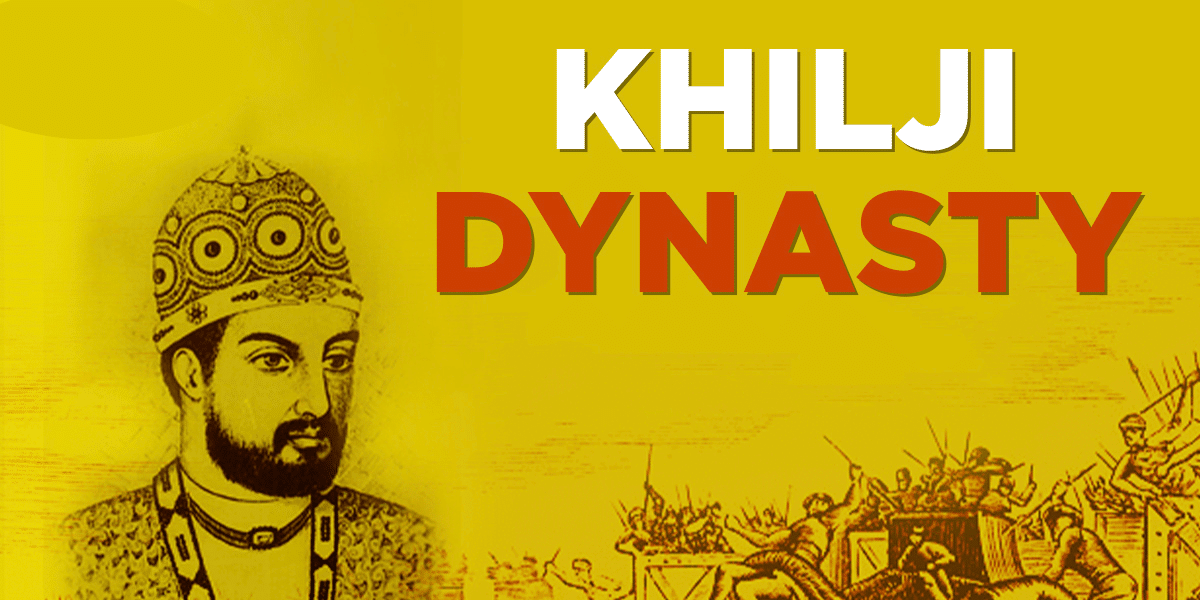
The Khilji Dynasty (1290–1320 CE) marked a powerful and transformative phase in the Delhi Sultanate. Originating from the Turk-Afghan lineage, the Khiljis rose to power after overthrowing the Mamluk (Slave) Dynasty, bringing major administrative, military, and economic changes to medieval India. Their rule is chiefly associated with Alauddin Khilji, the most ambitious and influential Khilji ruler, who expanded the empire deep into the Deccan and implemented bold reforms to strengthen the Sultanate.
The Khilji era is known for successful resistance against Mongol invasions, market control policies, land revenue reforms, and strengthening the central authority. Despite lasting only three decades, the Khilji Dynasty left a strong imprint on India’s political and economic structure, shaping Sultanate governance and warfare in the subcontinent.
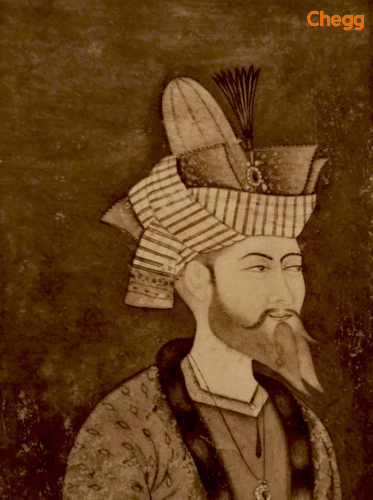
The Khilji Dynasty emerged as the second ruling dynasty of the Delhi Sultanate after replacing the Mamluk or Slave rulers in 1290 CE. The Khiljis were of Turko-Afghan origin and belonged to a prominent military clan that had settled in the region of Afghanistan long before they rose to power in India. Although they shared their Turkic heritage with the Slave rulers, many nobles of the Delhi court often questioned their legitimacy due to their closer cultural ties with Afghans. This tension shaped much of the early politics of their rule.
The establishment of the Khilji Dynasty came during a period of political instability and internal dissatisfaction. The decline of the Mamluk Dynasty, marked by weak rulers and constant court conspiracies, opened the door for a strong military leader to take control. Jalaluddin Khilji seized this opportunity and ascended the throne, beginning a more assertive and expansionist phase in the Sultanate’s history.
Once in power, the Khiljis focused on strengthening central authority and expanding territorial control. They introduced well-organized administrative and revenue systems, improved agrarian productivity, and restructured the military to respond effectively to threats like the Mongol invasions. Their governance laid the foundation for a more stable and powerful Sultanate, while their legacy continued to influence administrative models adopted by later dynasties such as the Tughlaqs.
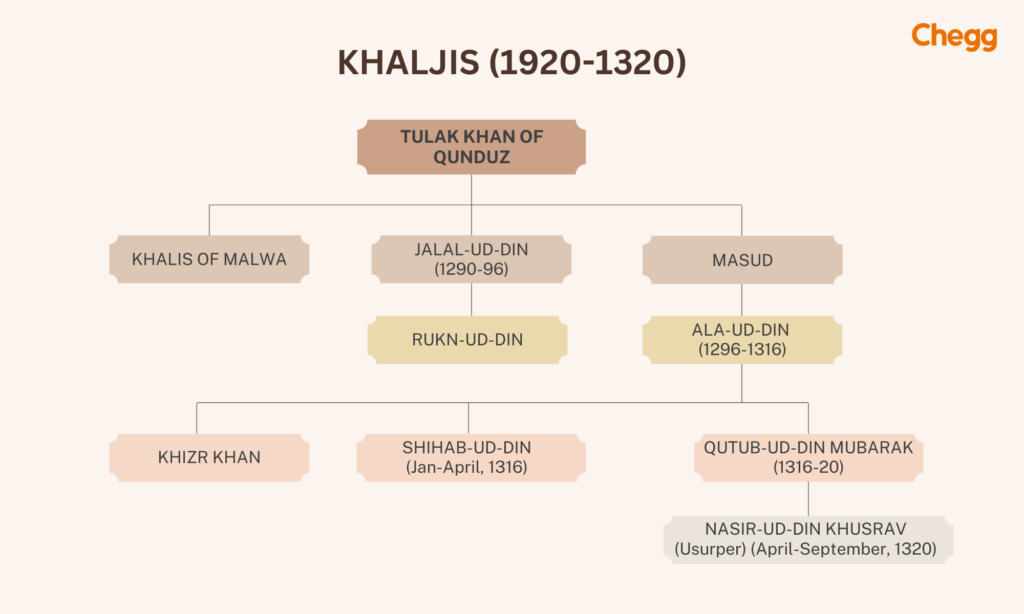
The Khilji Dynasty witnessed significant transformation under its three major rulers, who shaped the political and administrative framework of the Delhi Sultanate. From the gentle and diplomatic approach of Jalal-ud-din Khilji to the aggressive expansionism of Alauddin Khilji, the dynasty saw both stability and unprecedented military success. The last phase under Qutb-ud-din Mubarak Shah and Khusro Khan marked a decline in authority and internal conflicts, eventually ending the dynasty. These rulers played a crucial role in expanding the Sultanate’s territory, strengthening governance structures, and securing India against external threats like the Mongols.
Jalal-ud-din Khilji was the founder of the Khilji Dynasty, who rose to power after overthrowing the last ruler of the Slave Dynasty, Kaiqubad. Known for his humility, kindness, and lenient approach, he attempted to rule through mercy and diplomacy rather than strict enforcement. His policies were meant to calm the turmoil caused by years of harsh Mamluk rule.
Jalal-ud-din adopted a peace-first strategy, believing that generosity would discourage rebellion among nobles and strengthen the Sultanate internally. However, this softer approach was not always practical, particularly in dealing with ambitious nobles and external threats. Although he faced repeated Mongol raids on the northwestern frontiers, he preferred negotiations and pardons over aggressive retaliation. This allowed the Mongols to attack India multiple times during their rule.
His reign ended dramatically in 1296 CE when he was betrayed and assassinated by his ambitious nephew and son-in-law, Alauddin Khilji, who invited him to Karra under the guise of reconciliation. Jalaluddin’s assassination marked the rise of a more assertive, expansionist, and militarily powerful phase in the Delhi Sultanate under Alauddin.
Alauddin Khilji is widely regarded as the most dynamic, ambitious, and influential ruler of the Khilji Dynasty. His reign witnessed massive territorial expansion, strong administrative rule, and powerful resistance against foreign invasions, making him a central figure in medieval Indian history.
Alauddin aimed to establish complete political dominance in India. His northern campaigns subdued Rajput powers like Ranthambore (1301), Chittor (1303), and Maldahi (1305). He later turned toward the Deccan, sending generals like Malik Kafur to conquer:
These victories brought immense wealth to the Delhi Sultanate and extended its influence deep into southern India.
To maintain a strong army, Alauddin introduced strict price control policies:
These reforms helped keep soldiers satisfied and loyal by maintaining low living costs.
Alauddin strengthened the Sultan’s authority by reducing the power of nobles, banning social gatherings among them, and establishing a robust intelligence system to monitor rebellions. Land revenue collection was standardized to increase the state’s income.
He organized a professional standing army and introduced:
These reforms ensured discipline, loyalty, and accountability within the army.
After witnessing Jalaluddin’s assassination, Alauddin took harsh steps to eliminate potential rivals and rebellious nobles. Personal wealth, marriage alliances, and political contacts of nobles were monitored strictly.
Alauddin repelled multiple Mongol invasions (nearly 5–6 major attacks). His strong forts, trained cavalry, and efficient spy network helped secure India from the devastating Mongol threat that troubled previous rulers.
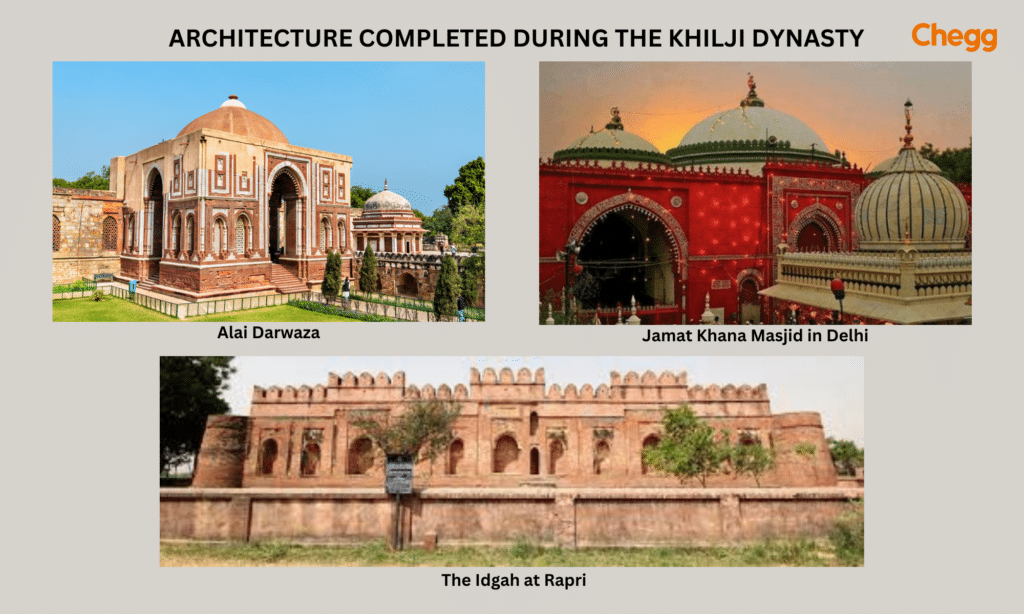
Alauddin also patronized architecture, contributing iconic monuments such as:
These structures reflect Indo-Islamic architectural advancements.
After Alauddin died in 1316 CE, his son Qutb-ud-din Mubarak Shah ascended the throne. Unlike his father’s strict control, Mubarak Shah reversed many harsh policies, restoring privileges to nobles. This shift led to weakening discipline, increased corruption, and the resurgence of court conspiracies.
The most influential figure during this period was the noble Khusro Khan, who gained the Sultan’s trust. In 1320 CE, Khusro Khan assassinated Mubarak Shah and tried to rule, but he faced strong opposition from loyal military factions. His reign was extremely short-lived, as political instability spiraled out of control.
Finally, Ghiyas-ud-din Tughlaq defeated Khusro Khan, marking the end of the Khilji Dynasty and the beginning of the Tughlaq Dynasty. The Khiljis’ downfall is largely attributed to weak successors and internal betrayals that dismantled the strong foundation laid by Alauddin.
The Khilji Dynasty, particularly under Alauddin Khilji, witnessed one of the most aggressive phases of territorial expansion in the Delhi Sultanate. Through decisive military campaigns, the empire extended from the Indo-Gangetic plains in the north to the prosperous kingdoms of the Deccan in the south.
Alauddin’s northern conquests were aimed at subduing major Rajput strongholds. He successfully captured:
The most notable expansion occurred in Southern India, led by Alauddin’s trusted general Malik Kafur, a brilliant military commander. His famous Deccan campaigns included:
These expeditions brought enormous war loot, tribute, and wealth, enabling the Sultanate to maintain a massive standing army.
Through military skill, strong leadership, and loyal commanders like Malik Kafur, Zafar Khan, and Nusrat Khan, the Khilji Dynasty established itself as a dominant force in medieval India’s political and military landscape.
Alauddin Khilji introduced a series of strong administrative reforms to consolidate central authority, control the economy, and maintain a powerful standing army. These reforms were crucial in strengthening the Delhi Sultanate and ensuring stability during his expansionist rule.
| Reform Area | Key Actions | Main Objective | Result |
|---|---|---|---|
| Revenue Reforms | – Land measurement system (bigha) – Direct taxation on peasants – 50% produce as tax – Abolition of intermediaries | Increase state treasury & reduce nobles’ power | Stronger state finances and central control |
| Market Reforms | – Fixed prices of essential goods – Control over grain supply & storage – Anti-hoarding policies – Market inspectors (Shahana-i-Mandi) | Maintain low living cost for army & public | Stable prices, limited exploitation |
| Military Reforms | – Chehra: soldier identification – Dagh: branding of horses – Regular army inspections | Prevent corruption, ensure efficiency | Disciplined and reliable army |
| Intelligence & Espionage | – Wide spy network – Strict monitoring of nobles – Ban on secret meetings & lavish marriages | Prevent rebellions & conspiracies | Strengthened political security |
Alauddin’s revenue system removed corrupt middlemen and ensured direct state involvement in land assessment. By fixing revenue at a high but uniform rate, he ensured consistent income to fund military campaigns.
Alauddin fixed prices for:
Government granaries were expanded for price stability. Officials regularly checked markets and punished unfair trade practices, ensuring affordability for soldiers and weakening wealthy grain merchants who could finance rebellions.
These reforms helped Alauddin maintain a large, loyal, and war-ready army, essential for resisting Mongol attacks.
Alauddin Khilji’s reforms transformed the Delhi Sultanate into a secure, prosperous, and centrally governed empire, influencing later rulers like the Tughlaqs.

The Khilji Dynasty had a notable influence on medieval India’s social structure, cultural interactions, and architectural development. With Alauddin Khilji’s market and administrative reforms, cities such as Delhi, Ranthambore, and Chittor saw rapid urban growth, attracting traders, craftsmen, and scholars. Strict trade controls stabilized prices and boosted internal commerce, making the Sultanate a major economic power.
Culturally, the Khiljis encouraged Persian and Central Asian influences, especially in court traditions, literature, clothing, and administrative language. Persian became the official medium of governance, contributing to the Indo-Islamic cultural fusion that shaped the era’s identity.
Architecturally, the Khilji period made significant strides in developing the early Indo-Islamic style, combining Islamic arches and domes with Indian decorative patterns. Major architectural contributions include:
These projects demonstrated advances in engineering, city planning, and artistic design. The Khilji rulers laid key foundations for architectural styles later refined by the Tughlaqs and Mughals, leaving a lasting cultural legacy in India’s medieval history.
The decline of the Khilji Dynasty began soon after the death of Alauddin Khilji in 1316 CE. His aggressive expansion and centralized control had created a powerful but highly strained administrative system, dependent heavily on a single strong ruler. After him, the empire lacked stable leadership and quickly fell into political chaos.
One of the primary reasons for the decline was overexpansion. Managing vast territories across northern and southern India required strong governance and loyal military leadership, both of which were weakening under his successors. Alauddin’s strict policies also created resentment among nobles eager to regain their lost power.
Court conspiracies increased significantly after Malik Kafur gained control during Alauddin’s last years. Internal rivalries, assassinations, and shifting loyalties destabilized the Sultanate. Weak rulers like Qutb-ud-din Mubarak Shah failed to restore discipline, while Khusro Khan’s brief and controversial reign further eroded legitimacy.
The Khiljis’s downfall resulted from internal instability, weak leadership, and failed power management, abruptly ending their otherwise impactful era in the Delhi Sultanate.
The Khilji Dynasty left a remarkable legacy that shaped the Delhi Sultanate’s and medieval India’s future. Their reign marked the strengthening of centralized authority, reducing the power of nobles and iqtadars who had previously challenged the throne. This shift allowed later dynasties, especially the Tughlaqs, to govern with greater control and stability.
Economically, Alauddin Khilji’s market regulations, revenue reforms, and policing measures created a more organized financial system. His successors adopted and modified many of these policies to maintain a stable treasury and disciplined administration.
Militarily, the Khiljis expanded the Sultanate to its widest boundaries up to that time, primarily through their successful campaigns in Rajasthan and the Deccan. Their strong defense against Mongol invasions ensured the Sultanate’s survival during a critical phase in global geopolitics.
Architecturally, the Khiljis promoted the development of the Indo-Islamic style, which is visible in structures like Alai Darwaza and the fort city of Siri. These innovations continued to influence construction techniques in the Tughlaq and Mughal periods.
Overall, the Khiljis played a crucial role in transforming the Delhi Sultanate into a powerful and culturally influential empire, leaving an imprint long after their rule ended.
Major Reforms:
Important Monuments:
The Khilji Dynasty was pivotal in transforming the Delhi Sultanate into a powerful, centralized, and militarily robust empire. From overcoming the political instability left by the Slave Dynasty to expanding the territorial boundaries deep into the Deccan, the Khiljis introduced reforms that left a long-lasting influence on governance, economy, and society. The reign of Alauddin Khilji, in particular, stands out for his bold administrative strategies, strong defense against Mongol invasions, and the consolidation of imperial authority.
Their architectural achievements, including the Alai Darwaza and the development of Siri, enriched India’s Indo-Islamic cultural landscape. Although the dynasty eventually declined due to internal conflicts and weak successors, its successes laid the groundwork for future rulers like the Tughlaqs and Mughals. The Khilji legacy continues to be remembered for strengthening the foundations of medieval Indian governance and shaping the political history of the subcontinent.
Read More:-
Jalal-ud-din Firuz Khilji was the founder of the Khilji Dynasty. In 1290 CE, he overthrew the weak successors of the Slave Dynasty and became the Sultan of Delhi, marking the beginning of a new ruling family of Afghan origin in India.
The Khilji Dynasty ruled the Delhi Sultanate between 1290 and 1320 CE. It was known for substantial military expansion, strict administrative reforms, economic control, and repelling Mongol invasions, especially under Alauddin Khilji, making it a significant phase in medieval Indian history.
The Khilji Dynasty is famous for Alauddin Khilji’s strong military campaigns, expansion into South India, strict market and administrative reforms, suppression of nobles, and successfully stopping Mongol invasions. It significantly strengthened the Delhi Sultanate during its 30-year reign.
According to historical accounts, the Koh‑i‑Noor diamond was likely taken by Alauddin Khilji around 1304 CE from the Kakatiya dynasty (the Kakatiya ruler of Warangal) as part of the loot from his southern campaign.
Yes, the area known as Siri was part of old medieval Delhi and is now within the boundaries of Delhi, specifically South Delhi / New Delhi