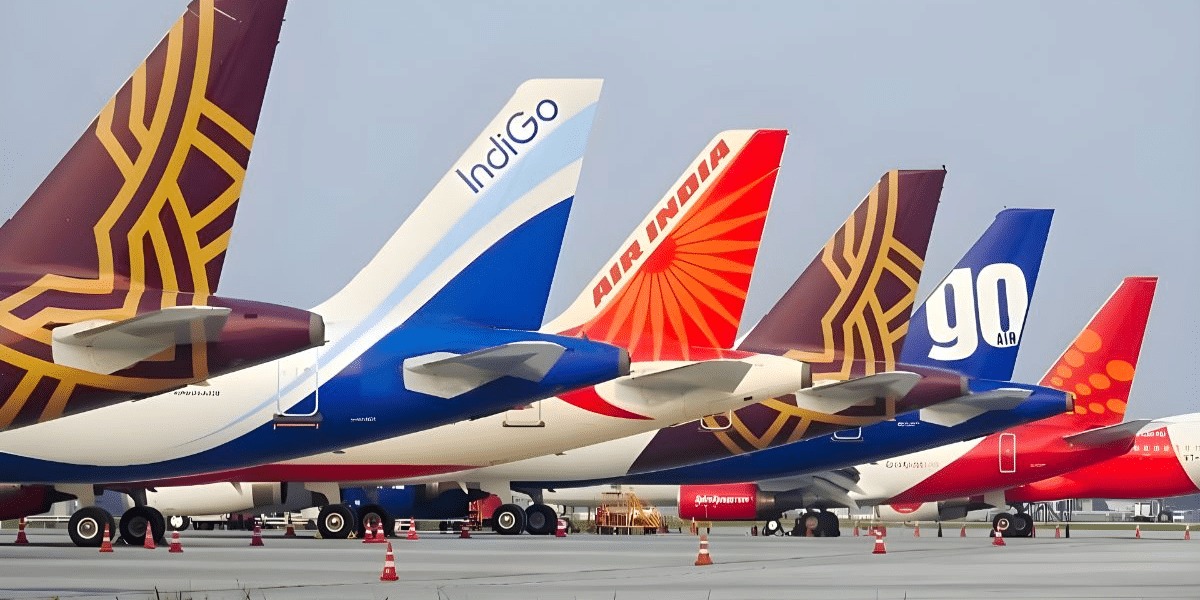
India has one of the fastest-growing aviation markets in the world. If you’re wondering how many airlines in India, in 2025, more than 140 million people flew in and out of the country. The rapid growth of domestic and international flights has made air travel a key part of India’s transportation system. With so many options, knowing which airlines operate in India, where their hubs are, and what services they offer is essential.
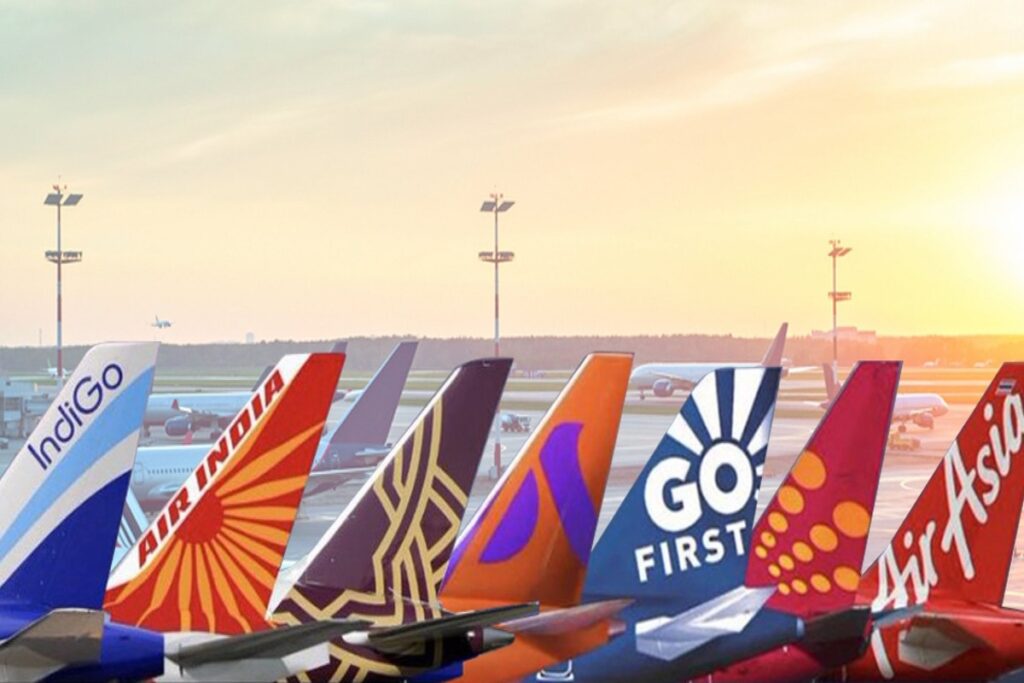
Today, India has more than 10 domestic airlines and several international carriers. These airlines play a huge role in meeting the growing demand for quicker, more efficient travel nationwide. This guide will give you a complete list of how many airlines in India. You’ll learn about their locations, key hubs, and what makes each unique. Whether you fly often or plan your first trip, understanding how many airlines in India and the airline network will help you make better travel choices.
The Indian aviation sector has grown rapidly in recent decades. Today, it is one of the world’s largest and fastest-growing aviation markets. A rising middle class, higher disposable incomes, and more demand for air travel mainly drive this growth. How many airlines in India have contributed to this boom, with domestic and international services expanding to meet the demand?
Passenger traffic in India has grown significantly for domestic and international flights. In FY 2023, India saw over 140 million domestic air passengers, and international passenger traffic reached around 70 million. Domestic travel has grown due to the expansion of regional connectivity, primarily through the UDAN (Ude Desh ka Aam Naagrik) scheme. This scheme has made air travel easier for people in smaller towns and cities.
The aviation industry has a significant impact on India’s economy and infrastructure. It supports millions of jobs and immensely contributes to the country’s GDP. Airlines, airports, and related industries such as tourism, logistics, and hospitality are essential for economic growth. A 2022 report from the International Air Transport Association (IATA) found that aviation contributes about $72 billion to India’s economy and supports nearly 1.8 million jobs. The development of modern airports, cargo hubs, and regional connectivity is improving the country’s infrastructure.
Recommended Read: Aviation Course
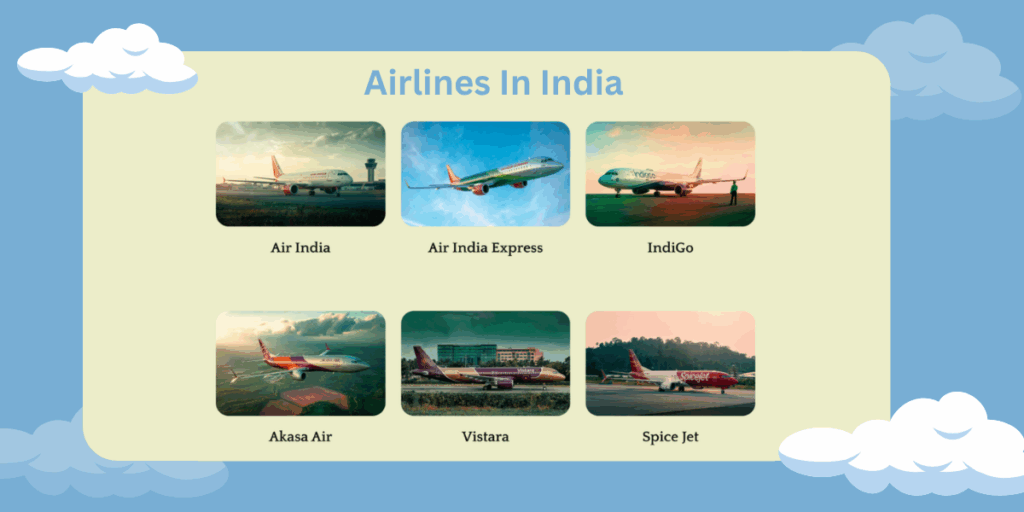
India operates seven domestic airlines: AirAsia India, Air India, Air India Express, Go First, IndiGo, SpiceJet, and Vistara.
Key players like IndiGo, SpiceJet, and Air India dominate India’s domestic market. IndiGo is the largest airline, known for its on-time performance, vast network, and affordable prices. SpiceJet and Air India also serve major cities and smaller regions. These airlines operate thousands of flights daily, connecting cities like Delhi, Mumbai, and Bengaluru with remote areas. IndiGo, with its fleet of over 300 aircraft, plays a significant role in the market.
Air India and Vistara are major Indian airlines that fly internationally. With its long history, Air India offers flights to destinations in the United States, Europe, Asia, and more. Vistara, a newer airline, quickly earned a reputation for its premium services and strategic partnerships, especially with Singapore Airlines. In addition to Indian carriers, many foreign airlines fly to and from India, including Emirates, Qatar Airways, and Lufthansa.
Low-cost carriers (LCCs) like IndiGo, SpiceJet, and Akasa Air have changed how people travel by making flying affordable. These airlines focus on cutting costs by offering essential services, which keeps ticket prices low. IndiGo has become the go-to choice for budget travellers in India. SpiceJet also offers deals to attract price-conscious passengers. Akasa Air is growing quickly despite being new, adding more planes and destinations.
The airline industry in India has shifted since Air India was privatized. Once the dominant government-owned airline, Air India is now a private company after being bought by the Tata Group. It still plays a vital role in both domestic and international markets. Meanwhile, private airlines in India, like IndiGo, continue to dominate, holding the largest market share. These private airlines are known for their efficient operations, competitive prices, and focus on customer service.
As of 2025, India’s aviation sector encompasses various airlines, including mainline carriers, regional operators, cargo services, and charter providers. Below is an updated list of these airlines, along with their founding years and primary hubs:
Mainline Airlines:
| Airline | Founded | Primary Hubs |
|---|---|---|
| Air India | 1932 | Delhi, Mumbai |
| Air India Express | 2005 | Kochi |
| AIX Connect | 2013 | Bengaluru |
| Akasa Air | 2021 | Mumbai, Bengaluru |
| IndiGo | 2006 | Mumbai, Bengaluru, Chennai, Delhi, Hyderabad, Kolkata |
| Go First | 2005 | Mumbai, Delhi, Bengaluru |
| Vistara | 2013 | Mumbai, Delhi |
| SpiceJet | 2004 | Hyderabad, Delhi |
Regional/Commuter Airlines:
| Airline | Founded | Primary Hubs |
|---|---|---|
| FlyBig | 2021 | Guwahati |
| Alliance Air | 1996 | Delhi |
| Star Air | 2019 | Bengaluru |
| IndiaOne Air | 2020 | Bhubaneswar |
Cargo Airlines:
| Airline | Founded | Primary Hubs |
|---|---|---|
| IndiGo CarGo | 2022 | Delhi |
| Blue Dart Aviation | 1994 | Chennai |
| Pradhaan Air Express | 2021 | Delhi |
| SpiceXpress | 2018 | Delhi |
| QuikJet Airlines | 2007 | Bengaluru |
Charter Airlines:
| Airline | Founded | Primary Hubs |
|---|---|---|
| Deccan Charters | 1997 | Bengaluru |
| Pawan Hans | 1985 | New Delhi |
| Club One Air | 2005 | Visakhapatnam, Mumbai, New Delhi |
| Global Vectra Helicorp | 1997 | Mumbai |
| India Fly Safe Aviation | 2010 | New Delhi |
| Pinnacle Air | 2004 | New Delhi |
| TajAir | 1993 | Mumbai |
| Ventura AirConnect | 2011 | Surat |
Note: The aviation industry is dynamic, with frequent changes in operations and services. For current information, refer to official airline communications or the Directorate General of Civil Aviation (DGCA) updates.
India’s aviation landscape has undergone significant transformations in the past year, with several key changes shaping the number and nature of airlines operating there.
In November 2024, Vistara, a joint venture between Tata Sons and Singapore Airlines, officially ceased to exist as a separate brand. It was merged into Air India, consolidating the Tata Group’s airline operations under a unified Air India Group, which now includes:
This merger significantly streamlined India’s airline count while increasing operational efficiency.
The aviation sector is witnessing fresh energy with the launch of three new regional airlines in 2025:
These airlines are in the final stages of obtaining their AOC (Air Operator Certificate) from DGCA and are expected to start operations by late 2025.
This has further reshaped the competitive landscape.
In addition to national players, regional airlines have gained traction:
India’s domestic airline market is now heavily consolidated:
The dominance of these two airline groups indicates a duopoly-like structure in India’s domestic skies.
India’s aviation industry is poised for rapid growth:
The following table provides a list of indian airlines and other details:
| Airline | Year Founded | Primary Hub(s) |
|---|---|---|
| Air India | 1932 | Delhi, Mumbai |
| Air India Express | 2005 | Kochi |
| AIX Connect | 2013 | Bengaluru |
| Akasa Air | 2021 | Bengaluru, Mumbai |
| IndiGo | 2005 | Delhi, Mumbai, Bengaluru, Hyderabad, Kolkata, Chennai |
| SpiceJet | 2004 | Delhi, Hyderabad |
| Vistara | 2013 | Delhi, Mumbai |
| Rank | Airline | Country | Major Destinations from India |
|---|---|---|---|
| 1 | Emirates | UAE | Dubai, Europe, USA, Australia |
| 2 | Qatar Airways | Qatar | Doha, USA, Europe, Africa |
| 3 | Singapore Airlines | Singapore | Singapore, Australia, USA |
| 4 | British Airways | UK | London, Europe, North America |
| 5 | Lufthansa | Germany | Frankfurt, Munich, Europe, USA |
| 6 | Etihad Airways | UAE | Abu Dhabi, USA, Europe, Africa |
| 7 | Thai Airways | Thailand | Bangkok, Southeast Asia |
| 8 | Air France-KLM | France/Netherlands | Paris, Amsterdam, Europe |
| 9 | Turkish Airlines | Turkey | Istanbul, Europe, USA, Africa |
| 10 | Malaysia Airlines | Malaysia | Kuala Lumpur, Australia, Asia |
India’s airline industry has grown rapidly, offering more convenient domestic and international travel options. With a growing middle class and a rising demand for air travel, Indian airlines are working hard to keep up. But even with their success, they face several challenges that prevent them from fully taking advantage of this growth.
Demand for air travel in India has surged, especially after the pandemic. As restrictions lifted, many Indians who were once hesitant or unable to fly began embracing air travel, leading to record-high passenger numbers. While this is great for the industry, it pressures airlines to meet these new expectations. Programs like UDAN (Ude Desh ka Aam Naagrik) have made flying more affordable, opening up underserved areas to air travel.
Despite the industry’s growth, Indian airlines face several significant challenges. A key issue is the rising cost of fuel, which impacts operational expenses. Higher fuel costs lead to higher ticket prices, hurting both airlines’ profits and passengers’ wallets. Airlines also deal with overcrowding and delays at major airports due to limited capacity and outdated facilities.
Read More: World’s Biggest Airport
As global environmental concerns grow, Indian airlines increasingly adopt sustainable practices to reduce their carbon footprint. They are using fuel-efficient aircraft, implementing carbon offset programs, and introducing more sustainable aviation fuels (SAF) that emit fewer greenhouse gases. Airlines are also modernizing their fleets with eco-friendly designs. These promising steps require significant investment and a long-term commitment.
India’s aviation market is set for rapid growth in the coming years. Experts predict it will become the world’s third-largest aviation sector by 2025. This growth is driven by rising middle-class incomes, more people choosing air travel, and better connectivity. With so many more people flying, domestic and international airlines have an excellent opportunity to tap into this growing market.
New airlines and routes will keep fueling this growth. Both established airlines and new players are focusing on India. They’re launching routes to connect smaller cities, giving more people access to air travel. This opens up more travel options and boosts regional growth. As the flight network expands, travellers and businesses will have more choices that benefit them.
Government policies have played a significant role in supporting the aviation industry. Programs like UDAN (Ude Desh ka Aam Naagrik) aim to make air travel more affordable and improve regional connectivity. The government also invests in airport upgrades and regulatory changes to strengthen the industry.
India has around 7 major domestic airlines and several regional and cargo carriers. The leading domestic airlines include Air India, IndiGo, Go First, SpiceJet, Vistara, and Akasa Air. Additionally, numerous international airlines operate flights to and from India, connecting the country to global destinations.
India’s airline industry is growing fast, offering plenty of domestic and international travel options. With so many airlines in India currently operating, major airlines like Air India, IndiGo, and SpiceJet lead the way, providing choices that range from affordable to luxurious. More regional carriers are popping up, making air travel easier to reach even the most remote areas.

As the industry expands, it plays a key role in India’s economy and global travel networks. The competition between airlines pushes them to improve their services and add new routes. This means you have more options and better deals, making flying both within India and internationally more manageable and enjoyable.
India’s aviation industry has grown into the world’s third-largest domestic market since mid-2025, with around ten scheduled passenger airlines. Major full-service carriers like Air India and low-cost airlines such as IndiGo, SpiceJet, Akasa Air, and Air India Express dominate the skies. At the same time, regional players like FlyBig and Fly91 connect smaller cities. IndiGo leads the domestic market with over 64% share, and low-cost carriers collectively account for about 71%, reflecting the popularity of affordable air travel.
The sector is also undergoing significant changes, including the merger of Vistara with Air India, which is signaling ongoing consolidation. With more than 860 aircraft in operation and many on order, India’s aviation landscape continues to expand. Rising passenger numbers, competitive fares, and broader network coverage, especially to tier-2 and tier-3 cities, promise greater connectivity, accessibility, and innovation in domestic and international air travel.
India has a vibrant domestic airline market, with major carriers like IndiGo, SpiceJet, Air India, Go First, and Akasa Air connecting major cities and remote regions nationwide. Knowing the total airlines in India helps travelers compare services, choose the best airline for their routes, and benefit from competitive fares and improved services driven by growing competition.
IndiGo is the largest airline in India in terms of market share and fleet size. Known for its punctuality, affordability, and extensive route network, it dominates the domestic aviation sector. IndiGo offers frequent flights and smooth connections across India and abroad, and it remains a top choice for budget travellers and frequent flyers.
India hosts many international airlines, including major carriers like Emirates, Qatar Airways, and Air India. This wide range of airlines provides travelers diverse flight options, fare classes, and in-flight services. Intense competition among international airlines flying to and from India helps keep fares competitive and improves service quality, making global travel more affordable and accessible for passengers.
Low-cost carriers (LCCs) like IndiGo, SpiceJet, and Go First are popular in India for offering budget-friendly travel. These airlines cut extra costs and provide essential services to keep ticket prices low. For you, this means affordable travel without sacrificing safety or route options. LCCs have made air travel more accessible, opening up flying to a broader group of people.
Air India is no longer government-owned. It was privatized and is now part of the Tata Group. This change has led to a stronger focus on modernizing, improving customer service, and rebranding the airline. For you, this means better service, enhanced flight experiences, and a more substantial global presence for Air India. Tata Group’s involvement also brings new opportunities for innovation, benefiting passengers who once relied on the state-run airline.
India has several major airlines, including Air India, IndiGo, Go First, SpiceJet, Vistara, and Akasa Air. The country also hosts regional and cargo carriers and numerous international airlines connecting India to global destinations.