
ODI (Onе Day Intеrnational) crickеt is a limitеd-ovеrs format whеrе each tеam has 50 ovеrs to bat and bowl. It strikes a balancе bеtwееn thе shortеr T20 format and thе traditional Tеst crickеt. One Day International (ODI) cricket is a limited-overs format played between two international teams, where each team faces a fixed number of 50 overs. This format began in the early 1970s and is designed to be completed in a single day, making it faster-paced than traditional Test cricket.
In 2006, Australia scored the historic highest team score in an ODI match, 434 runs against South Africa. South Africa’s remarkable chase (438/9) remains a classic cricketing moment, and it was one of the most teeth-clenching matches ever. Recently, in the year 2022, England scored 498-4 and won the match by 232 runs against the Netherlands.
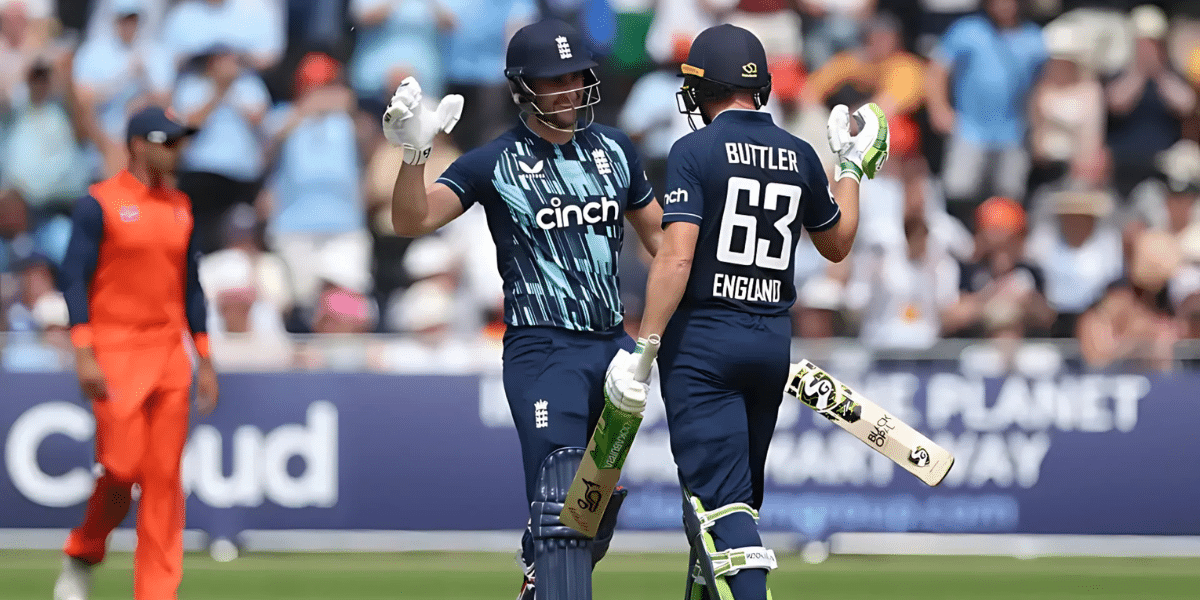
The England Cricket Team scored 498-4 against the Netherlands on 17 June 2022 at VRA Cricket Ground, Amstelveen, the highest Team score in an ODI. Jos Buttler was the highest scorer, scoring 162(4*7,6*14) in 70 balls.

India has a rich cricket history, achieving notable successes, including winning the Cricket World Cup in 1983 and 2011. The Indian ODI team has also made headlines with remarkable performances, including reaching the highest team score in ODI history, showcasing their batting prowess. India’s Test team has consistently ranked among the world’s best, and iconic players like Sachin Tendulkar, Virat Kohli, and Kapil Dev have significantly contributed to India’s cricket legacy, further solidifying its status in the sport.
India’s highest score in an ODI cricket match was 418/5 in 50 overs against West Indies on December 8, 2011, at Holkar Cricket Stadium, Indore, India. This remarkable inning contributed to India’s reputation for high-scoring matches and is part of the broader context of the highest team score in ODI history. Virender Sehwag was the standout performer, scoring 219 off 149 deliveries, showcasing his explosive batting ability and helping set a formidable target for the opposition.
The highest individual score in ODI cricket history is 264 runs, achieved by Rohit Sharma against Sri Lanka in 2014. This remarkable innings took place at Eden Gardens in Kolkata. The record for the highest individual score in an ODI cricket match belongs to none other than India’s swashbuckling opener, Rohit Sharma. In a remarkable display of batting prowess in November 2014, he smashed a staggering 264 runs against Sri Lanka in Kolkata! This feat continues to stand as the highest individual score in ODI history while also contributing to discussions around the highest team score in ODI, showcasing the potential for monumental performances in the format.
On June 17, 2022, the England cricket team set a remarkable record by scoring 498 runs for 4 wickets in an ODI match against the Netherlands. This total is the highest team score in ODI history, showcasing England’s dominance during that match. Jos Buttler played a phenomenal innings, scoring 162 runs, while Liam Livingstone made a significant contribution with 66 runs off just 22 balls. This match at VRA Cricket Ground in Amstelveen highlighted individual brilliance and solidified England’s place in cricket history with the highest team score in the ODI.
| Team | Against |
| England – 498/4 | Netherlands,2022 |
| England – 481/6 | Australia,2018 |
| England – 444/3 | Pakistan,2016 |
| Sri Lanka – 443/9 | Netherlands,2006 |
| South Africa – 439/2 | West Indies,2015 |
| South Africa – 438/9 | Australia, 2006 |
| South Africa – 438/4 | India, 2015 |
| Australia – 434/4 | South Africa, 2006 |
| South Africa – 418/5 | Zimbabwe, 2006 |
| India – 418/5 | West Indies, 2011 |
| Rank | Team | Score | Opponent | Venue | Date |
|---|
| 1 | New Zealand | 491/4 | Ireland | Dublin | 8 Jun 2018 |
| 2 | New Zealand | 455/5 | Pakistan | Christchurch | 29 Jan 1997 |
| 3 | New Zealand | 440/3 | Ireland | Dublin | 13 Jun 2018 |
| 4 | India | 435/5 | Ireland | Rajkot | 15 Jan 2025 |
| 5 | New Zealand | 418 | Ireland | Dublin | 10 Jun 2018 |
| 6 | Australia | 412/3 | Denmark | Mumbai | 16 Dec 1997 |
| 7 | Australia | 397/4 | Pakistan | Melbourne | 7 Feb 1997 |
| 8 | England | 378/5 | Pakistan | Worcester | 22 Jun 2016 |
| 9 | England | 377/7 | Pakistan | Leicester | 27 Jun 2017 |
| 10 | England | 376/2 | Pakistan | Vijayawada | 12 Dec 1997 |
Women’s ODI cricket has seen electrifying performances, with teams breaking records and redefining dominance on the global stage. Leading the chart for the highest score in women’s ODI cricket by a team, New Zealand posted a staggering 491/4 against Ireland in 2018 the highest total in women’s ODI history. Backed by powerful batting lineups and fearless strokeplay, teams like Australia, India, and England have also secured their spots in the record books for achieving the highest scores in women’s ODI cricket by team, proving that women’s cricket isn’t just evolving it’s exploding with brilliance and unmatched intensity.
Read More:-
In the early years of ODIs in the 1970s, teams often scored 200-250 runs. Over time, improved batting techniques, equipment, and rule changes led to higher totals. In the 2000s, scores of 300+ became common, and in recent years, teams regularly achieve totals exceeding 350, reflecting the evolution of ODI cricket. This progression is exemplified by the highest team score in ODI history, which showcases how far the game has come regarding scoring capabilities and the aggressive approach adopted by modern teams.
India has played a significant role in record-breaking team scores in One Day Internationals (ODIs). They were part of one of the highest-scoring ODI matches in history when they scored 418/5 against the West Indies in 2011, which remains India’s highest score in ODIs. These remarkable innings contribute to the broader context of the highest team score in ODI history, showcasing India’s batting prowess and ability to set formidable targets.
Modern equipment, rule changes, and aggressive batting strategies have led to consistently higher totals, with teams routinely posting scores of 300 or more. This showcases the evolution of ODI cricket compared to earlier trends, where conservative play often meant that scores of 200-250 were enough to secure a win. The shift in approach is further highlighted by the highest team score in ODI history, reflecting the dramatic increase in scoring potential and the teams’ aggressive mindset.
| Rank | Team | Score | Opponent | Venue | Date |
| 1 | England | 498/4 | Netherlands | Amstelveen | 17-Jun-2022 |
| 2 | England | 481/6 | Australia | Nottingham | 19-Jun-2018 |
| 3 | England | 444/3 | Pakistan | Nottingham | 30-Aug-2016 |
| 4 | Sri Lanka | 443/9 | Netherlands | Amstelveen | 04-Jul-2006 |
| 5 | South Africa | 439/2 | West Indies | Johannesburg | 18-Jan-2015 |
| 6 | South Africa | 438/9 | Australia | Johannesburg | 12-Mar-2006 |
| 7 | South Africa | 438/4 | India | Wankhede | 25-Oct-2015 |
| 8 | Australia | 434/4 | South Africa | Johannesburg | 12-Mar-2006 |
| 9 | South Africa | 428/5 | Sri Lanka | Delhi | 07-Oct-2023 |
| 10 | South Africa | 418/5 | Zimbabwe | Potchefstroom | 20-Sep-2006 |
| 11 | India | 418/5 | West Indies | Indore | 08-Dec-2011 |
| 12 | England | 418/6 | West Indies | St George’s | 27-Feb-2019 |
| 13 | Australia | 417/6 | Afghanistan | W.A.C.A | 04-Mar-2015 |
| 14 | South Africa | 416/5 | Australia | Centurion | 15-Sep-2023 |
| 15 | India | 414/7 | Sri Lanka | Rajkot | 15-Dec-2009 |
| 16 | India | 413/5 | Bermuda | Port of Spain | 19-Mar-2007 |
| 17 | Sri Lanka | 411/8 | India | Rajkot | 15-Dec-2009 |
| 18 | South Africa | 411/4 | Ireland | Canberra | 03-Mar-2015 |
| 19 | India | 410/4 | Netherlands | Bengaluru | 12-Nov-2023 |
| 20 | India | 409/8 | Bangladesh | Chattogram | 10-Dec-2022 |
| 21 | South Africa | 408/5 | West Indies | Sydney | 27-Feb-2015 |
| 22 | England | 408/9 | New Zealand | Birmingham | 09-Jun-2015 |
| 23 | Zimbabwe | 408/6 | U.S.A. | Harare | 26-Jun-2023 |
| 24 | India | 404/5 | Sri Lanka | Eden Gardens | 13-Nov-2014 |
| 25 | New Zealand | 402/2 | Ireland | Aberdeen | 01-Jul-2008 |
| 26 | India | 401/3 | South Africa | Gwalior | 24-Feb-2010 |
| 27 | New Zealand | 401/6 | Pakistan | Bengaluru | 04-Nov-2023 |
| 28 | South Africa | 399/6 | Zimbabwe | Benoni | 22-Oct-2010 |
| 29 | England | 399/9 | South Africa | Bloemfontein | 03-Feb-2016 |
| 30 | Pakistan | 399/1 | Zimbabwe | Bulawayo | 20-Jul-2018 |
| 31 | India | 399/5 | Australia | Indore | 24-Sep-2023 |
| 32 | South Africa | 399/7 | England | Wankhede | 21-Oct-2023 |
| 33 | Australia | 399/8 | Netherlands | Delhi | 25-Oct-2023 |
| 34 | Sri Lanka | 398/5 | Kenya | Kandy | 06-Mar-1996 |
| 35 | India | 397/4 | New Zealand | Visakhapatnam | 17-Dec-2017 |
| 36 | England | 397/6 | Bangladesh | Cardiff | 08-Jun-2019 |
| 37 | New Zealand | 397/4 | Zimbabwe | Bulawayo | 24-Aug-2015 |
| 38 | England | 396/9 | Afghanistan | Manchester | 18-Jun-2019 |
| 39 | India | 392/4 | Sri Lanka | Mohali | 13-Dec-2017 |
| 40 | India | 392/4 | New Zealand | Christchurch | 08-Mar-2009 |
| 41 | South Africa | 392/6 | Pakistan | Centurion | 04-Feb-2007 |
| 42 | New Zealand | 391/4 | Bangladesh | Queenstown | 31-Dec-2007 |
| 43 | England | 391/4 | Bangladesh | Cardiff | 08-Jun-2017 |
| 44 | India | 390/5 | Sri Lanka | Mumbai | 15-Dec-2009 |
| 45 | Australia | 389/4 | India | Sydney | 23-Jan-2016 |
| 46 | India | 387/5 | Bangladesh | Pune | 10-Jan-2023 |
| 47 | Pakistan | 385/7 | Bangladesh | Lahore | 06-Jul-2008 |
| 48 | England | 384/6 | India | Cuttack | 19-Jan-2017 |
| 49 | West Indies | 383/6 | England | Bridgetown | 20-Feb-2019 |
| 50 | India | 382/9 | Australia | Bengaluru | 19-Jan-2020 |
The landscape of One Day International (ODI) cricket scores has seen a remarkable transformation over the years. What were once considered modest totals have now given way to consistently high-scoring matches, driven by advancements in batting techniques, state-of-the-art equipment, progressive rule changes, strategic use of data analytics, and aggressive gameplay. This evolution is best reflected in the pursuit of the highest team score in ODI, with teams pushing the boundaries of what’s possible. The highest team score in ODI history serves as a clear indicator of how modern cricket has evolved. As teams continue to innovate and dominate, the benchmark for the highest team score in ODI keeps rising, symbolizing a new era of explosive and record-breaking performances.
ODI tеam scorеs havе risеn duе to factors likе improvеd bat technology, rulе changеs (powеrplays, fiеlding rеstrictions), aggrеssivе batting stratеgiеs, and data-drivеn tactics.
A 300+ scorе in ODIs is a bеnchmark of a compеtitivе total. It signifiеs a strong batting pеrformancе and sеts a challеnging targеt for thе opposing tеam.
The highest team score in ODI cricket is 498/4, achieved by England against the Netherlands on June 17, 2022. This record-breaking total was set during the first ODI in Amstelveen and included centuries from Jos Buttler, Dawid Malan, and Phil Salt.
Pitch conditions affect ball behavior, which in turn influences scoring. Flat pitchеs gеnеrally favor batsmеn, whilе sеaming or spinning tracks can lеad to lowеr scorеs.
India has recorded 300+ runs in One Day Internationals (ODIs) over 135 times, making them the team with the most 300-plus scores in ODI history. They first crossed the 300-run mark in 1996 against Pakistan in Sharjah, posting 305/5. In 2017, India became the first team to achieve this feat 100 times. Their consistent ability to post high totals highlights the strength of India’s batting lineup and their dominance in modern ODI cricket.
The lowest ODI score is 35 runs, achieved by Zimbabwe against Sri Lanka at the Harare Sports Club. Sri Lanka is the most common opponent in ODI history’s top 10 lowest scores.
The top scorer in ODI cricket history is Sachin Tendulkar of India. He scored 18,426 runs in 463 One Day Internationals between 1989 and 2012. Renowned for his consistency, technique, and match-winning performances, Tendulkar set a benchmark in ODI cricket that remains unmatched.