
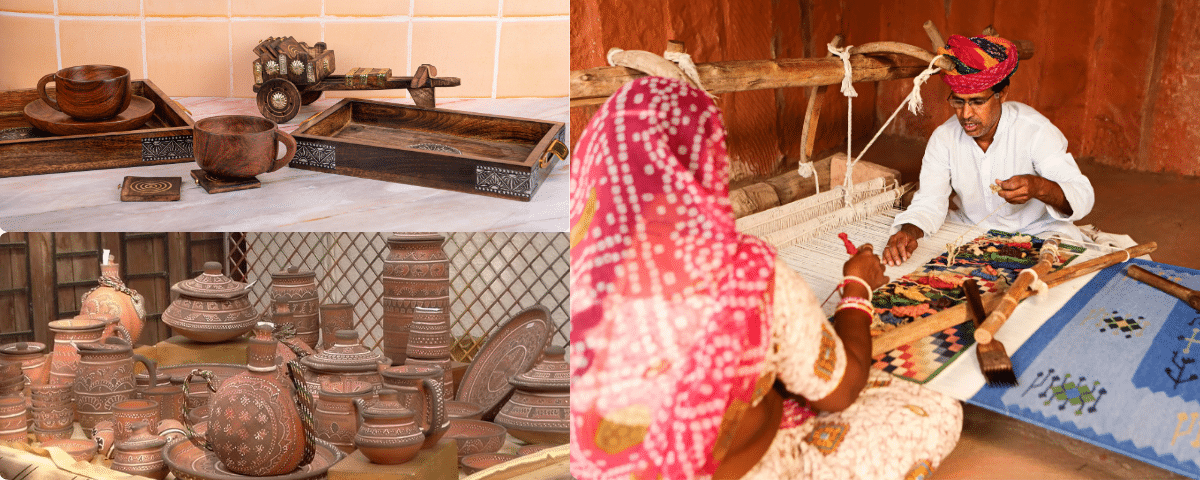
Indian handicrafts are an enduring symbol of the country’s cultural richness and artisanal legacy. These handmade products, crafted by skilled artisans across generations, embody India’s traditional values, regional diversity, and creative expression. More than just decorative or utilitarian items, Indian handicrafts carry deep-rooted stories of communities, rituals, and lifestyles.
Created to meet daily needs such as clothing, utensils, and tools, these crafts have evolved into globally admired art forms. The transformation from simple utility objects to intricate, decorative pieces has elevated their status in domestic and international markets. Indian handicrafts today are celebrated for their uniqueness, eco-friendliness, and cultural authenticity.
Whether it’s the delicate embroidery of Lucknow or the vibrant terracotta of West Bengal, each piece reflects the ethos of its origin. As we journey through this article, we will delve into the historical evolution, regional variety, and cultural importance of the handicrafts of India, along with the challenges and revival efforts shaping their future.

Indian handicrafts boast a legacy that spans thousands of years, deeply woven into the nation’s cultural and historical fabric. The roots of Indian handicrafts trace back to the Indus Valley Civilization (circa 2500 BCE), where archaeologists have uncovered pottery, seals, beads, and tools that reflect an early mastery of craftsmanship. These ancient artifacts reveal utility and aesthetic sensibilities, laying the foundation for India’s vast and varied handicraft tradition.
During the Maurya and Gupta empires, handicrafts flourished under royal patronage. Artists produced intricate stone sculptures, textiles, and metal works adorned temples and palaces. This period also saw the rise of organized guilds that regulated quality and passed down traditional techniques through apprenticeships.
The Mughal era marked a golden age for Indian handicrafts. Persian influences merged with indigenous styles to create luxurious carpets, miniature paintings, elaborate embroidery (like Zardozi), and detailed inlay work. Cities like Agra, Jaipur, and Lucknow became hubs of artisan activity, many of which remain prominent today.
With the arrival of colonial powers, particularly the British, the Indian handicraft industry suffered a significant setback. Mass-produced goods from Europe replaced local handmade items, leading to the decline of many traditional crafts and the disempowerment of artisan communities.
However, the post-independence period saw renewed efforts to revive Indian handicrafts. Leaders like Mahatma Gandhi emphasized self-reliance and rural craftsmanship through movements like Khadi. Government initiatives and NGOs began supporting artisans, promoting their work nationally and internationally.
Today, Indian handicrafts continue to evolve, blending heritage with innovation. Their survival and popularity, despite industrialization and globalization, testify to their timeless appeal and the enduring skill of Indian artisans.
India’s vast cultural landscape is a mosaic of traditions, languages, and lifestyles, and this diversity is beautifully mirrored in its handicrafts. Every region of India has developed distinct art forms, shaped by its geography, local resources, spiritual beliefs, and historical influences. The result is an incredible array of handmade products that serve aesthetic and functional purposes and preserve the heritage of their origin communities. Here’s a look at the regional richness of Indian handicrafts:
The northern belt of India showcases elegance, intricacy, and regal flair in its crafts.


Southern India is rich in temple traditions, reflected in its artisanal works.


The eastern states exhibit colorful traditions, often linked to folklore and festivals.
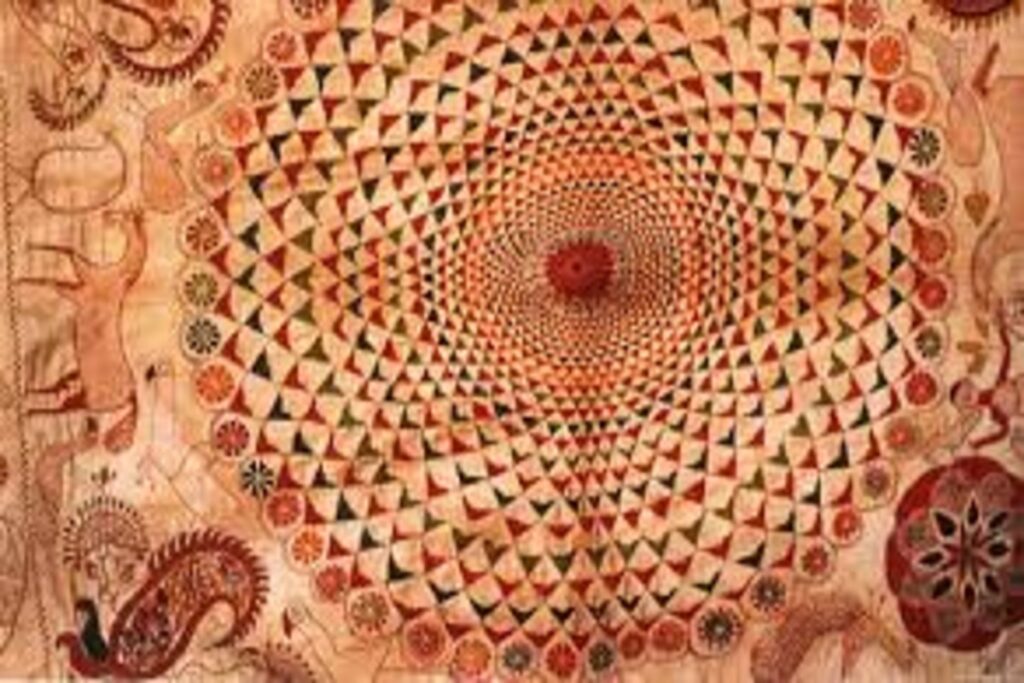

From deserts to coastlines, West India offers a diverse canvas of artistry.


Read More: Warli Tribal Art
Tribal traditions and eco-conscious crafts dominate this region’s contribution to the Indian handicrafts list.


From north to south and east to west, the handicrafts of India reflect the incredible variety and cultural ethos of the regions they come from. These handmade products are more than art, they are living traditions that continue to evolve and thrive in the hands of skilled artisans.
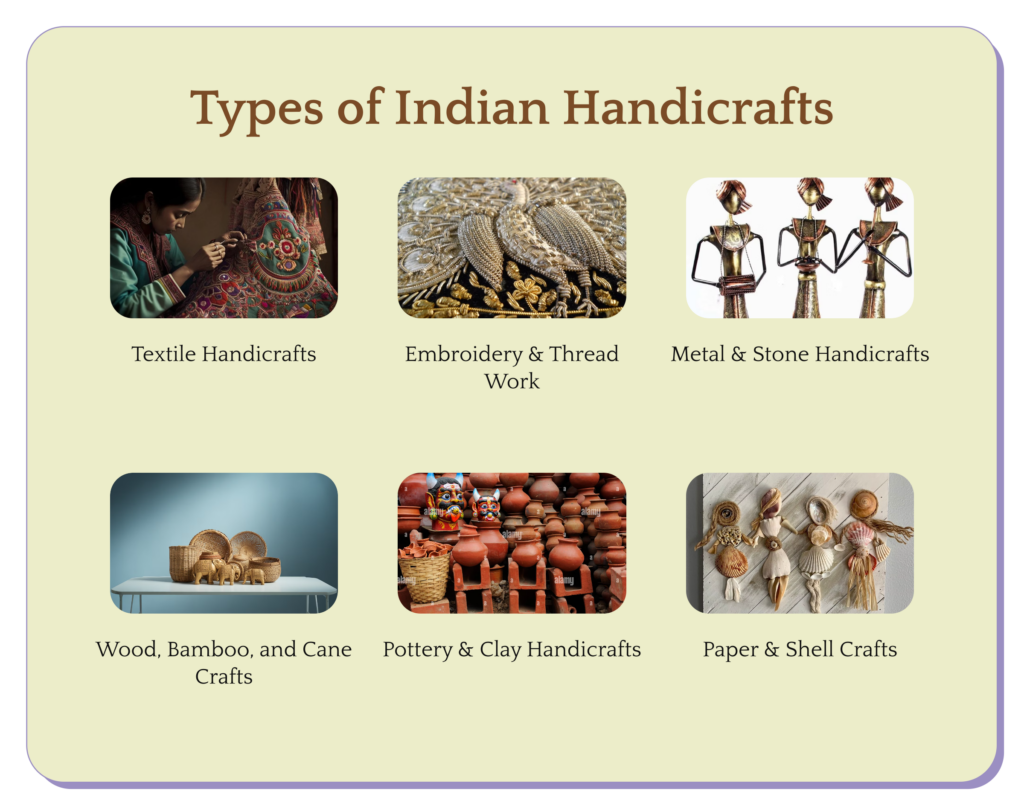
India’s artistic brilliance is best understood by exploring its diverse Indian handicrafts list, categorized by materials and techniques. These handmade products are a testament to the resourcefulness and creativity of Indian artisans, who transform natural and local resources into cultural treasures. Here’s a comprehensive look at the key categories of Indian handicrafts.
India has long been a global hub for handcrafted textiles. From dyeing to weaving and printing, every region contributes distinct textile traditions:
These crafts are significant in India’s fashion industry and textile exports.
Intricate needlework has deep ceremonial and aesthetic significance in Indian culture:
India’s rich mineral resources have led to exquisite metal and stone artistry:
Organic materials are transformed into beautiful and practical objects:
India’s pottery reflects both utility and aesthetics:
Creative expression thrives through unconventional materials:
These diverse categories comprise the vibrant tapestry of Indian handicrafts, keeping age-old traditions alive while adapting to modern tastes.
Indian handicrafts are vital to the nation’s cultural and economic ecosystem. They are essential to festivals, rituals, and ceremonies, from wedding garments to religious idols.
Economically, the handicraft sector is a significant source of employment in rural India, especially for women and tribal artisans. With minimal capital investment, handicraft production fosters local entrepreneurship and self-reliance. In 2023, the Indian handicraft industry exported over $4 billion, indicating strong international demand for handmade products.
Moreover, handicrafts act as cultural ambassadors, promoting India’s soft power globally. Artisans connect with audiences who appreciate authenticity and heritage through fairs, exhibitions, and online platforms.
Despite their cultural and economic importance, the handicrafts of India face multiple challenges:
Addressing these challenges is crucial for safeguarding the future of Indian handicrafts and supporting artisan livelihoods.
The government and NGOs have launched various impactful programs to preserve and promote India’s rich handicraft legacy. These initiatives focus on providing artisans with training, market access, and financial support, while protecting traditional crafts through measures like Geographical Indication tagging to ensure the sustainability and growth of this vibrant sector.
Together, these efforts safeguard Indian handicrafts and ensure artisans thrive in a competitive market.
To preserve and promote the rich legacy of the handicrafts of India, both the government and NGOs have launched impactful initiatives that support artisans and their crafts.
Hunar Haat, led by the Ministry of Minority Affairs, offers artisans a national platform to display and sell their handmade products, enhancing visibility and income. The Ambedkar Hastshilp Vikas Yojana focuses on skill development, tool distribution, and market linkages to empower handicraft workers.
Geographical Indication (GI) tagging helps protect unique regional crafts like Madhubani paintings and Kanchipuram silk from duplication, ensuring authenticity and value. Craft clusters and training centers enable artisans to modernize their designs and production techniques.
State emporia and cooperatives, such as the Central Cottage Industries Emporium, offer branding and retail support. NGOs like Dastkar and AIACA further aid by reviving dying arts and promoting ethical consumer practices. Together, these efforts strengthen the future of Indian handicrafts and uplift artisan communities.
Read More: Ancient Indian Art Forms
Indian handicrafts are more than decorative artifacts; they are the soul of India’s diverse cultural landscape. From the intricate weaves of Varanasi to the tribal artistry of Bastar, each handicraft carries generations of skill, tradition, and storytelling. These handmade products represent the collective identity and creativity of communities nationwide.
Preserving these traditions is not just a cultural necessity but a socio-economic one. It requires a joint effort from artisans, government bodies, NGOs, and consumers. By choosing authentic Indian handicrafts, we contribute to sustaining age-old techniques, supporting rural livelihoods, and encouraging eco-friendly production.
In an era of globalization and mechanization, handmade products symbolize authenticity and resilience. As we embrace modernity, we must keep these timeless crafts alive, celebrating, investing, and sharing them with the world. The future of handicrafts of India depends on our commitment to value and preserve them.
10 Timeless Indian Handicrafts That Add Charm to Your Home–
Madhubani Paintings
Jaipur Pottery
Dhokra Artifacts
Pashmina Shawls
Warli Paintings
Channapatna Toys
Banarasi Silk Sarees
Kutch Embroidery
Kalamkari Art
Meenakari Work
Using images and group discussions, students will explore handicrafts such as pottery, sculpture, embroidery, calligraphy, and mosaics, helping them understand their cultural significance and artistic techniques in an engaging and interactive learning environment.
Indian handicrafts originated in the Indus Valley Civilization over 5,000 years ago. They evolved through the Vedic Age, Mauryan, Gupta, and Mughal periods, showcasing advancements in pottery, textiles, metalwork, painting, and wood carving across centuries.
Dhokra is among India’s oldest handicrafts. It involves a traditional metal casting technique that dates back over 5,000 years. This ancient art form is still practiced, preserving a rich legacy of tribal craftsmanship and design.
India is globally recognized for its rich and diverse handicraft traditions. With a strong heritage in textiles, jewelry, pottery, woodwork, and leather, the country stands among the top exporters of traditional crafts, showcasing exceptional cultural and artistic craftsmanship.