
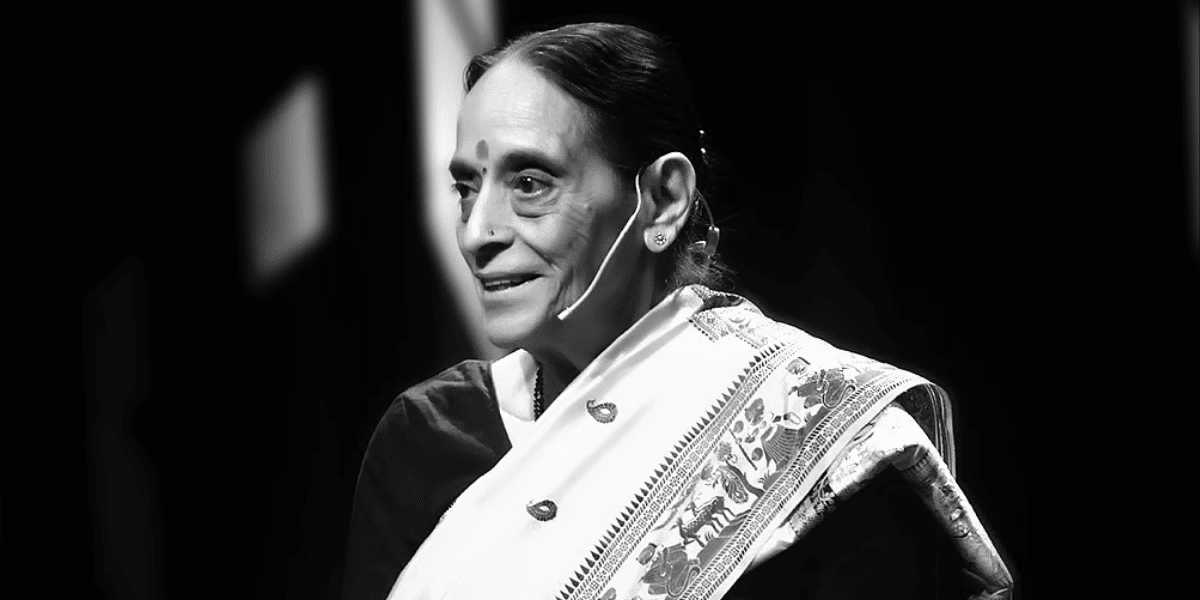
Courts reached a big moment when they appointed Leila Seth as their first woman Chief Justice of India. This historic event shows how the country is moving forward with gender equality and letting more women take top jobs. The first woman in this important role has made a big impact in law, showing how women can lead just as well as men. Her appointment is not only because of her skills and hard work, but it also inspires many young women in India to consider careers in law and the courts.
Leila Seth, overcoming all the challenges, made history in 1989 by becoming the first woman Chief Justice of India. Numerous women were inspired by the historic appointment of the first female chief justice of India. She never wavered in her pursuit of justice or commitment to the legal profession while in government. She makes a lasting impression by inspiring other women to fulfill their most significant potential and become justices of the Supreme Court.
Born on October 20, 1930, in Lucknow, India, Leila Seth broke multiple barriers in the legal field. She became Delhi High Court’s first female judge and later India’s first female Chief Justice. Despite societal discouragement, she pursued law, passing the London Bar Exam and earning her law degree. Through hard work and determination, she paved the way for women in India’s legal system.
Leila Seth’s journey is an inspiration for women in law, proving that with determination and intelligence, anything is possible.
Leila Seth balanced her personal and professional life with grace and determination. After marrying Premo Seth in 1951, she raised three children while continuing her legal career. She started as a lawyer in the Patna High Court and later moved to Delhi, where she made history as the first female judge of the Delhi High Court in 1978. In 1991, she became the first female Chief Justice of the Himachal Pradesh High Court. She was a strong advocate for gender equality, social justice, and children’s rights, leaving behind a legacy that continues to inspire.
Leila Seth’s life is a testament to determination, resilience, and breaking stereotypes in the legal world.
Leila Seth was a pioneering figure in Indian law, known for breaking barriers and paving the way for future generations of women in the legal profession. As the first woman to become a judge of the Delhi High Court and the first woman Chief Justice of a state High Court in India, her achievements were truly historic. Her resilience, sharp intellect, and unwavering commitment to justice inspired countless individuals, especially women, to pursue careers in law and stand strong in the face of adversity.

Leila Seth was a trailblazer in the Indian legal system. Despite facing gender bias in a male-dominated field, she built a remarkable career through hard work, legal expertise, and dedication to justice. She became the first woman judge of the Delhi High Court in 1978 and the first female member of the Law Commission in 1974. Her life was dedicated to human rights, gender equality, and legal reform, making her an inspiration for future generations.
Key Achievements & Milestones:
Leila Seth’s legacy continues to inspire women to break barriers and pursue leadership roles in law.
After working as a High Court judge for thirteen years, Leila Seth made history again by becoming the first woman Chief Justice in 1991. Her promotion to this important job was another big step towards gender equality.
Justice Leila Seth, a trailblazing figure in Indian law, passed away peacefully at her residence in Noida on the night of May 5th, 2017. She was 86 years old.
Justice Seth is survived by her husband, Prem Seth, and their children. Following her wishes, a funeral service was not held. Following her deeply held beliefs in the power of medical advancement, Justice Seth generously donated her eyes and other organs for transplantation or research purposes.
Justice Leila Seth’s life and career were testaments to selflessness and unwavering dedication to social justice. She left behind a remarkable legacy, having reshaped not only legislation but also societal attitudes in India.
Through her pioneering work, Justice Seth helped pave the way for a safer and more equitable India. Her efforts targeted both legal frameworks and public consciousness, promoting a vision of justice that embraced inclusivity and fairness.
Justice M. Fathima Beevi, born on April 30, 1927, in Pathanamthitta, Kerala, made history as India’s first female Supreme Court judge in 1989. Starting her career in Kerala’s judicial system, she overcame gender bias and climbed the ranks through hard work and dedication. Her journey paved the way for women in the legal profession, inspiring future generations to break barriers and achieve success.
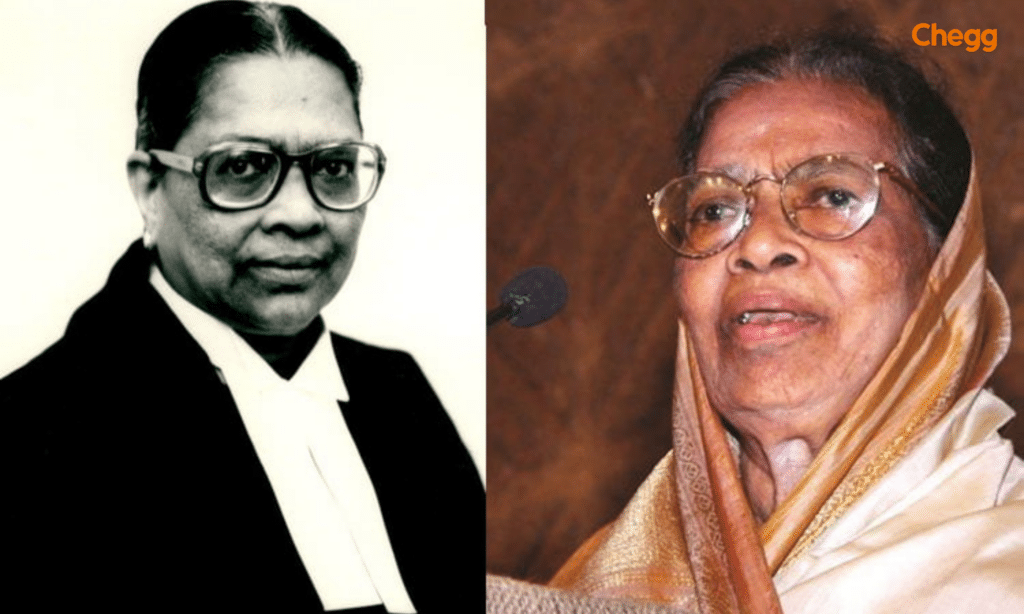
Key Milestones & Achievements:
Justice Beevi’s journey is a testament to perseverance, breaking gender stereotypes, and empowering women in the legal field. She remains an inspiration for future generations striving for justice and equality.
The Chief Justice of India (CJI) is the most senior judge in the nation and serves as the head of the Supreme Court. The Supreme Court assigns cases and chooses justices, among other administrative duties. Dhananjaya Y. Chandrachud has held the office of Chief Justice of India since November 9, 2022. The President of India selects the CJI, and the CJI serves until retirement at 65 years of age. The Indian Parliament determines the Chief Justice of India’s pay and working conditions.

The 1980s marked a watershed decade for social transformation in Indian society. During this period, the women’s rights and equality movement experienced a significant rise. Thus, in terms of transformation, the 1980s were a turning-point decade. However, many men practiced law compared to women, and prospective female lawyers faced challenging odds.
This generation of women faced numerous substantial barriers to higher education, particularly in fields like law, where men have historically dominated the workforce. Many women still encounter obstacles in pursuing their ambitions. This is largely attributed to the persistence of harmful gender stereotypes and biases in today’s society.
Since the establishment of the Supreme Court of India, the presence of women in the judiciary has gradually increased. Although true gender parity remains a work in progress, the appointment of female judges to high-ranking positions particularly as Chief Justices has played a significant role in shaping India’s legal landscape. Their contributions have brought fresh perspectives and positively influenced the country’s evolving judicial and regulatory framework.
A List of female Chief Justices of India’s Supreme Court includes the following:
| No | Name | Date of Appointment | Date of Retirement | Position before being appointed as a Judge of the Supreme Court | Notes |
| 1 | Fathima Beevi | 6 October 1989 | 29 April 1992 | Judge of the Kerala High Court | First female judge of the Supreme Court of India |
| 2 | Sujata Manohar | 8 November 1994 | 27 August 1999 | Chief Justice, Bombay High Court | Known for her progressive judgments on human rights and women’s rights. |
| 3 | Justice Ruma Pal | January 2000 | June 2006 | Judge, Calcutta High Court | Renowned for her integrity and involvement in landmark judgments. |
| 4 | Justice Gyan Sudha Misra | April 2010 | April 2014 | Judge, Jharkhand High Court | Known for her clear and concise judgments, especially in women’s rights and social justice. |
| 5 | Justice Ranjana Prakash Desai | September 2011 | October 2014 | Judge, Bombay High Court | Served with distinction and was part of several significant judgments. |
| 6 | Justice R. Banumathi | August 2014 | July 2020 | Chief Justice, Jharkhand High Court | Had a long and illustrious career in the judiciary, known for her fairness. |
| 7 | Justice Indu Malhotra | April 2018 | March 2021 | Senior Advocate, Supreme Court of India | First woman lawyer to be directly elevated to the Supreme Court from the Bar. |
| 8 | Justice Indira Banerjee | August 2018 | Present | Chief Justice, Madras High Court | Known for her legal understanding and commitment to justice. |
| 9 | Justice Hima Kohli | January 2021 | Present | Chief Justice, Telangana High Court | Known for her strong stance on women’s rights and social justice. |
| 10 | Justice B.V. Nagarathna | August 2021 | Present | Judge, Karnataka High Court | Projected to become the first woman Chief Justice of India in 2027. |
Justice Leila Seth was a true trailblazer in India’s legal system. As the first woman Chief Justice of a High Court, she broke gender barriers and opened doors for women in law. Her dedication to justice, legal reform, and gender equality left a powerful legacy. She also played a key role in shaping laws that protect women’s rights in India. Justice Seth’s inspiring journey encourages students and future legal professionals to aim high and believe in change, making her a symbol of progress in the Indian judiciary.
Read More:-
Leila Seth, a retired Justice, made history as the first female Chief Justice of a state high court in India. She was also celebrated as the mother of acclaimed writer Vikram Seth. Her passing marks the end of an era.
Leila Seth took on the role of a High Court Judge in 1978 upon her appointment to the Delhi High Court.
She was the first Indian woman to top the London Bar exam (1958), the first woman judge of the Delhi High Court (1978), and the first woman Chief Justice of a High Court in India.
On January 28, 1950, during the Supreme Court’s first session, Hon. Justice Harilal J. Kania, the country’s first Chief Justice, was pictured with the Chief Justices of all High Courts and other Supreme Court judges on a dais.
Chief Justice of the Calcutta High Court Arun Mishra opened the country’s first court dedicated to dealing with crimes against women.
The Patna High Court’s first female chief justice was Ms. Rekha Doshit.
The Chief Justice of the Kerala High Court was Indian jurist K. K. Usha, who was born on July 3, 1939, and passed away on October 5, 2020.
India has not yet had a female Supreme Court Chief Justice. The first female judge of the Supreme Court of India was Justice Fathima Beevi in 1989.
The first woman Chief Minister of an Indian state was Sucheta Kriplani, who became the Chief Minister of Uttar Pradesh in 1963.
Justice Seth was instrumental in amending the Hindu Succession Act (granting daughters equal inheritance rights) and served on the Justice Verma Committee (2012) recommending stronger laws against sexual violence after the Nirbhaya case