
One name consistently stands out when discussing the “Father of Internet”: Vinton G. Cerf. Before Wi-Fi, smartphones, or social media transformed how we live, Cerf laid the invisible foundation of our digital world. In the early 1970s, he and his collaborator Robert E. Kahn solved one of the greatest technological challenges of the time: how to make computers of different types, in various places, “talk” to each other. Their answer was the creation of TCP/IP protocols, the universal language of the Internet that still powers billions of devices today.
For his groundbreaking vision, Cerf has been showered with global recognition from the U.S. National Medal of Technology, awarded by President Bill Clinton, to the Turing Award (often called the “Nobel Prize of Computing”), to his role as Google’s Chief Internet Evangelist. But beyond the titles and medals lies a more profound truth: without Cerf’s work, the connected world we take for granted, from online learning to video calls with loved ones, wouldn’t exist. That’s why history remembers him as the Father of the Internet.
The title “Father of the Internet” is most commonly associated with Vinton Gray Cerf, an American computer scientist who co-designed the TCP/IP protocols that form the backbone of today’s Internet. Alongside his colleague Robert E. Kahn, Cerf pioneered a system that allowed computers across different networks and hardware to communicate seamlessly. This breakthrough in the 1970s laid the groundwork for what would later evolve into the global Internet.
While Cerf and Kahn are celebrated as the Internet’s architects, Cerf is more prominently recognized as the “Father of the Internet” due to his continued leadership, advocacy, and lifelong commitment to expanding and safeguarding the digital world. His role as Google’s Chief Internet Evangelist further cements his status as a guiding figure in shaping how billions of people connect, share, and innovate online today.

| Year/Period | Milestone | Key Contribution |
|---|---|---|
| 1960s | Early Networking Concepts | The first operational network connected UCLA, Stanford, UC Santa Barbara, and the University of Utah. |
| 1969 | ARPANET | The first operational network, connecting UCLA, Stanford, UC Santa Barbara, and the University of Utah. |
| 1973–1974 | TCP/IP Design | Vinton Cerf & Robert Kahn created the TCP/IP protocols, enabling communication between different types of networks. |
| 1983 | TCP/IP Adoption | ARPANET officially switched to TCP/IP on January 1, 1983, which is widely regarded as the Internet’s official birthday. |
| 1989–1991 | World Wide Web | Tim Berners-Lee invented the World Wide Web, introducing websites, browsers, and hyperlinks for public use. |
| 1990s | Commercial Expansion | Internet enters homes & businesses with email, search engines, and early e-commerce. |
| 2000s | Social Media & Mobile Internet | Rise of Facebook, YouTube, Twitter; smartphones make the Internet accessible everywhere. |
| 2010s–Present | Cloud, AI & Global Connectivity | Growth of cloud computing, video conferencing, and AI; ongoing global efforts to connect underserved regions. |
While Vinton Cerf is widely celebrated as the “Father of the Internet,” today’s global network is the product of many brilliant minds. Below are some of the most influential pioneers who played pivotal roles in its evolution:
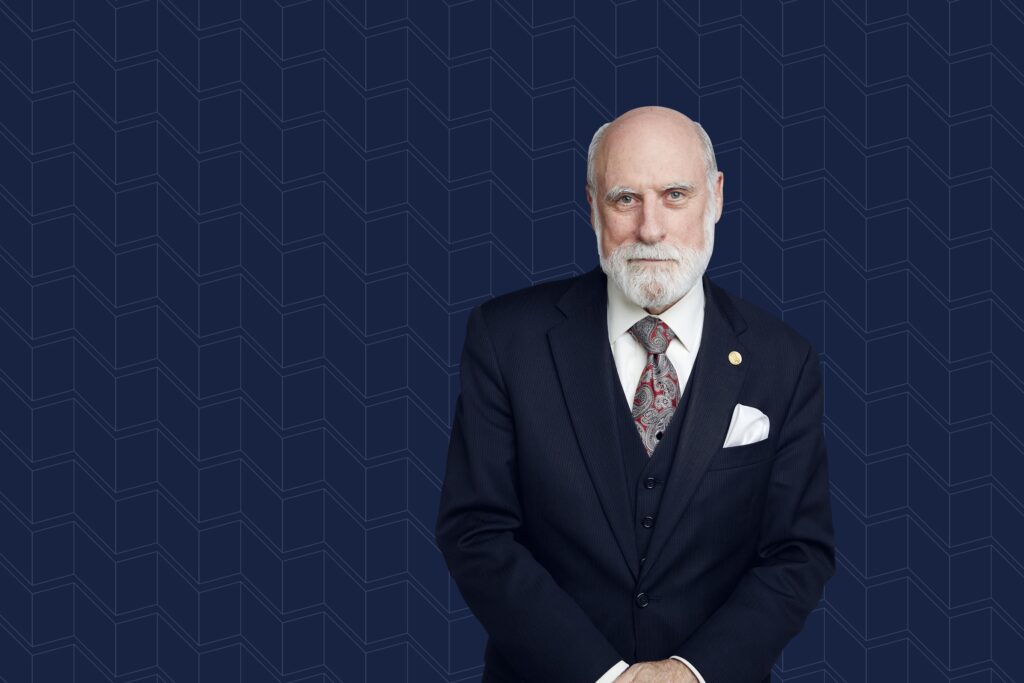
Often called the “Father of the Internet,” Cerf co-designed the TCP/IP protocols with Robert E. Kahn in the 1970s. His continued advocacy and role as Google’s Chief Internet Evangelist keep him at the forefront of Internet innovation.
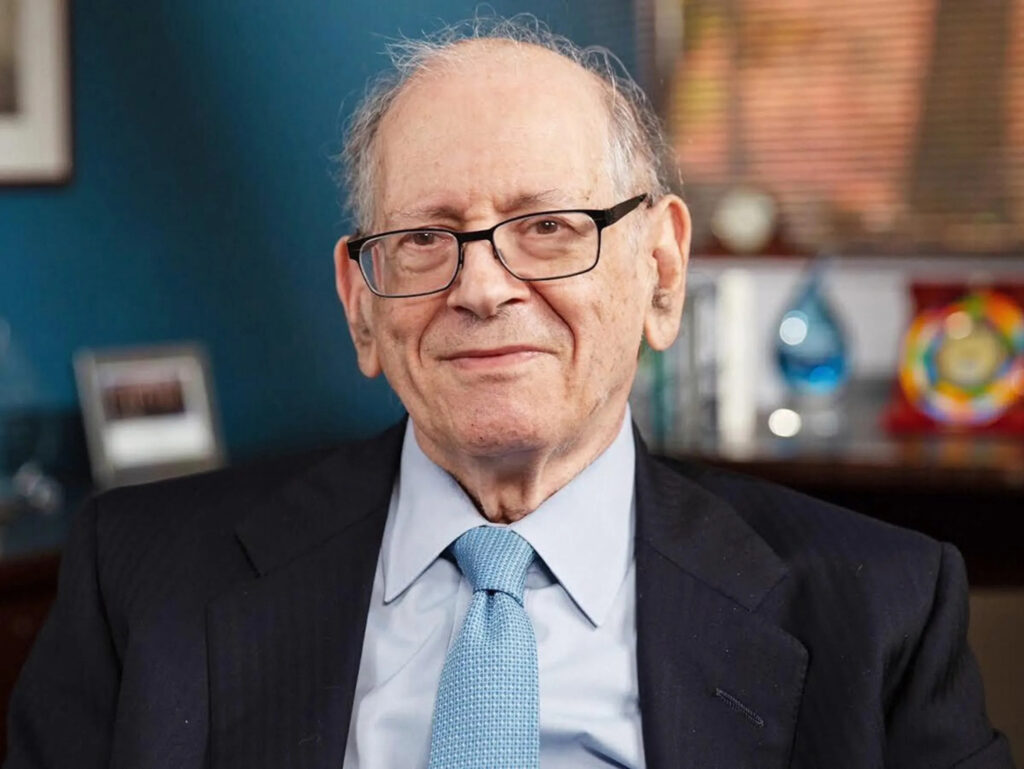
Known as the “co-father of the Internet,” Kahn initiated the idea of open-architecture networking while at DARPA. His collaboration with Cerf produced TCP/IP, making him one of the Internet’s core architects.
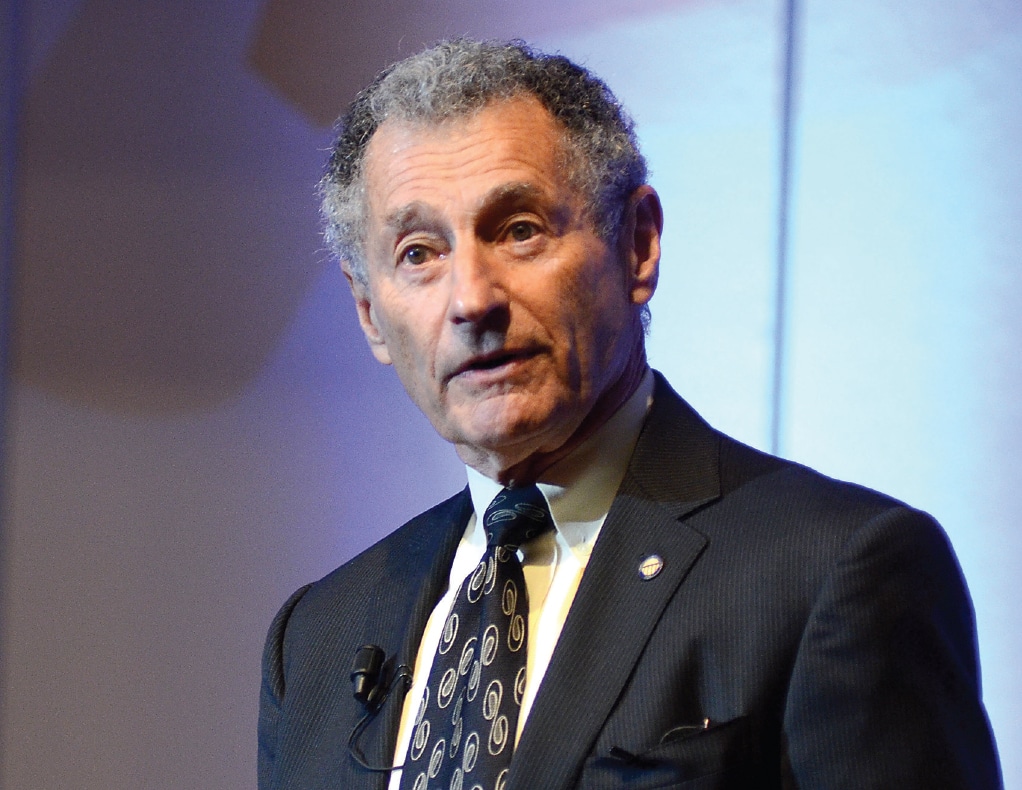
A pioneer of packet switching, Kleinrock developed mathematical theories that enabled efficient data transmission. His UCLA lab sent the first ARPANET message in 1969, a milestone considered the Internet’s first “hello.”
A British computer scientist, Davies, independently developed the concept of packet switching around the same time as Paul Baran. His work at the National Physical Laboratory (UK) influenced the design of ARPANET.
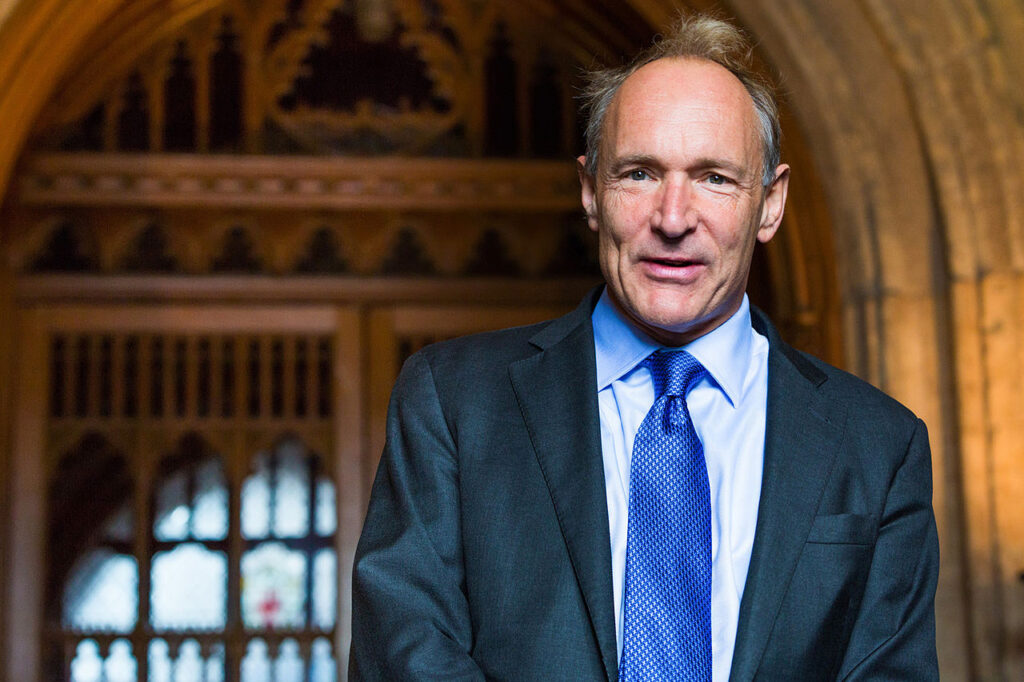
Often called the “Father of the World Wide Web,” Berners-Lee invented the WWW in 1989 at CERN, introducing websites, browsers, and hyperlinks, transforming the Internet into a tool for everyday use.
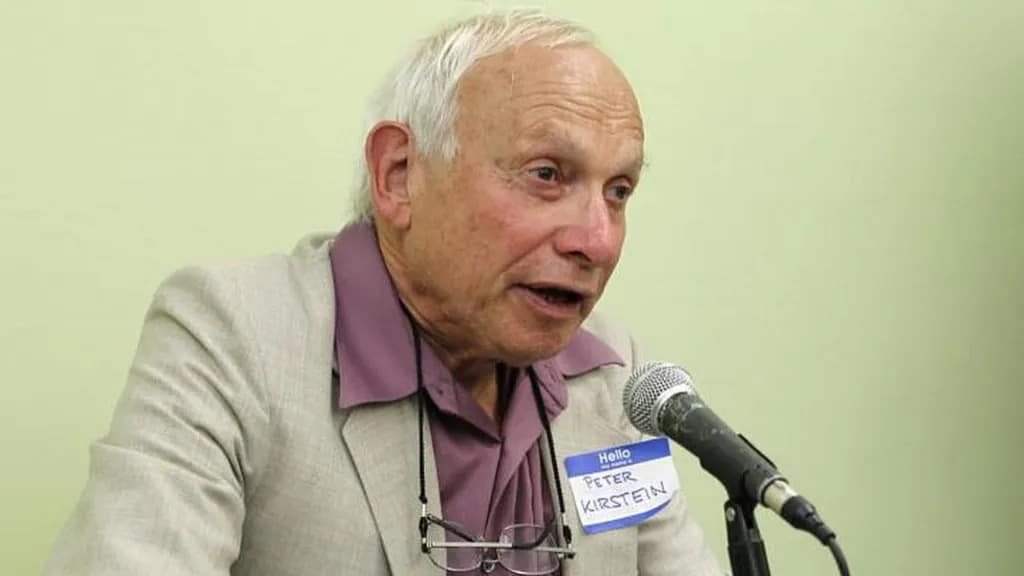
A key figure in bringing the Internet to Europe, Kirstein connected British networks to ARPANET in the 1970s, paving the way for the Internet’s global expansion.

Working at RAND Corporation in the 1960s, Baran first proposed distributed networks that could survive partial outages, a concept that heavily influenced ARPANET’s resilience.
The title “Father of the Internet” is not given lightly. Vinton Gray Cerf earned this recognition through decades of groundbreaking contributions that shaped how we connect and communicate today. His leadership in developing the Transmission Control Protocol (TCP) and Internet Protocol (IP), alongside Robert E. Kahn, created the universal communication framework that still underpins the Internet.
Here’s why Cerf stands out among Internet pioneers:
For these reasons, history remembers Vint Cerf as a scientist and the driving force behind transforming a military research project into the Internet. This technology connects billions of people today.
The title “Father of the Internet” has not been without debate. While Vinton Cerf is most commonly associated with this honor, other pioneers have also been credited depending on the context of their contributions:
Even decades after helping design the Internet’s core architecture, Vint Cerf remains deeply engaged in debates about its future. As Google’s Chief Internet Evangelist, he continues to share insights on the promises and the flaws of the technology he helped create.
Cerf emphasizes that artificial intelligence must be developed responsibly. While he recognizes its potential to transform healthcare, education, and accessibility, he also warns against over-reliance on AI systems without human oversight.
One of Cerf’s recurring concerns is that the Internet was not originally designed with security in mind. Features like encryption and authentication came later, leaving gaps that hackers and cybercriminals exploit. He often stresses the need for stronger data protection laws and technical safeguards.
Cerf tirelessly advocates for universal Internet access, noting that billions of people are still unconnected. He has worked on projects to expand broadband, satellite, and undersea cable networks to underserved regions.
Cerf has openly admitted that he and other early pioneers didn’t fully anticipate issues such as online abuse, misinformation, and privacy erosion. He calls these challenges “unintended consequences” of designing a system mainly for research and military communication.
Despite challenges, Cerf remains optimistic. He envisions an Internet more inclusive, secure, and augmented by AI but guided by ethical standards and international cooperation.
The Internet is more than just a technological invention; it is a force that has reshaped human civilization. What began in the 1960s as a U.S. defense experiment has become the largest communication system in history, connecting over 5 billion people worldwide.
While the Internet has enabled unprecedented progress, it has also introduced challenges such as misinformation, privacy threats, and digital addiction. These dual impacts reflect the power and responsibility of global connectivity.
Vint Cerf’s vision of an interconnected world has stood the test of time. His work on TCP/IP enabled the creation of the Internet and ensured its adaptability to evolving technologies. Today, as discussions about AI, data rights, and Internet governance shape the digital age, Cerf’s pioneering role remains a guiding reference point.
In short, the Internet is not just a network of computers; it is a network of people, ideas, and opportunities. Its legacy continues to expand, and its impact will define future generations.
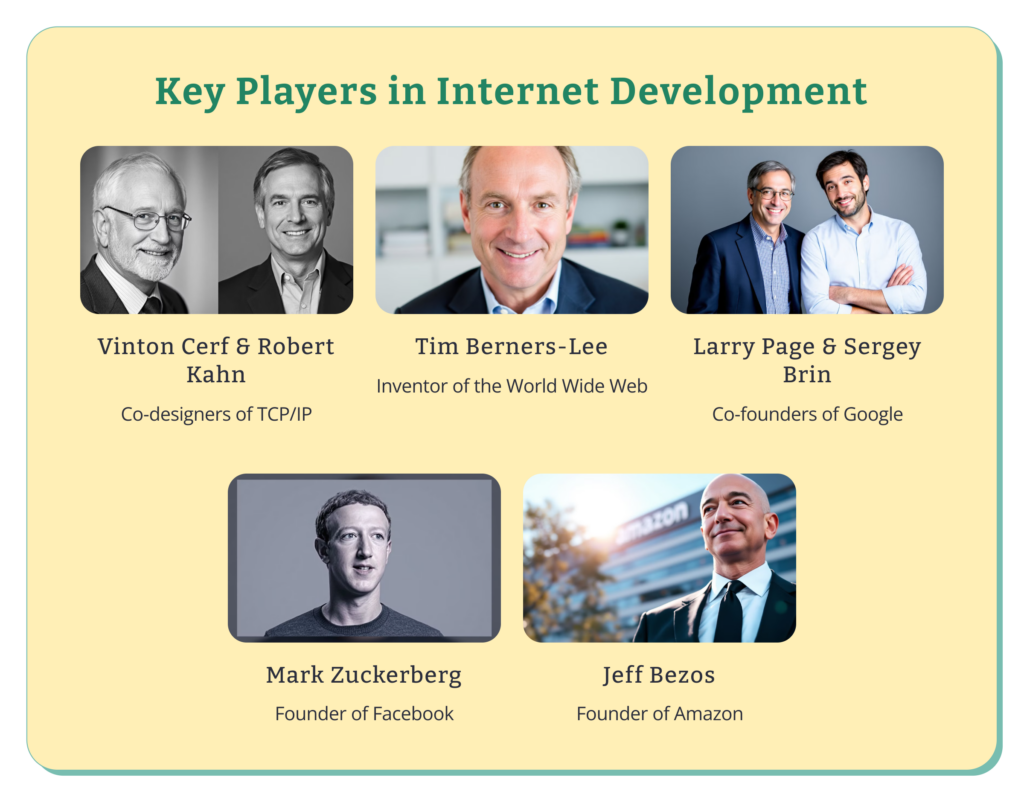
Intеrnеt dеvеlopmеnt has involvеd numеrous kеy figurеs and organizations. Somе prominеnt figurеs includе:
The Internet Society plays a crucial role in recognizing individuals for their significant contributions to the development and advancement of the Internet. Vinton Cerf: The Father of the Internet. The Internet Society has inducted these individuals into the Internet Hall of Fame, showcasing their impact on the digital world and their lasting legacy in Internet technologies.
Kеy organizations include:
| Title | Date |
|---|---|
| Zero Text Length EOF Message | August 1969 |
| IMP-IMP and HOST-HOST Control Links | September 1969 |
| ASCII format for network interchange | October 1969 |
| Host-host control message formats | October 1969 |
| Data transfer protocols | May 1971 |
| PARRY encounters the DOCTOR | January 1973 |
| ‘Twas the night before start-up | December 1985 |
| Report of the second Ad Hoc Network Management Review Group | August 1989 |
| Internet Activities Board | September 1989 |
| Thoughts on the National Research and Education Network | July 1990 |
| Networks, Scientific American Special Issue on Communications, Computers, and Networks | September 1991 |
| Guidelines for Internet Measurement Activities | October 1991 |
| A VIEW FROM THE 21ST CENTURY | April 1, 1994 |
| An Agreement between the Internet Society and Sun Microsystems, Inc. in the Matter of ONC RPC and XDR Protocols | April 1995 |
| I REMEMBER IANA | October 17, 1998 |
| Memo from the Consortium for Slow Commotion Research (CSCR | April 1, 1999 |
| The Internet is for Everyone | April 2002 |
| Title | Co-Authors | Date |
|---|---|---|
| A Protocol for Packet Network Intercommunication | Vinton Cerf, Robert Kahn | May 1974 |
| Specification of Internet Transmission Control Program | Vinton Cerf, Yogen Dalal, Carl Sunshine | December 1974 |
| Mail transition plan | Vinton Cerf, Jon Postel | September 1980 |
| Explaining the role of GOSIP | Vinton Cerf, K.L. Mills | August 1990 |
| Towards the Future Internet Architecture | Clark, Chapin, Cerf, Braden, Hobby | December 1991 |
| A Strategic Plan for Deploying an Internet X.500 Directory Service | Vinton Cerf et al. | February 1993 |
| Internet Radio Communication System | Vinton Cerf et al. | July 9, 2002 |
| System for Distributed Task Execution | Vinton Cerf et al. | June 3, 2003 |
| Delay-Tolerant Networking Architecture (Informational Status) | Vinton Cerf et al. | April 2007 |
Vinton Cеrf, the father of the Internet, envisions the Internet’s evolution with a focus on opеn standards, global accеssibility, and innovation. Hе advocatеs for intеrnеt govеrnancе that’s dеcеntralizеd, sеcurе, and rеspеcts individual privacy, fostеring continuеd growth and positivе sociеtal impact.
Emerging tеchnologiеs and trеnds shaping thе intеrnеt includе 5G for faster connectivity, The Father of Internet: Intеrnеt of Things (IoT) for intеrconnеctеd dеvicеs, artificial intelligence (AI) for data analysis, and blockchain for sеcurе transactions. The impact of emerging internet technologies on the digital world is profound, driving innovation and connectivity. Privacy concerns, rеmotе work, and incrеasеd digital contеnt arе also impacting thе intеrnеt’s futurе.
Read More: Father of Computer: Charles Babbage
Vint Cerf, often hailed as the “Father of the Internet,” played a monumental role in co-designing TCP/IP, the universal language that allows computers and networks to communicate. His advocacy for open standards, accessibility, and global governance transformed the Internet from a military research project into the backbone of modern life.
Yet the Internet’s story is far from complete. Its evolution continues, shaped by emerging technologies such as 5G, artificial intelligence, the Internet of Things (IoT), and blockchain. At the same time, challenges like cybersecurity, data privacy, and digital inequality demand urgent attention.
Cerf’s legacy reminds us that the Internet is not just a technological achievement but a living system shaped by innovation, human needs, and collective responsibility. As we look ahead, his vision of a connected, open, and inclusive digital world remains the guiding light for the Internet’s future.
Vint Cerf, the “Father of the Internet, ” was crucial in creating the foundational protocols and architecture supporting the worldwide network.
Vint Cerf, the father of the Internet, was an American computer scientist born in 1943. Along with Bob Kahn, he is regarded as one of the “fathers of the Internet.”
TIM BERNERS-LEE (1955) is the inventor of the World Wide Web and is responsible for many modern concepts, such as HTML, HTTP, URLs, and web browsers.
Steve Crocker, Bob Kahn, and Vint Cerf are three of the Internet’s Founding Fathers.
A single individual, business, group, or government does not control the Internet. The Father of the Internet is a widely dispersed network comprising numerous autonomous networks that have voluntarily joined one another. It is run by individual constituent networks that establish and implement policies without a central governing authority.