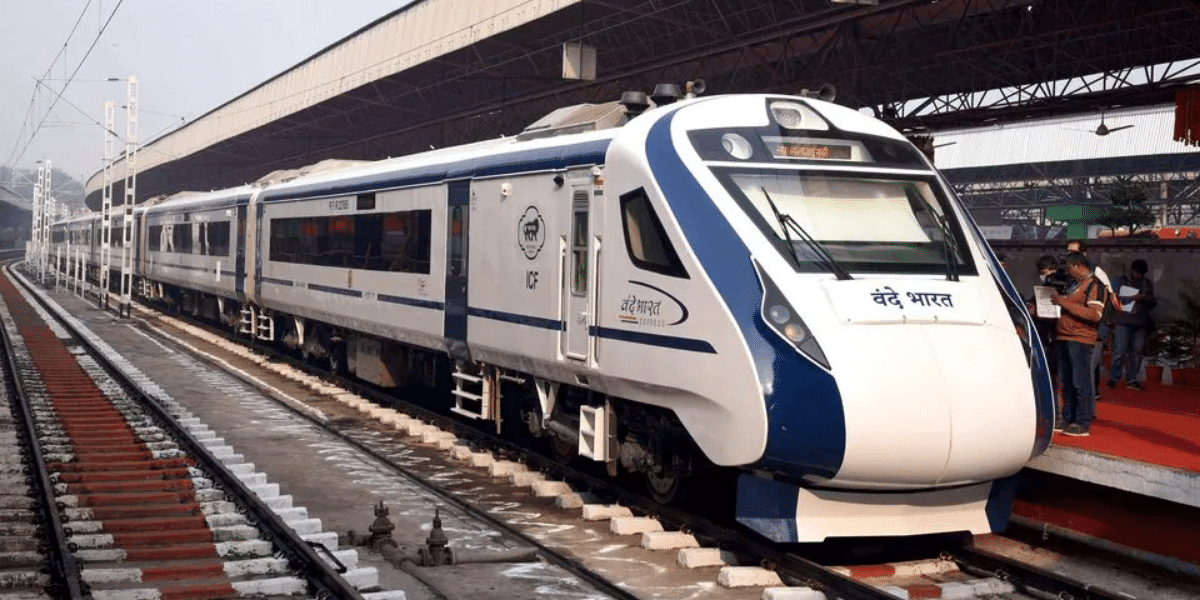
Trains are often called the lifeline of India, connecting distant cities, facilitating trade, and making travel affordable for millions. Over the years, Indian Railways has expanded its vast network and focused on enhancing speed and passenger comfort. Regarding the fastest train in India 2025, we refer to two key measures: maximum speed (the highest speed a train can technically achieve) and average operational speed (the speed maintained during regular service).
Both metrics play an important role in defining efficiency. India has made significant progress in semi-high-speed trains, with modern services like Vande Bharat Express already redefining travel standards. Moreover, with the ambitious Mumbai–Ahmedabad bullet train project under construction, India is stepping closer to joining the league of nations with true high-speed rail. This reflects the country’s determination to revolutionize its railway infrastructure for the future.

The fastest train in India 2025 is the Vande Bharat Express, capable of reaching 180 km/h with an average operational speed of 130–160 km/h. Gatimaan Express (160 km/h) and Namo Bharat RRTS (160 km/h) also stand out as India’s fastest train services.
As of 2025, the title of the current fastest train in India 2025 goes to the Vande Bharat Express, which can run at a maximum speed of 180 km/h. However, it maintains an average operational speed of 130–160 km/h during regular operations, making it the most efficient and fastest passenger train service in India today.
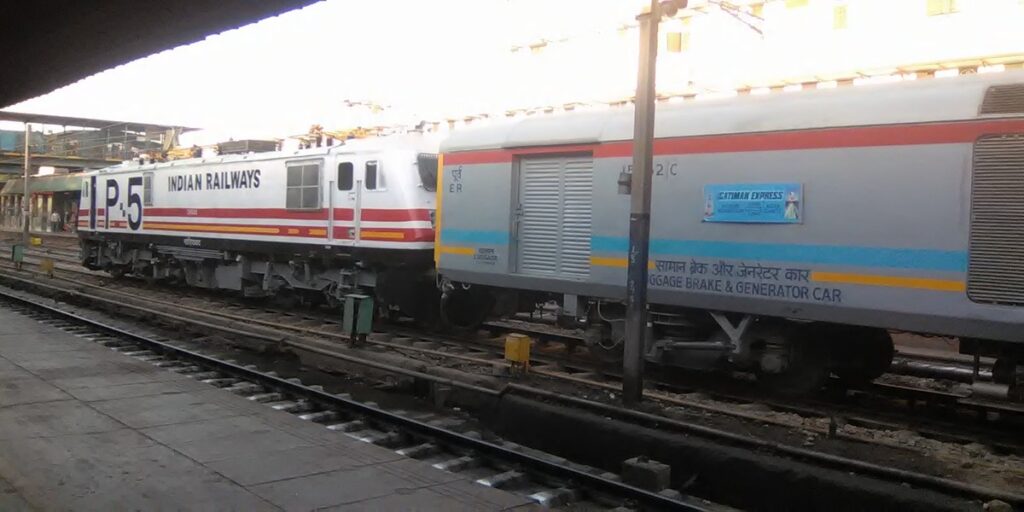
Another notable high-speed service is the Gatimaan Express, India’s first semi-high-speed train, launched in 2016. Operating at a maximum speed of 160 km/h on the Delhi–Jhansi route, it provides both speed and comfort. It has executive-class seating, onboard catering, and modern facilities, making it a preferred choice for business and leisure travelers.
In addition, the Namo Bharat RRTS (Delhi–Meerut), introduced in 2023, has emerged as India’s newest and fastest rail service. Designed as a rapid regional transit system, it runs at 160 km/h, offering metro-like convenience with faster intercity connectivity, modern interiors, luggage facilities, and high safety standards.
These trains highlight India’s growing expertise in semi-high-speed rail technology, bridging the gap between conventional express trains and modern high-speed rail. With the upcoming Mumbai–Ahmedabad bullet train project, capable of 320 km/h, India is poised to achieve true high-speed rail, significantly reducing travel time and enhancing passenger comfort, marking a new era in Indian railway travel.
| Train | Max Speed | Operational Speed | Route |
|---|---|---|---|
| Vande Bharat Express | 180 km/h | 130–160 km/h | Various routes across India |
| Gatimaan Express | 160 km/h | ~150 km/h | Delhi – Jhansi |
| Namo Bharat (RRTS) | 160 km/h | 160 km/h | Delhi – Ghaziabad – Meerut |
India’s railway network has transformed remarkably, with multiple semi-high-speed trains redefining passenger travel. These trains combine speed, comfort, and efficiency from the iconic Shatabdis and Rajdhanis to the modern Vande Bharat Express and Namo Bharat RRTS. Below is a ranking of the top 10 fastest train in India 2025.
| Rank | Train Name | Route | Max Speed (km/h) | Average Speed (km/h) | Year Introduced | Category |
|---|---|---|---|---|---|---|
| 1 | Vande Bharat Express | Delhi – Varanasi / Mumbai – Ahmedabad | 180 | 130–160 | 2019 | Semi High-Speed |
| 2 | Gatimaan Express | Delhi – Jhansi | 160 | ~150 | 2016 | Semi High-Speed |
| 3 | Namo Bharat (RRTS) | Delhi – Ghaziabad – Meerut | 160 | 160 | 2023 | Rapid Regional Rail |
| 4 | Bhopal Shatabdi Express | New Delhi – Bhopal | 150 | ~90–95 | 1988 | Shatabdi Express |
| 5 | Tejas Express | Mumbai – Goa / Lucknow – New Delhi | 160 | ~100–110 | 2017 | Luxury Express |
| 6 | Mumbai – New Delhi Rajdhani Express | Mumbai – New Delhi | 140 | ~90 | 1969 | Rajdhani Express |
| 7 | Howrah – New Delhi Rajdhani Express | Howrah – New Delhi | 135–140 | ~88–90 | 1969 | Rajdhani Express |
| 8 | Sealdah – New Delhi Duronto Express | Sealdah – New Delhi | 130 | ~85 | 2009 | Duronto Express |
| 9 | Bandra Terminus – H. Nizamuddin Garib Rath | Mumbai – Delhi | 130 | ~80–85 | 2005 | Garib Rath Express |
| 10 | Mysuru – Chennai Shatabdi Express | Mysuru – Chennai | 130 | ~85–90 | 1994 | Shatabdi Express |
Together, these trains represent India’s blend of speed, efficiency, and modern passenger comfort, while the upcoming bullet train promises to take rail travel to the next level.
India’s tryst with speed on railways began in the late 20th century with the introduction of the Shatabdi Express (1988) and the Rajdhani Express (1969). These trains became symbols of fast and premium travel, offering reduced journey times between major cities. However, due to track limitations and mixed-traffic congestion, their average operational speed remained at 80–100 km/h.
The next big leap came with the launch of Gatimaan Express in 2016, India’s first officially recognized semi-high-speed train with a maximum speed of 160 km/h. Soon after, the Vande Bharat Express (2019) revolutionized passenger travel with its modern design, better acceleration, and operational speeds of 130–160 km/h, drastically cutting down travel time on Delhi–Varanasi and Mumbai–Ahmedabad routes.
To further enhance railway efficiency, the Government of India introduced Mission Raftaar, aiming to double the average speed of passenger trains to 100 km/h and freight trains to 50 km/h. Complementing this, large-scale electrification projects and developing modern tracks, signaling systems, and trainset technology have been undertaken. These efforts ensure that trains like Vande Bharat and future models can operate closer to their design speeds.
In specific corridors, premium train average speeds have improved from around 90 km/h to 130+ km/h. With ongoing upgrades in tracks, signaling, and rolling stock, India is steadily bridging the gap between conventional express trains and global high-speed standards.
This journey reflects India’s determination to modernize its railways, combining speed, sustainability, and passenger comfort, while preparing the ground for the country’s first bullet train.
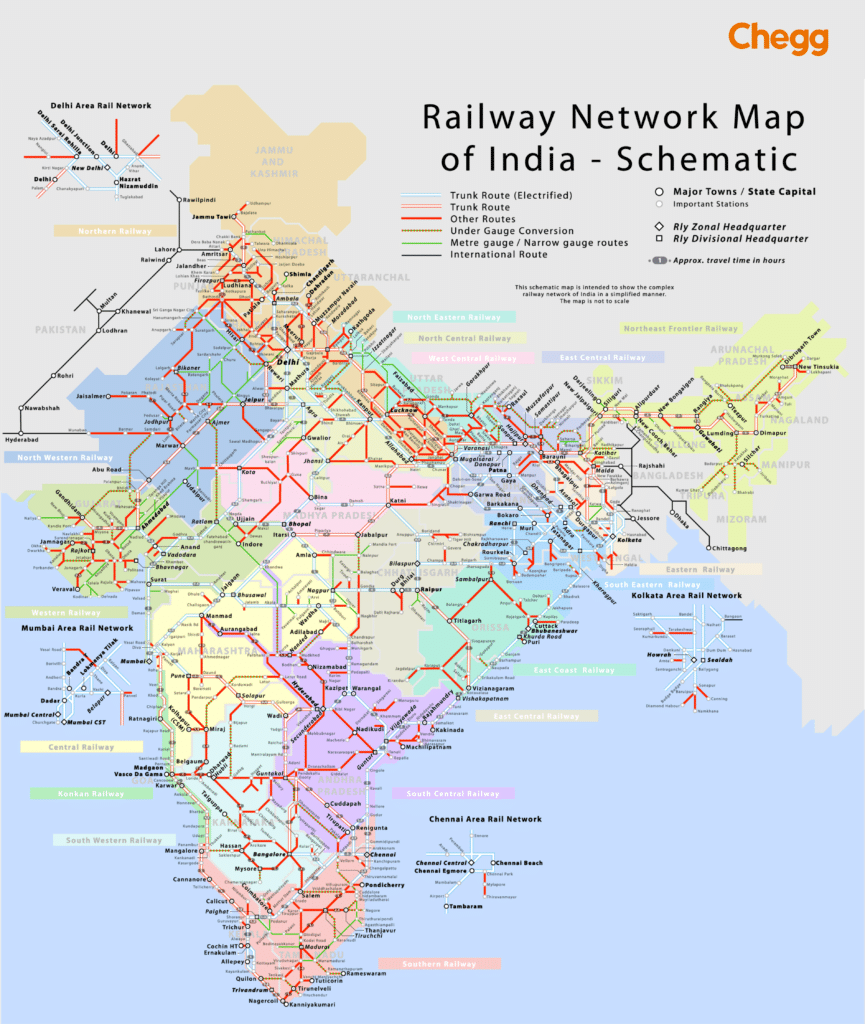
India is on the verge of a railway revolution with the launch of its first true high-speed rail corridor. The Mumbai–Ahmedabad High-Speed Rail (MAHSR), popularly known as the India bullet train project, promises to reduce travel time drastically, provide world-class comfort, and modernize the nation’s transport infrastructure. This project marks a significant milestone in India’s journey towards ultra-high-speed rail connectivity.
The MAHSR corridor spans 508 km, linking Mumbai in Maharashtra with Ahmedabad in Gujarat. Once operational, trains on this route will achieve a maximum speed of 320 km/h, cutting travel time from nearly 7 to 2 hours. This speed will make India’s train service one of the fastest in the world.
The project is being developed by the National High-Speed Rail Corporation Limited (NHSRCL) with technical and financial assistance from Japan. It uses the Shinkansen (E5 Series) technology, renowned for safety, punctuality, and passenger comfort. This collaboration ensures India adopts proven high-speed rail technology, minimizing risk and enhancing operational efficiency.
Significant progress has been made in land acquisition, viaduct construction, and station development. According to government updates, the first phase between Surat and Bilimora is expected to be operational by 2027–2028, with the whole corridor completed shortly after.
The project is expected to transform intercity travel, boosting economic activity along the corridor, creating jobs, and facilitating sustainable urban mobility. Operating on fully electrified, dedicated tracks will reduce carbon emissions compared to conventional trains.
Once operational, the India bullet train project will place the country alongside global leaders like Japan, China, and France in high-speed rail technology. It represents a leap forward in India’s railway modernization, setting the stage for more high-speed corridors across the nation and redefining the future of passenger mobility.
When discussing the fastest train in India, it’s essential to understand the difference between maximum speed, operational (average) speed, and trial/run speed. The maximum speed refers to the top speed a train can achieve under ideal conditions. In contrast, operational speed is the average speed maintained during regular service, considering stops and track limitations. Trial run speeds are tested during safety and performance trials and often exceed regular operating speeds.
In India, average speeds are lower than design speeds due to tracking conditions, signaling systems, and scheduled halts. Mixed traffic on conventional tracks also limits sustained high-speed travel. For example, the Vande Bharat Express is designed to reach 180 km/h, but during regular operations, it runs at an average of 130–160 km/h depending on the route. Similarly, Gatimaan Express achieves 160 km/h as its peak speed, but the average speed remains slightly lower due to intermediate stops.
Understanding this distinction helps clarify why even India’s fastest trains cannot always run at their top design speeds. Operational constraints, safety considerations, and passenger comfort influence the average speed, the real-world measure of a train’s efficiency and reliability.
India’s railway modernization is impressive, yet when compared globally, the country’s fastest trains still have room to grow. The world’s fastest train, the Shanghai Maglev in China, operates at a top speed of 431 km/h, while Japan’s Shinkansen bullet trains cruise at 320–320+ km/h. France’s TGV regularly reaches 320 km/h, setting benchmarks in high-speed rail technology.
In contrast, India’s fastest train, the Vande Bharat Express, achieves a maximum speed of 180 km/h with an average operational speed of 130–160 km/h. While this is significantly lower than global high-speed standards, it represents a significant leap from traditional Indian express trains, which averaged around 90 km/h. Trains like Gatimaan Express and the upcoming Mumbai–Ahmedabad bullet train (MAHSR) at 320 km/h are part of India’s strategic roadmap to narrow this gap.
India’s high-speed rail journey reflects a growth trajectory: from Shatabdi and Rajdhani Express in the 1960s–80s to semi-high-speed trains like Gatimaan and Vande Bharat, and now the country’s first actual bullet train. This progression demonstrates India’s commitment to adopting modern technology, improving travel efficiency, and preparing infrastructure for future ultra-high-speed trains.
Though India still lags behind Maglev and other global leaders, ongoing projects, electrification, and track modernization indicate that India’s high-speed rail network will continue to evolve, potentially joining the league of the world’s fastest trains in the coming decade.
| Train Name | Country | Max Speed (km/h) | Operational Speed (km/h) |
|---|---|---|---|
| Shanghai Maglev | China | 431 | 431 |
| Shinkansen (E5 Series) | Japan | 320 | 300–320 |
| TGV | France | 320 | 300–320 |
| Vande Bharat Express | India | 180 | 130–160 |
| Gatimaan Express | India | 160 | ~150 |
| Mumbai–Ahmedabad Bullet Train (MAHSR) | India | 320 | 320 |
India has made remarkable strides in modernizing its railway network, evolving from conventional express trains to semi-high-speed marvels like the Vande Bharat Express and Gatimaan Express. These modern trains have significantly reduced travel time while offering enhanced passenger comfort, contemporary interiors, and advanced onboard features such as GPS-based information systems, Wi-Fi, bio-toilets, and ergonomic seating. Their introduction represents a significant leap in efficiency and passenger experience on India’s railways.
The upcoming Mumbai–Ahmedabad bullet train project marks a historic milestone, bringing true high-speed rail to India. With operational speeds of up to 320 km/h, cutting travel time from 7 hours to just 2 hours, and world-class safety standards, this project redefines intercity travel.
India’s high-speed rail journey reflects the country’s determination to bridge the gap with global leaders like Japan, China, and France. With ongoing electrification, track modernization, and additional high-speed rail projects on the horizon, India is steadily moving towards world-class train speeds. The future promises faster, safer, and more comfortable rail travel, positioning India as a formidable player in the global high-speed rail arena.
Read More :-
The fastest train in India is the Vande Bharat Express, capable of reaching a maximum speed of 180 km/h with an average operational speed of 130–160 km/h. Gatimaan Express and Namo Bharat RRTS also rank among India’s fastest trains.
Currently, no conventional train can reach 1,000 km/h. Only experimental maglev trains, like Japan’s L0 series, have tested speeds approaching 600 km/h, while traditional high-speed trains operate between 300–431 km/h, far below 1,000 km/h.
Yes, the Vande Bharat Express is faster than the Rajdhani Express. With a maximum speed of 180 km/h and an average speed of 130–160 km/h, it outpaces Rajdhani trains, which run at a maximum of 140 km/h and average around 90 km/h.
The Shanghai Maglev in China is currently the world’s fastest train, operating at 431 km/h. It uses magnetic levitation technology to travel faster than conventional high-speed rail systems.
As of 2025, Indian Railways operates 8 Tejas Express trains across key routes, including Mumbai–Goa, Chennai–Madurai, Lucknow–New Delhi, and Ahmedabad–Mumbai. These semi-high-speed, fully air-conditioned trains offer modern amenities, faster travel, and enhanced passenger comfort, forming a key part of India’s efforts to modernize its rail network.
The 2nd fastest train in India is the Gatimaan Express. Launched in 2016, it operates at a maximum speed of 160 km/h and an average speed of around 150 km/h. It offers executive-class seating, onboard catering, and entertainment screens.