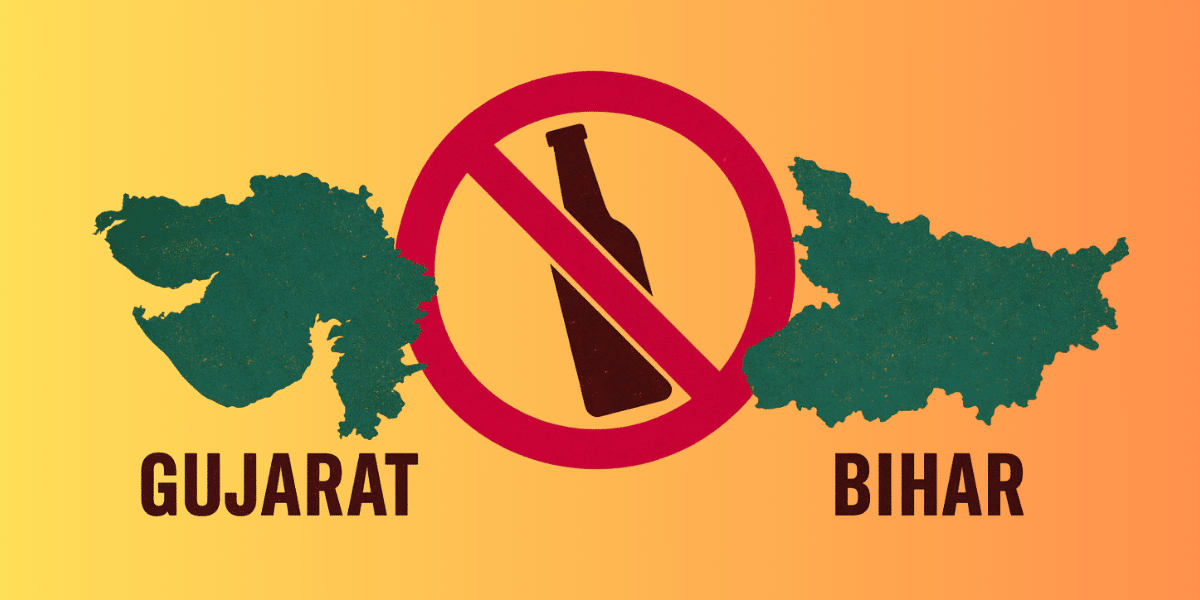
Bihar, Gujarat, Mizoram, Nagaland, and Lakshadweep are the dry states in India, as the Indian Government has banned alcohol in India and union territories. Alcohol consumption is quite common in India, but there are certain regions where it is strictly prohibited. These areas are known as dry states in India. Various cultural, social, and political factors mainly determine alcohol prohibition in India.
Article 47 of the Directive Principles of State Policy in the Indian Constitution prohibits the consumption of harmful alcohol. However, each state can decide whether to implement this principle. Therefore, alcohol regulations vary across the country.
In India, some states have implemented a concept called “dry state” or “alcohol prohibition.” Here’s a breakdown of what it means:
Essentially, a Dry state in India enforces a form of alcohol prohibition within its borders.
Understanding dry states in India gives you a clearer picture of the varying regulations on alcohol consumption across different regions in India. In India, dry states in India where alcohol consumption is prohibited include Bihar, Gujarat, Nagaland, Mizoram, and the union territory of Lakshadweep.
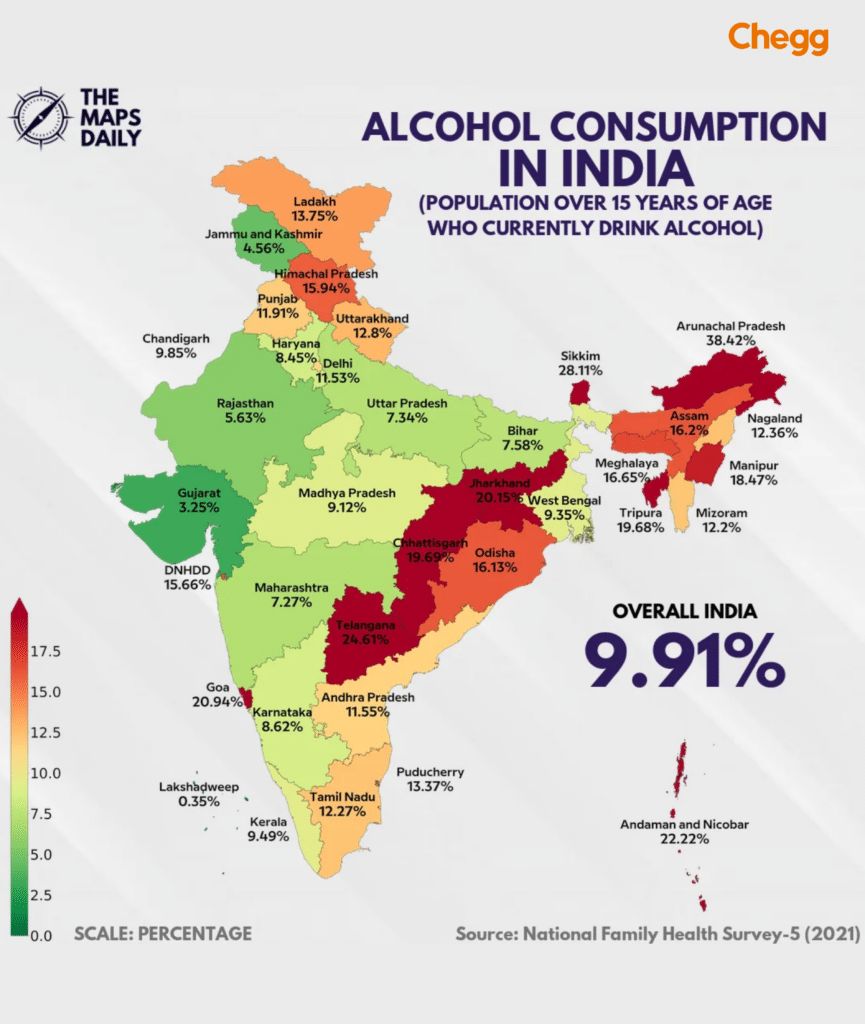
The legal drinking age in India varies from state to state, and the age for consuming and buying alcohol also differs. The table compares the legal drinking age in various states of India. Some states are also liquor-banned states in India.
| States/UTs | Legal Drinking Age |
| Andhra Pradesh | 21 |
| Arunachal Pradesh | 18 |
| Assam | 21 |
| Bihar | Prohibited |
| Chhattisgarh | 21 |
| Goa | 18 |
| Gujarat | Prohibited |
| Haryana | 21 |
| Himachal Pradesh | 18 |
| Jammu and Kashmir | 18 |
| Jharkhand | Prohibited |
| Karnataka | 21 |
| Kerala | 18 |
| Madhya Pradesh | 25 |
| Maharashtra | 21 |
| Manipur | Prohibited (Except for Tribals) |
| Meghalaya | 18 |
| Mizoram | 18 |
| Nagaland | 18 |
| Odisha | 25 |
| Punjab | 21 |
| Rajasthan | 21 |
| Sikkim | 18 |
| Tamil Nadu | 21 |
| Telangana | 21 |
| Tripura | 18 |
| Uttar Pradesh | 21 |
| Uttarakhand | 21 |
| West Bengal | 21 |
| Andaman and Nicobar Islands | 18 |
| Chandigarh | 21 |
| Dadra and Nagar Haveli | 18 |
| Daman and Diu | 18 |
| Delhi National Capital Territory (NCT) | 21 |
| Lakshadweep | Prohibited |
| Puducherry | 20 |
The legal drinking age varies across states and union territories due to different regulations and cultural contexts. Some states have completely banned alcohol consumption, while others permit it with varying age limits.
People do not particularly enjoy dry days. Alcohol sales in stores, bars, and lodging establishments are prohibited on dry days. Election-related holidays or state-level holidays are now possible. Some states prohibit the sale of alcohol on certain holidays.
Most Indian states observe dry days on significant national holidays and occasions, including Gandhi Jayanti on October 2, Republic Day on January 26, and Shaheed Diwas on January 30. In India Dry days are also observed when voting.
The State Election Commission (SEC) clarified that Maharashtra’s teachers and graduates’ constituency elections will only take place on January 30, the day the sale and supply of alcohol is prohibited.
In a few states, the government has outlawed the sale of alcoholic beverages, making any business activity involving alcoholic beverages illegal. Chapter IV of the Constitution discusses the DPSP (Directive Principles of State Policy). Consuming intoxicants that are unhealthy for the body, such as alcohol, is not permitted. The dry states in India claim this will support the morality principle and are a positive step toward social change in their state.

Bihar is one of the dry states in India that has recognized the significant threat posed by the increasing problem of alcoholism. The state government’s proposal to amend the Bihar Excise Act of 1915 resulted in the Bihar Excise (Amendment) Act of 2016. Now you’re wondering when alcohol was banned in Bihar. So, Bihar implemented a complete alcohol ban in 2016.
Since the division of Gujarat and Maharashtra in 1960, Gujarat (a dry state in India) has been recognized as a state that prohibits the sale and consumption of alcohol. This restriction is enforced through the Bombay Prohibition Act of 1949, which remains in effect in Gujarat. Gujarat has been prohibited from alcohol since 1960, making it the first state in India to implement such a ban.
The Mizoram (dry states in India) Liquor Prohibition Act, 2019, is a law enacted in Mizoram that prohibits selling, manufacturing, and consuming liquor within its territory. Regardless of their social status, they are strictly forbidden from using any intoxicating substances or consuming alcohol.
The preamble of the Nagaland Liquor Total Prohibition Act, 1989, explicitly states the ban on all aspects of alcohol within Nagaland. This involves prohibiting the sale, production, possession, consumption, import, and export of alcoholic beverages. Nagaland has been alcohol-free since 1989.
Manipur’s alcohol ban was partially enacted in 1991. Unlike Nagaland’s complete ban, Manipur prohibits commercial production, sale, and consumption of alcohol except for traditionally brewed beverages consumed by Scheduled Tribes under their customary laws.
One of India’s Union Territories is the island of Lakshadweep in the Arabian Sea. Except on the tourist island of Bangaram, alcohol consumption is completely prohibited in the Union Territory of Lakshadweep.
Here is the List of alcohol banned States or liquor-banned states in India:
| State | Banned Since | Reason for Ban |
| Bihar | 2016 | Social and health reasons |
| Gujarat | 1960 | Social and religious reasons |
| Lakshadweep | 1979 | To maintain peace and tranquility in the islands |
| Manipur (Partial Prohibition) | 1991 | To curb alcohol-related problems |
| Mizoram | 2019 | Social and health reasons |
| Nagaland | 1989 | Religious reasons |
| State | Alcohol Laws |
|---|---|
| Gujarat | Strict control through government outlets and high taxes, but alcohol is not entirely banned. |
| Bihar | The legal drinking age for spirits is 25, and for beer, it is 21; dry days are observed on national holidays. |
| Goa | Liberal alcohol laws with wide availability. |
| Kerala | Strict control through government outlets and high taxes, but alcohol is not fully banned. |
| Maharashtra | Strict control through government outlets and high taxes, but alcohol is not entirely banned. |
India’s approach to alcohol consumption varies across states. While some allow its sale and consumption, others have implemented a complete ban. Gujarat is the first liquor-banned state in India.
Gujarat is known as a dry state in India because it has implemented a sumptuary law prohibiting the manufacture, storage, sale, and consumption of alcoholic beverages. This prohibition is primarily due to Gujarat’s historical and cultural association with Mahatma Gandhi, who was born in the state and advocated for prohibition.
The ban on alcohol in Gujarat dates back to its formation and is seen as a way to honor and uphold Mahatma Gandhi’s principles and teachings. However, in a significant move, the Gujarat government has allowed the consumption of liquor in the Gujarat International Finance Tec-City (GIFT), India’s first financial services center, being built in Gandhinagar. This is the first exemption in Gujarat, which has been the First State in India’s list of dry states since its birth in 1960.
In 1960, after gaining independence, Gujarat became the first dry state in India to introduce a complete ban on the manufacture, sale, and consumption of alcoholic beverages. Social and political factors drove this move, aiming to promote social welfare and reduce alcohol-related issues.
Even today, Gujarat enforces strict prohibition laws with severe penalties for those caught consuming or selling alcohol. This policy has garnered support from those who argue it has led to positive social changes, such as reduced alcohol-related health issues and improved public safety. However, there are counterarguments, with critics pointing to the rise of illegal liquor markets due to the ban. Despite these challenges, Gujarat continues to uphold its prohibition as part of its broader social and cultural framework, aligning with other dry states in India that aim to promote public health and welfare.
The presence of dry states in India reflects the country’s diverse social and cultural landscape. Whether prohibition is the most effective solution for alcohol-related issues remains a topic of debate.
Since its establishment in 1960, Gujarat has been the first dry state in India to ban alcohol and & has maintained a prohibition law, which has not prevented residents from drinking alcohol. One of the widely acknowledged facts about the state is the significant level of alcohol consumption within its borders. It was argued that prohibition imposed limitations that increased consumer risks and widened the black market.
It’s essential to consider the alcohol ban from an economic standpoint because Gujarat has always had a laser-like focus on its economy. It also has an indirect impact on foreign investment. Gujarat would draw even more foreign investors without prohibition because it represents a significant cultural shift for them.
People enjoy drinking alcohol in most States of our nation, but some states are dry in India. A dry day may be familiar to those who regularly consume alcohol. If you didn’t know, please be advised that on a dry day, it is not permitted to sell or deliver alcohol. Indian national holidays are typically observed on dry days. However, many states today also have their observance laws. A dry day in Rajasthan is when the sale of alcoholic beverages is prohibited in the state. The dry days in Rajasthan are as follows:
Despite total prohibition, the illegal liquor trade thrives in dry states like Bihar and Gujarat. Reports show frequent seizures of smuggled alcohol worth crores every year.
Dry states often see higher deaths from toxic illicit liquor, such as the 2022 Gujarat hooch tragedy that killed over 40 people due to the consumption of spurious alcohol.
In Gujarat, tourists and permit-holding residents can legally consume alcohol. Ironically, some politicians and celebrities have reportedly accessed alcohol via special permits, creating a class divide.
States like Bihar lose thousands of crores in excise revenue every year due to prohibition, while neighboring wet states benefit from liquor tourism and smuggling.
Dry laws have led to a booming black market, empowering bootleggers and organized crime. Some areas see more crime linked to the illegal liquor trade than before prohibition.
States spend huge amounts on enforcement, policing, raids, and judicial costs to maintain prohibition — often more than what was earned through regulated alcohol sales.
While prohibition is often pushed under women’s empowerment and social reform, ground-level surveys show mixed reactions, with many locals secretly opposing the ban.
The chief minister, Nitish Kumar, demanded that alcohol be outlawed nationwide, like in Bihar, despite the widespread belief that this had made his state poorer.
“Prohibition can be used as a strong instrument to bring social and economic change.” – Nitish Kumar.
He claimed that the experience since the alcohol ban in Bihar, implemented in April 2016, has only strengthened Chief Minister Nitish Kumar’s resolve to maintain prohibition during his tenure. Kumar has emphasized that the success of the alcohol ban in Bihar will be a key aspect of his administration’s achievements, particularly as the state prepares for its upcoming assembly elections later this year. This move also ties into the broader trend of dry states in India, where alcohol bans are positioned as integral to social reform and public welfare.
“Alcohol is a toxic product; it causes moral, social, and economic damage.” – Dr A.P.J. Abdul Kalam.
President A P J Abdul Kalam delivered the “Attapadi Declaration” to declare the entire hill area a liquor-free zone. He gave a group of tribals an oath and said, “Let us take a pledge today to abolish the use of liquor and Ganja cultivation that is rampant in this most backward tribal belt.”
Alcohol prohibition can have both positive and negative effects on society.

| Age Group | Pre-mixed spirits | Bottle spirits and liqueurs | Regular strength beer | Bottle wine | Cider |
| Females 14-17 | 64% | 15% | 8% | 5% | – |
|---|---|---|---|---|---|
| Males 14-17 | 35% | 22% | 14% | 4% | – |
| Females 18-24 | 49% | 26% | 24% | 11% | 5% |
| Males 18-24 | 36% | 24% | 17% | 5% | 5% |
Here’s a list of dry states in India known for their high alcohol consumption based on various surveys and studies:
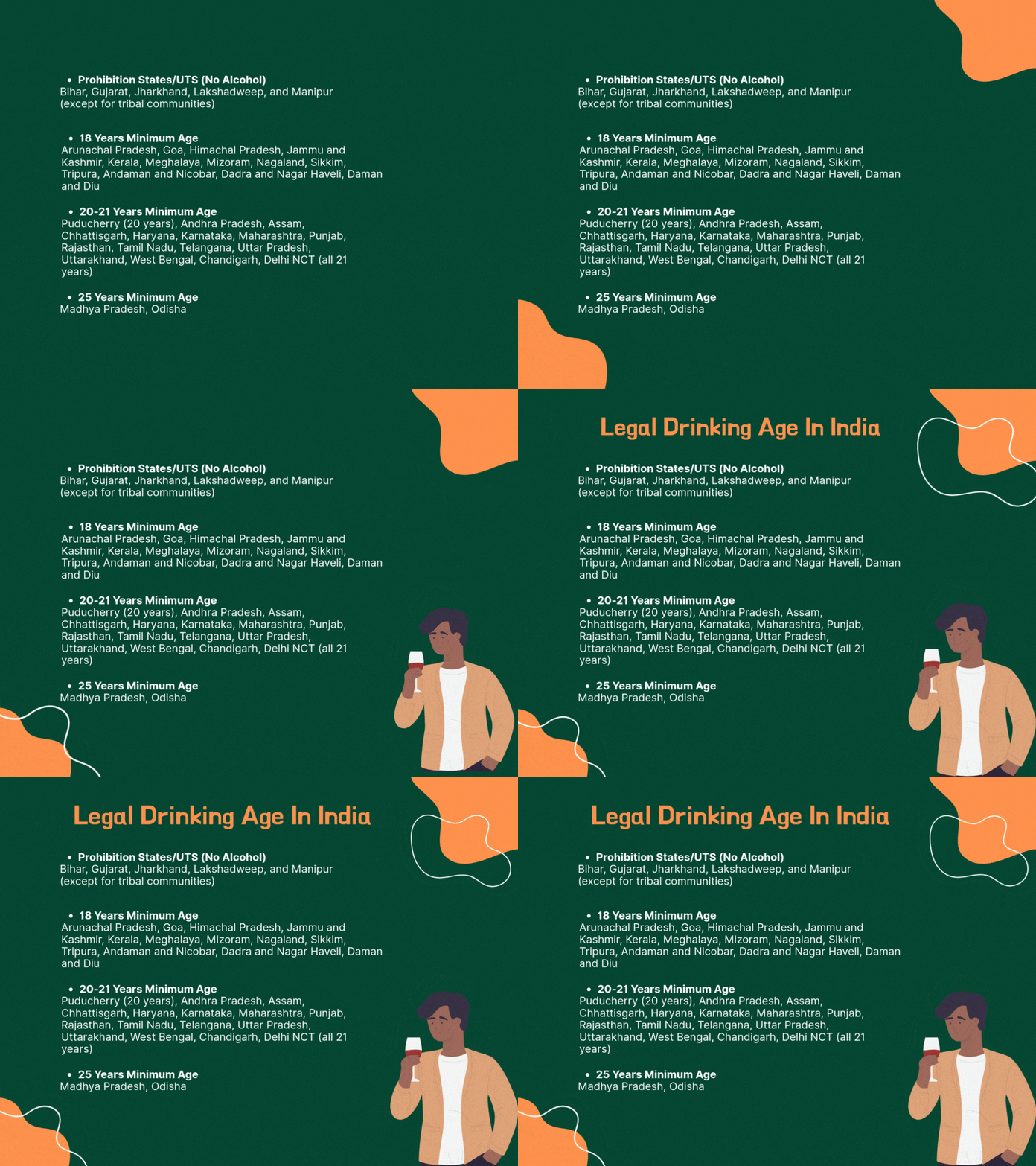
The Northeastern states of India, along with regions in the South and East, typically exhibit higher alcohol consumption due to various cultural and demographic factors, despite certain states enforcing prohibitions or dry days. In these areas, alcohol consumption is often intertwined with local traditions and social practices. Notably, tribal-dominated areas prefer locally made brews or country liquor, which are part of long-standing cultural customs. Even in dry states in India, such as Gujarat and Bihar, these traditional alcohols remain popular in some communities.
Alcohol prohibition in India is a multifaceted approach rooted in cultural traditions, legal frameworks, and public health priorities. While aiming to curb the societal and health risks associated with alcohol consumption, such as addiction and economic hardship, these policies also reflect the ethical principles advocated by leaders like Mahatma Gandhi. This approach aligns with the dry states in India, where alcohol bans are enforced to promote healthier lifestyles and preserve social harmony. These regions exemplify the nation’s commitment to reducing alcohol-related issues and advancing public welfare.
Prohibition underscores the government’s responsibility to enhance public welfare and social harmony by aligning with the Directive Principles of State Policy. Though its effectiveness and acceptance remain debated, the sustained implementation in states like Gujarat and Bihar signifies an enduring commitment to these ideals, fostering healthier and more equitable communities.
Read More:
A region is referred to as a ‘dry state’ when the sale and consumption of alcohol are strictly prohibited. This prohibition can be due to various social, cultural, and political factors.
India’s first alcohol prohibition was enacted in the state of Gujarat. The Gujarat Prohibition Act of 1949 was passed in memory of Mahatma Gandhi, a Gujarat native and ardent prohibition proponent.
Gujarat is known as a dry state because it has implemented a sumptuary law prohibiting the manufacture, storage, sale, and consumption of alcoholic beverages. This prohibition is primarily due to Gujarat’s historical and cultural association with Mahatma Gandhi, who advocated for prohibition.
Yes, Nagaland is officially a dry state in India.
Yes, Bihar is a dry state. In 2016, the government of Bihar implemented a total prohibition on the sale and consumption of alcohol, including Indian-made Foreign Liquor (IMFL).
States like Gujarat, Bihar, Nagaland, and Mizoram have complete alcohol bans, making them officially dry states with strict prohibition laws.