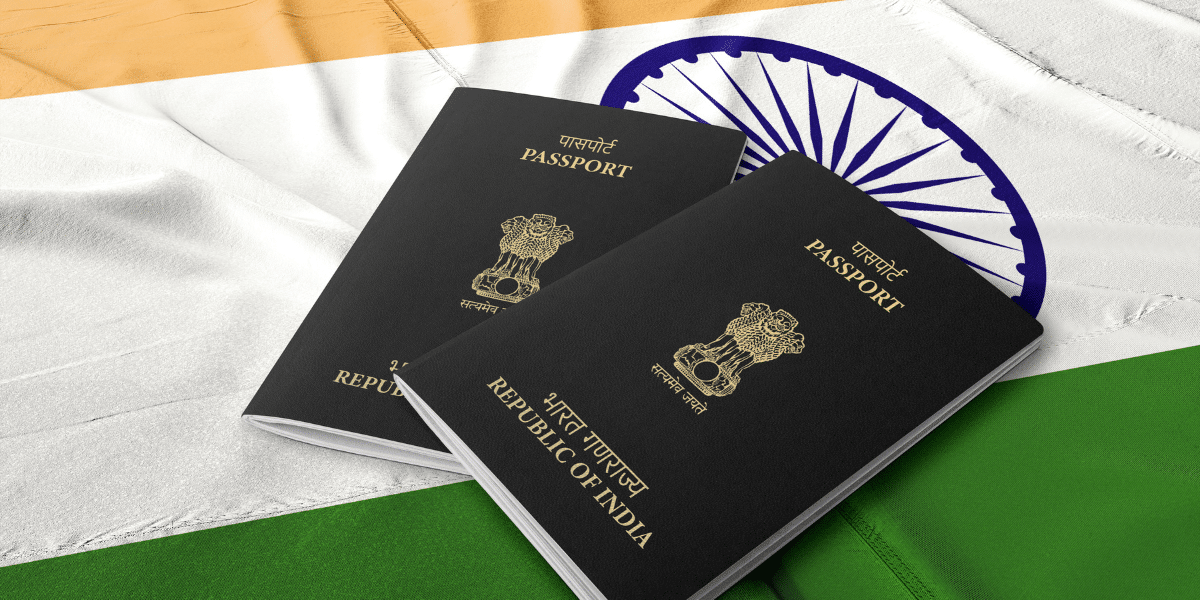
Citizenship of India is not just a legal label but the foundation of a person’s identity, rights, and duties within the nation. It decides who can enjoy fundamental rights, vote in elections, hold public office, and access social and economic benefits. While many people confuse citizenship with nationality, the two are different. Nationality in India reflects a person’s belonging to the nation by birth or origin. In contrast, citizenship of India is a legal status conferred by the state, carrying enforceable rights and responsibilities.
Understanding citizenship is essential in a diverse and democratic country like India, where identity, rights, and responsibilities are deeply tied to this legal status. Citizenship defines who belongs to the nation and who enjoys specific rights such as political participation, equal opportunity, and protection under the law. From the constitutional provisions in Articles 5–11 to the Citizenship Act 1955, from the modes of acquiring citizenship to the grounds for its termination, the framework plays a pivotal role in shaping India’s civic and political landscape.
This comprehensive guide explores the meaning, types, and legal provisions of Indian citizenship, highlighting key debates, amendments such as the CAA 2019, and recent developments.

The Constitution of India (Part II, Articles 5–11) lays the foundation for determining who was recognized as a citizen at the commencement of the Constitution on 26 January 1950. These provisions dealt with the transitional phase of citizenship when India became a Republic, resolving questions related to migration, domicile, and rights. Together, they form the constitutional basis on which the Citizenship Act, 1955 was later enacted.
Below is a simplified breakdown of each article, with its meaning and practical implications:
| Article | Short Text | Practical Implication |
|---|---|---|
| Article 5 | Citizenship at the commencement for persons domiciled in India. | Recognized residents of India on 26 Jan 1950 as citizens if they were born, domiciled, or had parents domiciled here. |
| Article 6 | Citizenship rights for migrants from Pakistan. | Granted citizenship to people who migrated from Pakistan to India before July 19, 1948, if they had resided in India. Later migrants needed registration. |
| Article 7 | Rights of migrants to Pakistan. | People who migrated to Pakistan after March 1, 1947, were not considered Indian citizens, unless they returned with resettlement permits. |
| Article 8 | Citizenship for Indians abroad. | Persons of Indian origin residing outside India (e.g., in foreign territories) could register as citizens at Indian consulates. |
| Article 9 | Voluntary acquisition of foreign citizenship. | Anyone voluntarily acquiring foreign citizenship could not be an Indian citizen simultaneously. |
| Article 10 | Continuance of citizenship rights. | Ensured that citizenship acquired under Articles 5–9 continued unless changed by law. |
| Article 11 | Parliament’s power to regulate citizenship. | Gave Parliament authority to make laws regarding acquisition, termination, and regulation of citizenship (basis for Citizenship Act, 1955). |
Articles 5–11 created a transitional framework for defining Indian citizenship post-Independence, while granting Parliament the authority to legislate future rules.
The Citizenship Act, 1955, was enacted by Parliament to provide a comprehensive framework for acquiring, terminating, and regulating Indian citizenship. While the Constitution (Articles 5–11) only dealt with citizenship at the commencement of the Republic, this Act created detailed legal provisions for future cases.
The Act initially provided five modes of acquiring citizenship: by birth, descent, registration, naturalisation, and incorporation of territory. Important sections include:
The CAA 2019 amended the 1955 Act to provide a path to Indian citizenship for Hindus, Sikhs, Buddhists, Jains, Parsis, and Christians from Afghanistan, Bangladesh, and Pakistan who entered India before 31 December 2014. It reduced the residency requirement for these groups from 11 years to 5 years. The Act excludes Muslims and does not apply to the tribal areas of Assam, Meghalaya, Mizoram, and Tripura.
For the official text, see the Citizenship Act, 1955 (Govt. of India PDF).
The Citizenship Act, 1955, recognizes five legal modes through which a person can acquire citizenship of India. Each has its own eligibility requirements, exclusions, and procedural steps.
Definition: Anyone born in India is considered a citizen, subject to conditions under the Act.
Definition: Citizenship for children born abroad to Indian parents.
Definition: A legal process allowing specific categories of persons to register as Indian citizens.
Definition: Citizenship granted to foreigners meeting strict residency and character requirements.
Definition: When a new territory becomes part of India, residents automatically become citizens.
| Mode | Eligibility | Documents | Timeline | Best for (Use Case) |
|---|---|---|---|---|
| By Birth | Born in India (conditions vary by year) | Birth certificate, parents’ proof | Automatic | Children born in India |
| By Descent | Born abroad to Indian parent(s) | Consulate registration, parents’ proof | Within 1 year (post-2004) | NRI/PIO children |
| By Registration | Indian origin, spouse of citizen, OCI | Proof of origin, marriage/residence | 6–12 months | Spouses, OCI holders |
| By Naturalisation | Foreigner with 12 years’ residence | Passport, residence proof, clearance | 1–2 years | Long-term foreign residents |
| By Incorporation of Territory | Resident of newly added territory | Residence proof | Automatic | Residents of annexed states/regions |
Applying for citizenship of India through registration or naturalisation is a structured process managed by the Ministry of Home Affairs (MHA). Below is a practical breakdown of the procedure.
The Overseas Citizenship of India (OCI) is a permanent residency status offered to foreign nationals of Indian origin, allowing them to live and work in India indefinitely with multiple-entry, lifelong visas. The Person of Indian Origin (PIO) scheme granted similar but less comprehensive rights and has been merged into OCI since 2015.
| Category | Citizen of India | OCI Cardholder | PIO Cardholder (merged into OCI) |
|---|---|---|---|
| Travel to India | Passport, full rights | Lifelong visa, multiple entry | 15-year visa, FRRO reporting |
| Work/Education | Full rights | Same as NRI (except restricted land) | Similar, but fewer rights |
| Property Rights | All property allowed | Residential & commercial only | Residential & commercial only |
| Political Rights | Full (vote, contest, offices) | None | None |
| Duration | Permanent | Lifelong | Discontinued (converted to OCI) |
The Citizenship (Amendment) Act, 2019 (CAA 2019) introduced religion-specific provisions, allowing fast-track citizenship for Hindus, Sikhs, Buddhists, Jains, Parsis, and Christians from Afghanistan, Bangladesh, and Pakistan who entered India before 31 December 2014. Muslims from these countries were excluded, which led to widespread debates.
In the Indian Constitution, some Fundamental Rights apply only to citizens, while others extend to all persons, including foreigners. This distinction highlights the privileges of citizenship and clarifies what non-citizens can or cannot claim.
Read More: Important Articles of Indian Constitution
The concept of citizenship of India is dynamic, shaped by the nation’s changing political, legal, and social realities. More than a legal designation, it represents belonging, rights, and participation in the democratic framework of the Republic. The Constitution and subsequent laws lay down how citizenship can be acquired, renounced, or terminated, ensuring that the framework remains adaptable to new challenges.
Key legislation, such as the Citizenship Act of 1955, established the foundation for defining who is an Indian citizen, while amendments like the Citizenship Amendment Act (CAA) 2019 introduced further qualifications, sparking wide-ranging debate about inclusion, equality, and constitutional values. These developments highlight the ongoing relevance of citizenship as both a legal status and a symbol of national identity.
Understanding citizenship is essential for students, policymakers, and citizens alike. Active citizenship goes beyond enjoying right it involves fulfilling duties and responsibilities, thereby strengthening the unity, integrity, and democratic progress of India.
The Constitution and the Citizenship Act of 1955 govern citizenship of India. A person is generally considered an Indian citizen if born in India, has an Indian parent, or fulfills residency and other legal requirements.
As per the Ministry of Home Affairs, Indian citizenship can be acquired through four main routes: by birth, by descent, by registration, and by naturalisation. These methods form the legal basis for granting citizenship under Indian law.
In 1949, anyone domiciled in India automatically became an Indian citizen if they were born in India, had a parent born in India, or had resided in India for at least five years before the Constitution came into effect.
Aadhaar is not a valid proof of Indian citizenship; it only serves as identity and address verification. The government states that only documents like birth and domicile certificates are officially accepted to establish an individual’s Indian citizenship status.
According to the Times of India, State Governors are ranked fourth in the Republic of India’s Order of Precedence, following the President, Vice President, and Prime Minister. Thus, they are the fourth-highest-ranking citizens in the constitutional hierarchy.