
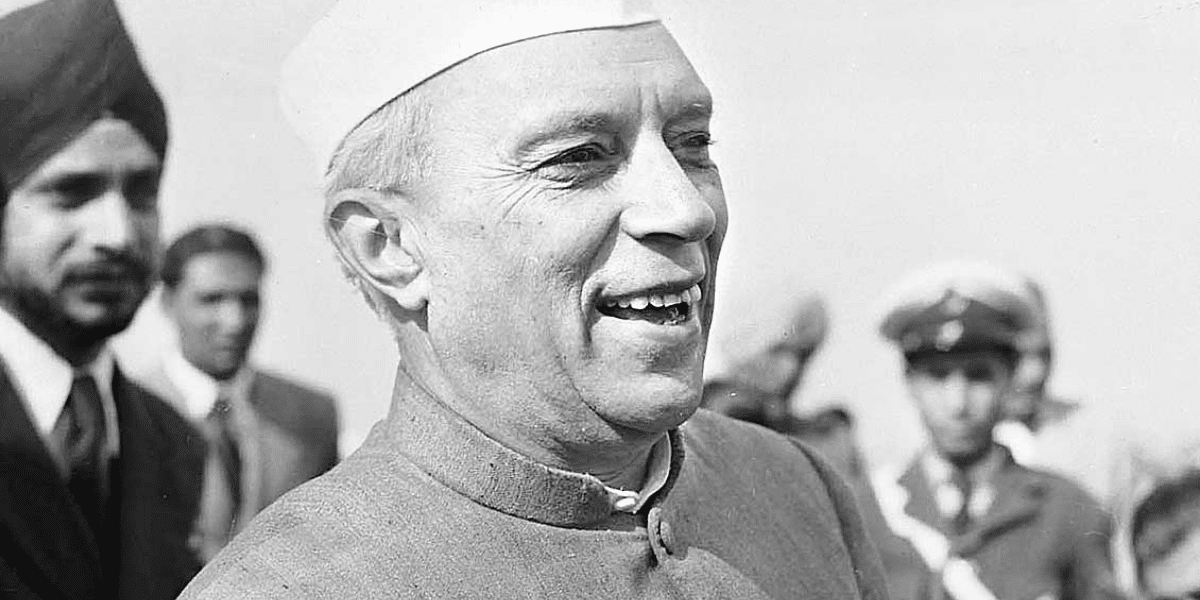
Jawaharlal Nehru, widely regarded as one of India’s most influential leaders, served as the country’s first Prime Minister from 1947 to 1964. Nehru, a prominent freedom fighter, played a pivotal role in India’s struggle for independence and in shaping the vision of a modern, democratic, and secular nation. Born on November 14, 1889, in Allahabad to a distinguished Kashmiri Pandit family, he combined a world-class education with a deep commitment to social justice, progress, and scientific advancement. His political journey began early with the Indian National Congress, where he became a close associate of Mahatma Gandhi and actively participated in movements challenging British colonial rule.
This biography of Jawaharlal Nehru highlights his early life, education, and experiences that shaped his leadership and ideals. It also emphasizes his contributions as a statesman, including nation-building, economic planning, industrial development, and education reforms. Nehru’s vision for a modern India, advocacy for scientific research, and commitment to children’s welfare reflect his forward-looking perspective. Studying his life and achievements provides insights into the man who led India to independence and inspired generations toward a progressive and inclusive India.

The early life of Jawaharlal Nehru provides a fascinating glimpse into the formative years of India’s first Prime Minister. Born on November 14, 1889, in Allahabad, Nehru belonged to a wealthy and influential Kashmiri Pandit family. His father, Motilal Nehru, was a prominent lawyer and an active member of the Indian National Congress, while his mother, Swaruprani Thussu, came from a cultured and affluent family. Growing up in such a privileged environment, Nehru had access to excellent education, exposure to political discussions, and a rich cultural heritage that blended traditional Indian values with Western ideas.
Nehru’s childhood was marked by curiosity, intellectual exploration, and a keen interest in history and literature. His father’s political activities and his mother’s nurturing profoundly influenced him, instilling a sense of responsibility and moral grounding. The social and cultural environment of colonial India and his family’s progressive outlook shaped his worldview from an early age.
Travelling and studying abroad further broadened his horizons, but his early experiences in Allahabad laid the foundation for his commitment to social justice, democracy, and national service. Understanding Jawaharlal Nehru’s early life helps explain the development of visionary thinking, compassion, and leadership qualities that would define his future role as a leader of independent India.
Jawaharlal Nehru’s education shaped his vision for India and his political ideals. He began schooling in India under private tutors and developed a strong foundation in languages, history, and literature. His family recognized his intellectual potential and sent him to Harrow School in England, one of the country’s most prestigious institutions. At Harrow, Nehru was exposed to rigorous academics, debates, and the Western worldview, which broadened his perspective beyond the confines of colonial India.
Following Harrow, Nehru pursued higher studies at Trinity College, Cambridge, where he studied natural sciences and history. His time in Cambridge and subsequent legal training at the Inner Temple, London, exposed him to liberal ideas, democratic principles, and global political thought. Travels across Europe introduced him to diverse cultures, philosophies, and political movements, further shaping his understanding of freedom, equality, and governance.
During these formative years, Nehru also developed a keen interest in Indian nationalism. Letters to his family reveal his growing awareness of India’s struggle under British rule and his desire to contribute to the nation’s independence. A disciplined Western education, exposure to global ideas, and early engagement with nationalist thought laid the foundation for Nehru’s future leadership. These experiences honed his intellect and instilled in him the vision of a modern, progressive, and independent India.
The journey of Jawaharlal Nehru as a leader cannot be understood without looking at his pivotal role in India’s struggle for independence. As a young and visionary leader, he dedicated his life to the nation, working tirelessly to mobilize people, challenge colonial policies, and promote the ideals of democracy, justice, and equality. His commitment to freedom and nation-building earned him a place among the foremost leaders of the Indian independence movement.
Indian freedom fighter Jawaharlal Nehru became an active member of the Indian National Congress after returning from England. His vision for social reform, self-rule, and political awakening quickly distinguished him as a key leader within the party.
Nehru played a central role in several major campaigns against British rule. During the Non-Cooperation Movement (1920–22), he supported Gandhi’s call for non-violent resistance and encouraged Indians to boycott British institutions. In the Civil Disobedience Movement (1930–34), he led protests, marches, and campaigns against unjust laws. His involvement in the Quit India Movement of 1942 was crucial, as he urged complete independence and mobilized the nation to unite against colonial rule.
A defining aspect of Nehru’s political journey was his close relationship with Mahatma Gandhi. Gandhi’s guidance helped shape Nehru’s philosophy of non-violence, tolerance, and ethical governance, strengthening his resolve to fight for India’s freedom while upholding moral principles.
Nehru faced numerous challenges, including years of imprisonment under harsh conditions. These periods became opportunities for reflection, writing, and strategizing. His letters and writings from jail inspired millions and demonstrated his unwavering commitment to independence.
Nehru, in the Indian independence movement, represents youthful idealism, disciplined leadership, and visionary thinking. His efforts contributed to India achieving independence in 1947 and laid the foundation for a democratic and secular nation, cementing his place as a central figure in modern Indian history.
As Prime Minister of India, Jawaharlal Nehru marked a transformative era in the country’s history. From 1947 to 1964, he became the first head of the independent nation, navigating the immense challenges of partition, nation-building, and establishing democratic institutions. His leadership combined visionary thinking with pragmatism, emphasizing planning, education, and international diplomacy.
One of Jawaharlal Nehru’s most notable achievements was his focus on industrialization. He promoted heavy industries, scientific research, and self-reliance, establishing institutions like the Indian Institutes of Technology (IITs) and the Council of Scientific and Industrial Research (CSIR). His vision aimed to create a modern economy sustaining long-term growth and development.
Nehru believed that education was key to nation-building. He emphasized modern schooling, higher education, and research institutions to cultivate a scientific temper among Indians. He laid the foundation for a skilled workforce and a forward-looking society by investing in education and innovation.
In global affairs, Nehru championed non-alignment, maintaining India’s independence during the Cold War while promoting peace and cooperation. He sought solidarity among newly independent nations and worked to position India as a responsible and influential player on the international stage.
As a constitutional leader, Nehru played a key role in shaping India’s parliamentary system. He reinforced democratic principles, secularism, and the rule of law. His speeches and policies emphasized participatory governance, social justice, and equality, ensuring India’s democracy remained inclusive and robust.
Beyond policy, Jawaharlal Nehru’s achievements include fostering national integration, cultural unity, and civic pride. As Prime Minister, Jawaharlal Nehru guided India through its formative years, laying the foundation for a modern, democratic, and progressive nation. His legacy continues to inspire leaders and citizens alike.
Jawaharlal Nehru believed that education, science, and culture were essential for building a modern nation. To realize this vision, he established premier institutions such as the Indian Institutes of Technology (IITs), All India Institute of Medical Sciences (AIIMS), and several central universities. These institutions promoted higher education and nurtured generations of scientists, engineers, and medical professionals who contributed to India’s progress.
Nehru strongly promoted science and technology, emphasizing research, innovation, and rational thinking as tools for nation-building. His policies encouraged industrial development, scientific inquiry, and a culture of experimentation, laying the groundwork for India’s achievements in space, nuclear energy, and technology.
Alongside academics and technology, Nehru was committed to social welfare and children’s rights. Initiatives like the Nehru Memorial Trust supported education, cultural programs, and research. His advocacy for children’s well-being earned him the affectionate title “Chacha Nehru,” reflecting his dedication to nurturing the younger generation.
Through these efforts, Nehru envisioned a knowledge-driven, culturally vibrant, and socially responsible India, leaving a legacy that inspires policymakers, educators, and reformers today.
Jawaharlal Nehru was born into a prominent family, the son of Pandit Motilal Nehru, a respected lawyer and Congress leader. He married Kamala Nehru, and their daughter, Indira Gandhi, later became India’s Prime Minister, continuing the family’s political legacy.
Beyond politics, Nehru was a man of diverse interests and hobbies. He was an avid reader, a prolific writer, and a keen observer of history and culture. His famous “Letters to Children” reflect his deep affection for young minds and his desire to inspire curiosity, imagination, and moral values. Nehru also enjoyed nature, gardening, and engaging with arts and literature, which enriched his worldview.
A visionary outlook, intellectual depth, and global perspective marked Nehru’s personality. He combined pragmatism with idealism, always striving for progress and innovation. His ability to balance political leadership with personal reflection and cultural engagement made him not only a statesman but also a thinker whose ideas continue to influence India and the world.
The Jawaharlal Nehru legacy continues to shape India’s political, social, and cultural landscape. As the country’s first Prime Minister, he laid the foundation for a modern India vision rooted in democracy, secularism, scientific progress, and social justice. His policies on industrialization, education, and foreign affairs established frameworks that guided India through its formative decades and continue influencing governance and development today.
Nehru’s contributions earned him global recognition. Leaders and thinkers worldwide acknowledged his efforts in promoting peace, non-alignment, and international cooperation. His writings, speeches, and vision for a progressive nation continue to inspire generations of politicians, scholars, and citizens.
Numerous schools, universities, and institutions have been named after him to honor his legacy, including the Nehru Memorial Museum and Library, reflecting his commitment to education and culture. Additionally, Children’s Day in India is celebrated on his birthday, November 14, highlighting his lifelong advocacy for children’s welfare and education.
Through these recognitions and the lasting impact of his policies, the Jawaharlal Nehru legacy endures as a guiding force in India’s journey toward a democratic, educated, and forward-looking society. His modern India vision remains a benchmark for leadership, nation-building, and progressive thinking.
These quotes reflect Nehru’s wisdom, foresight, and compassionate outlook, inspiring readers interested in leadership, education, freedom, and nation-building. They are ideal for speeches, educational content, and shareable social media posts.
Jawaharlal Nehru’s life and leadership left an enduring and transformative mark on India and the world. As a visionary leader, a dedicated freedom fighter, and the country’s first Prime Minister, he played a crucial role in shaping India’s democratic institutions, industrial development, and educational framework. This biography of Jawaharlal Nehru highlights his unwavering dedication to nation-building, social reform, and global cooperation, reflecting a vision that continues to inspire generations of Indians and citizens worldwide.
Nehru’s commitment to democracy, secularism, and scientific progress ensured that India emerged as a modern, inclusive, and forward-looking nation. He promoted industrialization, modern education, and technological advancement while advocating for social justice, equality, and children’s welfare. His policies in foreign affairs positioned India as a respected player on the global stage, emphasizing peace, non-alignment, and cooperation among nations.
The Jawaharlal Nehru legacy continues to guide contemporary leadership, governance, and policymaking. His vision of a modern India rooted in knowledge, culture, and innovation remains relevant today, inspiring leaders, educators, and citizens to work toward a progressive, equitable, and enlightened society.
Read More :-
Jawaharlal Nehru, India’s first Prime Minister and a prominent freedom fighter, played a pivotal role in the nation’s independence and post-independence development. This biography of Nehru highlights his early life, education, political journey, and visionary leadership, showcasing his contributions to democracy, industrialization, education, and the shaping of modern India.
Jawaharlal Nehru, born in 1889 in Allahabad, was a freedom fighter, writer, and India’s first Prime Minister. Educated in India and England, he joined the Indian National Congress, worked closely with Mahatma Gandhi, and dedicated his life to democracy, education, industrial growth, and building a modern, inclusive India.
Begin by introducing Jawaharlal Nehru as India’s first Prime Minister and a visionary freedom fighter. Highlight his role in shaping modern India, his dedication to education, democracy, and social reform, and briefly mention why his life and legacy inspire generations today.
The full name of Jawaharlal Nehru is Jawaharlal Lal Nehru. Born on November 14, 1889, in Allahabad, he was the son of Pandit Motilal Nehru and Swarup Rani Thussu. Nehru became a prominent freedom fighter and India’s first Prime Minister.
Jawaharlal Nehru’s famous English slogan was “Tryst with Destiny.” Delivered on the eve of India’s independence on August 14–15, 1947, it reflected his vision of a free, progressive, and modern India, inspiring citizens to work towards democracy, development, and national unity.