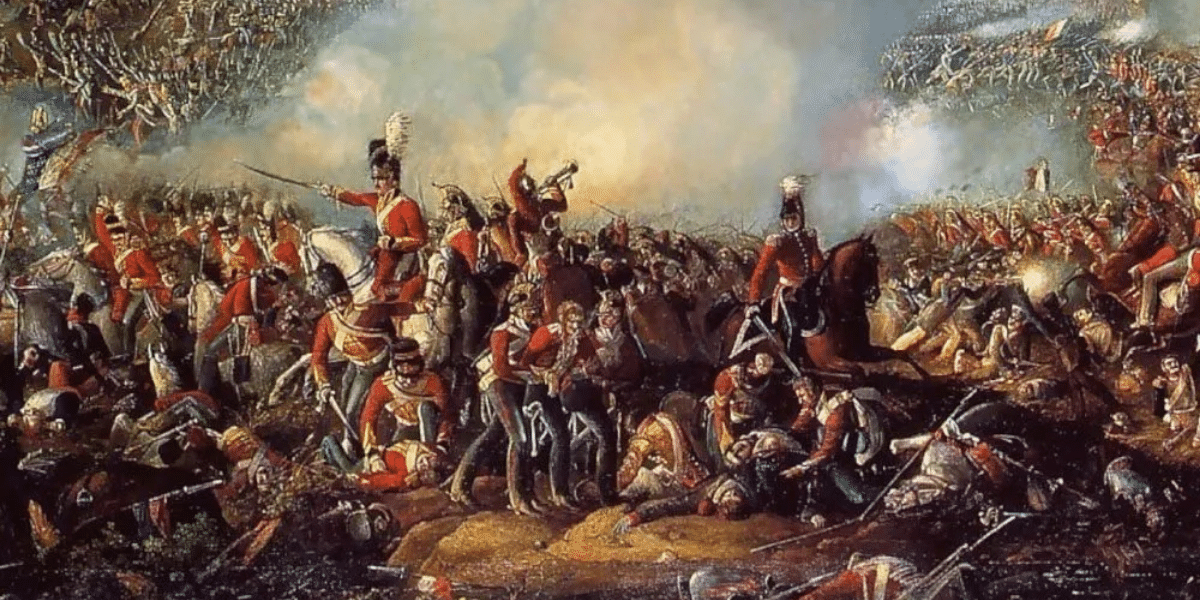
The 1764 Battle of Buxar was a key moment in British expansion in India. British East India Company forces, led by Major Hector Munro, faced an alliance of Indian rulers, including the Mughal emperor and the Nawabs of Bengal and Awadh.
Although outnumbered, the British won due to superior military tactics and weaponry. This victory secured British control over Bengal, Bihar, and Orissa.
The battle weakened the remaining Indian powers, paving the way for the Company’s dominance.
Table of Contents
The Battle of Buxar, fought on 22 October 1764, marked a defining moment in the expansion of British rule in India. It was a decisive confrontation between the British East India Company and a coalition of Indian powers led by Mir Qasim (Nawab of Bengal), Shuja-ud-Daula (Nawab of Awadh), and Shah Alam II (Mughal Emperor). Taking place in Buxar, Bihar, the British victory in this battle not only reinforced their military supremacy but also paved the way for the Treaty of Allahabad (1765), which granted them Diwani rights (revenue collection) in Bengal, Bihar, and Orissa. This blog explores its causes, major players, outcomes, and lasting impact on India’s colonial history.
What was the Battle of Buxar?
The Battle of Buxar was fought on 22 October 1764, between the English forces and a combined army of the Nawab of Oudh, the Nawab of Bengal, and the Mughal Emperor. The conflict arose due to the East India Company’s exploitation of trade privileges granted by the Nawab of Bengal, along with its growing colonial ambitions.
Battle of Buxar
Details
Date
October 22, 1764
Location
Buxar, Bihar, India
Opposing Forces
British East India Company vs. Nawab of Bengal, Nawab of Awadh, Mughal Emperor
British Commander
Hector Munro
Allied Commanders
Mir Qasim (Nawab of Bengal), Shuja-ud-Daula (Nawab of Awadh), Shah Alam II (Mughal Emperor)
Outcome
Victory for the British East India Company
Consequences
Solidified British control over Bengal paved the way for British dominance in India.
Importance of the battle of Buxar in Indian history
Established British Dominance: The battle marked a turning point in Indian history, solidifying the British East India Company’s (EIC) dominance.
Grant of Diwani Rights: The victory granted the EIC the right to collect revenue from vast swathes of Bengal, Bihar, and Odisha. This financial control provided the EIC with the resources to expand its military and political power.
Internal Strife Facilitated British Conquest: The battle highlighted the detrimental impact of internal conflicts among Indian rulers. The weakened state of Indian powers due to internal strife allowed the relatively smaller EIC force to achieve a decisive victory.
Foundation for British Rule: The consequences of Buxar paved the way for the establishment of British rule in India, significantly impacting the country’s political, social, and economic landscape.
Causes and Background
During the mid-18th century, India was going through a turbulent time marked by the fall of the Mughal Empire and the rise of regional rulers. At the same time, the British East India Company was gaining ground—not just through trade but also through increasing military involvement. Although Mir Qasim, the Nawab of Bengal, initially supported the British, he turned against them due to unfair trade practices and later allied with Shuja-ud-Daula and the Mughal Emperor Shah Alam II. The British, having already taken control of Bengal after the Battle of Plassey in 1757, were looking to expand further, which led to the conflict at Buxar. Many believe it was this battle—not Plassey—that solidified British dominance in India.
1. Political Background
Mughal Emperor Shah Alam II had little real power.
Regional rulers like Mir Qasim (Bengal) and Shuja-ud-Daula (Oudh) held actual authority.
Mir Qasim initially supported the British but later opposed them due to unfair trade policies.
2. Territorial Ambitions
British East India Company gained Bengal after the Battle of Plassey in 1757.
They aimed to expand their control further into India.
This clashed with the interests of Indian rulers, leading to conflict.
3. Significance of the Conflict
The battle was a key turning point.
Many historians argue that British colonial rule was truly established after Buxar, not Plassey.
The 5 Untold Secrets of the Battle of Buxar Revealed:
Secrets of the Battle of Buxar:
The Real Victor Was a Corporation The British East India Company’s private army defeated empires, making it a sovereign corporate power.
The Allied Forces Were Secretly Sabotaged The Indian coalition was fractured by distrust and conflicting agendas, not a unified front.
The True Prize Was India’s Treasury, Not Land Winning the tax collection rights (Diwani) let the British fund their empire with India’s own wealth.
The Mughal Emperor Became a British Pawn After his defeat, Shah Alam II was pensioned off, giving British rule a false veil of legitimacy.
It Was the Day the Boardroom Defeated the Throne The battle secured financial control, making the British Raj inevitable and impacting India’s economy.
Role of Various Participating Parties in the Battle of Buxar
Each participating party in the Battle of Buxar had its inspirations. The English East India Company, driven by Major Hector Munro, planned to tighten its grip on Bengal and gain income privileges over different domains. On the opposite side, Mir Qasim needed to recover Bengal, Shuja-ud-Daula meant to safeguard Oudh, and Shah Alam II looked to reestablish the respect of the Mughal Empire.
Participants
Respective Roles
Mir Qasim
The English terms “Dastak” and “Farmans” offended him. He plotted against the Mughal Emperor Shah Alam II and the Nawab of Awadh by forming an alliance.
Shuja-ud-Daulah
He was Awadh’s Nawab. Along with Mir Qasim and Shah Alam II, he established a confederacy.
Shah Alam II
The Mughal Emperor was he. His goal was to expel the English from Bengal.
Hector Munro
He was a British Army major. He led the English side in the Buxar War.
Robert Clive
After winning the Buxar War, he made treaties with Shah Alam II and Shuja-Ud-Daulah.
Battle of Buxar Fought Between and Participants:
1. Identification of the opposing forces
The Battle of Buxar was a clash between two opposing forces: the British East India Company and a coalition of Indian rulers. This coalition consisted of Mir Qasim, the Nawab of Bengal; Shuja-ud-Daula, the Nawab of Oudh; and Shah Alam II, the Mughal Emperor.
2. Key Leaders and Commanders
On the British side, the key leader was Major Hector Munro, a great military commander. He was in charge of the British East India Company’s forces and was known for his tactical brilliance. For the Indian coalition, Mir Qasim Shuja-ud-Daula and Shah Alam II were the principal leaders.
3. Military Strengths and Strategies
The English had a thoroughly prepared armed force, having unrivalled big guns and restrained troops. Their technique was to utilize their cannons effectively and keep a tight formation to counter the mush but less coordinated Indian powers. The Indian alliance, then again, had a bigger armed force; however, it came up short on discipline and high-level weapons that the English had. Their system was to overpower the English with numbers and utilize their insight into the neighbourhood landscape for their potential benefit.
Date and Geographical location of Buxar, where the battle occurred
The battle took place on October 22, 1764. The war’s geographical location is in present-day Bihar, India. The battle of Buxar’s date and its location are significant because the area provided a strategic advantage to the British, allowing them to utilize their artillery effectively.
The Battle of Buxar was a complex military engagement with multiple participants, each with their leader’s strengths and strategies. The British East India Company emerged victorious largely due to their superior military tactics and discipline, forever altering the course of Indian history.
The Course of the Battle of Buxar
The Battle of Buxar was a day-long conflict that unfolded with intense ferocity. Both sides had their strategies and objectives, but as the day progressed, it became clear that the British had the upper hand.
1. Battle Narrative (What Happened During the Battle)
The Battle began early in the morning, with both sides using heavy artillery.
British commander Major Hector Munro placed his cannons in smart, powerful positions.
The Indian alliance also used artillery, but their weapons and setup were not as strong or effective.
As time passed, the British infantry moved ahead in tight, disciplined groups with bayonets.
The Indian side tried to fight back using cavalry charges, but the British troops held their ground.
By midday, it was clear that the British were winning the battle with their strong firepower and formation.
2. Key Turning Points in the Battle
Breaking the Indian Left Flank:
The British broke through the left side of the Indian army, causing panic and confusion.
This sudden break made the Indian soldiers scattered and vulnerable.
Capture of Indian Artillery:
The British captured some of the Indian army’s cannons.
This reduced Indian firepower and gave a big morale boost to British troops.
3. Military Strategies Used
British Strategy:
Used superior artillery to weaken the enemy from a distance.
Moved forward with well-trained and organized infantry units.
Focused on discipline, teamwork, and better weapons.
Indian Coalition’s Strategy:
Relied on greater numbers and cavalry strength.
Tried to overpower the British with force.
But lacked coordination, and their weapons were not as advanced, which made their plan ineffective.
4. Outcome of the Battle
The British army’s well-planned strategy, strong leadership, and well-trained soldiers led them to a clear and decisive victory.
This win at Buxar marked a major shift, helping the British gain strong political and military control in India.
Significance
The Buxar Turning Point: The 1764 Battle of Buxar stands as a pivotal moment in India’s history. This victory solidified British control over Bengal, Bihar, Orissa, and Bangladesh.
Beyond Bengal: While the Battle of Plassey in 1757 weakened the Nawab of Bengal, Buxar’s outcome extended British influence. They not only decisively defeated the Nawab’s forces but also gained leverage over the weakening Mughal Empire and the Awadh region.
Foundation for Dominance: This decisive win established a strong foothold for the British in India. It paved the way for their eventual expansion and dominance over a large part of the country.
1757: Plassey Paves the Way: The British East India Company defeats the Nawab of Bengal, Siraj-ud-Daulah, at Plassey. This victory established their foothold in Bengal.
1760: A Fallen Emperor Seeks Allies: Mughal Emperor Shah Alam II loses his throne and seeks support from Indian rulers to regain power.
1762: Discontent in Bengal: The British-appointed Nawab of Bengal, Mir Qasim, rebelled due to disagreements over trade and revenue.
1764: A Coalition Forms: Shah Alam II joins forces with the Nawabs of Oudh and Bengal to challenge the British East India Company.
October 22nd, 1764: The British, led by Hector Munro, overpower the Indian coalition with superior weaponry and tactics.
November 1764: Surrender and Treaty: Shah Alam II surrendered to the British and signed the Treaty of Allahabad.
August 1765: The Company’s Dominance Secured: The Treaty of Allahabad grants the British East India Company the right to collect revenue from Bengal, Bihar, and Orissa, solidifying its control over these regions.
This timeline highlights the rising tensions, the formation of resistance against the British, and their ultimate victory at Buxar. The treaty that followed cemented their dominance in the region.
What was the outcome and result of the Battle of Buxar?
1. The ultimate victory
The winner of this battle was the British East India Company. Their disciplined troops and strategy led to a win for them and altered the course of Indian history.
2. Impact on the Political Landscape
The result of the Battle had a great impact on the political landscape of India. The British East India Company gained immense power. They secured the Diwani rights, which allowed them to collect revenue from Bengal, Bihar, and Orissa. This financial gain enabled them to strengthen their military and administrative capabilities, setting the stage for further territorial expansion.
The Indian rulers involved in the battle suffered big losses. They dethroned and exiled Mir Qasim. Shuja-ud-Daula lost control over parts of his territory, and the Mughal Emperor Shah Alam II became a puppet ruler under British protection. The defeat weakened the political dominance of these rulers and made it clear that the British were the new dominant force in the region.
3. Territorial Changes or Implications
The territorial implications of the victory were vast. The British now controlled rich regions, which they used to fund their colonial endeavours. The Treaty of Allahabad, signed in 1765, rectified these territorial gains and revenue rights. This treaty gave the British control over large parts of India and legitimized their rule, making it easier for them to expand further.
The outcome and result of the Battle were pivotal. The British ultimately prevailed, obtaining enormous financial and geographical benefits. After the Indian coalition was defeated, the balance of power changed, making the British control India and dominating the force for many years.
Key Facts:
On October 22, 1764, Mir Qasim, Shuja-Ud-Daula, and Shah Alam-II were defeated.
Robert Clive played a significant part in the decisive battle that Major Hector Munro won.
In northern India, English grew to be a dominant force.
The districts of Midnapore, Burdwan, and Chittagong were given to the English by Mir Jafar (Nawab of Bengal) so they could maintain their army.
In Bengal, the English were also allowed to trade duty-free, except for a 2% salt duty.
Najimud-Daula, Mir Jafar’s younger son, succeeded him as nawab after his death, but the naib-subahdar, whom the English could appoint or remove, held actual administrative authority.
In the Treaty of Allahabad, Clive reached diplomatic agreements with Shuja-Ud-Daula of Awadh and Emperor Shah Alam II.
What is the Treaty of Allahabad 1765?
The Treaty of Allahabad, a major agreement, was signed on August 16, 1765, following the Battle of Buxar in 1764. The following are the treaty’s principal points:
Treaty between Robert Clive & Shuja-Ud-Daulah:
Surrender of Allahabad and Kara: Shuja-ud-Daula, after his defeat in the Battle of Buxar, surrendered the territories of Allahabad and Kara to Shah Alam II, the Mughal Emperor, under British protection. This weakened Shuja’s position and solidified the Mughal figurehead’s dependency on British support.
Payment of War Indemnity: Shuja agreed to pay Rs 50 lakh as war indemnity to the British East India Company. This payment, a significant financial burden, was a common tactic used by the British to extract resources from defeated rulers and ensure their subjugation.
Grant to Balwant Singh: Shuja-ud-Daula granted Balwant Singh, the Zamindar (landlord) of Banaras, full possession of his estate. This move aimed at gaining local loyalty and support, ensuring cooperation from important regional figures.
Treaty between Robert Clive & Shah Alam II:
Shah Alam was to reside in Allahabad under the Company’s protection.
He granted the Diwani (revenue rights) of Bengal, Bihar, and Orissa to the Company in return for an annual payment of Rs 26 lakh.
Shah Alam also provided Rs 53 lakh for the Company to perform Nizamat functions—defence, policing, and justice—in these provinces.
The treaty allowed the Company to collect taxes directly from Bengal, Bihar, and Orissa, previously under Mughal authority.
The Nawab of Awadh was acknowledged as an independent ruler but had to pay a large sum for Company support in the Battle.
This treaty marked the decline of Mughal power and the rise of British dominance in India.
With control over Bengal’s revenue, the Company gained financial and political influence across India.
Battle of Plassey and Buxar: Differences
Aspect
Battle of Plassey
Battle of Buxar
Date
June 23, 1757
October 22, 1764
Location
Plassey, Bengal, India
Buxar, Bihar, India
Opposing Forces
British East India Company vs. Nawab of Bengal
British East India Company vs. Nawab of Bengal, Nawab of Awadh, Mughal Emperor
British Commander
Robert Clive
Hector Munro
Local Commanders
Siraj-ud-Daulah (Nawab of Bengal)
Mir Qasim (Nawab of Bengal), Shuja-ud-Daula (Nawab of Awadh), Shah Alam II (Mughal Emperor)
Outcome
Victory for the British East India Company
Victory for the British East India Company
Consequences
Start of British political control in Bengal
Solidified British control over Bengal, expanded British influence in India
What was the Dual Government System of Bengal?
Background: After the Battle of Buxar in 1764, the British East India Company gained control over Bengal.
Introduction of the Dual System (1765): Robert Clive, then the Governor-General of Bengal, introduced this system.
Diwani Rights: The Company gained the right to collect taxes (Diwani) from the region.
Nizamat Rights: The Nawab of Bengal retained the responsibility for law and order, including administration and justice (Nizamat).
Consequences of the Dual System
Corruption and Exploitation:
Company officials abused their power for personal gain.
They exploited Indian merchants through unfair trade practices and excessive taxes.
Economic Decline:
Indian industries, particularly textiles, suffered due to competition from British goods and unfair trade policies.
Farmers were heavily burdened with taxes, leading to poverty and widespread famines.
Administrative Breakdown:
Both the Company and the Nawab neglected their administrative duties.
Law and order deteriorated, and the needs of the people were ignored.
Abolition of the Dual System
In 1772, Warren Hastings, the new Governor-General, abolished the Dual System.
The Company assumed direct control over both revenue collection (Diwani) and administration.
The Nawab was reduced to a mere figurehead, stripped of most of his powers.
Impactof the Dual System
The Dual System had a devastating impact on the economy and society of Bengal.
It paved the way for the Company’s increasing dominance and ultimately led to British colonial rule in India.
Key Facts about the Battle of Buxar UPSC Mains
Awadh’s Strategic Choice: After defeating Shuja-Ud-Daulah, the British refrained from annexing Awadh, avoiding the obligation to defend an extensive border against Afghan and Maratha invasions.
Awadh as a Buffer State: Shuja-Ud-Daulah became an ally to the British, turning Awadh into a buffer state, protecting British territories from northern invasions.
Treaty of Allahabad’s Impact: The treaty with Mughal Emperor Shah Alam II made him a symbolic figure for the Company, while his Farman officially legitimized the British control in Bengal, securing their political authority.
Conclusion
The Battle of Buxar was a pivotal event in Indian history that marked the rise of British power in India. Its outcome led to significant political shifts and territorial gains for the British East India Company, while weakening the influence of Indian rulers. More than just a military victory, the battle shaped the future of colonial rule, making it one of the most important conflicts in India’s past.
Frequently Asked Questions (FAQs)
Who won the Battle of Buxar?
The British East India Company won the Battle of Buxar on October 22, 1764, defeating the combined forces of Mir Qasim, Shuja-ud-Daula, and Mughal Emperor Shah Alam II.
Why was the Battle of Buxar considered a turning point for British rule in India?
The battle demonstrated the British forces’ military superiority and weakened the indigenous rulers’ power. It paved the way for the British to establish a stronghold in India, eventually leading to colonial rule.
Who was the Nawab defeated in the Battle of Buxar?
Mir Qasim, the Nawab of Bengal, was defeated in the Battle of Buxar in 1764. After the battle, Mir Jafar became Nawab and ceded Midnapore, Burdwan, and Chittagong to the British East India Company to support their army.
Why did India lose the Battle of Buxar?
India lost the Battle of Buxar due to a lack of unity among the Indian rulers and poor coordination between their forces. In contrast, the British East India Company had superior tactics, better-trained soldiers, and artillery support.
When and where did the Battle of Buxar take place?
The Battle of Buxar was fought on October 22, 1764, in today’s Bihar.
What was the Treaty of Allahabad?
Signed in 1765, the treaty granted the British East India Company the Diwani rights (revenue collection) over Bengal, Bihar, and Odisha, cementing their rule.
What was the role of Hector Munro?
Hector Munro led the British forces to victory, showcasing superior military tactics against the combined Indian forces.
Who fought the Battle of Buxar?
The Battle of Buxar was fought between the British East India Company and a combined Indian alliance consisting of Mir Qasim (Nawab of Bengal), Shuja-ud-Daula (Nawab of Awadh), and Shah Alam II (Mughal Emperor). It took place on 22 October 1764 near Buxar in Bihar and ended in a decisive British victory.
What is the difference between Plassey and Buxar?
The Battle of Plassey (1757) was a political betrayal involving the British and Mir Jafar, which established initial British control in Bengal. The Battle of Buxar (1764), however, was a full-scale military conflict. Its victory gave the British East India Company administrative rights and confirmed their political dominance across major North Indian provinces.
Authored by, Muskan Gupta Content Curator
Muskan believes learning should feel like an adventure, not a chore. With years of experience in content creation and strategy, she specializes in educational topics, online earning opportunities, and general knowledge. She enjoys sharing her insights through blogs and articles that inform and inspire her readers. When she’s not writing, you’ll likely find her hopping between bookstores and bakeries, always in search of her next favorite read or treat.