Constitutional Role: The Attorney General of India is the highest law officer in the country, appointed under Article 76 of the Constitution to advise the Union Government on legal matters and represent it in the Supreme Court and other courts.
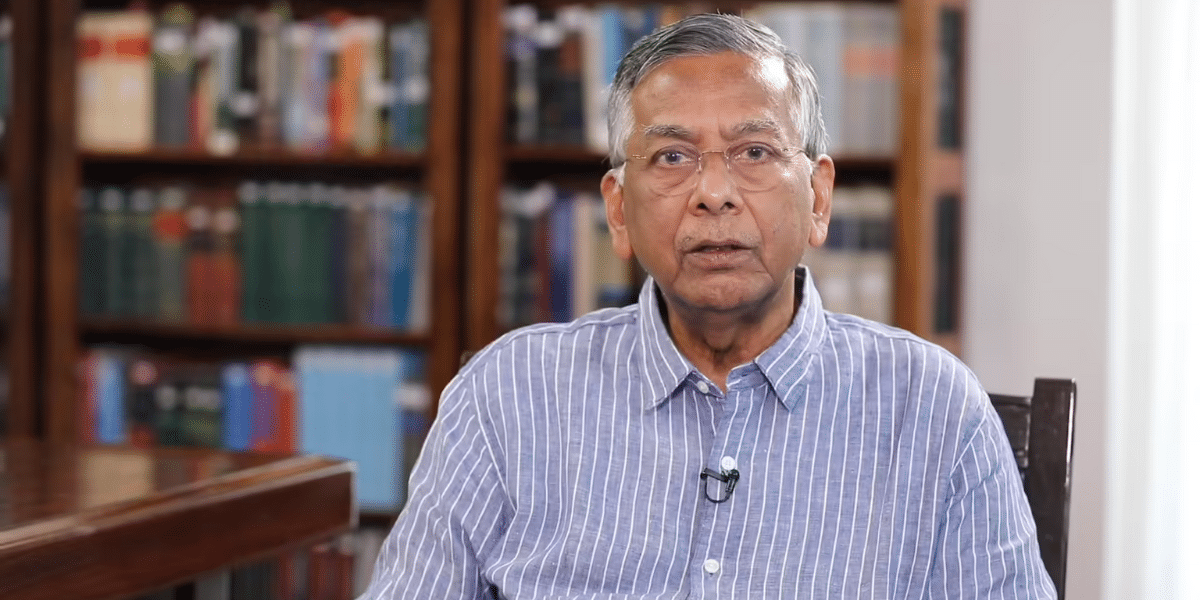
Current Attorney General (as of 2025): Senior Advocate R. Venkataramani is the current AG, appointed in October 2022, known for his constitutional expertise and independent legal stance.
Appointment & Tenure: Appointed by the President of India on the advice of the Union Government; holds office at the President’s pleasure without a fixed term.
Powers & Limitations: While the AG advises the government and appears in courts, they cannot engage in private practice against the Union or act as a government servant; they are expected to maintain impartiality.
Difference from Solicitor General: The Attorney General is a constitutional post, while the Solicitor General is a statutory officer assisting the AG; the AG has a broader mandate and authority.
Table of Contents
The Attorney General of India is the country’s highest legal officer and principal legal advisor to the Government of India. Established under Article 76 of Indian Constitution, the office ensures that all Union actions follow the Constitution.
India’s Attorney General (AG) is the Union Government’s chief legal advisor and principal advocate in the Supreme Court and other courts. This constitutional office, created under Article 76, serves as a key guardian of the rule of law within the framework of parliamentary democracy. Let us discuss in detail the Role, Powers, and Limitations of the Attorney General of India in this article.
Who is the Attorney General of India?
The Attorney General of India is the chief legal advisor to the Government of India and its primary lawyer in the Supreme Court. The post is established under Article 76 of the Indian Constitution and is a constitutional authority, not merely a civil servant or political appointee.
As of July 2025, R Venkataramani serves as the Attorney General of India, having assumed office on October 1, 2022. A veteran in constitutional law, his legal career spans over four decades, with vast experience in public law, civil liberties, and policy advocacy.
Who Appoints the Attorney General of India?
The President of India appoints the Attorney General under the advice of the Union Cabinet, especially the Prime Minister and Minister of Law and Justice.
Eligibility Criteria:
Must have at least five years as a judge in a High Court, ten years as an advocate, or an expert jurist in the President’s opinion.
Must be qualified to be appointed as a judge of the Supreme Court.
Should be an Indian citizen.
Article 76 of Indian Constitution outlines the Attorney General’s appointment, qualifications, and powers.
Key Provisions:
Must qualify to be a Supreme Court judge
Appointed by the President of India on the Cabinet’s advice
Holds office at the pleasure of the President
Has parliamentary participation rights (but no voting power)
Entitled to government legal documents and records for duties
Who is the Current Attorney General of India?
Shri R Venkataramani continues to serve as the Attorney General. Appointed in late 2022, he remains a key figure in legal battles concerning data protection, digital rights, federal structure, and constitutional balance.
Responsibilities of the Attorney General of India
The AG’s wide-ranging responsibilities include:
Advising the Government of India on legal matters
Representing the Union Government in the Supreme Court and High Courts
Assisting the President in legal and constitutional matters
Contributing to legislative and policy formulation through legal counsel
The Attorney General also plays an advisory role in inter-ministerial legal coordination, especially in cases with implications for constitutional interpretation and fundamental rights.
Appointment Process of the Attorney General of India
The President of India appoints the Attorney General upon the advice of the Union Cabinet. This process involves thorough vetting to ensure competence and impartiality.
Criteria:
Must be a citizen of India
Must qualify to be a Supreme Court judge:
Minimum five years as a High Court judge, or
Minimum ten years of advocacy in the High Court, or
Recognized as an eminent jurist by the President
What is the Term of the Attorney General’s Office?
Unlike other constitutional posts, the term of the Attorney General is not fixed by the Constitution. It is at the discretion of the President, who holds the power to appoint or remove the AG at any time.
Term Specifics:
Serves during the pleasure of the President.
May resign at any time by resigning from the President.
The position is not bound by tenure or age limits.
Role of the Attorney General of India
The Attorney General’s role is crucial for the functioning and governance of the Indian legal system. They act as the chief legal representative of the Union Government in legal matters.
Constitutional Functions:
Advise the government of India on legal matters referred to by the president.
Appear in the Supreme Court and High Courts on behalf of the Government of India.
Perform other legal duties assigned by the President.
Statutory Responsibilities:
Appear in matters involving national interest and constitutional interpretation.
Represent the Union in important references under Article 143 (Presidential Reference).
Participate in parliamentary proceedings (without voting rights).
Primary Duties:
Legal adviser to the Government of India
Represents the Union in Supreme Court/High Courts
Participates in the vetting of key legislative proposals
Takes part in Parliament and Committees (without vote)
Additional Functions:
Leads public interest litigation from the Union’s perspective
Collaborates with legal officers and ministries
Promotes constitutional values and legal research
Participates in legal education and public discourse
Powers of the Attorney General
The Attorney General of India wields significant legal authority to advise, represent, and protect the interests of the Union Government. These powers are designed to support the AG in maintaining the rule of law and ensuring constitutional compliance in state actions.
Right of Audience in All Courts: The AG can appear and be heard in any court within the territory of India, irrespective of jurisdiction or hierarchy. This includes the Supreme Court, High Courts, and subordinate courts.
Access to Government Information: The AG has the legal right to access all confidential reports, official documents, and legal papers necessary for advising the government or defending its position in court. This is essential for preparing informed legal opinions.
Participation in Parliamentary Proceedings: Under Article 88 of the Constitution, the AG may participate in both Houses of Parliament, their joint sittings, and any of their committees—although without the right to vote. This ensures the government has legal support in legislative discussions and debates.
Advisory Role in Legal Policy and Lawmaking: The AG contributes to the formulation and vetting of laws, especially in areas with constitutional significance such as data privacy, federal relations, or national security. The AG’s counsel is often sought in the drafting of major legislation, especially where legal scrutiny is anticipated.
Defending the Union in Major Litigations: The AG leads the legal defense in key constitutional challenges, such as matters involving fundamental rights, Centre-State disputes, electoral reforms, and PILs against the Union Government.
Advisory Role to the President: When the President of India refers a legal matter to the Supreme Court under Article 143 (Advisory Jurisdiction), the AG plays a pivotal role in presenting the government’s legal stand.
Representation in International Law Matters: In cases involving treaties, international arbitration, or diplomatic disputes, the AG may represent India’s legal position in international forums and tribunals.
Coordination with Legal Officers: The AG leads and coordinates with other key legal officers, such as the Solicitor General and Additional Solicitors General, ensuring a unified legal strategy for the government.
What are the Limitations on the Attorney General?
While the Attorney General of India is the apex legal officer of the Union, the role is subject to significant constitutional, statutory, and ethical limitations to ensure balance and prevent misuse of authority. These limitations have gained renewed attention in 2025, particularly amidst rising concerns over the independence of constitutional offices and legal ethics.
Key Restrictions
Not a Full-Time Government Servant: The AG is not considered a full-time functionary of the Government of India. This means the AG is not bound by the service rules applicable to civil servants and may undertake private legal work, subject to certain restrictions.
Prohibition Against Conflict of Interest: The AG cannot appear against the Government of India or take any briefs from parties opposing the Union. As of 2025, the Law Ministry has re-emphasized this principle in light of recent debates over AG appearances in politically sensitive litigation.
No Voting Rights in Parliament: Though the AG may participate in parliamentary proceedings under Article 88 of the Constitution, they have no right to vote. This ensures the AG retains neutrality and advisory status without interfering in legislative decisions.
Subject to Professional Conduct Regulations: The AG is bound by the Bar Council of India Rules and the Advocates Act, 1961, like any other senior advocate. Any breach may attract professional sanctions, as reaffirmed by recent Bar Council rulings in 2024–25.
No Departmental Control or Oversight Role: The AG does not exercise control over ministries or departments and cannot enforce legal compliance. Their role remains advisory and representative, not administrative.
Tenure Subject to Political Confidence: Although appointed by the President, the AG serves at the pleasure of the Union Cabinet. This makes the AG’s tenure politically sensitive, especially in coalition governments or during legal-political crises.
Limited Enforcement Power: The AG cannot direct or compel legal action by the government. The political executive may overrule or disregard their advice, limiting their direct impact on policy enforcement.
Judicial Insight: In Indira Gandhi v. Raj Narain (1975) and reaffirmed in Rojer Mathew v. South Indian Bank Ltd. (2024), the courts have reiterated that the AG’s role must not be compromised by political pressures or private interests.
Difference Between Attorney General and Solicitor General
The Attorney General of India and the Solicitor General of India are top law officers, but they differ in appointment, role, and hierarchy.
Feature
Attorney General of India
Solicitor General of India
Constitutional Backing
The highest law officer
No (Statutory position)
Appointed By
President of India
Appointed by the Appointments Committee of the Cabinet
Main Role
Chief legal adviser & top law officer
Assists AG; handles litigation
Appears In
SC, Constitutional matters
SC, High-Profile cases
Hierarchy
Generally, for 3 years
Second after AG
Term
Not fixed
Generally for 3 years
Attorney General of India List (1950 to Present)
The Attorney General of India has played a pivotal role in shaping the constitutional and legal history of the nation. Since adopting the Constitution in 1950, several distinguished jurists have held this office, providing legal guidance to the Union government through critical judicial and political junctures. Below is a table of all Attorneys General since the adoption of the Constitution in 1950:
The Attorney General of India UPSC topic is crucial for aspirants preparing for Civil Services. It is frequently asked in Polity and Constitution sections due to its relevance in understanding constitutional offices, legal functioning of the Union Government, and governance mechanisms.
Sample UPSC Prelims MCQ:
1. Under which Article of the Indian Constitution is the Attorney General of India appointed?
A. Article 74
B. Article 75
C. Article 76
D. Article 77
2. Who appoints the Attorney General of India?
A. Prime Minister of India
B. President of India
C. Chief Justice of India
D. Union Public Service Commission
3. Which of the following is NOT true about the Attorney General of India?
A. He has the right to speak in Parliament
B. He is the chief legal advisor to the government
C. He can vote in Parliamentary proceedings
D. He must be qualified to be a Supreme Court judge
4. Who among the following is the Attorney General of India as of 2025?
A. Mukul Rohatgi
B. K.K. Venugopal
C. R. Venkataramani
D. Soli Sorabjee
5. What is one key difference between the Attorney General and the Solicitor General?
D. The Solicitor General advises the President directly
A. Both are constitutional positions
B. The Attorney General is a constitutional post; the Solicitor General is not
C. Both can speak and vote in Parliament
Conclusion
The Attorney General of India is a pillar of the constitutional legal framework, offering impartial legal advice and ensuring that Union actions withstand judicial scrutiny. Understanding this office is vital for those preparing for exams or studying Indian polity, as it helps them comprehend how constitutional checks and balances operate in practice.
R Venkataramani is the current Attorney General of India with second longest terms in the history of Attorney General of India.
What is article 76 and 78?
Article 76 of Indian Constitution outlines the Attorney General’s appointment, qualifications, and powers, while Article 78 provides for the duties of the Prime minister with respect to fuyrnishing information ot the president.
Who is the 16th AG of India?
R Venkataramani is the 16th Attorney General of India. Having experience as a Constitutional lawyer and being a senior Advocate with over 45 years of experience.
Who was the first AG of India?
Motilal Chimanlal Setalvad was the first Attorney General of India. He was also known for his work in Indian Jurisprudence.
Who is the New Chief Justice of India?
Justice Bhushan Gavai, also known by the name B.R. Gavai is the new Chief justice of India.
Authored by, Muskan Gupta Content Curator
Muskan believes learning should feel like an adventure, not a chore. With years of experience in content creation and strategy, she specializes in educational topics, online earning opportunities, and general knowledge. She enjoys sharing her insights through blogs and articles that inform and inspire her readers. When she’s not writing, you’ll likely find her hopping between bookstores and bakeries, always in search of her next favorite read or treat.