Alcohol prohibition in India refers to the legal banning of the manufacture, sale, consumption, and possession of alcoholic beverages in certain states and union territories. Rooted in both constitutional directives and public health objectives, alcohol prohibition is a complex policy issue that varies widely across the country. While some states like Gujarat, Bihar, and Nagaland enforce total prohibition, others regulate alcohol through licensing, taxation, and sale restrictions.
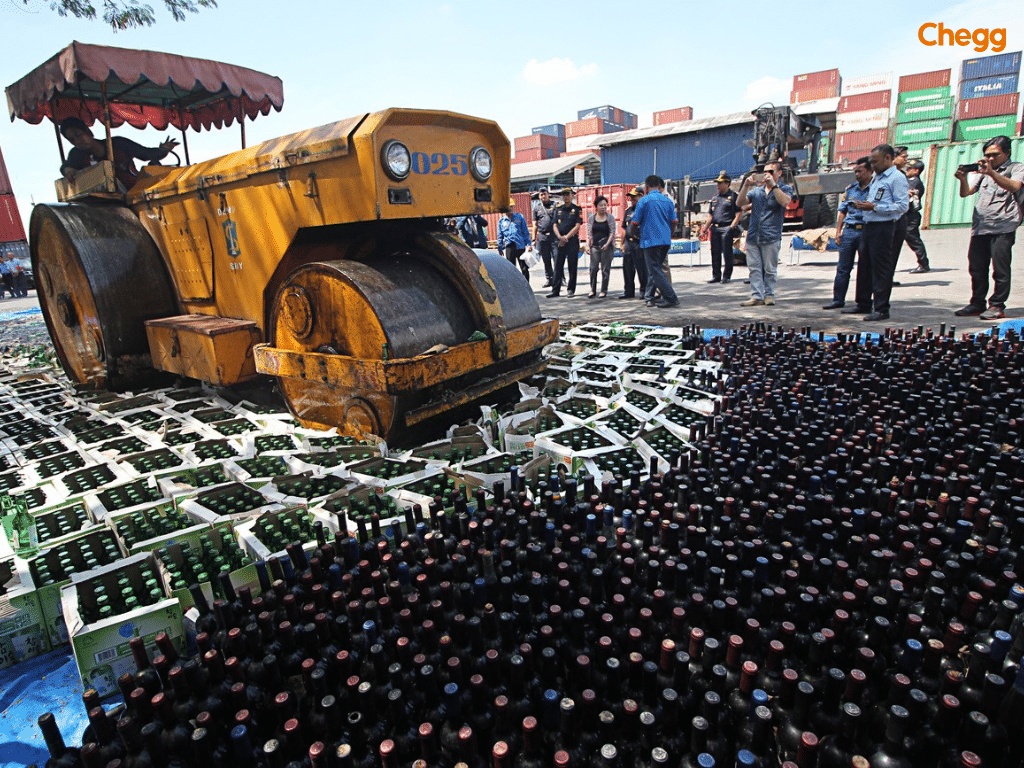
The roots of alcohol prohibition in India go back to the colonial era, where early temperance movements, Gandhian philosophy, and post-independence experiments collectively shaped the country’s unique and fragmented approach to liquor regulation.
After 1947, several Indian states experimented with prohibition, often influenced by Gandhian ideals or populist sentiment. However, many of these efforts were short-lived due to revenue loss, smuggling, and enforcement difficulties.
| State/UT | Law / Act Name | Year Enacted | Prohibition Status (2025) | Key Provisions / Notes |
|---|---|---|---|---|
| Gujarat | Bombay Prohibition Act (as applicable to Gujarat) | 1949 | Total Prohibition | Includes harsh penalties; amended in 2022 for hooch-related deaths. |
| Bihar | Bihar Excise (Amendment) Act | 2016 | Total Prohibition | The law was reinstated after public demand; it had earlier lifted the ban. |
| Nagaland | Nagaland Liquor Total Prohibition Act | 1989 | Total Prohibition | Widely criticized for poor enforcement. |
| Mizoram | Mizoram Liquor Prohibition Act (various iterations) | 2019 (latest) | Total Prohibition (reinstated) | Penalizes consumption, sale, and storage; partially eased in 2022. |
| Lakshadweep | Local Regulation / Admin Order | N/A | Total Prohibition | No licensed liquor outlets allowed. |
| Tamil Nadu | Tamil Nadu Prohibition Act | 1948 | Not Enforced | Law reinstated after public demand; it had earlier lifted the ban. |
| Andhra Pradesh | Andhra Pradesh Prohibition Act (historical) | 1995 (repealed) | No Prohibition | Attempted total prohibition in 1995–97; failed due to smuggling. |
| Kerala | Abkari Act + Policy Directives | Ongoing | Regulated Sale | The ban was lifted in 5 districts (2022); active debate is ongoing. |
| Manipur | Manipur Liquor Prohibition Act (partial) | 1991 (amended) | Partial Prohibition | The state sells liquor through TASMAC stores. |
| Delhi / Goa | Delhi Excise Act / Goa Excise Duty Act | State Laws | Regulated Sale | Legal alcohol sales with licensing and age restrictions. |
In India, apart from states with full or partial alcohol bans, dry days are observed nationwide when alcohol sales are prohibited. These include national holidays like Republic Day, Independence Day, and Gandhi Jayanti. States also declare state-specific dry days for religious, cultural, or law-and-order reasons. For example, Kerala observes the first day of every month as a dry day, while Maharashtra includes regional observances like Shivaji Jayanti. Although most outlets remain shut, some licensed venues may serve alcohol with special permission from the excise department. Dates may also vary annually. Here’s a list of dry days in India 2025:
Many factors have caused a rise in alcohol consumption in India state-wise. Factors like an increase in spending and urbanization have made India the third-largest alcohol and beverage market in the world.
Specific regional trends show that men’s alcohol consumption is notably high (40% and above) in some areas of Assam, Jharkhand, Chhattisgarh, and Odisha.

In July 2022, at least 28 people died and 60 others fell ill after consuming altered liquor in the Ahmedabad and Botad districts of Gujarat state. These districts have strict prohibitions on liquor manufacturing, sale, and consumption. The chemical used to change the liquor remains unknown.
In February 2019, nearly 100 people died in Assam and neighboring Uttarakhand due to contaminated alcohol. Illegally brewed alcohol is common in India, where it is often spiked with chemicals like pesticides to increase potency.
In August 2020, at least 86 people died in Punjab after consuming illegally-made alcohol. Authorities conducted raids, confiscated suspected liquor supplies, and made arrests in response to the tragedy.

Alcohol Prohibition in India (Dry states in India), state-wise:
| State | Year of Alcohol Ban |
|---|---|
| Gujarat | 1960 |
| Bihar | 2016 |
| Nagaland | 1989 |
| Mizoram | 1997 |
The state of Gujarat has always been a staunch supporter of alcohol prohibition in India. This sentiment has existed since Gujarat split from Maharashtra and achieved statehood. One of the main reasons for alcohol prohibition is the Gandhian philosophy in Gujarat. Mahatma Gandhi’s influence enters Gujarat. Gandhi was also strictly against all intoxicants. Another reason for the ban could also be to combat the rising age of alcohol consumption in India. Banning alcohol preserves the Gandhian principles that the state abides by. The first state to ban alcohol in India was Gujarat, on May 1st, 1960.
Nagaland is strictly against alcohol consumption and has banned it. In Naga culture, people mostly view drinking as taboo. A lot of Christian missionaries in the state also opposed alcohol consumption. Not only that, the movement to ban alcohol in the state was so rampant that people began fasting. As a result, the state implemented the Prohibition Act of 1989 in April 1990.
Mizoram’s handling of the prohibition of alcohol can be pretty confusing for some. The Prohibition Act of 1995 came into effect in 1997. Then, in 2007, a partial ban permitted guavas and grapes to produce wine. However, only a certain amount of alcohol was allowed. Then, another act called the Mizoram Liquor Prohibition Act, 2019, made alcohol illegal again. Alcohol consumption has been banned in the state ever since. Similar to Nagaland, Mizoram looked down on alcohol and considered it foul and against their culture.
The decision to ban alcohol in Bihar was a major one. The Bihar Prohibition and Excise Act 2016 was introduced in 2015, 6 months after Nitish Kumar was elected Chief Minister. Banning alcohol meant a massive blow to the excise that the state collects. Despite this, the ban was met with tremendous aplomb from the masses, especially women. This is because acts of spousal and domestic violence were attributed to heavy/binge drinking. Although Alcohol Prohibition in India is a heavily debated topic, states like Bihar support the ban on alcohol.
Alcohol consumption is strictly and completely banned in certain parts of India. Each state’s challenges are unique, but the primary reason is public safety and health.
Despite the Indian Constitution prohibiting alcohol, most states find it extremely difficult to pass such a law. This is mainly because alcohol sales are difficult to ignore and have regularly contributed significantly to state government revenue. For example, during the nationwide COVID-19 lockdown in April 2020, state liquor revenues in Maharashtra were Rs 11,000 crore as opposed to Rs 17,000 crore in March.
Article 47 of the Indian Constitution, a Directive Principle, urges the State to prohibit intoxicating substances in the interest of public health. Rooted in Gandhian principles, this has led to alcohol bans in certain states. A 2019 MoSJE study found over 57 million Indians suffer from harmful alcohol use, reinforcing the push for prohibition. While the Centre allows states to decide on alcohol laws, the first bans began in 1950 in Gujarat, Maharashtra, and Tamil Nadu. Others adopted partial bans, while some, like West Bengal and Rajasthan, never enforced prohibition.
The right to privacy, affirmed in the K.S. Puttaswamy case, is part of Article 21 and extends to personal choices like food and drink. This has sparked debate on whether alcohol consumption should be protected under this right. Despite this, several Indian states enforce complete bans on alcohol, citing health and social concerns. The legal and constitutional tension between personal liberty and public welfare makes alcohol prohibition a complex issue. Let’s explore how states approach this policy and its broader implications on individual rights and governance.
Although prohibition is constitutionally and politically backed in many Indian states, its enforcement faces widespread issues. Smuggling, illegal brewing, corruption, and rising enforcement costs undermine its effectiveness.
Prohibition has unintentionally created a thriving black market. Illegal alcohol is often smuggled from non-prohibition states using rail, road, and courier networks. Gujarat and Bihar have reported frequent seizures of large alcohol consignments, indicating systemic evasion.
In the absence of legal access, many turn to unsafe homemade alcohol. This has led to tragic incidents, such as the 2022 Bihar hooch tragedy that resulted in numerous deaths. Spurious liquor is often toxic and produced in unhygienic, hidden setups.
Police and excise departments enforce prohibition, but limited manpower, logistical constraints, and corruption dilute their effectiveness. While many small-time offenders are arrested, larger networks often operate with political or economic protection.
States like Odisha have introduced geofencing around educational zones to restrict alcohol delivery near schools and colleges. Some states are experimenting with drones, digital checkpoints, and bottle-tracking technologies, though these efforts are still limited in scope and consistency.
Prohibition demands massive public spending on enforcement mechanisms. At the same time, states lose significant excise revenue. For example, Bihar has faced high enforcement costs, raising concerns about the financial sustainability of a blanket ban.
Thousands of alcohol-related arrests burden the judiciary. In some cases, family members or landlords of offenders have also been penalized. High courts in Gujarat and Bihar have begun re-evaluating overly harsh provisions to ensure fairness.
There are strict measures regarding the legal alcohol consumption age in India. However, according to Statista, most Indian adults between 45 and 59 years of age consume alcohol. A concerning development is that 8.3% of the drinkers in the country are teenagers. Barring the alcohol-banned states in India, the legal age in most states is 21. States like Himachal Pradesh have a legal age of 18. Meanwhile, Maharashtra has a legal age limit of 25.
| Age | Name of the state |
| 18 years | Rajasthan, Himachal Pradesh, Goa, Andhra Pradesh, Sikkim, and Puducherry |
| 23 years | Kerala |
| 25 years | Maharashtra (light beer is allowed at the age of 21), Haryana, Punjab, Chandigarh, Dadra and Nagar Haveli, Daman and Diu |
| 21 years | All the remaining states |
Alcohol prohibition in India reflects a complex intersection of constitutional ideals, cultural values, public health goals, and economic realities. While Article 47 promotes state-led prohibition, the enforcement landscape reveals significant challenges, including black-market growth, illicit brewing, and legal backlogs. Some states uphold total bans, citing social benefits and Gandhian principles, while others manage regulated sales due to revenue concerns.
The right to privacy under Article 21 also introduces legal tensions around individual choice. As India evolves socially and economically, a uniform national policy remains unlikely. Instead, a state-wise approach continues, shaped by local cultures, politics, and economic priorities. The debate over prohibition versus regulation is far from settled and will likely remain a subject of active discussion and reform in the coming years.
Read more:
Alcohol is not banned across India, but states like Gujarat (since 1960), Bihar (since 2016), Nagaland, Mizoram, and Lakshadweep have enforced prohibition laws, restricting its sale and consumption based on health, cultural, or religious considerations.
Since 1960, Gujarat has enforced alcohol prohibition to honor Mahatma Gandhi. Despite the ban, illicit liquor, often referred to as hooch, remains accessible, with reports suggesting it thrives due to alleged collusion with certain law enforcement officials.
In India, the legal blood alcohol concentration (BAC) limit for drivers is 0.03%, or 30 mg of alcohol per 100 ml of blood. This standard applies universally, and exceeding it can result in legal consequences and penalties.
India enforces total alcohol prohibition in Bihar, Gujarat, Mizoram, Nagaland, and the union territory of Lakshadweep. Additionally, certain districts in Manipur impose partial restrictions. These bans aim to address health, social, and cultural concerns related to alcohol consumption.
Arunachal Pradesh records the highest alcohol consumption among both men and women in India. States like Chhattisgarh, Telangana, and northeastern regions such as Assam and Sikkim also report notably high alcohol use across genders, reflecting regional cultural and social patterns.