


An internship report is a document with summary statements about the knowledge and skill competency gained during an internship. It allows students to reflect on learning and professional writing and show employers what they have mastered. The report’s format is easy to read and well-presented, making it a good tool for boosting a career.
This guide gives an overview of how to make an internship report, including key components, formatting guidelines, and industry-specific examples. Whether you are a student intern or an educator, this resource will be enough to give you the skills to craft a brilliant and properly organized report sample, leaving an unforgettable impression on academic and professional growth.
An internship links academic learning and practical experience, exposing students to the industry by allowing them to apply theoretical ideas in real-world settings. Although an internship helps students gain practical experience, the actual value of the internship is derived from the students documenting their experiences in a well-planned report.
It is crucial to write an internship report for various reasons.
A structured internship report format ensures clarity and professionalism, helping students communicate their work experiences concisely and effectively.
| Aspect | Internship Report | Work Report |
| Purpose | Documents learning experiences and growth during an internship. | Provides analytical insights for business decision-making. |
| Focus | Emphasizes personal and professional development. | Highlights project progress, company performance, or financial results. |
| Audience | Academic supervisors, mentors, or career advisors. | Business executives, managers, stakeholders. |
| Content | Responsibilities, challenges, skills acquired, achievements. | Data-driven analysis, strategic insights, financial and operational updates. |
| Use Cases | Helps students reflect on and improve their career prospects. | Aids in organizational improvements and strategic planning. |
An internship report is a structured document highlighting an intern’s work experience, learning goals, and professional growth. It details the tasks completed, the challenges faced, and the overall impact of the internship on the intern’s career development. This report showcases how classroom knowledge translates into real-world application and helps students and employers evaluate the internship’s success.
A well-structured internship report format serves multiple objectives:

By creating a well-organized internship report, students can enhance their professional credibility and ensure their experience contributes to their career progression.
A structured internship report format enhances clarity, professionalism, and readability. It ensures that all essential aspects of an internship experience are well-documented, making the valuable report for academic assessment and future job applications. Below are the key components that should be included in a well-organized report.
The cover page serves as the first impression of the report and should include the following details:
This section provides background information about the internship and includes:
A thorough introduction gives the report perspective and clarifies how the internship fits into a larger professional framework.
Students can showcase engagement and contributions to the company by elaborating on these aspects.
Internships often come with challenges, and detailing them in the internship report demonstrates adaptability and critical thinking skills. In this section:
Highlighting problem-solving skills adds depth to the report, showing professional growth.
Internships are valuable for skill-building. This section focuses on:
By summarizing key learning points, interns can demonstrate how their experience has prepared them for future roles.
The conclusion should provide a strong closing statement about the overall internship experience. It should:
A well-structured internship report format is a professional document and enhances career prospects by highlighting practical experience and personal growth.
A well-written internship report fulfills academic requirements and enhances professional credibility. To make your report stand out, ensure it is well-structured, concise, and error-free.

An effectively written internship report improves readability, professionalism, and credibility. Proper formatting, appropriate length, and formal tone combine to make the report succinct, informative, and impactful. Here are the key factors to look at when structuring your report effectively.
Proper formatting gives your internship report a professional look and ensures that information is well-organized.
The length of an internship report varies based on the internship’s duration and the work’s complexity.
A professional and engaging internship report should:
Mistakes in an internship report can affect credibility and readability. Avoid:
Proper citation is essential if you refer to external sources, reports, or company documentation in your internship report.
Following these structuring guidelines will make your internship report professional, well-organized, and impactful, effectively showcasing your experiences and learning outcomes.
Internship reports vary by industry and job role. Each report should highlight key responsibilities, major projects, skills acquired, and learning experiences specific to the field. Below are reports tailored to different industries, including technical, marketing, business and finance, and engineering.

A technical internship report focuses on roles related to software development, IT systems, programming, or network support. This type of report should include:
A marketing internship report reflects your exposure to branding, digital campaigns, content creation, and market research. It generally includes:
A business and finance internship report includes corporate finance, budgeting, and financial analysis experiences. Essential sections are:
An engineering internship report focuses on design, project management, and technical problem-solving. Key elements include:
Each internship report sample should be tailored to industry-specific expectations, demonstrating an intern’s contributions and learning outcomes.
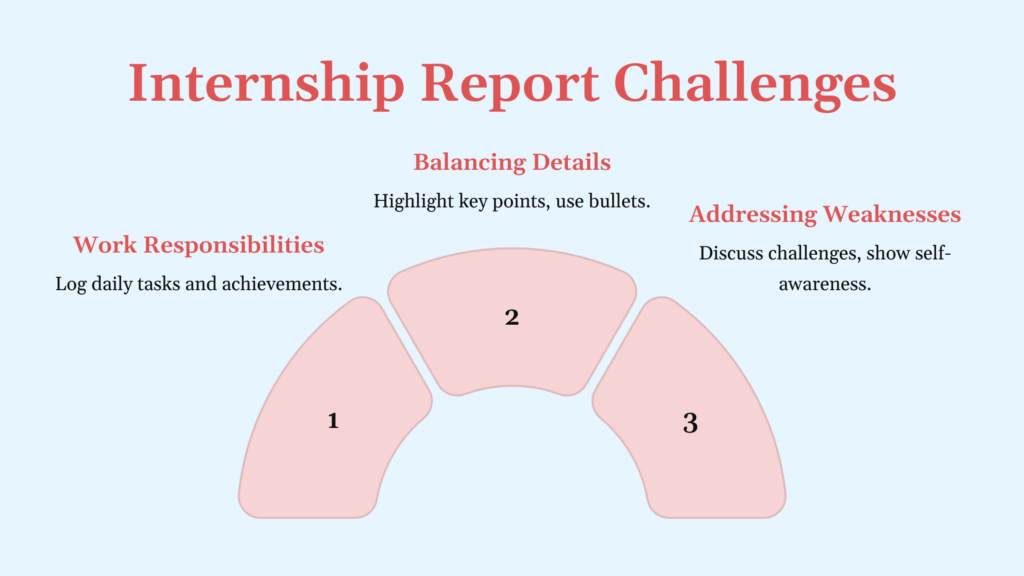
Writing an internship report can be challenging, especially when balancing structure, clarity, and professionalism. Below are some common difficulties students face and how to overcome them.
If you’re a college student looking for a proper internship report format, this guide will help you create a clear and professional report that showcases your learning experience. Below is a simple format that works for students from any stream—BBA, B.Com, B.Tech, or others.
1. Cover Page
Start your report with a cover page that includes the following:
2. Acknowledgement
Write a short paragraph to thank the people who helped you during your internship. This usually includes your mentor or manager at the company, your college guide, and anyone else who supported you.
3. Internship Certificate (if provided)
If the company gave you a certificate after the internship, you can mention it in this section or attach a scanned copy if required.
4. Table of Contents
Add a list of all the main sections in your report with proper headings. This helps the reader navigate the report easily.
5. Introduction
Give a brief introduction about your internship. Mention the name of the company, the duration of your internship, and your reason for choosing that company. You can also share what you expected to learn from the experience.
6. Company Profile
Write about the company where you completed your internship. Include its background, the type of work it does, the services or products it offers, and its position in the industry. You can also describe its departments or team structure.
7. Work Experience
In this section, describe your day-to-day work during the internship. Share the tasks you were assigned, the projects you worked on, any tools or software you used, and the meetings or training sessions you attended. Be honest and clear about your responsibilities.
8. Skills and Knowledge Gained
Talk about what you learned during the internship. This can include technical skills, communication skills, teamwork, time management, or industry-specific knowledge. Mention how this experience helped you grow personally and professionally.
9. Challenges Faced
Mention any difficulties you came across during your internship and how you handled them. This could include working with tight deadlines, learning a new software, or managing tasks in a team environment.
10. Suggestions and Recommendations
Share your suggestions for the company or future interns. If you noticed something that could be improved in the workplace or internship process, mention it politely. You can also give tips for students who will intern in the same company.
11. Conclusion
End your report by summarizing your overall internship experience. Talk about how the internship met your expectations, the key takeaways, and how it will help you in your future career.
12. Annexures (Optional)
You can attach any additional documents like daily logs, sample work, screenshots, or reports you created during the internship. This adds value and gives proof of your contributions.
This internship report format is ideal for students writing their first internship experience. Make sure your report is original, well-organized, and clearly presents what you’ve learned. It not only helps in academic submissions but can also be added to your portfolio or resume in the future.
Writing a professional internship report can be easier with the help of templates and online tools. These resources streamline the formatting process, enhance readability, and improve the overall presentation of the report.
Using pre-designed templates ensures consistency in formatting and structure. Some valuable sources for free internship report templates include:
Proper formatting is essential to ensure a professional presentation. Helpful online tools include:
Proofreading and editing are crucial to avoid errors in an internship report. The best tools for improving grammar and readability include:
Students can use these templates and tools with minimal effort to create a polished, error-free, professional internship report.
An excellently formulated internship report is more than an academic requirement; it is a powerful tool for career development. Students should thus be able to share their experiences, responsibilities, and, most importantly, takeaways clearly and professionally. Templates and online tools make formatting more manageable, ensuring a neat and professional presentation.
This method also helps organize industry-specific samples into meaningful content. Writing an internship report is not a task; it’s an opportunity for self-reflection on the challenges faced, the learning and personal development acquired, and the foundations that can be built into entering a future job.
The students can document their experiences quite mindfully, upholding their progress in learning and career growth to distinguish themselves from the rest of the job market crowd.
Read more:
To write an internship report, start with a structured format including an introduction, company overview, work responsibilities, challenges faced, key learnings, and a conclusion. Keep it clear, concise, and professional. Use bullet points for responsibilities and insights, and reflect on how the internship contributed to your career growth.
The five stages of an internship include preparation (setting goals and expectations), orientation (understanding the company and role), skill development (gaining hands-on experience), evaluation (assessing progress and challenges), and reflection (documenting key learnings in an internship report and applying gained knowledge to future career opportunities).
Start an internship presentation with a brief self-introduction, followed by an overview of the company and your role. Outline your key responsibilities, projects, challenges, and learning experiences. Engage the audience with visuals or real-world examples, and conclude how the internship contributed to your professional development.
An internship report helps document work experience, skills gained, and challenges faced. It serves as a self-reflection tool, aiding personal and professional growth. Employers use it to assess performance, while students can leverage it to strengthen resumes, making them more competitive in the job market.
“In conclusion, my internship provided invaluable hands-on experience, enhancing my professional skills and industry knowledge. I faced challenges that improved my problem-solving abilities and gained insights into workplace dynamics. This experience has strengthened my career goals, preparing me for future opportunities and contributing to my personal and professional growth.”