

The role of a product manager is one of the most dynamic and sought-after positions in today’s business world. As the link between customers, development teams, and stakeholders, product managers play a crucial part in shaping a company’s success by turning ideas into innovative products. If you’re curious about how to become a product manager, you’re not alone. Many aspiring professionals are drawn to this career for its mix of creativity, strategy, and leadership.
This guide will walk you through everything you need to know about becoming a product manager. From the essential skills and qualifications to gaining relevant experience and acing the interview process, you’ll find practical steps to launch and grow your career in product management. Whether you’re moving from another field or starting fresh, these insights will help you understand what it takes to succeed and stand out in this exciting role.
A product manager is a professional responsible for creating, launching, and continuing the success of a company’s product or product line. They define the product vision, strategy, and roadmap while balancing business goals, user demands, and technological feasibility.

Product managers act as the central communication hub for various teams. This includes engineering, design, marketing, and sales, ensuring everyone works together to create a successful product. Their impact is significant: studies show that effective product management can increase profit by 34.2%, highlighting the crucial role these professionals play in a company’s success.
Product managers drive the entire journey of a product, from crafting a strategic vision to overseeing its development and lifecycle. They ensure every step aligns with the broader goals through:
How to become a product manager: Product managers are responsible for developing and executing the product strategy. This involves analyzing market research, assessing competitors, and identifying innovative opportunities. They establish the product vision, set goals, and determine key performance indicators to measure success.
How to become a product manager: Product managers play a crucial role in coordinating engineering and design teams to bring the product vision to life during the development process. They manage the product backlog, document detailed requirements, and prioritize features. By facilitating communication between technical and non-technical teams, product managers ensure that the development process aligns with the overall strategic direction. This alignment helps maintain focus on the product vision throughout the project’s lifecycle.
How to become a product manager: Product managers oversee the entire product lifecycle, from conception to launch and beyond. To enhance user experience and drive adoption, they monitor product performance, gather user feedback, and iterate on features. This process involves data analysis, user research, and staying informed about market changes.
Product managers take care of customer needs, ensuring products align with market demands. They achieve this through:
Product managers prioritize customer needs and pain areas. This prioritization helps produce products that are more likely to find success in the market.
Many departments—such as engineering, marketing, and sales—serve as liaisons, making sure everyone is in line with the product vision and strategy.
Defining the product strategy and road plan falls to product managers. Their well-defined goals and objectives direct the development process and enable feature and improvement prioritizing.
Market, competition, and technology changes are monitored to adjust product strategy. This proactive strategy keeps companies competitive in a fast-changing environment.
How to become a product manager: Beginning a career as a product manager requires a blend of knowledge, experience, and practical skills. Whether you’re a recent graduate or a professional considering a career change, these are the key steps to enter this exciting field.
A strong educational foundation is crucial for aspiring product managers. Although there is no one recommended route, several degrees and certifications might provide useful information and skills for the role.
Often desirable degrees include business administration, computer science, or engineering. These courses provide the technical know-how, commercial sense, and problem-solving ability needed in product management.
Professional qualifications improve your credentials. Popular choices include certificates in product management from companies like Pragmatic Institute, Product School, or Scrum.org. These courses provide industry acceptance and specific expertise.
Product management benefits much from practical knowledge. Even if you’re not in a product job right now, various methods exist to get relevant experience.
Look for tech companies or startup product management internships. These changes provide knowledge of the daily tasks of a product manager as well as practical experience.
Consider roles like project coordinator, business analyst, or junior developer. These roles will enable you to grasp product creation processes and acquire transferable skills.
If you currently work for a firm, search for ways you may help with projects connected to products inside your current company. This might mean working with the product team or assuming product-oriented duties in your present position.
To potential companies, a good portfolio highlights your expertise in product management. It’s concrete proof of your capacity for conception, development, and product introduction success.
Track your particular contributions to product development projects. Add indicators of your work’s influence, including user adoption rates, income growth, or raised customer satisfaction ratings.
If at all feasible, include samples of products you have worked on, including specifics on the development process, issues they addressed, and results. If you’re new to product management, consider creating hypothetical product plans or contributing to open-source projects to build your portfolio.
Emphasizing these areas—education, experience, and portfolio development—you will be positioned to seek a job in product management. Recall that the path to becoming a product manager usually requires ongoing education and adaptation to match changing consumer expectations and technology developments.
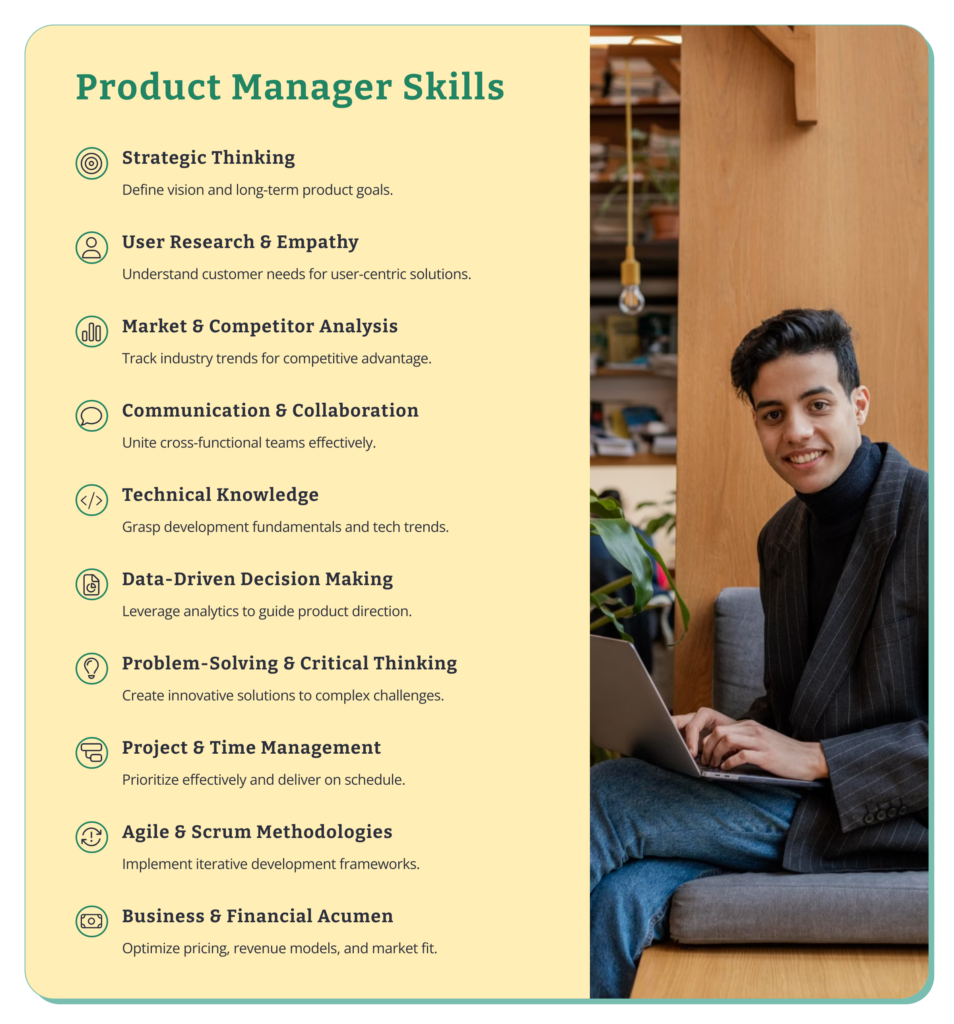
How to become a product manager: Product managers play a crucial role in determining product success. To thrive in this role, they need a diverse set of competencies, including business acumen, technical knowledge, and interpersonal skills. These abilities are essential for navigating the complex landscape of product development and management.
Product managers require a diverse set of competencies to excel in their multifaceted roles. These qualities range from technical knowledge to strategic thinking to interpersonal skills. Product managers must possess these basic skills if they are to properly direct product development and drive success.
How to become a product manager: Effective product managers excel in conducting thorough market research, analyzing trends, assessing customer needs, and spotting innovative opportunities. This expertise allows them to make informed choices about product positioning, pricing, and attributes.
Understanding user experience (UX) is crucial. Product managers have to be sympathetic to consumers, spot problems, and provide workable answers. This calls for working with UX designers, doing usability tests, and iterating depending on comments.
Product managers have to skillfully guide items from concept to completion. This includes creating objectives, specifying deadlines, allocating resources, and controlling stakeholders’ expectations.
In the fast-changing field of product management, ongoing education is useful and necessary. Product managers must alter and develop as technology, approaches, and market dynamics evolve. The following points highlight why ongoing skill development is crucial for long-term success in this field.
While product managers don’t need to be technical experts, having a solid foundation in technical skills is crucial. Let us look at the key technical skills required for product manager roles.
Product managers must have a strong knowledge of technical ideas to collaborate with development teams successfully. Key areas include:
Several technical skills required for product manager roles include:
Product manager technical skills can boost their technical prowess through:
In the busy IT scene, constant learning is very essential. To remain current, product managers should often improve their skills. Mastery of these skills will enable one to make wise judgments and interact more with development teams. This technical expertise also clarifies product viability and provides a basis for reasonable feature development timeframe determination.
Alongside technical expertise, product managers must excel in soft skills to lead teams and drive product success. Let’s explore the essential soft skills and how they apply to a product manager’s daily work.
These soft skills are essential among the skills needed for positions like product managers:
How to become a product manager: Every day, product managers utilize these skills to drive their products’ success. They lead cross-functional teams, communicate their vision effectively, and tackle unforeseen challenges. By honing these soft skills, product managers can navigate obstacles and build strong relationships. These abilities complement their technical knowledge, creating well-rounded leaders who can successfully guide products from concept to launch.
How to become a product manager: With India’s thriving IT scene, the pathway to becoming a product manager is filled with exciting potential. Whether you’re a professional aiming for a career shift or a student starting out, these suggestions can guide you. Let’s uncover the key insights.
To embark on a product management career in India, consider these education pathways:
These routes provide a strong basis for anybody considering what to study to become a product manager. Online certificates and courses may also improve your abilities.
India’s job market for product managers is expanding with top companies like:
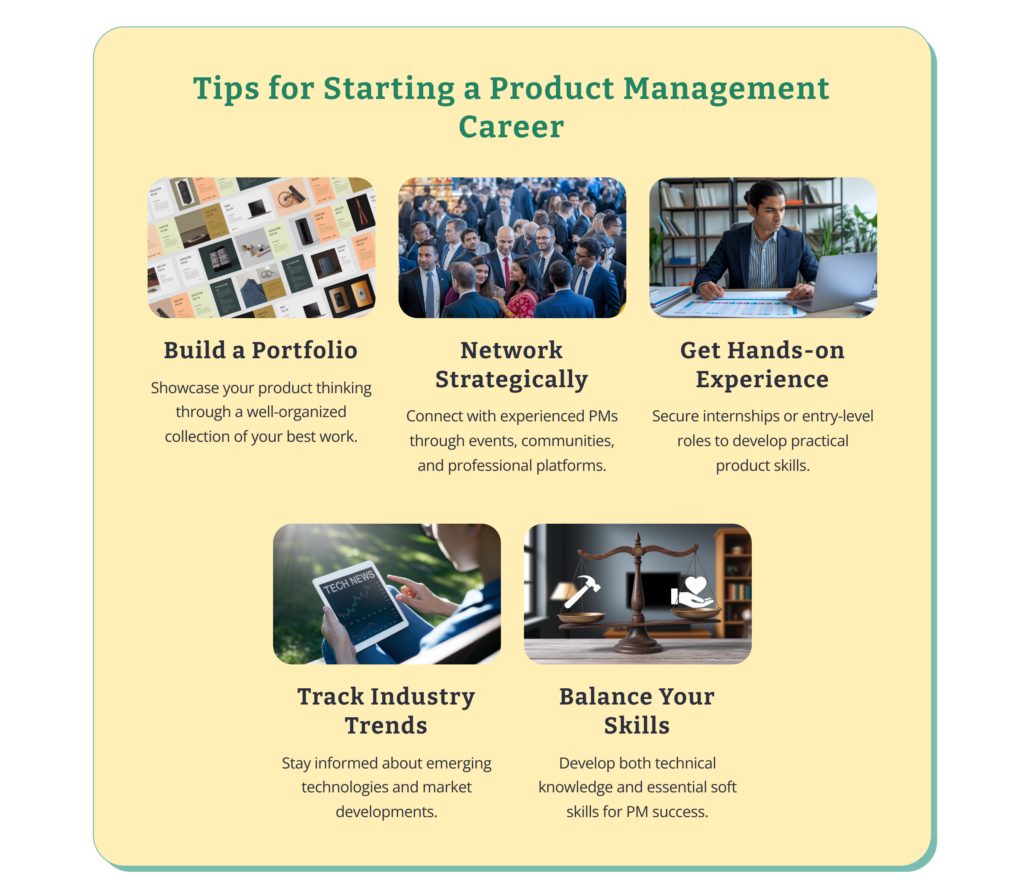
Breaking into product management in India requires a strategic approach and persistent effort. These tips will enable you to negotiate the difficult conditions and set yourself up for success in this exciting area.
How to become a product manager: Aspiring product managers need to make thoughtful choices about their educational journey. While there isn’t a one-size-fits-all path, let’s examine the essential requirements to prepare for a career in product management.
Several academic paths can lead to a product management career:
Target your studying to improve your skills:
Theory alone isn’t enough. Gain hands-on experience through:
How to become a product manager: A strong foundation for a career in product management is built on formal education, specialized training, and practical experience. This blend of knowledge and skills equips future product managers to grasp both the technical and business aspects of product development. In this rapidly evolving field, continuous learning is crucial, so stay curious and keep honing your skills.
How to become a product manager: Launching a career as a product manager is an exciting journey that requires a blend of knowledge, training, and experience. This guide highlights the essential steps, from obtaining the right educational background to developing crucial technical and soft skills. While the path may appear challenging, it is highly rewarding.
Although official education lays a solid basis, practical experience is just as important. Look for internships, work on actual projects, and never stop learning. Product management is a dynamic area needing constant development and adaptation.
Stay curious, accept challenges, and remain user-oriented as you work toward this job. Product managers play an important role in determining the future of technology and business. Dedication and the correct skill set can help you succeed in this position, inspiring creativity and producing impactful things. Your journey to becoming a successful product manager starts now – take that first step with confidence!
Becoming a successful product manager takes time and involves strategic thinking, creativity, and strong leadership skills. Gaining relevant experience, learning continuously, and facing challenges can help you build a rewarding career in this impactful field.
Keep in mind that everyone’s journey into product management is different; stay curious, connect with industry professionals, and keep improving your skills. With commitment and the right attitude, you will be ready to turn ideas into valuable products and genuinely contribute to your organization’s success.
Evaluate numerous career choices to choose the right career path for yourself. Dive into our guide on Career Advice.

To become a product manager, you need skills in market research, strategic thinking, communication, project management, and problem-solving. You also need knowledge of product development and customer needs, as well as experience in related fields or relevant certifications.
To become a product manager after high school, get a bachelor’s degree in business, management, engineering, or similar areas. Develop skills in communication, analytics, and project management. Gain experience through internships, and think about earning certifications in product management.
A product manager’s salary averages ₹13 to 22 LPA in India and US $130K to $160K per year in the United States. This varies based on experience, location, and company.
Anyone with a bachelor’s degree in business, management, engineering, or similar fields, and skills in communication, analytics, market research, and project management can become a product manager.
Yes, product management pays well. It often offers salaries above average, along with bonuses and benefits, especially at senior levels.
Yes, freshers can become product managers if they have the right education, strong communication skills, analytical abilities, and problem-solving skills. They should also gain experience through internships, projects, or certifications.