Dreaming of flying as a pilot? In 2025, the aviation industry in India is growing, offering exciting opportunities for those who love flying. Becoming a pilot is a challenging but rewarding journey that takes hard work, training, and a strong focus on safety. The journey usually starts after 12th grade, focusing on science and math, and then enrolling in a DGCA-approved flying school. Aspiring pilots must pass medical exams, log flight hours, and succeed in written and practical tests to get their Commercial Pilot License (CPL).
Thanks to technology improvements and a rising need for skilled workers, pilots in India have great job opportunities in commercial airlines, charter services, and even the defense sector. Ready to make your aviation dreams come true? Let’s look at the steps to become a pilot in India.
In India, becoming a pilot involves several straightforward steps. If you want to fly commercial planes or serve as a military pilot, the country has clear paths to help you reach your goals. This guide will help you learn how to become a pilot in India. It covers the qualifications you need, the training programs available, entrance exams, and the job opportunities waiting for you.
Aspiring pilots in India usually pick between two main career paths. They can choose between two options. One is civil aviation for commercial pilots. The other is military aviation with the Indian Air Force (IAF). However, they have very different eligibility requirements for admission, training regimens, and career prospects. If you are wondering how to become a pilot in India, understanding these pathways will help you make an informed decision.
Becoming a commercial pilot is the most common route to fly commercial aircraft for airlines or charter services. Commercial pilots operate large passenger aircraft to ensure safe and smooth transportation. Here’s how you can become a commercial pilot in India:
DGCA is the Directorate General of Civil Aviation, India’s regulatory body overseeing civil aviation. You must enroll in a flying school that DGCA approves to gain recognition for your pilot training. These schools issue theoretical and practical training courses to acquire the necessary skills and knowledge. Some of the prominent DGCA-approved flying schools in India are:
Your pilot training will include ground schooling (theoretical classes) and practical flight training. In the theoretical courses, you will learn about different topics. These include aircraft systems, air navigation, meteorology, aviation laws, and flight planning. How to Become a Pilot in India also involves completing practical flight training to help you build your flying hours.
For example, a CPL is obtained at 200 flight hours minimum. The actual flight hour minimums will depend on your selected course of study. By reaching that milestone, you will learn to fly in different weather. You will also manage aircraft systems and handle emergencies.

You must achieve your Commercial Pilot License (CPL) after training. To get the CPL, one must clear the DGCA exams and be eligible medically.
A key part of a career in commercial flying in India is meeting the medical standards set by the DGCA. A Class 1 Medical Examination is mandatory and tests your mental and physical fitness.
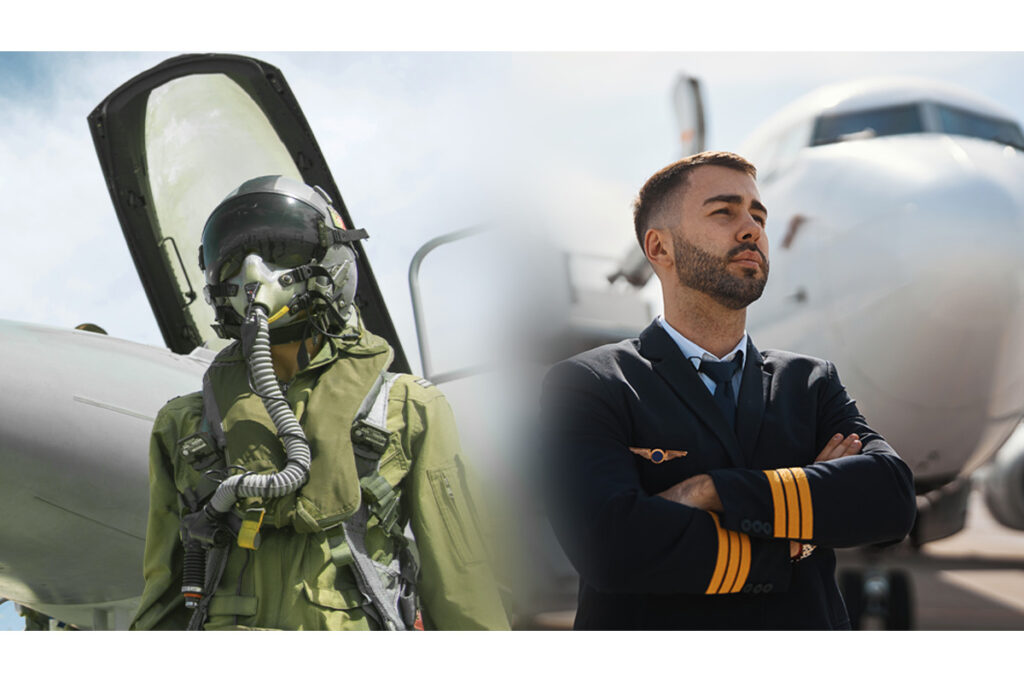
If you love your country and want to serve, becoming a military pilot in the Indian Air Force (IAF) could be a great choice. Military pilots fly fighter jets and transport aircraft and helicopters. They are the primary force behind national defense and participate in combat and peacekeeping missions. If you are interested in how to become a pilot in India in the military, here is a step-by-step guide:
To join the Indian Air Force as a pilot, you need to clear one of the following exams:
Once you clear the entrance exams, you must join the Air Force Academy (AFA) or other IAF training establishments. How to Become a Pilot in India involves rigorous training, including tests of physical fitness and aviation training. This will prepare you for a job in the armed forces.
As a military pilot, you’ll serve at least 10-15 years, depending on the IAF’s requirements. This service period is significant because you will be involved in national defense and other specialized missions. The IAF sponsors your training, covering the financial costs associated with your education.
| Criteria | Civil Aviation (Commercial Pilot) | Indian Air Force (Military Pilot) |
| Training Location | DGCA-approved flying schools | NDA, AFA, IAF Training Academies |
| License Required | Commercial Pilot License (CPL) | Military Pilot Certification |
| Cost of Training | ₹50 Lakhs – ₹1.2 Crores | Sponsored by the Government |
| Career Commitment | Flexible career choices | Minimum 10-15 years of service |
| Salary | ₹1-15 Lakhs per month | ₹80,000 – ₹2.5 Lakhs per month |
The process is relatively straightforward if you pursue a pilot career after completing 12th grade. If you’re wondering how to become a pilot in India after 12th, here’s a step-by-step guide to help you:
Read more:

As an aspiring pilot, you will need to clear specific entrance exams depending on the training route you choose:
Read more: Defence Exam
Pilot training is an expensive investment. If you are wondering how to become a pilot in India, the cost of training may range from ₹50 Lakhs to ₹1.2 Crores, depending upon the flying school and course duration. However, many financial institutions offer bank loans, and some flying schools provide scholarships, which may reduce the financial burden for aspiring pilots.
As part of your training on how to become a pilot in India, you will need to obtain several pilot licenses, including:
Salary expectations are among the most frequently asked questions regarding how to become a pilot in India. Pilot salary in India vary based on experience, airline, and aircraft type. Understanding salary structures is essential for those wondering how to become a commercial pilot in India.
A fresh commercial pilot with a CPL and type rating can expect an average monthly starting salary of ₹1-3 lakh. Yet, this can vary depending on the airline and additional flying experience.
With 3-5 years of experience, first officers and captains can earn anywhere between ₹5-10 lakh per month. Senior captains flying for major airlines like Air India, IndiGo, and Vistara can command salaries of ₹12-15 lakh per month.
For those pursuing a military aviation career through the Indian Air Force, entry-level salaries start at ₹80,000 per month, with experienced fighter pilots earning up to ₹2.5 lakh per month and additional benefits like housing, medical care, and pension.
Private and charter pilots earn between ₹3 and 7 lakh per month, depending on the aircraft type and employer. Cargo pilots also earn competitive salaries, with leading logistics companies offering ₹6-12 lakh per month.
The demand for pilots in India is vast, and with the right qualifications, you can build a successful career flying for a commercial airline, operating private aircraft, or transporting cargo. If you are wondering how to become a pilot in India, obtaining the proper training and certifications is essential. With the growing aviation industry, your CPL opens up numerous career opportunities in both domestic and international aviation sectors.
Whether you aim to be a civil aviation pilot or an Air Force pilot, these tips will help you succeed:
Becoming a pilot in India is a journey filled with learning, discipline, and adventure. You must meet eligibility criteria, undergo extensive training, and pass medical and licensing exams. Each step brings you closer to the cockpit. As the aviation sector expands in 2025, qualified pilots are in high demand and enjoy attractive salaries and growth opportunities. Whether you want to fly commercial jets, private charters, or serve in the armed forces, the sky is the limit.
Stay committed to continuous learning and safety standards to excel in this dynamic career. By choosing the right training institute and keeping up with industry trends, you can achieve your dream of becoming a pilot and exploring the world from above. Take flight; your pilot journey starts now!
Read more: Aeronautical Engineering
To apply for a flying school, you must finish 10+2 with Physics and Mathematics and be at least 17.
Example: A student with PCM in Class 12 can apply for a Commercial Pilot License (CPL) program.
Tip: Begin preparing early for the medical fitness requirement (Class 1 Medical Certificate) since it is necessary.
Clear medical tests, join a DGCA-approved flying school, complete 200 flying hours, pass DGCA exams, get a CPL.
Example: Students often train at Indira Gandhi Institute of Aeronautics (IGIA) in Ahmedabad.
Tip: Research the schools’ placement assistance and fleet size before enrolling.
Clear NDA, CDSE, AFCAT exams, pass SSB and PABT, and complete Air Force Academy training to qualify as a fighter pilot.
Example: A 12th PCM student clears NDA, trains at AFA, and flies jets like Rafale.
Tip: Focus on fitness and academics early for better selection chances.
You start as a Flying Officer and then move up the ranks to Flight Lieutenant, Squadron Leader, and so on while flying fighter jets like Sukhoi Su-30MKI, Rafale, or Tejas.
For example, many IAF pilots begin with Hawk trainer jets before transitioning to advanced fighters.
Tip: To advance in your career, keep up with new technologies and consistently increase your flying hours.
You need to clear the NDA, CDSE, AFCAT, the Pilot Aptitude Battery Test (PABT), and the SSB interview.
Example: A candidate passes AFCAT, goes through SSB, undergoes PABT, and finally joins AFA.
Tip: Pay equal attention to written and personality tests, since SSB evaluates overall officer potential.