
Summary
- Embodied AI is AI built into a physical body, not a chatbot or a model trained only on text. It learns by acting on the world and sensing what happens next.
- "Physical AI" is used for similar ground and shows up constantly in related searches, but the practical difference for training data is small.
- Four data types actually train these systems: teleoperation and human demonstrations, egocentric and spatial sensor data, fused multi-sensor streams, and simulation or synthetic data.
- A 2023 cross-institution dataset pooled over a million real robot demonstrations across 22 robot types, because diversity, not raw volume, is what makes embodied AI training data useful.
- The real risk is a subtly unrepresentative demonstration slipping through unreviewed and teaching a model a shortcut that fails the moment conditions change.
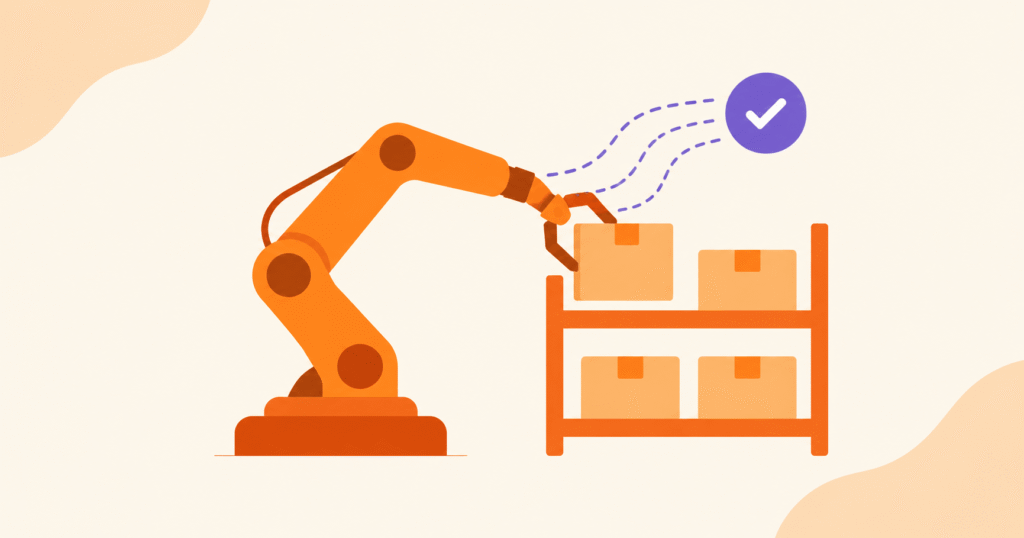
A warehouse robot spots a dropped box and steers around it. That alone doesn’t make it embodied AI, not by most researchers’ definition. The robot also has to learn something from that moment: how its own movement changed what the camera saw a second later. Embodied AI is artificial intelligence built into a physical body, a robot arm, a warehouse picker, a humanoid, a self-driving car. It learns by acting on the world and sensing what happens next. That’s a different kind of learning from a language model trained on text scraped off the internet. It needs a different kind of training data to match.
I spend a lot of my time at Chegg reviewing exactly this kind of data. I check whether a robot’s training examples are actually good enough to learn from, not just plentiful enough to hit a number. This article covers what embodied AI is, in plain terms. Then it covers the part most explainers skip past in a sentence or two: what training data embodied AI needs, and where it comes from. And what goes wrong when nobody checks it closely.
What embodied AI is
Embodied AI is the branch of artificial intelligence concerned with systems that have a body, sensors, and the ability to act, not just a chat window. A warehouse picking arm, a delivery robot on a pavement, a humanoid folding laundry, a self-driving car: all of these are embodied AI in the sense researchers use the term. Each one perceives its surroundings through cameras, LiDAR, or touch. Each one decides on an action, then senses the result before deciding what to do next. A 2021 survey of the field describes this as a shift from “internet AI” to embodied AI (Duan et al., 2021). Internet AI means models trained on datasets of images, video, or text pulled from the web. Embodied AI means a system that learns through its own interactions with an environment.
You’ll sometimes see the term physical AI used for similar ground. The two terms get used loosely enough online that people search for the difference between them more than almost anything else about embodied AI. The distinction researchers draw is narrower than the search traffic suggests. Physical AI tends to describe a system executing a task reliably in the physical world. Embodied AI specifically learns and adapts through its own interaction with that world. In practice, most of what a buyer actually needs looks the same under either label: training data captured from a physical system doing real tasks.
Why embodied AI needs a completely different kind of training data
A large language model learns from text: books, articles, forum posts, and code, written and rewritten by people long before the model ever sees it. An embodied AI system can’t learn to pick up a coffee cup from a paragraph describing how to do it. It needs examples of the actual physical task: a camera feed showing what the robot saw, a record of what it did, and a signal for whether the action worked. That’s what “training data” means in this field. And it’s why a dataset for embodied AI looks less like a labelled spreadsheet, and more like a logged recording of a body moving through a space.
This is also where the embodied AI data searches on Google tend to land. Not on what embodied AI is in the abstract. It’s about where the actual training examples come from, who captures them, and how anyone knows they’re good enough to train on. That last question is the one most explainers answer in a single sentence, then move past.
The four kinds of data embodied AI trains on
Most embodied AI systems are trained on a mix of four distinct data types, not one. Each comes with its own collection method, and its own way of going wrong.
Teleoperation and human demonstration data
A person operates the physical robot directly, often through a VR headset, a joystick rig, or a matched leader-follower arm. The robot logs every joint position, camera frame, and action it takes. This is still the most reliable way to teach a robot a genuinely hard physical skill, because the demonstration comes from someone who can do the task well. What “Robotics Data Collection” Actually Means goes deeper into teleoperation specifically, including what a reviewer checks before a demonstration is trusted enough to train on.
Egocentric and spatial sensor data
Alongside the robot’s actions, embodied AI systems need a record of what its own sensors perceived. That includes camera video from the robot’s own point of view, known as egocentric video. It also includes LiDAR or depth-camera readings that map the 3D shape of the space around it. A warehouse robot deciding whether a shelf gap is wide enough for its arm needs 3D spatial data to make that judgement reliably. A flat image alone doesn’t carry enough depth information. LiDAR and 3D Point Cloud Annotation covers what a human reviewer checks in that kind of spatial data, down to individual points in a scan.
Fused, multi-sensor streams
A real robot rarely relies on one sensor alone. A self-driving car crossing an intersection combines camera, LiDAR, radar, and motion data into a single picture of what’s happening around it. Any one sensor can be wrong in conditions the others handle fine: a camera struggles in glare, LiDAR struggles with glass, radar struggles with low-speed clutter. Training data for embodied AI increasingly has to be labelled and reviewed across all of these streams at once, not one sensor at a time. Sensor Fusion, Explained covers what that fusion process involves, and what a reviewer checks when two sensors disagree about what just happened.
Simulation and synthetic data
Not every training example comes from a real robot in a real room. Simulated environments can generate thousands of variations on a task, a slightly different box placement, a different lighting angle, faster than any team could collect them physically. Synthetic data from a simulation can fill gaps a real-world dataset doesn’t cover. The trade-off is real too. A model trained mostly on simulation has to cross what researchers call the “sim-to-real gap”. That’s the difference between how an object behaves in a physics engine and how it behaves when a robot touches it for real. Most explainers mention this in a single line and move on. They rarely say how a team checks whether a simulated example is realistic enough to be useful.
Why this data is hard to get right
Scale alone does not solve this. In 2023, a collaboration across 21 research institutions pooled over a million real robot demonstrations into a single shared dataset. The dataset spans 22 different robot types and 527 distinct skills (O’Neill et al., 2023). No single lab’s robot data was diverse enough on its own to train a model that worked across different robots and tasks. Diversity of this kind, across robots, tasks, and conditions, is what makes a training set useful. It’s also what makes reviewing it properly so much harder than checking a batch of labelled photos.
Say a team is training a warehouse robot to pick items off a shelf and place them in a bin. A teleoperator records forty demonstrations. A person wears a VR headset and guides the robot arm through the task forty separate times. On demonstration seventeen, the operator grips an item slightly off-centre. The robot’s gripper compensates with a small last-second wrist twist. That twist works, but only because that particular item happened to be rigid. If that demonstration goes into the training set unreviewed, the model can learn the wrist twist as a general strategy. It can then apply that strategy to a soft or oddly weighted item, where the same move causes the gripper to drop it. A reviewer who actually understands robotic grasping catches that demonstration seventeen is an edge case. It gets flagged, relabelled, or excluded before it’s weighted the same as the other thirty-nine.
That’s the quiet failure mode in embodied AI training data. It’s not that the data is wrong in an obvious way. One subtly unrepresentative demonstration teaches the model a shortcut. That shortcut only happens to work in the exact conditions it was recorded in. Get that wrong at scale, and the robot doesn’t fail once. It fails the same way on every object that doesn’t match the hidden assumption baked into its training data.
What to ask a vendor about embodied AI training data
Any vendor can claim its robotics data is expert-reviewed or quality-checked. Claiming it costs nothing. A few questions separate a real review process from a label:
- Who actually reviews a demonstration before it’s added to a training set, and what is their background in the physical task itself, rather than in AI or annotation generally?
- How is a teleoperated demonstration checked for edge cases, like the wrist-twist example above, before it’s weighted the same as every other example?
- Is the sensor data reviewed together, across camera, LiDAR, and the rest, or is each stream checked in isolation?
- If simulation or synthetic data is part of the mix, how was it validated against real-world behaviour, instead of simply generated and added in?
- Is there a record of why a specific demonstration was kept or excluded, or does the dataset only show the final set, with no trace of how it got there?
None of these are really about the size of the dataset. They’re about whether anyone can show their work, months later, when a model trained on this data starts behaving in a way nobody expected.
How Chegg approaches embodied AI training data
My team at Chegg reviews embodied AI training data the way we review anything else that’s hard to get right. It’s its own stage, run by people who understand the physical task, not a formality tacked onto the end of collection. A teleoperated demonstration, a LiDAR scan, or a fused multi-sensor clip goes through someone who can tell a representative example from an edge case. That’s the same discipline behind 3D point cloud annotation and sensor fusion work more broadly.
That review discipline borrows directly from human-in-the-loop practice elsewhere in AI. A model’s output, or in this case a robot’s training example, often needs a person to check it. A script alone won’t catch everything a person would. What Is Human-in-the-Loop (HITL) covers that idea in more general terms. Embodied AI training data is one of the places it matters most, because a bad example doesn’t just produce one wrong answer, it teaches the model a habit. That standard is part of the same review process Chegg applies across AI Data Services, not a special case built for robotics alone.
Key takeaways
- Embodied AI is AI built into a physical body. It learns by acting on the world and sensing what happens, not from static text or images alone.
- It’s sometimes called physical AI, though researchers draw a narrower distinction. Either way, what a buyer needs is training data captured from a real physical task.
- Embodied AI trains on four main data types: teleoperation and human demonstrations, egocentric and spatial sensor data, fused multi-sensor streams, and simulation or synthetic data.
- Scale doesn’t solve the hard part. A 2023 cross-institution effort pooled over a million demonstrations across 22 robot types specifically because diversity, not volume alone, is what makes the data useful.
- The real risk isn’t obviously bad data. It’s a subtly unrepresentative demonstration that teaches a model a shortcut that fails outside the exact conditions it was recorded in.
FAQs
What is embodied AI?
Embodied AI is artificial intelligence built into a physical system: a robot arm, a humanoid, a self-driving car. It learns by acting on its environment and sensing the result, rather than learning only from static text or images. The physical body and the sensing loop are what separate it from a typical AI model.
What is embodied AI vs physical AI?
The two terms are often used interchangeably in search and in casual conversation. The narrower distinction: physical AI describes a system reliably executing a task in the physical world. Embodied AI specifically learns and adapts through its own interaction with that world. For a buyer evaluating training data, the practical difference rarely matters: both need real examples of a physical system performing a real task.
What is the difference between agentic AI and embodied AI?
Agentic AI describes a system that plans and takes multi-step actions, often through software tools, APIs, or other digital systems, to complete a goal. Embodied AI specifically has a physical body and acts in the physical world. The two can overlap, a robot can be both agentic and embodied, but agentic AI on its own doesn’t require a body at all.
What is embodied AI data?
Embodied AI data is the training data a physical AI system learns from: teleoperated demonstrations, egocentric video, LiDAR or depth-sensor readings, fused multi-sensor recordings, and simulation output. It’s distinct from the datasets used to train a text or image model, because it captures a sequence of actions and their physical consequences, not a static labelled example.
Can you give an example of embodied AI?
A warehouse robot that picks items off a shelf, and adjusts its grip based on what its sensors detect, is a working example. So is a humanoid robot that learns to fold laundry by practising the task repeatedly, adjusting based on what its cameras and touch sensors report back each time.
How is embodied AI training data collected?
Most of it comes from teleoperation: a person operates the physical robot directly while it logs the action. Sensor recordings, camera, LiDAR, and others, add to that, captured either from the robot’s own point of view or from a simulation. The collection method matters less than the review that follows it: unreviewed demonstrations can teach a model a shortcut that only works in the exact conditions it was recorded in.