
Summary
- Data annotation for autonomous vehicles means labelling raw sensor data, camera video, LiDAR scans, radar returns, so a self-driving car’s perception software can learn to recognise real objects on the road.
- Most vendors in this space describe themselves the same way: expert reviewers, rigorous quality checks, fast turnaround. That language alone does not tell a buyer anything verifiable.
- Five questions actually separate vendors: who reviews the labels, how edge cases get handled, whether sensor streams are checked together, how quality gets measured, and what a faster or cheaper quote changes.
- A 2020 Waymo research paper built one of the field’s most cited driving datasets specifically because scenario diversity, not raw data volume, is what makes a dataset useful.
- One unreviewed edge case does not cause a single mistake. It teaches a model the same blind spot every time a similar scene appears.
Ask a vendor for an audio annotation quote, and what comes back often reads like a transcription quote with a different label on it. Before you buy audio annotation services, it helps to know why. A clean transcript often gets treated as the finished product. For most machine learning use cases, it’s really the starting point. A transcript tells a model what was said. It says almost nothing about who said it, how they said it, or what else was happening in the recording while they said it.
I’ve sat in on buyer calls where the brief for “audio annotation” turned out to mean, in practice, “transcribe these calls.” That’s not unreasonable. Most people’s only hands-on experience with audio-to-text work is a transcription app on their phone. It’s the closest mental model available. This piece covers what a proper audio annotation project adds on top of a transcript. It also covers where that extra work shows up in a finished dataset, and what to ask a vendor so a quote’s real coverage is clear.
What audio annotation actually is
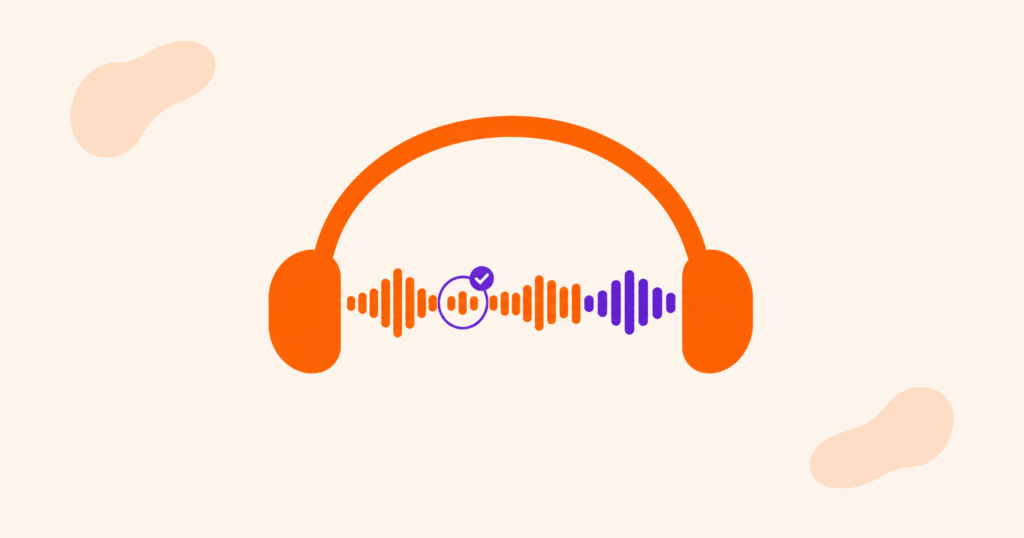
Data annotation, in plain terms, is a person looking at a piece of raw data and attaching a label that says what’s true about it. Audio annotation is that same work applied to sound. Someone listens to a recording and adds structured information a transcript alone doesn’t carry. That includes who is speaking and when, what tone they’re using, and what else is happening in the recording beyond the words themselves. You’ll also see this called voice annotation or speech annotation. Vendors use the terms loosely enough that they mostly mean the same thing, and for the rest of this piece, they do too.
Transcription is one part of that work. It’s the most visible part, the one a buyer can read and check in seconds, but it’s not the whole job. A finished audio annotation project usually layers several other kinds of labelling on top of the transcript. Most of what a buyer actually needs a model to learn lives in that extra layer, not in the words alone.
Why “it’s just transcription” is the default assumption
Transcription is the part of this work that already feels familiar. Free tools do a rough version of it for anyone with a phone. Say a sentence to a voice assistant and usable text comes back in seconds. That everyday experience quietly sets the bar for what “processing audio” is supposed to mean, and it’s a bar transcription alone clears easily.
It’s also the easiest part to put in a sales demo. A transcript reads cleanly on a page in a way a diarization timeline or a tone label doesn’t. It’s usually what shows up first when a vendor wants to prove the work is real. None of that is dishonest. It’s just incomplete. The gap between a demo and the actual deliverable is exactly where a buyer’s assumptions quietly drift from the project they’re about to receive. I’ve written before about what actually makes image annotation difficult, the edge cases a “draw a box around the object” pitch never mentions. Audio annotation has its own version of that gap. It’s a different set of edge cases, and almost none of them show up on a transcript at all. The same pattern shows up in video annotation. A per-minute quote there can look like it’s pricing a simple job, when the real cost sits in review work most buyers never see.
What audio annotation services actually cover beyond the transcript
Four things sit on top of a transcript in a properly scoped audio annotation project. A quote that’s only pricing transcription usually hasn’t accounted for any of them.
Speaker diarization: who said what, and when
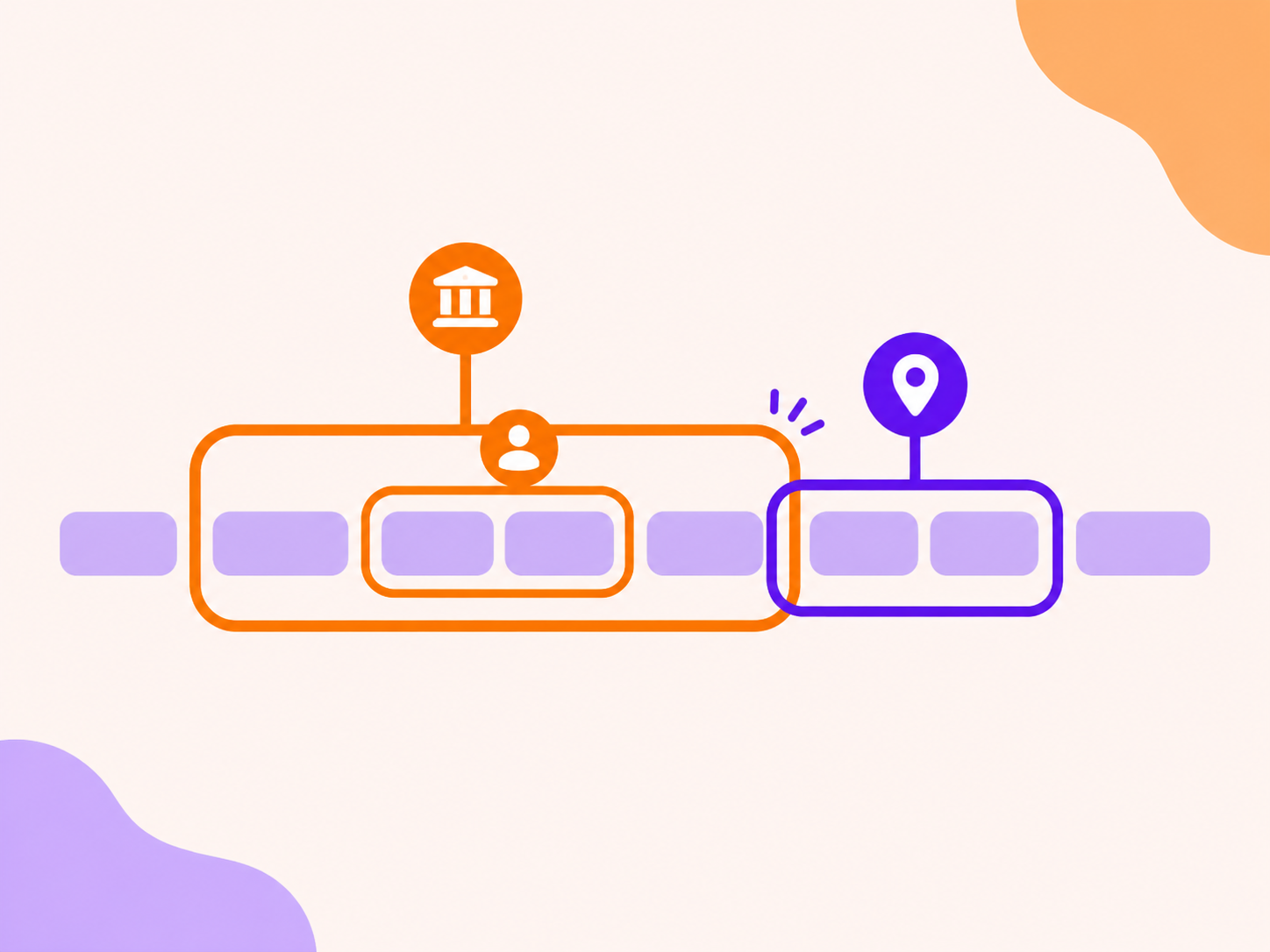
Diarization is the task of marking who is speaking at each point in a recording, consistently (Park et al., 2022). It works without knowing anyone’s name, just that this stretch is “speaker one” and that stretch is “speaker two,” held consistently through the file. A transcript on its own doesn’t reliably do this. Run a two-person call through a basic speech-to-text tool and you’ll often get a single unbroken block of text. There’s no marker for where one person stops and the other starts, let alone when they talk over each other.
That distinction matters more than it sounds. A model trained to flag an agent’s tone on a support call needs to know which lines are the agent’s and which are the customer’s. Get the attribution wrong on enough calls, and the model learns the wrong pattern entirely, not just a noisier version of the right one.
Tone and emotional context the words alone don’t carry
The same sentence can mean two different things depending on how it’s said. “That’s fine” said flatly is a different data point from “that’s fine” said sharply after three interruptions. A transcript renders both as the same four words. Audio annotation adds a layer a transcript structurally can’t carry: tags for tone, sentiment or emotional shift, timestamped to the moment they happen. These aren’t inferred later from the text alone.
This is also where a lot of quotes quietly go thin. Tagging tone well needs a defined taxonomy: a short, agreed list of what counts as “frustrated” versus “annoyed” versus “firm.” It also needs reviewers trained against that taxonomy, not left to an annotator’s private sense of how someone sounded. A vendor who can’t describe that taxonomy probably doesn’t have one.
Non-speech events: the sounds between the words
Some of what a model needs to learn from audio isn’t speech at all. A hold-tone beep, a door slam, a dog barking in the background, a long silence before someone answers. These are all real signal, not noise to be edited out. Researchers building large-scale audio datasets treat this as its own formal category rather than an afterthought. Google’s AudioSet is one of the standard datasets used to train audio event recognisers. It organises non-speech sounds into a hierarchy of 635 separate classes (Gemmeke et al., 2017). The project exists because audio event recognition turned out to need the same scale of labelled data image recognition already had. A transcript has no mechanism for capturing any of it. It simply isn’t built to.
Why “just transcribe it” breaks even on the words themselves
Even the transcription half of the job isn’t as reliable as it looks, and it isn’t reliable in the same way for every speaker. A 2020 study tested five commercial speech recognition systems, the kind powering mainstream transcription tools. It compared recordings of Black and white speakers matched for age, gender and recording quality. The average word error rate was nearly double for Black speakers: 35% of words wrong, against 19% for white speakers (Koenecke et al., 2020). That gap held across every system tested. The researchers traced it to the acoustic models themselves, not vocabulary or grammar. In other words, the problem was how the systems heard speech, not what they expected it to contain.
That finding isn’t really about any one vendor’s tool. It’s a reason a transcript can’t be treated as neutral ground truth the way a buyer might assume. A human reviewer who actually listens to the audio catches these errors before they ever reach a training set. That beats trusting whatever a speech-to-text engine produced on its own. A quote that skips straight to automated transcription, with no human review layered on top, is quietly inheriting that accuracy gap.
A worked example
Say a support team wants to train a model that flags calls where a customer is likely to churn. The training set is ninety seconds of audio from each of several thousand past calls. A transcription-only vendor delivers exactly what was asked for: clean, readable text of every call. Agent and customer are merged into one stream, word-for-word accurate on a good day.
On its own, that dataset can’t do what the team actually needs. The model can’t tell which lines came from the agent and which from the customer, because nothing marks the switch. The diarization step is still missing. It can’t tell a customer saying “sure, that’s fine” calmly from the same words said after being placed on hold twice. Tone isn’t in the text at all. It can’t register the three-second silence before the customer answers a direct question. Nor can it register the hold-music loop that plays for ninety seconds while nobody speaks. Neither shows up as words to transcribe in the first place.
A properly scoped audio annotation project adds all three. The call gets split into speaker-attributed segments. Tone shifts get tagged at the point they happen, flat to clipped, calm to frustrated. The hold-music stretch and the silence both get logged as their own labelled events, not silently dropped. None of that shows up by asking for a better transcript. It shows up by scoping the project as audio annotation from the start, not transcription with an annotation label stuck on it afterwards.
What to ask a vendor about an audio annotation quote
If outsourcing this work already makes sense for your team, the next decision is reading the quote itself. Read closely enough to tell what it actually covers.
- Does the quote name diarization, tone tagging and non-speech event tagging as separate line items? Or is everything folded into one “transcription and annotation” number with no breakdown? A vendor who can’t separate the two usually hasn’t scoped them separately either.
- Is tone or sentiment tagging done against a written taxonomy, with examples, or left to each reviewer’s own judgement? Ask to see the taxonomy itself, not just a description of it.
- Are non-speech events tagged by default, or only if you ask for them specifically? Silence, hold tones and background sound are easy to drop from a scope quietly if nobody names them up front.
- Does a human reviewer check the transcript against the actual audio? Or is it taken straight from an automated speech-to-text pass with no review layer on top?
None of these four questions are about negotiating the price down. They’re about finding out whether the number in front of you covers the work this piece has just walked through. Or whether “audio annotation” on the quote is doing a job the actual deliverable won’t do.
How Chegg approaches this
Audio annotation, at Chegg, gets scoped as its own project — not transcription with extra steps bolted on afterwards. A quote states which of diarization, tone tagging and non-speech event tagging are included, and what the tone taxonomy actually is. It also states where a human reviewer checks the work against the real audio, rather than trusting an automated pass. That’s the same expert-vetting and calibration process applied across every annotation project here. In audio’s case, it’s aimed at the specific judgement calls the format adds on top of the words.
A buyer shouldn’t have to guess what “audio annotation” means on a given quote. The real test is whether a vendor can name the layers above the transcript. Can they also show you how each one is checked, the way this piece just has? This is the standard my team holds every audio quote to, across the annotation work Chegg does.
Key takeaways
- Audio annotation services usually cost more and cover more than transcription alone. Diarization, tone tagging and non-speech event tagging all sit on top of the transcript, not inside it.
- Speaker diarization, marking who spoke when, is a formally studied problem in its own right, not something a transcript captures by default.
- Tone and emotional context change what the same words mean, and a transcript renders them identically regardless of how they were actually said.
- Non-speech events (silence, hold tones, background sound) carry real signal that a transcript has no mechanism to record at all.
- Even plain transcription accuracy isn’t neutral. Commercial speech recognition systems have been shown to perform meaningfully worse on some accents and dialects than others. That’s one more reason a transcript alone isn’t a safe finish line.
FAQs
What is audio annotation?
Audio annotation is the process of adding structured labels to a sound recording. That includes who is speaking and when, their tone, and non-speech sounds or silences, on top of the words themselves. Transcription, converting speech to text, is only one part of it.
What’s the difference between audio annotation and transcription?
Transcription converts speech to text. Audio annotation includes transcription but adds several more layers on top. These include speaker diarization, tone and sentiment tags, and labels for non-speech events like silence or background sound. A transcript alone can’t carry any of that extra information.
What is speaker diarization?
Speaker diarization is the task of marking which speaker is talking at each point in a recording, consistently. It doesn’t require knowing who they are by name. It answers “who spoke when,” which a plain transcript doesn’t reliably show, especially in recordings with more than one speaker.
Is voice annotation the same as audio annotation?
Largely, yes. Vendors use “audio annotation,” “voice annotation” and “speech annotation” fairly interchangeably. All three describe the same underlying work: labelling sound recordings with more than just their words.
Do audio annotation services always include transcription?
Usually, yes, transcription is typically the first layer. The question worth asking a vendor is what else is included alongside it. Diarization, tone tagging and non-speech event tagging are the three most commonly left out of a quote that only prices the transcript.
Why does tone tagging matter if the transcript is already accurate?
The same words can carry different meaning depending on how they’re said, and a model trained only on text has no way to learn that difference. Tone tagging gives it the signal a transcript structurally can’t carry, even when the transcript itself is word-for-word correct.