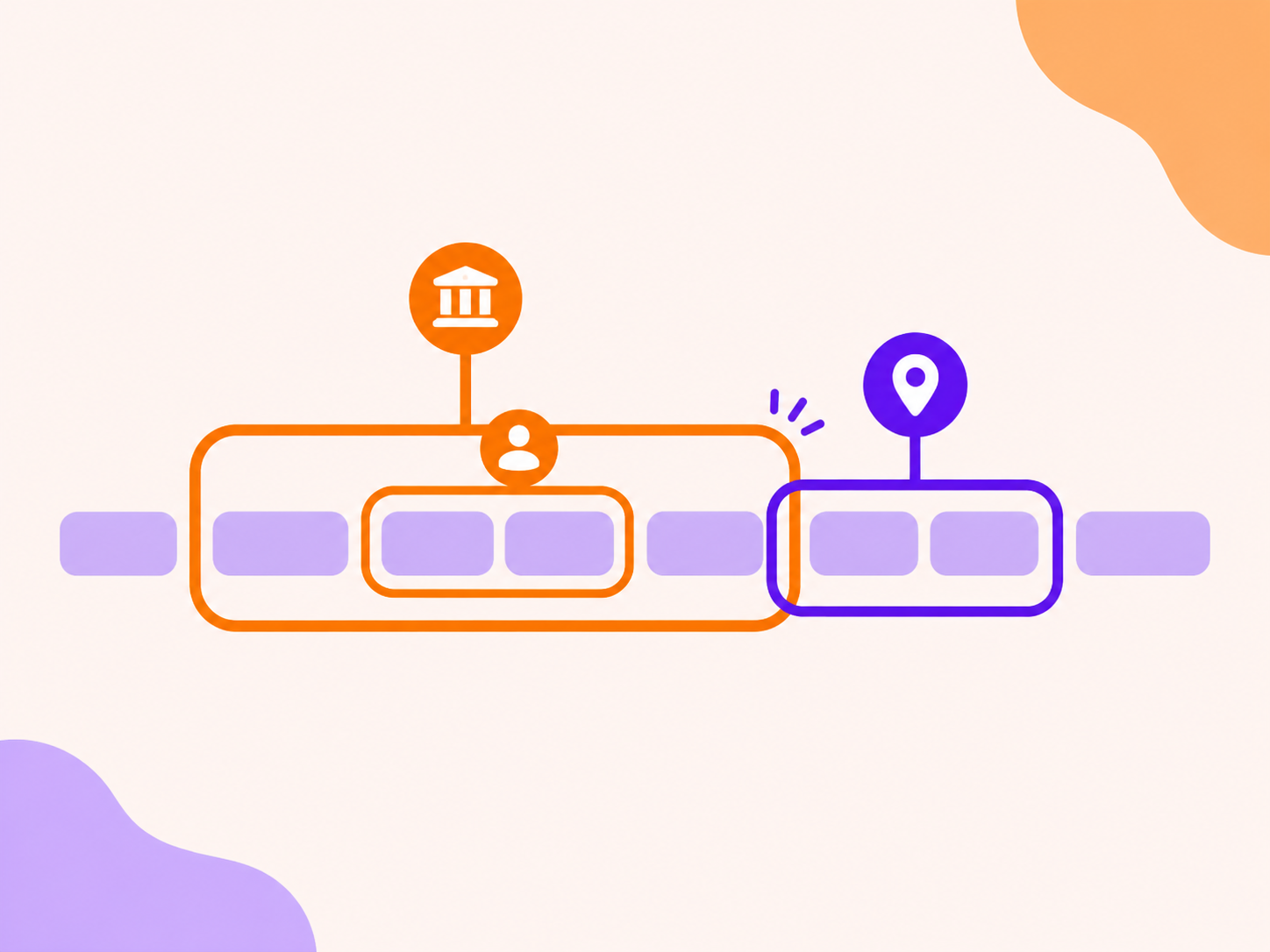

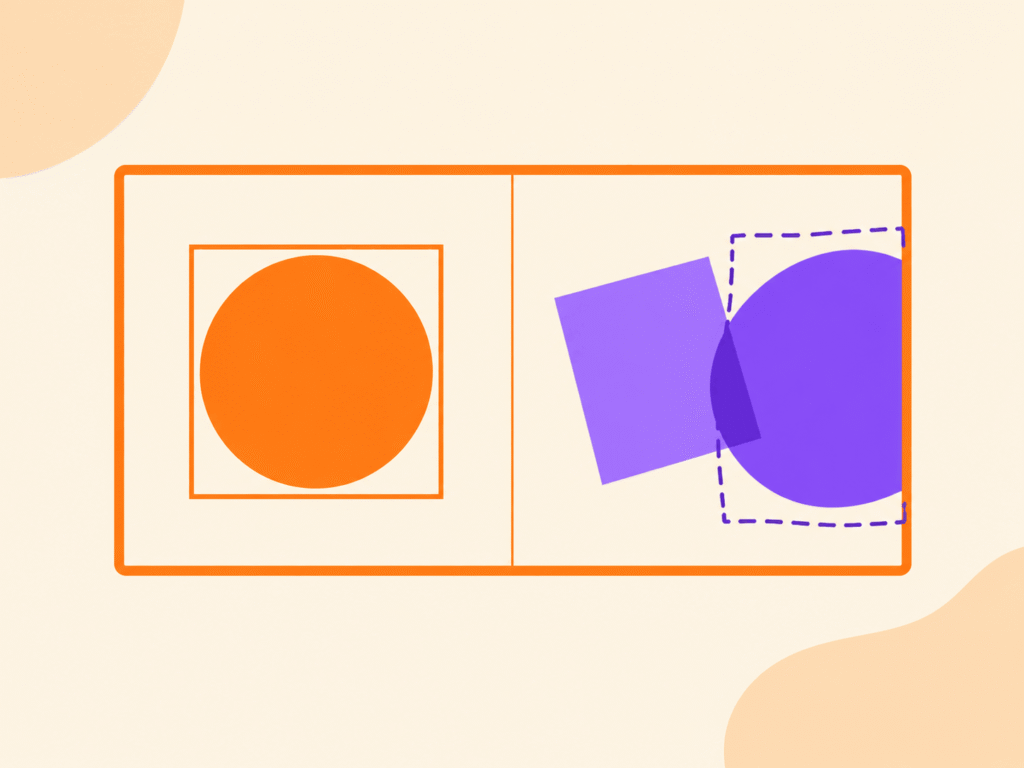
Draw a box around the car. That’s the stock example almost every introduction to image annotation uses, and it makes the whole task look mechanical: find the object, drag a rectangle around it, move on to the next one. The part that actually determines whether the resulting dataset is usable almost never makes it into that explanation: what to do when an object is cut off at the edge of the frame, when two objects overlap, or when the category itself is a judgement call rather than a lookup.
This article covers what actually makes image annotation difficult, past the drawing-a-box mechanics that dominate most introductions to the topic, and what separates reviewers, and vendors, who handle the hard cases consistently from the ones who just handle volume.
What image annotation actually is
Image annotation means marking up visual data so a model can learn from it: drawing a bounding box around an object, tracing a polygon or pixel-level mask around its exact outline, placing keypoints on a specific structure, or simply classifying what an image contains overall. It’s the visual case of the same underlying work covered in more general terms in our breakdown of what data annotation means.
Some vendor pages say “image labelling” instead of “image annotation”. It’s the same work; the word choice isn’t a meaningful signal either way.
Why “draw a box” undersells the task
A bounding box genuinely is mechanically simple when the object is fully visible, isolated, and unambiguous: one car, centred in frame, nothing touching it. That’s also the example almost every explanation of image annotation reaches for, because it’s the case that needs the least explaining. It’s not, however, the case that actually determines whether a vendor or an annotation team is any good, because real photos and video frames are full of the cases that example quietly skips.
Search for an introduction to image annotation and the page structure repeats across almost every source: what it is, the annotation types, common use cases, how companies approach it. That’s a genuinely useful map of the field. It’s also, almost without exception, written at the level of “here is what a bounding box is” rather than “here is what a reviewer actually has to decide when the object doesn’t sit neatly inside the frame”.
Why the annotation type changes what “hard” means
The specific hard case shifts with the annotation type, even though the underlying problem, a judgement call the mechanics don’t resolve, stays the same.
- Bounding boxes: the truncation and occlusion problems above. Fast to draw, loosest on precision, so the judgement calls are mostly about what to include, not exactly where the edge falls.
- Polygons and segmentation masks: the same occlusion problem, but now at pixel precision. A soft or ambiguous boundary, hair against a background, a shadow at the edge of an object, fur, smoke, forces a reviewer to decide exactly where an object “ends” in cases where the real-world boundary is genuinely fuzzy, not just visually cluttered.
- Keypoints: the judgement call moves from boundaries to visibility. A keypoint on a person’s elbow that’s hidden behind their torso either doesn’t get placed, gets placed at an estimated position, or gets placed with a visibility flag, and a guideline that doesn’t pick one leaves pose-estimation data riddled with inconsistent gaps exactly where the model most needs consistency.
- Classification and multi-label tagging: no shape to draw at all, so the entire task is the category-boundary judgement call. An image that genuinely contains two plausible primary subjects is where single-label guidelines break down fastest.
None of this means one annotation type is harder than another in the abstract. It means the specific edge case a guideline has to cover depends on which type a project actually uses, and a generic guideline written for “image annotation” broadly, without naming the type, tends to miss exactly the case that type struggles with most.
The three things that actually make image annotation hard
None of the three hardest parts of image annotation are about drawing a shape accurately. They’re about deciding what the shape should contain in the first place.
- Truncation at the frame edge. When an object is partially cut off by the boundary of the image itself, a reviewer has to decide whether to box only the visible portion, estimate the object’s likely full extent, or flag it separately, and a guideline that doesn’t say which one leaves every reviewer picking a different answer.
- Overlap and occlusion. When one object partially blocks another, the box (or mask) for the occluded object has to represent a boundary that isn’t actually visible in the image. Two equally reasonable reviewers can draw genuinely different, internally consistent answers here without either one being simply wrong.
- Ambiguous category boundaries. Whether a specific object counts as one class or an adjacent one, a van or a truck, a cup or a mug, a pedestrian or a cyclist mid-dismount, isn’t something the pixels alone settle. It’s settled by whatever the guideline says, and a thin guideline leaves it to whichever reviewer happens to see that image first.
This isn’t just a vendor-side quality concern. The large benchmark datasets built specifically to train and evaluate computer vision models document the same difficulty directly. The team behind ImageNet, the dataset behind much of the field’s progress on large-scale visual recognition, discusses the challenges of collecting reliable ground-truth annotation at scale as a core part of the work, not a footnote (Russakovsky et al., 2015). The COCO dataset went further on exactly the boundary-precision problem: objects are labelled with per-instance segmentation specifically so an object’s true outline can be localised precisely rather than approximated, built through dedicated interfaces for category detection, instance spotting, and instance segmentation separately, because those turned out to be different enough problems to need different tooling.
That last point is the COCO dataset’s own finding (Lin et al., 2014), and it’s the same lesson a reviewer runs into on every image with two overlapping objects: spotting that something is there is a different task from deciding exactly where its boundary is, and treating them as one task is where consistency breaks down.
A worked example
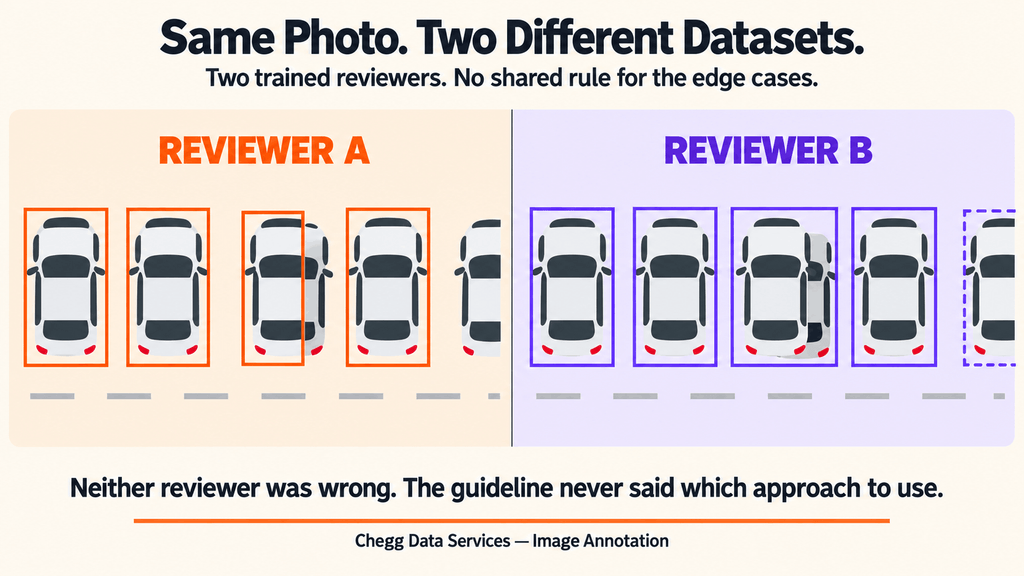
Take a single street-scene photo with five visible cars, one of them half-hidden behind a van, and one parked car with only its rear bumper visible at the very edge of the frame. Reviewer A boxes the four fully-visible cars, skips the one at the frame edge entirely (not enough of it is visible to be confident), and boxes the partially-hidden car around only its visible portion. Reviewer B boxes all six cars, including the one at the edge with a note flagging it as truncated, and estimates the hidden car’s full extent behind the van rather than boxing only what’s visible.
Both reviewers followed a reasonable, defensible approach. Neither is simply wrong. But the two resulting datasets are meaningfully different: one systematically under-represents partially-visible and occluded vehicles, which is exactly the case a model deployed in the real world will keep encountering. The difference didn’t come from either reviewer being careless. It came from a guideline that never specified which approach to use, which is a QA failure, not a reviewer failure.
The same gap shows up with keypoint annotation. Given a photo of a person reaching into a cabinet, one reviewer places a keypoint at the estimated position of their hidden elbow and flags it as occluded; another simply omits any keypoint that isn’t directly visible. Both choices are defensible in isolation. Mixed together across a dataset without a stated rule, they produce a model that’s seen two contradictory conventions for the exact case, a partially-hidden limb, it will encounter constantly once deployed.
What image annotation outsources well, and what doesn’t
Not every image annotation task is an equally good fit for a generalist outsourced team, and the difference comes down to how much of the task is genuinely ambiguous rather than how visually complex it looks.
A single-class detection task on clean, well-separated images, “find the product in this e-commerce photo”, is a strong candidate for a generalist team: the category is unambiguous, occlusion is rare, and a short guideline covers almost every case a reviewer will see. A dense, multi-class street scene with heavy occlusion, or a medical imaging task where the category boundary requires specific clinical judgement, is a different case entirely: the edge cases aren’t rare exceptions, they’re a large share of the actual images, and a generalist reviewer pool applying a thin guideline to either will produce exactly the kind of inconsistent dataset the worked examples above describe.
A vendor that quotes the same per-image rate and the same guideline depth for both kinds of project is a sign they haven’t actually looked at what either one needs. The questions worth asking before signing anything are the same three checks below, not the list of annotation types a vendor says it supports.
What good QA actually checks for in image annotation
The same three checks that separate a text annotation engagement that works from one that doesn’t apply here too, specific to the edge cases above rather than generic “is there a box” accuracy:
- A written guideline with worked examples of the hard cases specifically. Not “box all visible objects”, but a guideline that states explicitly what to do with a truncated object, an occluded one, and a category boundary case, with real example images attached.
- A measured boundary-agreement figure, not just a class-agreement one. Two reviewers can agree on what an object is and still draw meaningfully different boxes around it; a vendor that only reports class agreement isn’t measuring the part that’s actually hard.
- A review layer that specifically samples truncated and occluded cases, rather than a random sample across the whole dataset. The hard cases are where disagreement concentrates, so a QA sample that doesn’t over-index on them will systematically miss where the real quality problems are.
If you’re evaluating image annotation services rather than building an in-house team, these three are the right things to ask a vendor to show, not just the list of annotation types they support. The broader question of whether outsourcing the work at all is the right call is covered separately.
How boundary agreement is actually measured
“A measured boundary-agreement figure” sounds abstract until you see what it actually means in practice. The standard metric is Intersection over Union, IoU: take two boxes drawn for the same object, divide the area where they overlap by the total area they cover between them. Two boxes that line up almost exactly score close to 1.0. Two boxes that barely touch score close to 0.0.
This is what makes IoU the right tool for catching exactly the disagreement that matters: two reviewers can both correctly identify that an object is a car, full class agreement, while drawing boxes with only 60% overlap because one of them included a sliver of the vehicle poking out from behind another car and the other didn’t. A quality process that only checks “did both reviewers label this a car” will score that pair as perfect agreement. An IoU check at a stated threshold, 0.75 is a common bar for detection work, catches it immediately, because the disagreement is in exactly the boundary placement this article has been describing, not in what the object is.
The practical version of the QA checklist above, translated: ask a vendor what IoU threshold they measure against, not just whether they “check agreement”, and ask whether that threshold is applied specifically to the truncated and occluded subset of a batch, not just averaged across the easy cases that were never going to disagree in the first place.
Where this shows up beyond flat bounding boxes
The same judgement calls reappear, not just in more detailed 2D work like polygon and segmentation-mask annotation, but in a genuinely different data type entirely. In 3D point cloud annotation, an object split by an obstruction has to be treated as a single object with one correct boundary rather than two separate ones, the same occlusion decision in a different coordinate system. The specific judgement calls differ by data type; the underlying problem, that the hard part is the decision, not the drawing, doesn’t.
How Chegg approaches this
Chegg‘s image annotation work is built around the same principle as its text and sensor-data work: a written guideline with worked examples of truncation, occlusion and category-boundary cases specific to each project, a measured boundary-level agreement figure tracked throughout rather than quoted once upfront, and a review layer weighted toward the hard cases rather than a flat random sample.
Reviewers are matched to the kind of visual data a project actually involves, dense street-scene imagery with heavy occlusion is a different reviewing skill from isolated product photography, which is the direct answer to the question a feature list alone can’t answer: whether a vendor has actually thought about the hard cases in your specific data, not just the annotation types it technically supports.
Key takeaways
- Drawing a bounding box is the mechanical, visible part of image annotation; the genuinely difficult part is the judgement calls underneath it, and it’s the part most introductions to the topic skip past.
- Three things actually make image annotation hard: deciding where an object’s box ends when it’s cut off at the frame edge, deciding how to box objects that overlap or occlude each other, and deciding which category a genuinely ambiguous object belongs to.
- Large benchmark datasets built to train computer vision models document this same difficulty directly, not just vendor-side quality teams; it’s a documented research problem, not a talking point.
- A worked example makes the stakes concrete: two reviewers given the same image can produce meaningfully different, both internally consistent, labels depending on how they handle exactly these edge cases.
- Good QA for image annotation checks the edge cases specifically, a written guideline with worked truncation/occlusion examples, a measured boundary-agreement figure, and a review layer, not just whether a box exists around each object.
FAQs
What’s the difference between bounding box annotation and segmentation?
A bounding box draws a rectangle around an object’s approximate extent. Segmentation traces the object’s actual outline, pixel by pixel. Segmentation is more precise and more expensive; most projects use bounding boxes unless the exact shape genuinely matters for the model’s task.
Why do two reviewers sometimes draw different boxes for the same image?
Almost always because of the edge cases: an object cut off at the frame boundary, one object overlapping another, or a category that’s genuinely ambiguous. Given a clear guideline that specifies how to handle each of these, reviewer disagreement drops sharply; without one, it concentrates almost entirely in these cases.
How should occluded or overlapping objects be annotated?
There’s no universal right answer, it depends on what the model needs to learn, but the guideline has to pick one approach (box only the visible portion, or estimate the full extent) and apply it consistently. The failure mode is leaving it unspecified, not picking either option.
What happens to objects that are cut off at the edge of the frame?
The same principle applies: the guideline needs to say explicitly whether to box the visible portion, estimate the full object, or flag it as truncated and exclude it, rather than leaving that decision to whichever reviewer sees the image first.
Is image annotation accurate enough without expert reviewers?
For well-defined categories with a clear guideline, non-expert reviewers can be highly consistent. The accuracy problem almost never comes from reviewers lacking expertise; it comes from a guideline that doesn’t specify how to handle truncation, occlusion and ambiguous categories.
What’s the difference between image annotation and image labelling?
Nothing meaningful. The terms are used interchangeably across the industry; the choice usually reflects a vendor’s own house style rather than a real difference in the work.
How much does image annotation quality actually matter for model performance?
A great deal, specifically on the hard cases. A model trained on annotations that systematically mishandle occluded or truncated objects will reliably struggle on exactly those cases in the real world, which are often the cases that matter most.