Bibi Ka Maqbara, often called the “Tomb of the Lady,” is a poignant remembrance symbol closely resembling its inspiration, the Taj Mahal. Though it draws heavy influence from the Taj, this mausoleum proudly represents a son’s love for his mother. Designed by Ataullah, the son of Ahmad Lahauri, who also designed the Taj Mahal, it bears striking similarities to the famous monument but has its own distinct charm.
The two mausoleums share a deep connection, not just through their architectural style, but in their representation of love, memory, and loss. While the Taj Mahal was built in honour of Emperor Shah Jahan’s mother, Bibi Ka Maqbara was created to honour Aurangzeb’s wife. Together, these tombs stand as lasting tributes to the women they commemorate, reflecting the legacy of the last powerful Mughal emperor, Aurangzeb.
Built in 1668 by Azam Shah, son of Aurangzeb, the Tomb of Rabia Durani Bibi Ka Maqbara honors his mother, Dilras Begum, posthumously named Rabia Durani. The “Taj of the Deccan” mirrors the Taj Mahal’s elegance, representing Mughal architectural brilliance in southern India. It is situated in Aurangabad and remains Maharashtra’s most iconic Mughal monument, symbolizing imperial grandeur and legacy.
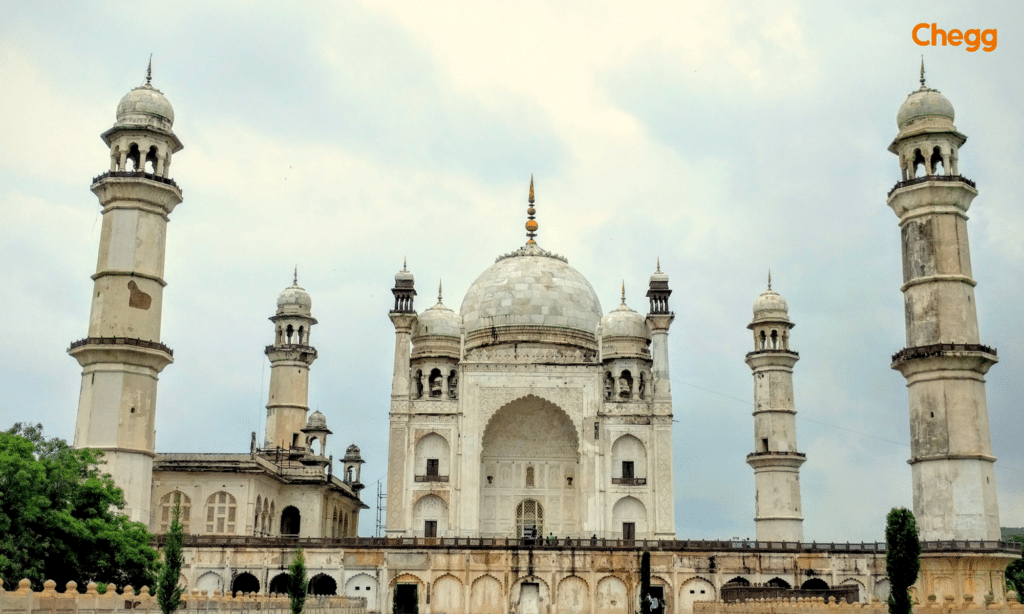
Bibi Ka Maqbara, also known as the “Taj of the Deccan,” is a captivating Mughal monument in Aurangabad. It boasts its unique charm while sharing some architectural elements with the Taj Mahal.
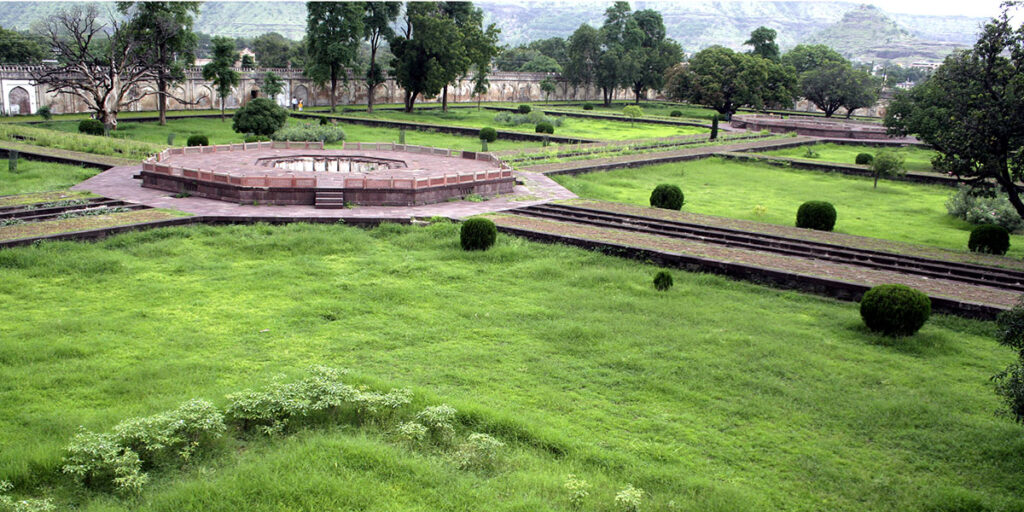
The mausoleum stands proudly amidst a sprawling Charbagh garden, a classic Mughal design featuring a four-quartered layout with water channels. The enclosure surrounding the garden measures a vast 458 meters by 275 meters. Pathways lined with cypress trees, mango groves, vibrant rose bushes, and colorful flowers create a serene ambiance.
The mausoleum rests on a raised square platform, echoing a common feature in Mughal architecture. Four graceful minarets, each with 72 feet of height, flank the corners of the platform. Stairs on three sides provide access to the main structure.
The central part of the mausoleum and its majestic dome are made from white marble, while the remainder of the structure is built using lime and plaster. This unique combination creates a distinct visual appeal unlike the Taj Mahal’s uniform marble facade. The intricate carvings and beautiful wall latticework further enhance the monument’s elegance.
Bibi Ka Maqbara offers breathtaking city views, adding to its magnificence. As the sole Mughal-built monument in the Deccan region, it holds historical and architectural significance. Its captivating beauty, captivating garden setting, and unique architectural features make it a must-visit destination for anyone exploring the wonders of Mughal art and history.
The splendid monument of the Bibi Ka Maqbara, Aurangabad, was built between 1651 and 1661 AD.
It cost about Rs. 6.6 lakhs, and Aurangzeb gave Rs. 7 lakhs for it. Ataullah designed it, and Hanspat Rai was the engineer. Marble from Jaipur mines was used. Around 300 carts, each pulled by twelve oxen, carried marble to Aurangabad for construction. They aimed for a design like the Taj Mahal but faced budget and architectural challenges.
Dilras Banu Begum, Aurangzeb’s first and favourite wife, was the daughter of Mirza Badi-uz-Zaman Safavid. She married him in 1637. “Tomb of the Lady,” also called Bibi Ka Maqbara, was built by Prince Azam Shah, Aurangzeb’s son, in memory of Dilras Banu Begum. She died in 1657 due to complications after childbirth.
Aurangzeb’s pain was immense, and Azam Shah had a breakdown. Three years later, he commissioned the Bibi Ka Maqbara, similar to the Taj, as her resting place. Aurangzeb, who rarely built grand structures, made an exception for his wife’s mausoleum.
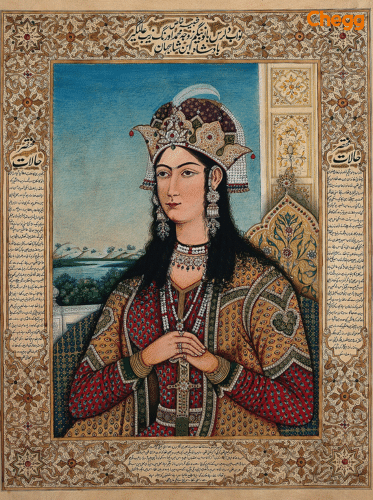
The Aurangabad Taj Mahal is a beautiful tomb for Rabia-ud-Daurani, also known as Dilras Banu Begum. She was the wife of Mughal Emperor Aurangazeb (1658-1707 A.D.).
Prince Shah built this Bibi ka Maqbara to remember his mother between 1651 and 1661 A.D. On the main door, it says Ata-ullah, an architect, and Hanspat Rai, an engineer, built it. It resembles the famous Taj Mahal in Agra, the “Taj of Deccan”.
The tomb sits in a big space, about 458 meters north-south and 275 meters east-west. Pillared pavilions called Baradaris are at the north, east, and west. The tomb has a Char-Bagh design, like the Mughals loved, with a symmetrical garden. The walls have cool designs with little minarets.
The tomb stands on a tall square base with minarets at each corner. Steps go up from three sides. A mosque was added later in the west. The tomb is covered with marble up to a point. Above that, it’s made of a dark stone. The dome on top has pretty designs like flowers.
Inside, Rabia-ud-Daurani rests below the ground. Marble screens with lovely patterns surround her. You can go down to see it. There’s a hole in the roof to see inside, too. The small mosque is west of the tomb. It has arches and corner minarets. The tomb is round, about 170 feet wide. Marble minarets stand on each side. They have three floors and stairs to the top. The dome has flower designs.
Dilras, also known as Rabia, and Aurangzeb had five children: two sons and three daughters. Tragically, after giving birth to her fifth child, a son named Akbar, Dilras passed away just a month later. Her death left a deep void in the royal family, especially for Aurangzeb. To honor her memory, he commissioned the creation of Bibi Ka Maqbara, a timeless symbol of his love and devotion.
Later, her son Azam Shah took it upon himself to restore and enhance the mausoleum, making it even more beautiful. Maqbaras, the grand tombs built during the Mughal era, were not only memorials for royals and nobles but also held religious and cultural significance, marking the legacy of those who passed.
As the COVID-19 cases rose, Bibi Ka Maqbara, a historical Mughal monument in Aurangabad, closed its doors. During this time, the Archaeological Survey of India (ASI) began repairing and conserving the site. ASI officials shared that they focused on the paintings and marble sections of the monument.
Setting up scaffolding around the central dome took nearly 25 days. Misra pointed out that using wooden and steel scaffolding around the 44-meter-wide central dome and its 3-meter-tall metallic pinnacle was particularly challenging.
The ASI team planned to conserve the paintings using earth colours from Rajasthan. These colours were used in historic palaces and were essential for restoration. Challenges like colour reintegration and climate effects also had to be addressed. Misra and his team remained committed to their task despite the setbacks and challenges. They expected to unveil the renewed Aurangabad Taj Mahal, with most interior marble conserved.
| Feature | Bibi Ka Maqbara | Taj Mahal |
|---|---|---|
| Location | Aurangabad, Maharashtra | Agra, Uttar Pradesh |
| Built By | Azam Shah (Aurangzeb’s son) | Shah Jahan |
| Purpose | Tomb for Aurangzeb’s wife, Rabia-ud-Daurani | Tomb for Shah Jahan’s wife, Mumtaz Mahal |
| Nickname | Mini Taj Mahal | N/A |
| Construction Cost | 7 lakh rupees | Estimated 32 million rupees |
| Materials Used | Marble and plaster | White marble with precious stones |
| Durability | Less durable | Highly durable |
| Size | Smaller | Larger |
| Design | Similar to the Taj Mahal with a dome and char bagh garden | Octagonal structure, dome, char bagh garden |
| Symbolism | Political move by Aurangzeb | Symbol of love |
| Structural Shape | Square with octagonal elements | Octagonal |
| Historical Significance | Reflects Aurangzeb’s ambitions as an emperor | Symbolizes eternal love |
Bibi Ka Maqbara, a symbol of remembrance, resembles the Taj Mahal. It’s a tribute to a mother’s love, standing proudly with its uniqueness. Also known as the Tomb of the Lady, Ataullah, son of Taj Mahal’s architect, Ahmad Lahauri, designed it, heavily influenced by the prime wonder.
The pattern and design closely mimic the Taj Mahal, as Attaullah learned from his father’s work. Skilled in metalwork and languages like Sanskrit and Persian, he translated math books. Likely aided by Aurangzeb and his wife, they picked the site vital for its beauty and aesthetics. Rai’s name is on the metal door, showing his role.
The tomb aimed to be grander than the Taj, yet budget constraints led to a challenging replica. Mughal architects valued rivers through their structures and Charbagh gardens. Bibi Ka Maqbara is no different.
The Maqbara has a Charbagh-style garden at its center, surrounded by structures: a 12-door Baradari to the north, the main entrance to the south, a mosque to the west, and Aina Khana (mirror chamber) to the east. The white dome features flowery patterns. The walls hold arched recesses and bastions. A small mosque stands west, which was added later by the Nizam of Hyderabad.
Bibi Ka Maqbara is a must-visit for anyone interested in Mughal history. It represents an essential piece of the 17th-century Mughal capital, offering a glimpse into the grandeur of the era. By visiting, you not only witness architectural brilliance but also gain an understanding of Aurangzeb’s ambitions. However, the monument also symbolizes the decline of the empire. Under Aurangzeb’s rule, the Mughal Empire reached its territorial peak, but cultural prosperity and grand architectural projects slowed down, marking the end of the golden era. The Maqbara reflects this transition as a reminder of the empire’s zenith and eventual decline.
In addition to its historical significance, Bibi Ka Maqbara offers a unique emotional appeal. Though it may not evoke the same awe as the Taj Mahal, the monument exudes charm and nostalgia, making it a serene and introspective experience. A visit also helps support the conservation efforts of this important site. Protecting Bibi Ka Maqbara is crucial in preserving India’s history, particularly as some of it faces attempts at erasure. With fewer tourists than the Taj Mahal, Bibi Ka Maqbara provides a peaceful experience, and your visit can directly contribute to its restoration. We also offer tours that cover the region’s Mughal capitals, including Aurangabad, to help you explore this fascinating history.
| Details | Information |
|---|---|
| Location | Begumpura, Aurangabad, Maharashtra 431004 |
| Distance from City Centre | Approximately 3 km |
| Visiting Hours | 8:00 AM to 8:00 PM (Daily) |
| Ideal Visiting Season | October to March (Pleasant weather for sightseeing) |
| Entry Fee | |
| – Indian Nationals | ₹25 |
| – Foreign Nationals | ₹300 (approx.) |
| Distance from Mumbai | 333 km (about 7 hours by road via NH160 Nagpur-Aurangabad highway) |
| Travel by Air | 1 hour 10 minutes flight from Mumbai to Aurangabad |
Easily accessible from Mumbai, Aurangabad, a popular tourist destination in Maharashtra, draws visitors year-round due to its diverse range of monuments. It is roughly 333 kilometers from Mumbai and can be reached by car via the NH160 Nagpur-Aurangabad highway in about 7 hours. From Mumbai to Aurangabad, the Maharashtra State Road Transport Corporation (MRCTC) operates a Parivaran bus daily. An average flight from Mumbai to Aurangabad will take about one hour and ten minutes if you travel that distance by air. At the moment, Jet Airways and Air India are using the route.
| Mode of Transportation | Details |
|---|---|
| Nearest Airport | Aurangabad Airport (Chikkalthana, 11 km away) |
| Airlines Serving the Airport | Flights available from Hyderabad, Mumbai, and Delhi |
| Nearest Metro Station | Metro station under construction in Aurangabad |
| Nearest Railway Station | Aurangabad Railway Station (6 km away) |
| Fastest Train from Mumbai | Aurangabad Jan Shatabdi Express |
| Nearest Bus Stand | Central Bus Stand (3.4 km away) |
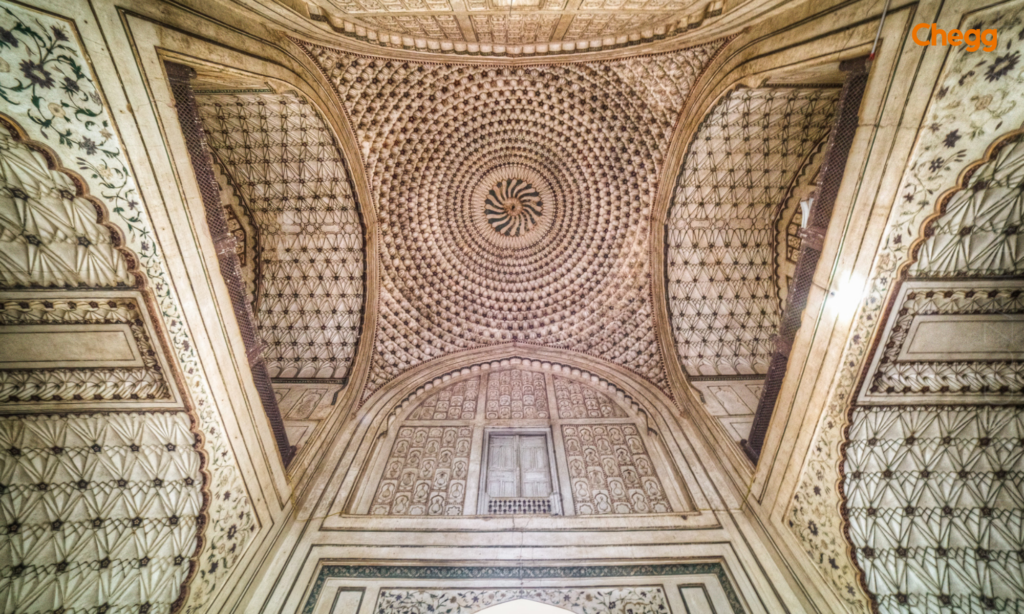
The Bibi Ka Maqbara, often hailed as the “Taj of the Deccan,” reflects exquisite Mughal artistry in every detail. From its majestic exterior to the intricately designed interiors, the monument is adorned with stucco paintings, raised plaster decorations, colorful tile work, and delicate lattice screens. As visitors step inside, they are welcomed by ceilings enriched with geometric patterns and thread-like designs, displaying remarkable craftsmanship. The latticework, carved with floral and geometric motifs, adds elegance while allowing light to filter through in beautiful patterns.
The mausoleum, commissioned by Prince Azam Shah in 1668 to honor his mother, Dilras Begum, posthumously known as Rabia Durani, is one of Maharashtra’s finest historical treasures. Aurangzeb, known for his restraint in monumental constructions, intended this to rival the Taj Mahal. However, financial limitations curtailed his vision. Despite that, Bibi Ka Maqbara remains an enduring symbol of Mughal grandeur and artistry in southern India.
Read More:-
It was built by Azam Shah, son of Mughal Emperor Aurangzeb, in 1660 in Aurangabad, Maharashtra, in memory of his mother, Dilras Banu Begum.
Bibi Ka Maqbara’s lesser fame is because Aurangzeb, who wasn’t much into architecture, didn’t want a monument as grand as the Taj. He blocked marble movement from Rajasthan and other parts of the Mughal empire, stopping its construction.
Aurangzeb created the largest structure, Bibi Ka Maqbara, which resembles the Taj Mahal. He built it for his mother-in-law, Empress Mumtaz Mahal, who died while giving birth. Aurangzeb himself is buried nearby in Khuldabad.
Located around 3 kilometers outside the city, Bibi Ka Maqbara is where Aurangzeb’s wife, Rabia-ud-Durrani, rests.
Although the Mini-Taj is about half the size of the famous Taj Mahal, it’s still a remarkable monument and considered the finest Mughal monument in the western Deccan region of India.