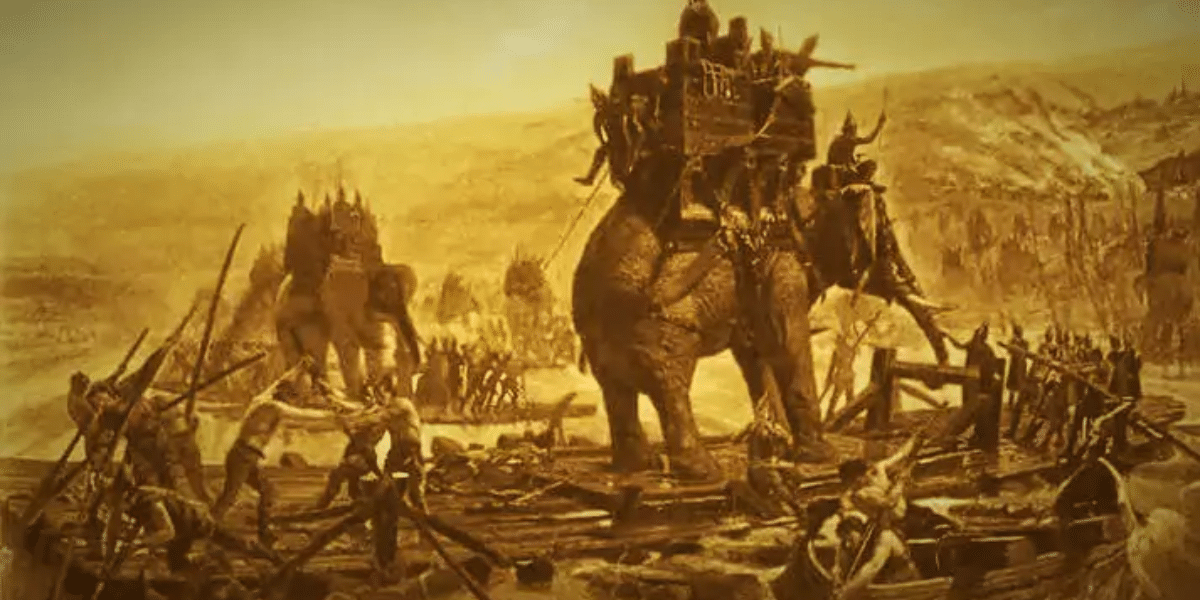
The Kalinga War (261 BCE) was a major conflict between the Mauryan Empire under Ashoka and the Kalinga kingdom.
Known for its immense bloodshed and destruction, it marked a turning point in Indian history.
The war’s aftermath led to Ashoka’s transformation and his embrace of Buddhism.
Table of Contents
The Kalinga War (261 BCE) marked a pivotal moment in Indian history, fought between King Ashoka of the Mauryan Empire and the independent kingdom of Kalinga. The battle took place near Dhauli hills on the banks of the Daya River, in present-day Odisha. Known for its unprecedented bloodshed, this war not only reshaped the Mauryan Empire but also changed the course of Ashoka’s life, leading him toward Buddhism and a reign defined by peace and moral governance.
For UPSC and SSC aspirants, the Kalinga War is vital because it connects politics, religion, governance, and cultural transformation in ancient India.
Chronology of the Kalinga War
Pre-261 BCE: The Mauryan rulers before Ashoka attempted to subjugate Kalinga but failed. The Kalinga Empire thrived independently after the fall of the Nanda dynasty.
261 BCE: Ashoka, seeking to secure trade routes and strengthen Mauryan power, launched a campaign against Kalinga.
261 BCE (Battle of Kalinga): A brutal conflict unfolded, causing immense loss of life on both sides. The bloodshed deeply impacted Ashoka.
Post-261 BCE: The devastation became the catalyst for Ashoka’s spiritual transformation and his adoption of Buddhism.
Where Was the Kalinga War Fought?
The Battle of Kalinga is believed to have taken place near the Daya River in Odisha, with the Dhauli Hills serving as the battleground. Today, Ashoka’s Rock Edicts at Dhauli remind the emperor of remorse and his shift from violence to peace.
Historical Background of the Kalinga War
Location of Kalinga: The Kalinga Empire covered the eastern coastal belt of India, stretching between the Ganges and Godavari rivers. It included parts of modern-day Odisha and northern Andhra Pradesh.
Early mentions: References to Kalinga are found in the Mahabharata, highlighting its ancient prominence.
Dynasties of Kalinga: Several rulers governed Kalinga before Ashoka, including the Mahameghavahana, Vasishtha, Mathara, and Eastern Ganga dynasties.
Prosperity: Kalinga thrived as a maritime power, trading with Southeast Asia and fostering a unique cultural blend of tribal traditions and Brahmanism.
Strategic importance: Ashoka wanted to control Kalinga because it linked Pataliputra (Mauryan capital) with central and southern India, making it crucial for trade and administration.
Who Was the King of Kalinga When Ashoka Attacked?
When Ashoka waged war on Kalinga, the region was ruled by Raja Anantha Padmanabha, who was remembered for his bravery and leadership. He commanded an army of 60,000 infantry, 1,000 cavalry, and 700 war elephants against the mighty Mauryan forces.
Who Was Involved in the Kalinga War?
The Kalinga War was a pivotal clash between two powerful forces:
Mauryan Empire – Led by Emperor Ashoka, who sought to expand his dominion.
Kalinga Kingdom – A prosperous and independent state under Raja Anantha Padmanabha, located in present-day Odisha and northern Andhra Pradesh.
This battle represented more than a political conflict; it was a struggle for sovereignty and survival that forever altered Indian history.
The Battle of Kalinga (261 BCE)
Also called the 261 BC Kalinga War, the battle was among the deadliest in Indian history.
Mauryan Strength: Greek ambassador Megasthenes described Ashoka’s military as vast, over 100,000 soldiers, 1,700 cavalry, and war elephants.
Kalinga Resistance: Raja Anantha Padmanabha fought valiantly with his well-trained army.
The Bloodshed: According to Ashoka’s 13th Rock Edict, the war caused 100,000 deaths, 150,000 deportations, and countless other casualties.
The Kalinga War left behind immense human suffering. Though Ashoka won militarily, the emotional loss was far greater, as the horror of the battlefield transformed him forever.
Ashoka’s Role in the Kalinga War
Ashoka’s role in the conflict highlights three distinct phases:
A Transformed Ruler – Moved by the aftermath, Ashoka turned away from warfare, embracing compassion, Buddhism, and moral governance.
Initiator of Conflict – He waged war to expand Mauryan dominance over the independent Kalinga.
Leader of a Brutal Campaign – His army inflicted widespread destruction, leading to massive casualties.
Course of the Kalinga War
The Mauryan forces attacked from multiple directions in a coordinated campaign rather than a single frontal assault.
Kalinga’s defence: Local troops fought fiercely lists of fighting units include infantry, cavalry and war-elephants and offered stiff resistance.
Nature of fighting: Contemporary and later accounts describe the battle as brutal and intensely violent, with close-quarters clashes and heavy losses.
Scale of armies: Ancient writers emphasize very large forces on both sides; these portrayals underline the battle’s exceptional scale (exact numbers remain debated).
Casualties and dislocation: Sources differ, but all agree on widespread death and displacement, the conflict devastated towns and uprooted communities across Kalinga.
Immediate aftermath: Commerce and local administration were badly disrupted; many settlements suffered destruction and population shifts.
Long-term impact on Kalinga: The social and economic fabric of the region was altered for decades, with recovery taking generations.
Major Outcomes of the Kalinga War
The Kalinga War and its significance cannot be overstated. It changed the course of Ashoka’s reign and reshaped Indian history. Below are the seven key outcomes of the battle:
1. Ashoka’s Conversion to Buddhism
The horrors of the Kalinga War bloodshed led Ashoka to adopt Buddhism.
He abandoned aggressive expansion and embraced ahimsa (non-violence), compassion, and moral governance.
This transformation made him a major patron of Buddhism, spreading it across India and beyond.
2. Introduction of Dhamma (Moral Law)
Ashoka developed a code of conduct known as Dhamma, which promoted kindness, truth, respect for all beings, and religious harmony.
Through his Rock and Pillar Edicts, he encouraged ethical living and social responsibility.
3. End of Military Expansion
Before 261 BCE, Ashoka expanded the Mauryan Empire through war.
After the Battle of Kalinga, he vowed never to wage another conquest.
His focus shifted toward internal peace and efficient governance.
4. Promotion of Social Welfare
Ashoka launched welfare measures such as hospitals, roads, rest houses, and irrigation projects.
He also emphasized animal welfare, banning cruel practices and protecting species in designated sanctuaries.
5. Religious Tolerance and Pluralism
Despite following Buddhism, Ashoka respected all religions, including Brahmanism, Jainism, and local traditions.
His policies of tolerance promoted interfaith harmony, rare for that era.
6. Spread of Buddhism Beyond India
Ashoka sent missionaries to Sri Lanka, Central Asia, and Southeast Asia.
This helped Buddhism become a global religion and strengthened India’s cultural ties abroad.
7. Cultural and Architectural Growth
Ashoka commissioned stupas, monasteries, and the famous Ashokan pillars inscribed with edicts.
These remain crucial sources of history and symbols of moral leadership.
Causes and Consequences of the Kalinga War
Causes of Kalinga War
The reason for the War can be understood through three main factors:
Strategic Location – Kalinga controlled trade routes along the eastern coast.
Political Independence – Unlike most of India, Kalinga resisted Mauryan dominance.
Ashoka’s Expansion Policy – Following in his predecessors’ footsteps, Ashoka wanted to annex Kalinga to secure the empire’s boundaries.
Thus, the Kalinga War causes and effects highlight political ambition and the consequences of imperial overreach.
Consequences
His reign thereafter focused on moral leadership, welfare policies, and religious tolerance.
Over 100,000 people died, and 150,000 were deported.
The destruction caused massive human suffering.
Ashoka, deeply moved, abandoned warfare and adopted Buddhism.
Aftermath of the Kalinga War
The aftermath of the Kalinga War (261 BCE) brought far-reaching consequences for both Emperor Ashoka and the Indian subcontinent. The battle left over 100,000 people dead and 150,000 taken prisoner, plunging the region into devastation. Confronted with the horrors of the war, Ashoka experienced deep remorse, which ultimately led to his conversion to Buddhism.
This transformation marked a turning point in his reign. Ashoka renounced violence and began promoting Dhamma (righteousness), a moral code emphasizing compassion, non-violence, respect for all living beings, and religious tolerance.
To spread these values, he issued a series of Rock and Pillar Edicts, inscribed across the Mauryan Empire. These edicts urged truthfulness, harmony, and welfare for all subjects. Ashoka also:
Sent Buddhist missionaries to Sri Lanka, Central Asia, and Southeast Asia, helping establish Buddhism as a major world religion.
Appointed Dhamma Ma`hamatras, officials tasked with ensuring moral governance and justice.
Undertook welfare measures such as building hospitals (for both humans and animals), planting trees, and constructing rest houses for travelers.
Thus, Ashoka’s reign after the Kalinga War is remembered for its emphasis on peace, compassion, and ethical governance.
Importance of the Kalinga War
The importance of the Kalinga War lies in its far-reaching consequences:
Religious Change: Ashoka’s patronage helped Buddhism flourish in India and Asia.
Humanitarian Governance: He replaced aggression with peace, welfare, and moral policies.
End of Expansion: The Mauryan Empire entered a phase of stability without further violent conquests.
Administrative Reforms: Ashoka appointed Dhamma Mahamatras, officials responsible for spreading ethical values and addressing public grievances.
In short, while the Kalinga Empire lost its independence, the war ensured a more humane and ethical governance model under Ashoka.
Legacy of the Kalinga War
The Kalinga War and its significance remain unparalleled in the annals of history. It proved that conquest by the sword can give way to conquest by moral values.
Historical Legacy
The battle showcased the limits of warfare and the power of empathy.
Ashoka’s embrace of Buddhism redefined governance and influenced India’s moral and political fabric for centuries.
Modern-Day Lessons
Spread Positivity – By spreading Buddhism, Ashoka promoted peace and tolerance, values still relevant today.
Choose Peace Over War – War only brings destruction, while dialogue creates lasting harmony.
Embrace Empathy – Ashoka’s transformation shows the strength of compassion in leadership.
Ashoka’s Rock Edicts
Ashoka’s Rock Edicts are a network of public inscriptions cut into boulders and pillars across South Asia in the 3rd century BCE. Carved by the Mauryan emperor Ashoka, they broadcast his new moral programme – dhamma – offering guidance on compassion, non-violence, social responsibility and peaceful co-existence. These texts represent some of the earliest readable records from ancient India and are vital for understanding Ashoka’s reign and early Buddhist influence.
What are the Rock Edicts? (plainly put)
Short inscriptions chiseled on natural rock faces and standing pillars.
A corpus of roughly 33 separate inscriptions – grouped into Major Rock Edicts, Minor Rock Edicts, and pillar inscriptions.
Meant as public proclamations: Ashoka used them to communicate directly with subjects across his empire about ethical behaviour and state policy.
Important sites to note
Dhauli (Odisha): associated with the aftermath of the Kalinga conflict.
Mansehra (now in Pakistan): contains rock inscriptions in the Major Edict series.
Kandahar (Afghanistan): a multilingual edict (Aramaic/Greek) that reveals Ashoka’s message reached beyond the subcontinent.
The Kalinga War for UPSC Aspirants
For UPSC and SSC aspirants, the 261 BC Kalinga War is a case study in:
Ancient Indian warfare and expansionist policies.
The transformation of governance under Ashoka.
The socio-religious impact of Buddhism in India and beyond.
The ethical principle of Ahimsa (non-violence) is a foundation of statecraft.
Prelims-style (MCQ / objective)
The Kalinga War is generally dated to: A) 326 BCE B) 261/262 BCE C) 185 BCE D) 321 BCE
Ashoka’s account of the Kalinga War and its consequences is found in which of the following? A) Arthashastra B) Megasthenes’ Indica C) Rock Edicts of Ashoka D) Puranas
Which site is commonly associated with Ashokan memorials related to the Kalinga campaign? A) Sanchi B) Dhauli C) Nalanda D) Taxila
Ashoka’s policy after the Kalinga War was called: A) Rajdharma B) Dhamma C) Dharmaśāstra D) Arthashastra
The Kandahar inscription indicates Ashoka’s outreach beyond India by using which scripts/languages? A) Brahmi only B) Kharosthi only C) Aramaic & Greek D) Tamil & Prakrit
(Answers: 1-B, 2-C, 3-B, 4-B, 5-C)
Short-answer (50–80 words)
Outline the immediate political and social consequences of the Kalinga War.
What does Ashoka’s Major Rock Edict (recounting Kalinga) reveal about his motives for adopting Dhamma?
Why do historians treat Ashoka’s casualty figures from the edict with caution?
Name two archaeological sites associated with the Kalinga conflict and state their significance.
How did the Kalinga War affect Mauryan foreign policy and missionary activity?
Mains / Long answer (150–250 words)
“The Kalinga War marks a watershed in Mauryan polity.” Critically analyze with special reference to Ashoka’s Rock Edicts.
Examine the economic and strategic motives behind the Mauryan invasion of Kalinga. To what extent do sources support these motives?
Discuss how the Kalinga War influenced the propagation of Buddhism both within and beyond the subcontinent.
Assess the reliability of literary and epigraphic sources on the Kalinga War. How should a historian balance archaeological evidence with royal inscriptions?
“Ashoka’s remorse was as much political messaging as personal conversion.” Critically examine this view with examples from the edicts and archaeological record.
Source-based / Document-analysis
Given an excerpt of Major Rock Edict (translated): “Many were killed… many were deported… what is here described moved me…” – Analyze the purpose and audience of this proclamation. (Explain tone, intended recipients, and administrative aims; 10–12 marks.)
Compare a short excerpt from Megasthenes’ account describing Indian military strength with Ashoka’s edict. How do foreign and native sources differ in focus and bias regarding the Kalinga conflict? (12–15 marks.)
Conclusion
The Kalinga War is one of the most transformative events in Indian history. It transformed Ashoka from the conqueror into the compassionate, replacing violence with peace, tolerance, and moral leadership.
The war’s legacy continues to resonate, reminding us that even the mightiest empires must eventually bow to the pursuit of harmony. A new path of peace and compassion arose from destruction, shaping India’s cultural identity and influencing the broader world through Buddhism.
Ashoka and Raja Anantha Padmanabha engaged in combat during the Kalinga war. In 261 BCE, Ashoka invaded this kingdom because it would not submit to him. It is estimated that 100,000 Kalinga soldiers lost their lives in this horrific conflict.
Who defeated Ashoka?
There are no historical records of Ashoka the Great’s defeat by any individual or group. He stood as one of the most powerful emperors of the Mauryan Empire, the largest empire in India during his reign.
How many died in the Kalinga War?
The Kalinga War was a colossal conflict resulting in the deaths of approximately 100,000 individuals and the capture of 150,000 others. Additionally, a similar number perished in the aftermath of the war.
In which inscription is the Kalinga War mentioned?
The Kalinga War and Ashoka’s remorse are described in Major Rock Edict XIII, one of Ashoka’s rock inscriptions. These edicts (found at several sites) record his account of the conquest and his turn toward the principles of dhamma.
What is Kalinga called now?
Odisha is the current name for Kalinga. The last dynasties to rule Kalinga were the Gajapati and Suryavansh or Nandapur. The Banga kingdom is where the term Bengal originates.
What was the main reason for the Kalinga War?
Ashoka’s campaign aimed to bring the wealthy, strategic Kalinga coast under Mauryan control, securing trade routes, ports and regional power. In short, it was an imperial expansion to consolidate territory and commerce, not a local quarrel.
Who was involved in Kalinga War?
The Kalinga War in 261 BCE involved Emperor Ashoka of the Mauryan Empire and the people of Kalinga, an independent and prosperous region in eastern India. The conflict arose from Ashoka’s desire to annex Kalinga, which resisted Mauryan rule, leading to a fierce and devastating battle.
Who won the Kalinga War?
The Kalinga War fought between the Maurya Empire and the state of Kalinga, was won by Emperor Ashoka. Emperor Ashoka, son of Bindusara, won the Kalinga War in 261 B.C.
Authored by, Muskan Gupta Content Curator
Muskan believes learning should feel like an adventure, not a chore. With years of experience in content creation and strategy, she specializes in educational topics, online earning opportunities, and general knowledge. She enjoys sharing her insights through blogs and articles that inform and inspire her readers. When she’s not writing, you’ll likely find her hopping between bookstores and bakeries, always in search of her next favorite read or treat.