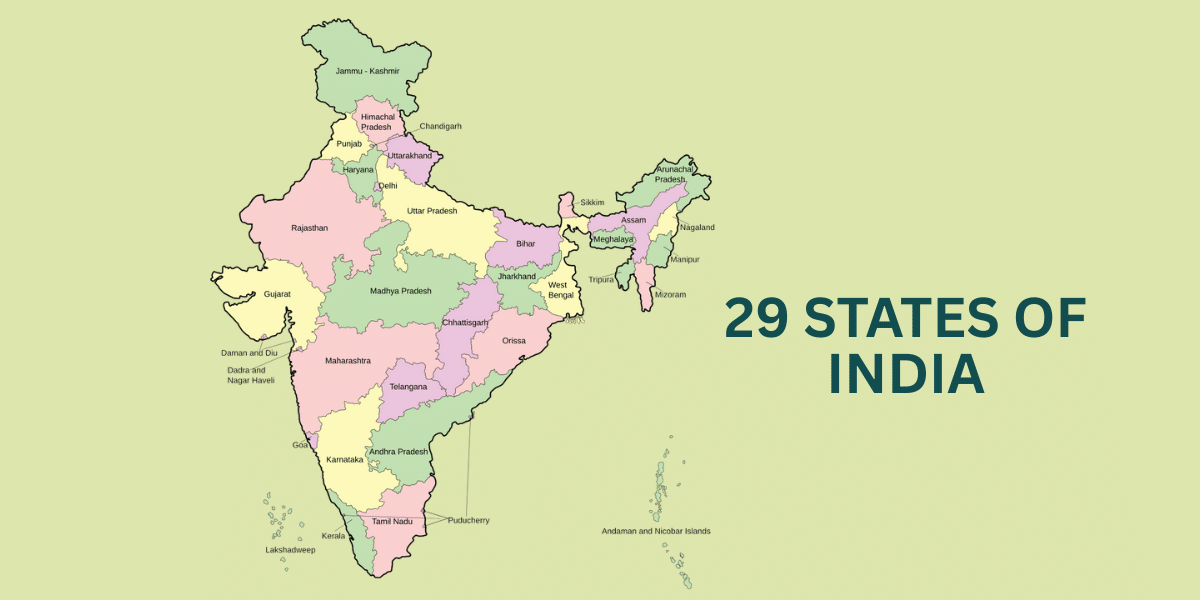
India is known for its distinct traditions and culture. When asked “How many states in India?” the answer is 28 states in India. Earlier, we had a list of 29 states of India that covered an area of 32,87,263 sq. km. That is why it is also called the 7th-largest country in the world. Every state in India differs from the others because of the diverse traditional attire and the occasions they observe annually. A festival celebrated in Kerala may not be famous in Punjab, and vice versa.
The country is known for believing in the motto of cultural unity in diversity. Learning about the different states in India requires learning more about rich traditions, languages, and customs.
This guide will explore the list of 28 states in India and their capitals to understand these distinctions. We will also learn about each state’s specialities, traditional outfits, and major festivals, helping you learn more about India’s states and capital, its rich geographical terrain, and cultural heritage.

The country’s richness and diversity are easily showcased in the list of 28 states in India. People usually categorise these states in India into North, South, East, West, and Northeast India. Every state has a different climate, landscapes, and traditions. Most importantly, they vary in size. Currently, Rajasthan is the largest state in India, and Goa is the smallest in land area.
Learning more about the state names of India and its geographical barriers is the best way to understand the country better. Dividing the country’s landscape into northern and southern states in India makes these distinctions easier to understand and further explains the states and capitals.
Punjab, Himachal Pradesh, Haryana, and Uttarakhand are the northern states in India. Tourists usually visit these places because of their rich history and cultural significance. They are known for breathtaking landscapes, snow-capped mountains, and lush green valleys.
This region has helped shape Indian history and includes evidence of several ancient civilisations. States in the North, like Punjab and Himachal Pradesh, are home to key landmarks like the Golden Temple and Dal Lake. These states showcase rich traditions and the culinary delights of North Indian cuisine.
Tamil Nadu, Kerala, Andhra Pradesh, Karnataka, and Telangana are the central southern states in India. They are celebrated for their deep-rooted traditions and contributions to India’s identity. South India is known for its Dravidian architecture, classical music, and festivals like Pongal and Onam. These states in India have numerous architectural monuments showcasing India’s ancient past.
Southern India is known for world-famous dishes like dosa, idli, and spicy curries. The people in these states speak Tamil, Telugu, Malayalam, and Kannada, showcasing the linguistic diversity South India is usually known for worldwide. Learning the states’ names and heritage helps better connect with Indian diversity.
Article 370 of the Indian Constitution, enacted in 1949, granted special autonomous status to Jammu and Kashmir. This article allowed Jammu and Kashmir to have its own Constitution, a separate flag, and autonomy over internal matters except defense, foreign affairs, finance, and communications, which remained with the Indian government.
Under Article 370:
This provision was initially intended to be temporary, but it remained in force for decades, making Jammu and Kashmir politically distinct from the rest of India.
Alongside the abrogation of Article 370, the Jammu and Kashmir Reorganization Act, 2019, was passed, bifurcating the state into two Union Territories effective from October 31, 2019:
This reorganization reduced the number of states in India from 29 to 28. It increased the number of union territories from 7 to 9 (later adjusted to 8 after merging Daman and Diu with Dadra and Nagar Haveli).
If you want to visit all the cultural epicentres in India, consider visiting all the Indian states. These 28 regions always reflect the unique heritage of their respective areas. Look at the table of 28 states of India and their capitals below:
| State | Capital |
| Andhra Pradesh | Amaravati |
| Arunachal Pradesh | Itanagar |
| Assam | Dispur |
| Bihar | Patna |
| Chhattisgarh | Raipur |
| Goa | Panaji |
| Gujarat | Gandhinagar |
| Haryana | Chandigarh |
| Himachal Pradesh | Shimla |
| Jharkhand | Ranchi |
| Karnataka | Bengaluru |
| Kerala | Thiruvananthapuram |
| Madhya Pradesh | Bhopal |
| Maharashtra | Mumbai |
| Manipur | Imphal |
| Meghalaya | Shillong |
| Mizoram | Aizawl |
| Nagaland | Kohima |
| Odisha | Bhubaneswar |
| Punjab | Chandigarh |
| Rajasthan | Jaipur |
| Sikkim | Gangtok |
| Tamil Nadu | Chennai |
| Telangana | Hyderabad |
| Tripura | Agartala |
| Uttar Pradesh | Lucknow |
| Uttarakhand | Dehradun |
| West Bengal | Kolkata |
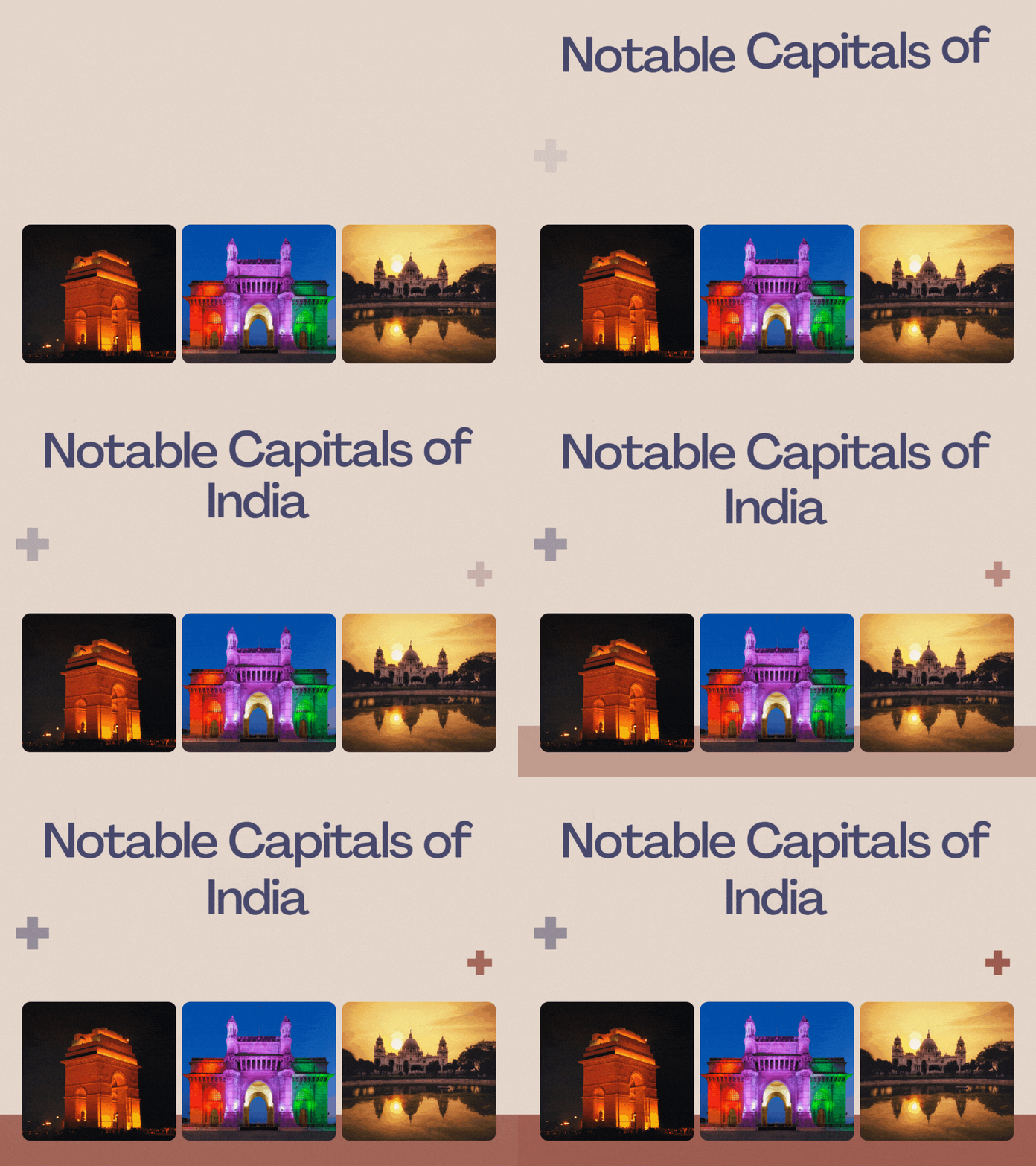
Delhi is the national capital of India and a hub of all meaningful political discussions. The city has various historical monuments, such as the Red Fort and Qutub Minar.
Mumbai is Maharashtra’s capital; people often call it the country’s financial capital. It houses both the stock exchange and the world of entertainment, with the Bollywood industry.
Kolkata is the capital of West Bengal and represents India’s intellectual heritage. The city is known for its literature, art, and colonial architecture. It won’t be wrong to call Kolkata the key centre of learning and cultural exchange in India.
| State/UT | Famous Food(s) |
|---|---|
| Andhra Pradesh | Andhra Chicken Curry, Gongura Pachadi |
| Arunachal Pradesh | Thukpa, Apong |
| Assam | Khar, Masor Tenga |
| Bihar | Litti Chokha, Sattu Paratha |
| Chhattisgarh | Chana Samosa, Faraa |
| Goa | Fish Curry Rice, Prawn Balchão |
| Gujarat | Dhokla, Undhiyu, Thepla |
| Haryana | Bajra Khichdi, Bhutte ka Kees |
| Himachal Pradesh | Siddu, Chana Madra |
| Jharkhand | Dhuska, Chilka Roti |
| Karnataka | Bisi Bele Bath, Mysore Pak |
| Kerala | Appam with Stew, Kerala Sadya |
| Madhya Pradesh | Poha, Bhutte ka Kees |
| Maharashtra | Vada Pav, Pav Bhaji |
| Manipur | Eromba, Chamthong |
| Meghalaya | Jadoh, Dohneiiong |
| Mizoram | Bamboo Shoot Curry, Bai |
| Nagaland | Smoked Pork with Bamboo Shoot, Akhuni |
| Odisha | Dalma, Rasgulla (Odisha-style) |
| Punjab | Butter Chicken, Sarson da Saag with Makki di Roti |
| Rajasthan | Dal Baati Churma, Gatte ki Sabzi |
| Sikkim | Phagshapa, Sel Roti |
| Tamil Nadu | Dosa, Idli, Chettinad Chicken |
| Telangana | Hyderabadi Biryani, Pesarattu |
| Tripura | Mui Borok, Bamboo Shoot Pickle |
| Uttar Pradesh | Tunday Kabab, Bedmi Puri |
| Uttarakhand | Aloo Ke Gutke, Kafuli |
| West Bengal | Macher Jhol, Shorshe Ilish |
| Delhi (UT) | Chole Bhature, Paratha, Nihari |
Every Indian state has a unique traditional dress and festival that stands out from other regions. Here is an overview of the 28 states of india and their dress names list:
| State | Women’s Attire | Men’s Attire | Accessories | Major Festivals |
| Andhra Pradesh | Pochampally saree, Langa voni | Pancha (dhoti), Kurta | Temple jewellery | Sankranti, Ugadi, Bathukamma |
| Arunachal Pradesh | Galuk, Dumsum | Traditional tribal attire | Beaded necklaces, headgear | Losar, Mopin, Solung |
| Assam | Mekhela chador, Riha | Dhoti-kurta, Gamosa | Traditional Assamese jewellery | Bihu, Ambubachi Mela, Majuli Festival |
| Bihar | Bhagalpuri silk saree | Dhoti-kurta, Pajama | Traditional gold ornaments | Chhath Puja, Sama-Chakeva, Madhushravani |
| Chhattisgarh | Tribal costumes, Saree | Dhoti-kurta, Traditional tribal wear | Bell metal jewellery | Bastar Dussehra, Madai Festival, Goncha Festival |
| Goa | Pano bhaju, Kunbi saree | Kaftan, Shorts | Shell jewellery | Carnival, Sao Joao, Bonderam |
| Gujarat | Chaniya choli, Abhla work | Kediya, Chorno | Heavy silver jewellery | Navratri, Uttarayan, Rann Utsav |
| Haryana | Ghagra-choli, Damankurta | Dhoti-kurta, Turban | Gold jewellery | Teej, Gangaur, Baisakhi |
| Himachal Pradesh | Kullu shawl, Chamba suit | Dhatu (woollen coat) | Silver jewellery | Kullu Dussehra, Losar, Mandi Shivratri |
| Jharkhand | Panchi saree, Tribal attire | Dhoti-kurta, Traditional tribal wear | Tribal jewellery | Sarhul, Karma, Tusu |
| Karnataka | Ilkal saree, Kasuti embroidery | Panche, Kurta | Traditional gold jewellery | Dasara, Ugadi, Karaga |
| Kerala | Kasavu saree, Set-mundu | Mundu, Shirt | Temple jewellery | Onam, Vishu, Thrissur Pooram |
| Madhya Pradesh | Chanderi sarees, Tribal wear | Dhoti-kurta, Bandi | Silver jewellery | Lokrang, Khajuraho Dance Festival, Tansen Festival |
| Maharashtra | Nauvari saree, Paithani | Dhoti-kurta, Pheta (turban) | Nath (nose ring) | Ganesh Chaturthi, Gudi Padwa, Diwali |
| Manipur | Phanek, Innaphi | Khudei | Tribal jewellery | Ningol Chakouba, Yaoshang, Lai Haraoba |
| Meghalaya | Jainsem, Dhara | Jainpein, Traditional wear | Coral beads | Wangala, Nongkrem Dance, Behdienkhlam |
| Mizoram | Puanchei, Kawrchei | Tawlhloh Puan | Tribal ornaments | Chapchar Kut, Pawl Kut, Mim Kut |
| Nagaland | Mekhela, Traditional tribal wear | Tribal attire varies by tribe | Beaded jewellery | Hornbill Festival, Moatsu, Sekrenyi |
| Odisha | Sambalpuri saree, Kotki | Dhoti-kurta | Filigree jewellery | Rath Yatra, Raja Parba, Kumar Purnima |
| Punjab | Phulkari suits, Patiala salwar | Kurta-pajama, Turban | Parandi (hair accessory) | Lohri, Baisakhi, Maghi |
| Rajasthan | Ghagra-choli, Bandhej | Dhoti-kurta, Angarkha | Lac bangles | Gangaur, Teej, Pushkar Fair |
| Sikkim | Bakhu, Honju | Kho | Turquoise jewellery | Losar, Saga Dawa, Lhabab Duechen |
| Tamil Nadu | Kanjeevaram saree, Pattu Pavadai | Veshti-sattai | Temple jewellery | Pongal, Thai Pongal, Aadi Perukku |
| Telangana | Gadwal saree, Langa voni | Pancha kattu, Kurta | Traditional gold jewellery | Bathukamma, Bonalu, Sankranti |
| Tripura | Rignai, Risa | Pachra | Tribal ornaments | Garia Puja, Kharchi Puja, Orange Festival |
| Uttar Pradesh | Chikankari kurtas, Saree | Dhoti-kurta, Topi | Traditional jewellery | Diwali, Holi, Kumbh Mela |
| Uttarakhand | Ghagra-choli, Pichora | Dhoti-kurta | Silver jewellery | Kumbh Mela, Nanda Devi Fair, Phool Dei |
| West Bengal | Tant saree, Jamdani | Dhoti-kurta, Punjabi | Shakha pola (bangles) | Durga Puja, Kali Puja, Saraswati Puja |
The governance structure of Indian states follows a parliamentary system within a federal setup. Each state has a governor (appointed by the president) as the constitutional head and a chief minister (elected) who leads the government. Most states have a unicameral legislature (Vidhan Sabha), while some have a bicameral legislature (Vidhan Sabha + Vidhan Parishad). The high court serves as the top judicial authority in each state, overseeing lower courts.
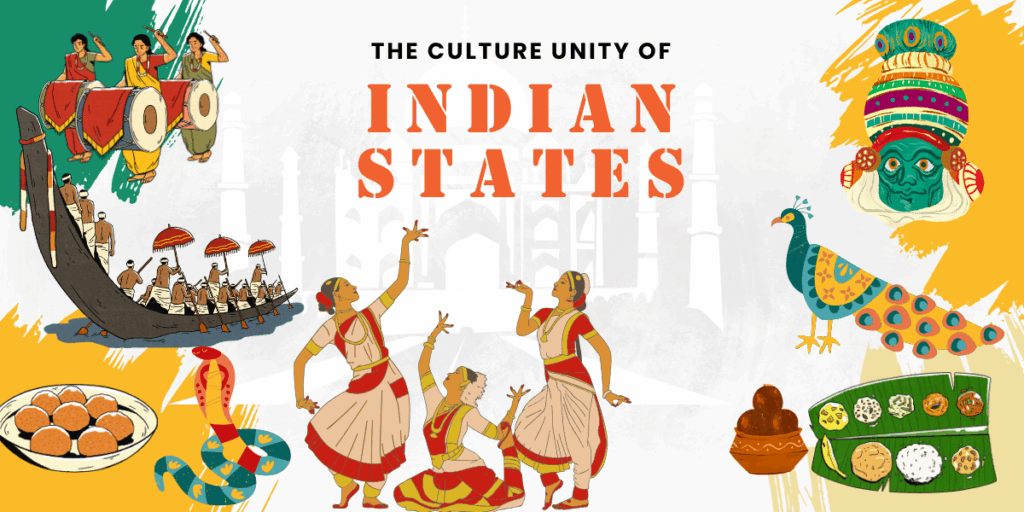
Several languages, religions, and traditions coexist across the Indian states, so the country is also called a land of culture. This promotes tolerance and understanding among all citizens. It enables individuals to learn from one another and appreciate diverse customs and practices.
India’s festivals and traditional attire serve as symbols of national unity. The diverse clothing styles across the 29 states reflect shared artistic elements and cultural symbolism. For instance:
India’s diverse cultural landscape is beautifully reflected in its 28 states, each offering a distinct blend of heritage, language, traditions, attire, and festivals. From the snowy peaks of Himachal Pradesh to the vibrant backwaters of Kerala, every region adds a unique thread to the country’s cultural fabric. The question, “How many states in India?”, has evolved, from 29 states in India to the current 28 states, marking not just a numerical change but a significant shift in India’s political and constitutional structure.
The transformation of Jammu and Kashmir into a Union Territory, following the abrogation of Article 370, stands out as a pivotal moment in the nation’s contemporary history. This move integrated Jammu and Kashmir more fully into the Indian Union and redefined its administrative identity. It also signaled a broader commitment to uniformity in governance while still celebrating the distinct identity of every region.
Understanding the states and capitals of India, their traditional clothing, signature festivals, and governance structures is not just about memorizing names on a map; it’s about appreciating the idea of unity in diversity, which lies at the heart of the Indian Constitution. Whether you’re a student, traveler, cultural enthusiast, or someone exploring India’s federal evolution, this comprehensive view of the 28 states of India is a gateway to knowing the honest India, diverse yet united, traditional yet ever-evolving.
As we continue to celebrate regional diversity, we must recognize that India’s strength lies in integrating this diversity into a common national identity. The journey from 29 to 28 states is not just a reorganization of borders but a reflection of India’s resilience, adaptability, and enduring democratic ethos.
India has a total of 9 union territories as of 2025, which include Andaman and Nicobar Islands, Chandigarh, Dadra and Nagar Haveli and Daman and Diu, Lakshadweep, Delhi, Puducherry, Ladakh, and Jammu and Kashmir.
As of 2025, India has 28 states and 8 union territories.
Andhra Pradesh, Arunachal Pradesh, Assam, Bihar, Chhattisgarh, Goa, Gujarat, Haryana, Himachal Pradesh, Jharkhand, Karnataka, Kerala, Madhya Pradesh, Maharashtra, Manipur, Meghalaya, Mizoram, Nagaland, Odisha, Punjab, Rajasthan, Sikkim, Tamil Nadu, Telangana, Tripura, Uttar Pradesh, Uttarakhand, West Bengal.
After Article 370 was abrogated, Jammu and Kashmir were removed from the list of 29 states and reorganized into two union territories, Jammu and Kashmir and Ladakh, reducing the total number of states in India to 28.
In 2025, India is divided into 28 states and 8 union territories. While states have their governments and designated capitals, union territories are primarily overseen by the Central Government, though a few possess their own legislative bodies.