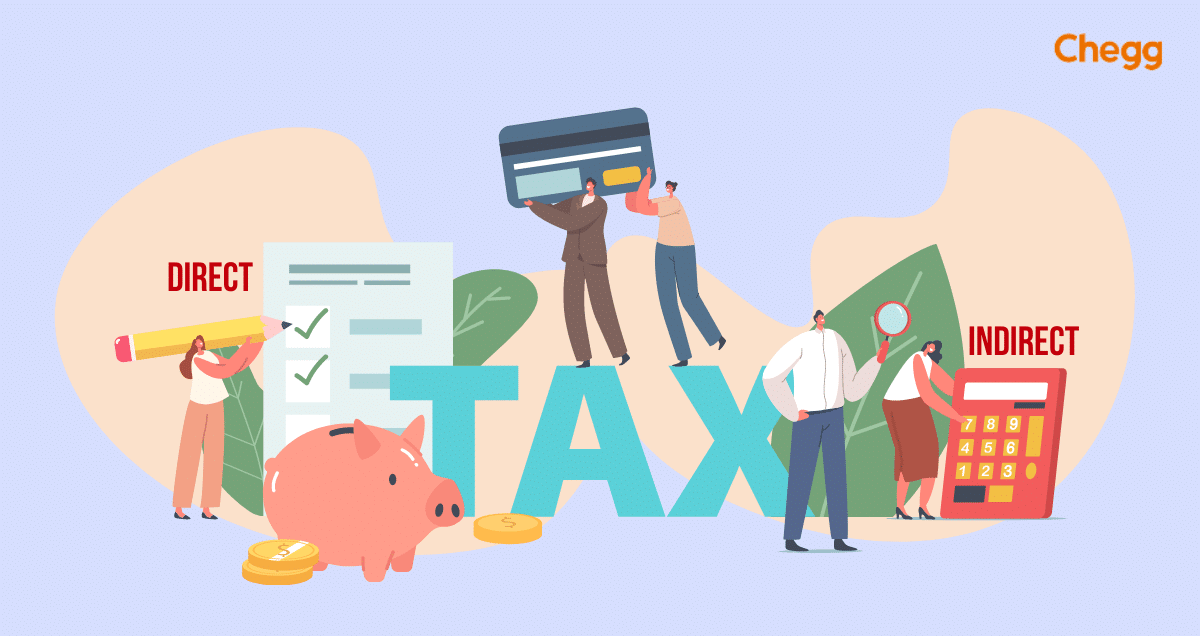
Direct and Indirect Taxes form India’s core revenue system direct taxes (like income and corporate tax) are paid directly by individuals and organizations, while indirect taxes (like GST and customs duty) are levied on goods and services.
CBDT and CBIC manage direct and indirect taxes respectively, ensuring compliance and policy formulation.
2025 Updates include revised GST rates, expanded e-invoicing, customs duty hikes, and a GST Amnesty Scheme aimed at transparency, Make in India promotion, and fair digital taxation.
Table of Contents
India’s revenue system is powered by direct and indirect taxation, funding infrastructure, welfare, and national growth. While income from interest and dividends helps, direct tax and indirect tax remain the primary sources. This blog explores:
The difference between direct and indirect tax: who pays, who bears the burden
Key indirect tax examples like GST, TDS, and customs duty
Role of CBDT and CBIC in tax enforcement
Impact of the New Income Tax Bill 2025 India
How individuals, companies, andHUFs(Hindu Undivided Families) contribute
With collections rising 14.69%, tax compliance is strengthening in 2025.
What are Direct Tax and Indirect Tax?
As an Indian citizen, you are obliged to pay tax to the government either from whatever you earn or through the goods and services that you purchase. It is a mandatory recurring fee that you have to pay to the state as well as the central government.
Direct tax and indirect tax are two primary forms of taxation that impact individuals and businesses differently. A direct tax is levied directly on a person or organization, such as income tax or corporate tax, where the burden cannot be shifted. On the other hand, an indirect tax is imposed on goods and services, like GST or excise duty, and is ultimately passed on to consumers. Understanding the differences between direct tax and indirect tax is crucial for effective financial planning, as both influence spending, savings, and overall economic growth.
On a broad level, there are two main categories of taxes – direct tax and indirect tax. Here is some information that will help you differentiate between direct and indirect tax:
Direct Tax
Direct tax is a tax that you pay directly to the authority that is imposing the tax. As an individual, HUF, or business entity, you have to pay this of your own accord. The burden of tax cannot be shifted to any other entity.
The CBDT (Central Board of Direct Taxes) is responsible for collecting and administering direct taxes in India. Governed by the Department of Revenue, the CBDT provides regular inputs to the government to plan direct taxes and create policies around them.
Direct tax is levied as a percentage of the income or profit you have earned. So the higher the income you earn, the higher the tax you have to pay. Any Indian under the age of 60 years, who earns more than Rs. 2.5 lakhs per year will have to pay Income tax.
Indirect Tax
An indirect tax is a tax that is levied on goods and services that consumers purchase. It will be included in the price of the product that you buy. Although it is the consumer from whom the tax money is collected, the person paying the tax would be the one who is selling the product (manufacturer or supplier).
The CBIC or Central Board of Indirect Taxes and Customs is the authority in charge of collecting and administering indirect taxes. As part of the Department of Revenue, the CBIC formulates policies concerning indirect taxes and takes steps to prevent smuggling and evasion of duties.
The indirect taxes in India have to be paid by everyone irrespective of the income that they earn.
Who is eligible to Pay Direct Taxes?
Eligibility to pay direct taxes depends on the tax laws of a specific country, but generally, the following entities are liable to pay direct taxes, such as income tax, corporate tax, or property tax:
1. Individuals:
Residents earning income above a certain threshold (varies by country).
Non-residents earning income from sources within the country.
Criteria often include age, income level, and employment status. For example, in the U.S., individuals with income exceeding the standard deduction or specific thresholds must file and pay income taxes.
2. Businesses and Corporations:
Companies, partnerships, and other legal entities generating profits.
Tax liability depends on the entity’s structure (e.g., sole proprietorship, corporation) and revenue.
3. Property Owners:
Individuals or entities owning real estate, subject to property taxes based on the property’s assessed value.
4. Trusts and Estates:
Trusts, estates, or other legal arrangements with income or assets may be liable for direct taxes.
5. Specific Groups:
High-net-worth individuals may face wealth taxes (in some countries).
Self-employed individuals or freelancers must pay taxes on their earnings, often including self-employment taxes.
Types of Direct Tax and Indirect Tax
Direct tax and Indirect tax are the two main sources of revenue for the Indian Government. The process of calculation and collection is different in both cases. Here are a few examples of different types of direct tax and indirect tax:
1) Example of Direct Tax
Here are a few examples of direct tax that can help you get clarity on the direct tax meaning:
i) Income Tax
One good direct tax example is the income tax that you file every year. It is calculated as a percentage of your salary, depending on how much you earn. The good thing is that you can lower your tax liabilities through some credits and deductions.
ii) Transfer Tax
One example of the transfer tax is estate tax which is levied on the properties of deceased individuals, including financial accounts and trusts. Another example is gift tax where the person transferring the property has to pay a certain amount as tax.
iii) Property Tax
This is the tax that is charged on lands and buildings that are used to maintain public services such as schools, libraries, roads, police, and fire departments.
iii) Entitlement Tax
This is the tax that gets deducted from your payroll every month to make you a part of social programs such as Social Security, Medicare, and Medicaid. All these deductions are grouped under the Federal Insurance Contributions Act.
iv) Capital Gains Tax
Capital Gains Tax is the tax that you pay when you sell your assets, such as real estate, stocks, or even your business. It is a part of the profit that you earn by selling your property.
A few examples of today’s indirect tax examples in India include:
i) GST or Goods & Services Tax
Since the 1st of July 2017, India has implemented the GST slab system with different rates of GST for different commodities. Any product that you buy will attract GST as per its slab rate. Every business that has an annual turnover of more than Rs. 20 lakhs, has to pay GST.
ii) Customs Duty Tax
This is the tax that you pay when you transport goods out of the country. It needs to be paid by every entity that is involved in international trading.
iii) Excise Duty
Although this tax has been replaced by GST, certain commodities still attract excise duty at a time when they are being removed from the warehouse. These include fuel, petroleum, and liquor.
Direct and indirect taxation have their own sets of benefits. Being aware of these will help you understand the difference betweendirect and indirect tax.
1) Key Benefits of Direct Tax
Although every individual, HUF, or company with an annual income of more than Rs. 2.5 lakhs have to pay direct tax, and there are still certain advantages of paying this tax.
It promotes equality: Direct taxes are charged differently for different people, based on their annual income. The main purpose of collecting direct taxes is to promote equality among the citizens and payers.
It increases the revenue of the government directly: Since direct tax is paid directly by the taxpayers to the government, it adds up directly to the revenue of the government.
It helps in curbing inflation: The amount of direct taxes collected by the government fluctuates every year, depending upon the earnings of the taxpayers. This helps in keeping inflation under control.
It is convenient to collect: In most cases, the employers deduct the taxable portion of the salaries of their employees, before transferring them. This makes it very convenient to collect taxes as the employers act as tax collectors.
2) Key Benefits of Indirect Tax
Like direct tax and Indirect tax also offer several key benefits to the government as well as the taxpayers. A few such benefits are listed below:
Transferrable Liability: Unlike direct taxes, the liability of indirect taxes can be transferred to other entities at a later date. Therefore, the actual tax burden falls on the person consuming the goods and services. Also, since indirect taxes can be collected directly, it saves a lot of time and effort for the government.
Easy Collection: When compared to direct tax and indirect tax are easy to collect. They get collected automatically when products are purchased or transported. The authorities won’t have to put any effort to collect these taxes.
Wider Base of Taxpayers: People with an annual income lower than Rs. 2.5 lakhs need not pay income tax. Also, those who fall in the income bracket of Rs. 2.5 lakhs to Rs. 5 lakhs per annum get Rs.12,500 tax rebate as per Section 87A. When compared to this, indirect taxes have no such exemptions or rebates. Everyone who purchases products or services will have to pay GST, irrespective of how much they earn.
Equitable Contributions: The amount of indirect tax you need to pay depends on the cost of products and services you purchase. So if your consumption is less, you pay less tax and vice versa. Also, the tax rate on luxury items is higher, which makes tax contributions equitable.
Comparison Between Direct And Indirect Taxes
Direct Tax and Indirect Tax are the two main types of taxes collected by the Indian government to increase its revenue. While direct taxes are paid directly by the taxpayer to the government, indirect taxes would be collected by intermediaries who transfer their tax liabilities to their end consumers.
For instance, income from the business is a part of direct tax. Whereas under indirect tax the prices of the goods are taxed. Here are a few points that will help youdistinguish betweendirect and indirect taxes:
Taxpayers: Direct taxes have to be paid by individuals, HUFs, and companies whose annual income is more than Rs. 2.5 lakhs. In the case of indirect taxes, the taxpayers would be the end consumers who purchase and consume products and services. However, the collection and payment of such taxes will be done by manufacturers and retailers who sell these products and services.
Tax Applicability: Direct tax applies only to the individual, HUF, or company that is paying that tax. Indirect tax, on the other hand, will be levied on every stage of production and distribution of the goods until they are consumed by the end consumers.
Transferability of the Tax Liability: The tax liability in case of direct taxes cannot be transferred to any other entity. The taxpayer will have to pay it on his own accord. Nevertheless, the tax liability in the case of indirect taxes is generally transferred by the manufacturer/supplier to the end consumers who consume their goods.
Tax Evasion: Although direct tax cannot be transferred, it can be evaded if you invest in certain tax-saving instruments. Indirect tax, on the other hand, cannot be evaded at any cost.
Key Difference Between Direct and Indirect Tax
Below are the top difference between direct and indirect tax:
Aspect
Direct Taxes
Indirect Taxes
Meaning
Taxes paid directly by individuals, or companies to the government.
Taxes imposed on goods and services purchased by consumers, collected indirectly from people.
Authority
Central Board of Direct Taxes (CBDT).
Central Board of Indirect Taxes and Customers (CBIC).
Taxpayers
Individuals and companies with taxable income.
Consumers who purchase goods and services.
Tax Applicability
Directly applied to the income or profits earned by taxpayers.
Applied at every stage of production and distribution until consumed by consumers.
Transferability
Taxpayers pay directly.
Through pricing of goods and services.
Examples
Income tax, Property tax, Entitlement tax.
Goods and Services Tax, Customs duty tax and Excise duty.
Ease of Collection
Collection process can be complex as it requires direct assessment and payment by taxpayers.
Easier to collect as it’s automatically imposed on goods and services at the point of purchase.
Tax Evasion
Can be evaded through tax-saving instruments.
Difficult to evade as taxes are embedded in the prices of goods and services.
Advantages and Disadvantages of Direct Taxes
Advantages of Direct Taxes:
Equity: Based on ability to pay, ensuring fair distribution.
Revenue Stability: Provides a steady income source for the government.
Economic Control: Helps regulate economic activity through tax rates.
Reduces Inequality: Progressive taxation can redistribute wealth.
Awareness: Taxpayers are conscious of their contribution.
Disadvantages of Direct Taxes:
Tax Evasion: Easier to evade or avoid with proper planning.
Disincentive to Work: High rates may discourage productivity or investment.
Administrative Costs: Requires significant effort to assess and collect.
Economic Burden: Can reduce disposable income, affecting consumption.
Inflexibility: Difficult to adjust quickly to economic changes.
Advantages and Disadvantages of Indirect Taxes
Advantages of Indirect Taxes:
Wide Coverage: Affects all income groups, ensuring broad revenue collection.
Convenience: Collected by businesses, reducing taxpayer burden.
Elasticity: Easily adjustable to meet government revenue needs.
Discourages Consumption: Can reduce demand for harmful goods (e.g., tobacco, alcohol).
Hard to Evade: Difficult to avoid as embedded in goods and services.
Disadvantages of Indirect Taxes:
Regressive Nature: May disproportionately burden lower-income groups.
Inflation Risk: Can increase prices, contributing to inflation.
Unawareness: Taxpayers may not realize the tax amount they pay.
Limited Revenue: Dependent on consumption levels, which can fluctuate.
Inefficiency: May not align with ability to pay principle.
What Are the Latest Indirect Tax Changes in India for 2025–26?
India’s updated indirect tax system for 2025–26, alongside the New Income Tax Bill 2025 India, aims to boost compliance, support local manufacturing, and simplify business operations. Here’s a quick look at the key changes
GST Rate Revisions Essential items like food and medical supplies now enjoy reduced GST rates, easing the cost burden on consumers. On the other hand, luxury and sin goods—such as high-end electronics and tobacco have seen rate hikes, generating additional revenue and discouraging unnecessary consumption.
Expansion of E‑Invoicing E-invoicing is now mandatory for businesses with turnover above ₹5 crore. This move improves transparency and streamlines direct and indirect tax compliance.
Customs Duty Adjustments Import duties increased on electronics and luxury goods to promote Make in India. This is a strategic use of indirect tax examples for economic reform.
Revamped Digital Services Tax (DST) The tax framework for foreign digital service providers like Netflix, Amazon, and app stores has been strengthened. This ensures a fair tax environment and levels the playing field for Indian digital enterprises.
GST Amnesty Scheme 2025 A relief scheme lets businesses settle old GST dues with reduced penalties highlighting a balanced approach to direct and indirect taxation.
Conclusion
Understanding the difference between direct and indirect tax is essential for informed financial planning and responsible citizenship. Both direct and indirect taxation play a vital role in nation-building by funding public services and infrastructure. While HUFs, individuals, and companies pay direct taxes, indirect tax examples like GST and customs duty impact consumers daily. As India modernizes its tax system under the New Income Tax Bill 2025, awareness and compliance are more important than ever. A balanced approach to direct tax and indirect tax ensures economic stability and equitable growth for all.
If you are a tax expert and would like to share your knowledge with others, here is a wonderful opportunity for you to earn some money. Become a Chegg Q&A Expert and connect with students across the world.
What is the difference between direct and indirect tax ?
Direct tax is a tax that you pay directly to the authority that is imposing the tax. An indirect tax is a tax that is levied on goods and services that are purchased by consumers.
What is an example of a direct tax?
A direct tax is one that is levied directly on an individual or entity. A prime example is income tax, where individuals or businesses are taxed based on their earnings. The taxpayer is responsible for paying the tax, and it cannot be shifted to others.
What are examples of indirect tax?
Indirect taxes are levied on goods and services rather than on income or profits. Common examples include sales tax, value-added tax (VAT), and excise duties. These taxes are collected by businesses on behalf of the government, often included in the final price paid by consumers.
Is GST direct or indirect?
GST is an indirect tax. It is levied on the supply of goods and services, and businesses collect it from consumers at the point of sale. While businesses are responsible for remitting the tax to the government, the financial burden ultimately falls on consumers.
What are the 17 indirect taxes?
The 17 indirect taxes are: Sales tax, VAT, GST, excise duty, customs duty, service tax, entertainment tax, luxury tax, turnover tax, stamp duty, toll tax, cess, import duty, export duty, property tax, central sales tax, advertisement tax, and road tax.
What is the difference between direct and indirect income?
Direct Income: Earnings generated directly from the primary business operations, such as sales revenue, service charges, or manufacturing income. It is the main source of a company’s profit. Indirect Income: Earnings that are not directly related to the core business activities but contribute to overall income, such as rental income, interest earned, dividends, or commission received.
What are the different types of GST?
GST is categorized into four types: Central GST (CGST), State GST (SGST), Integrated GST (IGST), and Union Territory GST (UTGST), each applicable based on the transaction and location within India.
What are the five GST rate slabs?
The New Income Tax Bill 2025 India maintains five GST slabs: 0%, 5%, 12%, 18%, and 28%, applied to goods and services based on their category and importance.
Can direct taxes be avoided or evaded?
While indirect taxes are difficult to evade, direct taxes can sometimes be minimized through legal tax-saving instruments such as deductions, exemptions, and investment options under the Income Tax Act.
Authored by, Sakshi Arora Digital Content Writer
Sakshi is a Content Creator and Strategist who specializes in crafting well-researched content across diverse topics including economics, finance, health, and more. She brings a fresh perspective to every piece she writes, always aiming to offer real value to her readers. When she’s not writing, you’ll likely find her curled up with a book—she’s a proud bookworm—or sipping on endless cups of chai, her favorite obsession.