

Ever wondered how companies acknowledge hard work and assist employees in reaching their full potential? Performance appraisals are the answer. These regular reviews aren’t just about completing forms. They celebrate achievements, identify growth opportunities, and foster a culture of ongoing improvement.
Whether you’re an employee seeking your next promotion or a manager wanting to inspire your team, knowing about performance appraisals can make a big difference. This article will explain what performance appraisals are, why they matter, and how they can lead you to lasting career success.
It is a structured process used to evaluate an employee’s work performance over a defined period. Understanding what is performance appraisal helps organizations assess various aspects of job performance, such as productivity, commitment to company goals, and work quality.
Its main purpose is to support career growth by providing feedback and identifying areas for improvement. The process helps businesses identify training needs, ensuring that employees receive the development they require. By offering constructive feedback, performance appraisals motivate employees to improve and align with the company’s objectives. This process fosters growth and strengthens the workforce, benefiting both employees and the organization.
What is performance appraisal? It is a process that supports organizational growth by aligning individual employee efforts with the company’s goals. Understanding what is performance appraisal helps ensure that everyone’s work contributes to the overall success of the organization. It fosters a unified direction and drives better performance outcomes.
What is performance appraisal? It focuses on employee development by identifying strengths and areas for improvement. The process motivates and engages employees by recognizing their achievements and setting clear expectations for future performance. By empowering employees, organizations can cultivate a motivated workforce that is committed to the company’s success. This also leads to higher productivity and growth for both employees and the organization.
What is a performance appraisal? It is a process used to evaluate employees in various industries. In healthcare, medical staff are assessed based on patient care and protocol adherence. In education, teachers are evaluated by their ability to manage classrooms, peer feedback, and student performance.
What is a performance appraisal? In sales, team members are reviewed based on achieving goals, client feedback, and sales performance. Organizations can ensure consistent and high-quality performance across all departments by implementing effective performance appraisal methods. These appraisals help organizations track progress, identify areas for improvement, and maintain a culture of continuous development. Ultimately, performance appraisals help drive success at all levels.
What is performance appraisal? It is a method used to evaluate an employee’s performance and contributions within an organization. Understanding what is performance appraisal allows companies to assess skills, knowledge, and areas of development. This process helps in identifying high performers and those who may need additional support or training.
It involves various methods like rating scales, narrative forms, and 360-degree feedback, which provide a clear picture of employee performance. These techniques help businesses identify strengths, recognize areas for improvement, and offer constructive feedback. Knowing what is performance appraisal ensures that the process is fair and effective, ultimately leading to better employee engagement, motivation, and growth.
Understanding what is performance appraisal is key to evaluating employee performance and ensuring growth. Traditional performance appraisal methods have been used for years to assess skills, productivity, and overall contribution. Companies can use these methods to provide feedback, set goals, and improve efficiency, leading to better employee and organizational success.
Managers keep track of everything about a worker’s performance, including their potential, weaknesses, and strengths. This helps provide useful information about how a worker is doing and where they can improve. For example, a manager might say that a marketing executive did a great job running a campaign but struggled with time management.
Workers get feedback based on different performance standards, rated from 1 to 5. This helps in giving a clear numerical evaluation of how they are doing in various areas. For example, employees can be rated on their cooperation, communication skills, and punctuality using this 1 to 5 scale.
Workers are rated from best to worst based on how well they perform. This helps to see who is doing great and who needs some improvement. For example, sales representatives are ranked by their annual sales totals.
Understanding what is performance appraisal helps organizations adopt modern techniques for evaluating employees effectively. These methods go beyond traditional ratings and focus on continuous feedback, employee development, and goal alignment. By using advanced tools companies can enhance productivity, boost motivation, and create a more engaged and high-performing workforce.
Feedback is gathered from various sources like peers, subordinates, and supervisors to get a complete picture of a worker’s performance. This helps in understanding how well someone is doing their job from different angles. For example, clients, team members, and higher management can all give their input. They often assess the manager’s communication and leadership skills.
Management and staff work together to set clear and measurable targets. We measure performance based on how well these goals are achieved. This ensures that individual goals align with the company’s objectives, promoting accountability. For example, we might assess a developer’s performance by aiming for a 20% reduction in coding errors within six months. This way, everyone knows what to aim for and is held accountable for their progress.
This method mixes personal judgments with rating scales and uses clear examples of behaviors for each rating. It aims to make performance reviews more consistent and clear. For instance, a teamwork score of five might mean “works well with others to meet team goals,” while a score of one could mean “often avoids group tasks and duties.”
By using these performance appraisal methods, businesses can better evaluate and improve worker performance. This will lead to success and growth.
The following is a thorough explanation:
Performance standards should be clear, achievable, and measurable, ensuring they align with the company’s goals. These standards serve as benchmarks to assess employee performance. For instance, a sales department might set targets for reaching a specific customer satisfaction score or achieving a certain sales goal. These guidelines help keep everyone focused and on track.
Employees should clearly understand what is expected of them and how their performance will be measured. This can be achieved through regular meetings and written materials that outline these expectations. This way, staff know exactly what they need to do and how they will be evaluated.
Use various methods like reports, performance metrics, and observations to get information on how well your staff is doing. This phase involves gathering evidence of their performance against set standards. For example, you could track the number of sales a salesperson closes over a specific period.
Managers can look at the performance data to compare it with the expected standards. This helps them see if there are any differences between what was expected and what actually happened. Based on this comparison, they can decide if workers are meeting, exceeding, or falling short of their job requirements.
Giving staff members constructive feedback is important. Compare their performance to standards. Feedback should be fair, specific, and aimed at helping them recognize their strengths and areas for improvement. For example, ask a worker how their time management has impacted their productivity.
To address any performance gaps, we can take several actions. We might need to change our goals, implement new work procedures, or provide additional training. The aim is to help our staff improve and ensure they meet the required standards.
Organizations can make sure of a fair and efficient performance appraisal process. They can do this by following these guidelines. The guidelines will improve employee performance and company success.
The objectives of performance appraisal are important. They help improve performance at both the individual and organizational levels. Assessments help coordinate employee performance with the organization’s success. They do this by stating objectives and goals clearly.
Organizations can find high-performing employees and those needing development. They do this using performance assessments. People work better when their goals match the company’s. This boosts results and drives growth.
Regular feedback from performance reviews raises employee morale. It helps them feel appreciated and understood. Acknowledging accomplishments and offering helpful feedback fosters development. It raises job satisfaction and retention by promoting personal and professional growth.
Case Studies Showing the Impact of Effective Performance Appraisals:
By using these practices, organizations can achieve better performance. They can also have higher employee satisfaction and reduced turnover.
Three effective methods of performance appraisal include Narrative Forms, Graphic Rating Scales, and Checklists. Narrative Forms allow managers to provide detailed feedback on an employee’s performance. Graphic Rating Scales offer a numerical rating system to evaluate different aspects of an employee’s work. Checklists are structured lists of criteria that help assess performance based on predefined standards. Understanding what is performance appraisal and using the right methods can improve feedback and enhance employee performance.
Evaluations should include thorough reviews of a worker’s performance, highlighting their strengths, weaknesses, and areas for growth. This allows for extensive, specific feedback, making it easier to understand how to improve and excel in their role.
Using a rating system, like 1 to 5, to score different areas of work performance has its perks. It gives clear, measurable signs of how well someone is doing. Plus, it makes comparing and tracking progress over time much simpler.
Using performance criteria involves a list that checks if specific standards are met or not. This method is helpful for large or frequent reviews because it’s quick and easy to use, ensuring everything is consistent.
What is performance appraisal? It is a process used to assess and improve employee performance within an organization. Knowing what is performance appraisal helps organizations choose the right methods. Understanding what is performance appraisal enables better feedback and ensures that performance reviews are effective in boosting productivity and growth.
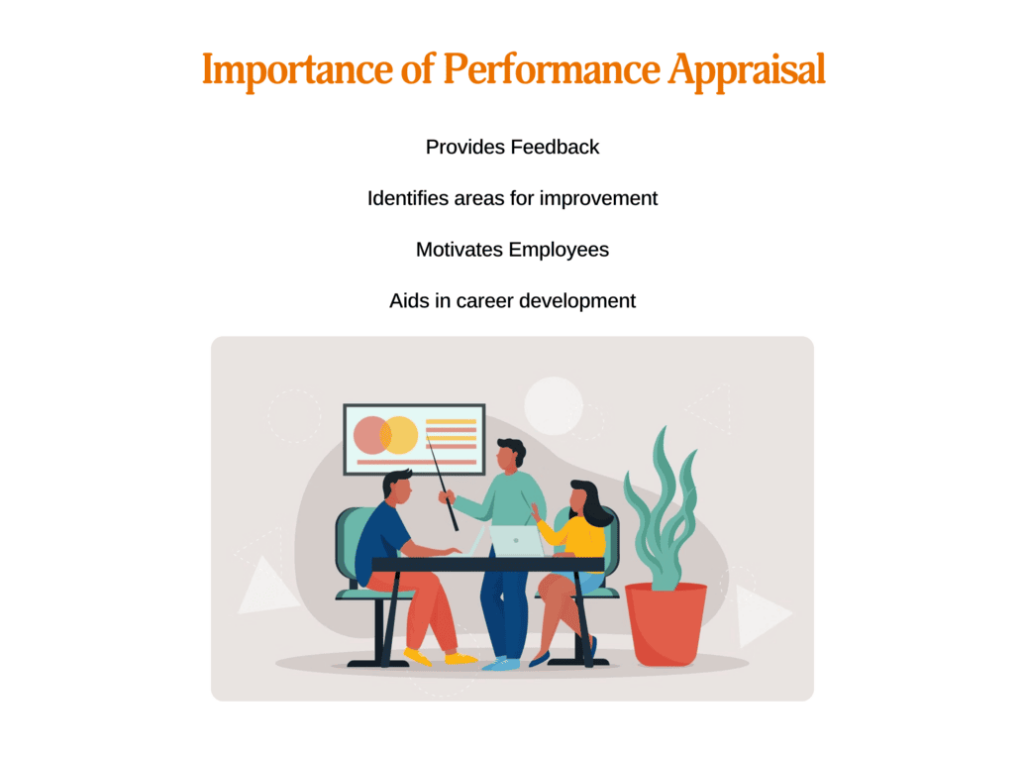
Understanding what is performance appraisal is crucial for any organization aiming to achieve continuous improvement and growth. Performance reviews boost employee motivation and morale. They create a culture of feedback and growth. They also align individual goals with company objectives. Good appraisal systems find top performers. They also point out areas for improvement. And, they ensure that staff feels appreciated and understood.
Establishing a good performance review system can bring many benefits. These include higher output, less staff leaving, and better manager-employee communication. Organizations can foster growth by praising accomplishments. They can also offer helpful feedback.
Future technology and workplace shifts will likely change how we rate performance. New trends are reshaping appraisals. They include real-time feedback, AI evaluations, and a focus on employee growth. These changes put more weight on worker well-being and development. Organizations will be better able to adjust to the changing business environment and will have long-term success if they stay ahead of these trends.

In today’s fast-paced work environment, performance appraisals are vital for keeping employees and organizations on track. They provide a clear way to recognize hard work, tackle challenges, and set new goals, ensuring that everyone is moving in the right direction. When done well, appraisals serve as a motivating force instead of just a yearly formality.
For employees, these reviews offer valuable feedback and a clear picture of their situation. This boosts confidence and highlights opportunities for skill development and career growth. Knowing that your contributions are recognized can motivate you to achieve even more.
For organizations, regular performance appraisals help spot top talent, address training needs, and create a culture of ongoing improvement. By investing in open and supportive review processes, companies can build loyalty, increase productivity, and work toward long-term success together.

A performance appraisal is a methodical review of an employee’s performance during a specific timeframe. It evaluates achievements, skills, and contributions. This evaluation assists in deciding salary increases, promotions, training needs, and career development opportunities within an organization.
Five standard performance appraisal methods are:
Management by Objectives (MBO)
360-Degree Feedback, Rating Scale
Behaviorally Anchored Rating Scale (BARS)
Critical Incident Method
Checklist Method
The four primary purposes of performance appraisal are:
1. to evaluate employee performance
2. Give constructive feedback
3. Identify training and development needs
4. Support decisions about salary increases, promotions, transfers, or organizational role changes.
An example of a performance appraisal is an annual review. In this review, a manager looks at an employee’s work quality, productivity, and ability to meet goals. The manager then gives feedback and decides on promotions, salary increases, or training needs.
Common types of appraisals include:
1. Management by Objectives (MBO), goal-based performance evaluation
2. 360-Degree Feedback, feedback from multiple sources
3. Behaviorally Anchored Rating Scales (BARS), behavior-based ratings
4. Rating Scales Method, performance rated against set criteria
5. Checklist Method, task or skill completion tracking
6. Self-Appraisal: The employee evaluates their performance
7. Peer Review, performance assessed by colleagues
The five steps in the performance appraisal process are:
1. Setting Performance Standards
2. Communicating Expectations
3. Measuring Actual Performance
4. Comparing Performance with Standards
5. Providing Feedback and Taking Action