An MBA in Hospitality Management equips students with advanced business and leadership skills tailored for the dynamic hospitality industry.
This program covers key areas such as hotel operations, event management, and strategic planning.
Graduates are prepared to take on managerial roles in hotels, resorts, travel companies, and related sectors worldwide.
Table of Contents
Hospitality management is a vast and dynamic field that spans hotels, resorts, restaurants, event planning, and tourism services. At its heart, it is about creating exceptional guest experiences while balancing operational efficiency and profitability. With globalization and the steady rise in travel and lifestyle industries, hospitality has emerged as one of the fastest-growing career domains. Today, it demands professionals who not only excel in customer service but also possess skills in human resource management, marketing, finance, and cross-cultural communication. This makes it an attractive career path for individuals with strong interpersonal abilities, leadership qualities, and a passion for service excellence.
In recent years, the MBA in Hospitality Management has gained immense popularity as a specialized program for those aiming to lead in this competitive sector. Unlike a traditional MBA, this program blends business fundamentals such as strategic management, finance, and marketing with deep insights into hospitality-specific practices. Students gain expertise in hotel operations, tourism, event management, and customer experience, while also learning to adapt to technological innovations and sustainable hospitality trends. Graduates are well-prepared for leadership roles in luxury hotel chains, international resorts, cruise lines, event companies, and emerging travel-tech startups. For aspiring managers and entrepreneurs, an MBA in Hospitality Management offers the perfect combination of industry knowledge, business acumen, and global exposure to thrive in a rapidly evolving marketplace.
What is MBA in Hospitality Management?
An MBA in Hospitality Management is a postgraduate program that combines core business principles with specialized knowledge of the hospitality and tourism industry. It prepares students for leadership roles in hotels, resorts, event management, and related sectors. The program emphasizes strategic thinking, customer service excellence, and global industry trends.
MBA in Hospitality Management: Top Institutes
Following are the top institutes that offer the course:
Institute Name
Location
Duration
Fees (₹ Lakhs)
Entrance Exam
Institute of Hotel Management (IHM), Pusa
New Delhi
2 years
3.13
CAT, MAT, XAT, CMAT, ATMA, GMAT, IHM Pusa Entrance Test
Welcomgroup Graduate School of Hotel Administration (WGSHA)
Manipal, Karnataka
2 years
3.6 – 10.2
N/A (Merit/Institution criteria)
Amity University
Noida, Uttar Pradesh
2 years
7.8 – 8.8
CAT, MAT, XAT, GMAT, NMAT, CUET, UP 12th
Christ University
Bangalore, Karnataka
2 years
8.51
Christ University Entrance Test
Banarsidas Chandiwala Institute of Hotel Management
New Delhi
2 years
4.75
IPU CET
Guru Nanak Institute of Hotel Management
Kolkata, West Bengal
2 years
1.15 – 4.9
NCHMCT JEE, GNIHM JET, CBSE 10th
IHMCT – Bharati Vidyapeeth
Pune, Maharashtra
2 years
0.01 – 2.4
MAH HM CET, CBSE 12th, ICSE, ISC, Maharashtra HSC
Jain University
Bangalore, Karnataka
2 years
0.016 – 12
CAT, MAT, GMAT, XAT, NMAT, KMAT
Chennais Amrita International Institute of Hotel Management
Bengaluru, Karnataka
2 years
2.58
Karnataka PGCET
AISSMS College of Hotel Management and Catering Technology
Pune, Maharashtra
2 years
4.47 – 5.97
MAH HM CET, CBSE 12th, Maharashtra HSC
MBA in Hospitality Management: Online Courses
1. MBA in Hospitality Management (Online)
Institute: Amity University Online
Duration: 2 years
Fees: Approx. ₹1.6 – ₹2.5 lakhs
2. MBA in Hospitality Management (Online)
Institute: Symbiosis Centre for Distance Learning (SCDL)
Duration: 2 years
Fees: Approx. ₹60,000 – ₹70,000
3. MBA in Hospitality and Hotel Administration (Online)
Institute: Indira Gandhi National Open University (IGNOU) – Diploma/PG Diploma leading to MBA
Duration: 2-3 years
Fees: Approx. ₹37,800
4. MBA in Hospitality Management (Online)
Institute: Sikkim Manipal University (SMU-DE)
Duration: 2 years
Fees: Approx. ₹70,000 – ₹1 lakh
5. MBA in Hospitality and Tourism (Online)
Institute: ICFAI University (Distance Learning)
Duration: 2 years
Fees: Approx. ₹1.2 – ₹1.5 lakhs
6. MBA in Hotel Management and Hospitality (Online)
Institute: Jain University – Distance Education
Duration: 2 years
Fees: Approx. ₹1.5 – ₹2 lakhs
7. MBA in Hospitality Management (Online)
Institute: Chandigarh University – Online Program
Duration: 2 years
Fees: Approx. ₹1.5 lakhs
8. MBA in Hospitality Management (Online)
Institute: Lovely Professional University (LPU) Online
Duration: 2 years
Fees: Approx. ₹1.2 lakhs
9. MBA in Hospitality Management (Online)
Institute: Dr. A.P.J. Abdul Kalam Technical University (AKTU) – Distance
Duration: 2 years
Fees: Approx. ₹40,000 – ₹60,000
10. MBA in Hospitality Management (Online)
Institute: NMIMS Global Access School for Continuing Education
Duration: 2 years
Fees: Approx. ₹2 lakhs
What to Do Before pursuing MBA in Hospitality Management
Before pursuing an MBA in Hospitality Management, students can strengthen their foundation by completing relevant undergraduate courses that provide essential industry knowledge and skills. Some popular courses include:
Bachelor of Hotel Management (BHM): Focuses on core hospitality operations, food and beverage management, and front office administration.
Bachelor of Business Administration (BBA) – Hospitality Management: Combines business principles with hospitality industry practices, offering a solid managerial base.
Bachelor of Tourism Management (BTM): Provides insights into tourism dynamics, travel operations, and event management, complementing hospitality studies.
Diploma in Hotel Management: A shorter program emphasizing practical skills in hotel operations and customer service.
Bachelor of Commerce (B.Com) with specialization in Hospitality: Offers a blend of commerce and hospitality-focused subjects, useful for finance and marketing roles in the sector.
Bachelor of Science (B.Sc) in Hospitality and Hotel Administration: Provides scientific and managerial understanding tailored to the hospitality industry.
These courses help build a strong base, making the transition into an MBA program smoother and more effective, while also enhancing career prospects in the competitive hospitality sector.
Exams for MBA in Hospitality Management
1. National-Level Entrance Exams:
CAT (Common Admission Test)
Accepted by: IIMs, Amity, LPU, and many top private universities
Conducted by: Indian Institutes of Management (IIMs)
MAT (Management Aptitude Test)
Accepted by: Christ University, Amity, Jain University, etc.
Conducted by: AIMA (All India Management Association)
XAT (Xavier Aptitude Test)
Accepted by: XLRI and other top-tier private B-schools
Conducted by: XLRI, Jamshedpur
CMAT (Common Management Admission Test)
Accepted by: AICTE-approved institutes, including some hospitality-focused colleges
Conducted by: National Testing Agency (NTA)
GMAT (Graduate Management Admission Test)
Accepted by: Some Indian B-schools and international hospitality programs
NMAT (NMIMS Management Aptitude Test)
Accepted by: NMIMS and some other business schools
2. University/Institute-Specific Exams:
CUET (Common University Entrance Test)
Accepted by: Central and some state/private universities
Conducted by: NTA
IPU CET (Indraprastha University Common Entrance Test)
Accepted by: Banarsidas Chandiwala Institute of Hotel Management and others under GGSIPU
Christ University Entrance Test
Accepted by: Christ University for its MBA programs in hospitality and tourism
MAH MBA CET
Accepted by: Maharashtra-based universities and colleges including those offering hospitality-related MBA specializations
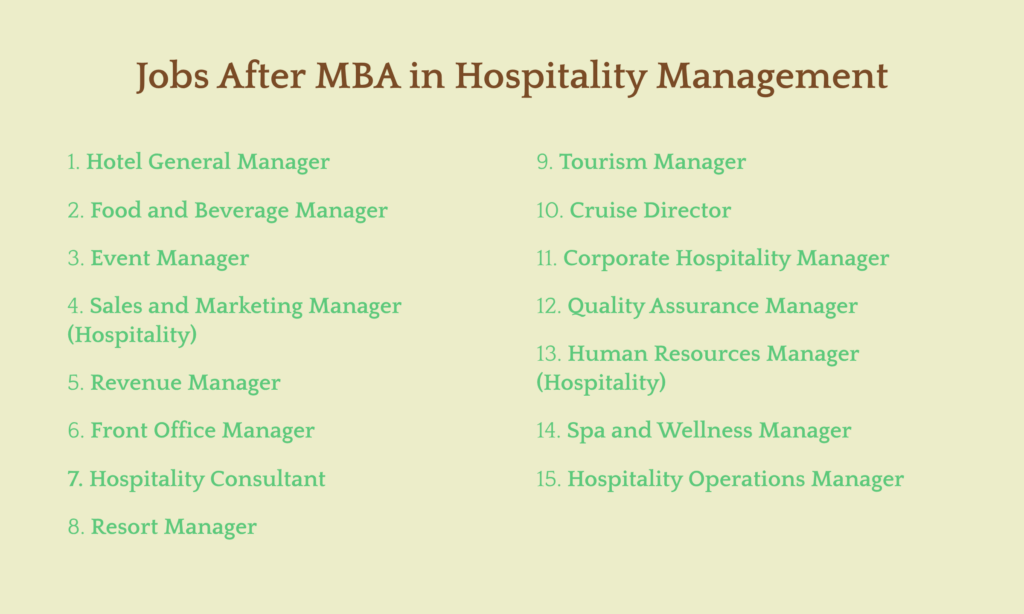
Jobs after MBA in Hospitality Management
Pursuing an MBA in Hospitality Management opens the door to diverse and rewarding career opportunities across hotels, resorts, event management firms, cruise lines, and tourism companies. Graduates can leverage their strategic, operational, and leadership skills to excel in various high-impact roles. Here are 10 top job profiles along with their key responsibilities and expected salary ranges:
1. Hotel General Manager
Role: Oversees overall hotel operations, manages staff, ensures guest satisfaction, and drives profitability. Salary: ₹10 – ₹25 lakhs per annum
2. Food and Beverage Manager
Role: Manages dining services, catering, and kitchen operations while maintaining quality and cost control. Salary: ₹6 – ₹15 lakhs per annum
3. Event Manager
Role: Plans, coordinates, and executes corporate events, weddings, and conferences, ensuring seamless delivery. Salary: ₹5 – ₹12 lakhs per annum
4. Sales and Marketing Manager (Hospitality)
Role: Develops marketing strategies, builds client relationships, and drives revenue growth for hotels or tourism services. Salary: ₹7 – ₹18 lakhs per annum
5. Revenue Manager
Role: Optimizes pricing, forecasting, and inventory control to maximize hotel revenue. Salary: ₹8 – ₹16 lakhs per annum
6. Front Office Manager
Role: Supervises front desk staff, manages guest check-ins/outs, and enhances customer experience. Salary: ₹5 – ₹12 lakhs per annum
7. Hospitality Consultant
Role: Provides expert advice to hospitality businesses on operations, marketing, and customer service improvement. Salary: ₹12 – ₹30 lakhs per annum
8. Resort Manager
Role: Manages resort facilities, guest services, and recreational activities to ensure exceptional guest experiences. Salary: ₹9 – ₹20 lakhs per annum
9. Tourism Manager
Role: Plans and promotes travel packages, liaises with travel agents, and ensures smooth tour operations. Salary: ₹5 – ₹12 lakhs per annum
10. Cruise Director
Role: Oversees guest entertainment, activities, and service quality on cruise ships. Salary: ₹8 – ₹18 lakhs per annum
11. Corporate Hospitality Manager
Role: Manages hospitality services for corporate clients, including event planning, client entertainment, and facility management. Salary: ₹7 – ₹16 lakhs per annum
12. Quality Assurance Manager
Role: Ensures hotels and hospitality services meet quality standards and regulatory requirements through audits and training. Salary: ₹6 – ₹14 lakhs per annum
13. Human Resources Manager (Hospitality)
Role: Handles recruitment, training, employee relations, and performance management within hospitality organizations. Salary: ₹6 – ₹15 lakhs per annum
14. Spa and Wellness Manager
Role: Oversees spa operations, staff management, customer service, and budget control in wellness centers or resorts. Salary: ₹5 – ₹12 lakhs per annum
15. Hospitality Operations Manager
Role: Coordinates daily operations across multiple departments, focusing on efficiency, customer satisfaction, and cost control. Salary: ₹8 – ₹18 lakhs per annum
Why MBA in Hospitality Management is Popular in India
Here are five reasons why an MBA in Hospitality Management is popular in India:
Growing Hospitality Industry India’s booming tourism and hospitality sector offers vast career opportunities in hotels, resorts, event management, and travel services, making this specialization highly attractive.
Diverse Career Paths An MBA in Hospitality Management opens doors to roles in operations, marketing, finance, human resources, and entrepreneurship within the hospitality ecosystem, providing flexibility and growth potential.
International Exposure Many hospitality MBA programs include internships, industry tie-ups, and global exposure, preparing students to work in both domestic and international markets.
High Earning Potential With increasing demand for skilled professionals, hospitality managers can command competitive salaries, especially in luxury hotels, multinational chains, and niche sectors like cruise ships or airlines.
Skill Development and Networking The program emphasizes leadership, communication, problem-solving, and customer service skills, while offering valuable industry connections through alumni and corporate partnerships.
Key Advantages of Pursuing MBA in Hospitality Management
Specialized Industry Knowledge: Gain in-depth understanding of hospitality operations, marketing, finance, and customer service tailored specifically for the hospitality sector.
Leadership and Management Skills: Develop strong leadership, strategic thinking, and decision-making abilities essential for managing large teams and complex hospitality businesses.
Global Career Opportunities: Hospitality is a global industry, offering chances to work in diverse locations such as luxury hotels, resorts, cruise lines, and international event companies.
High Demand for Skilled Professionals: The growing tourism and travel industry consistently demands qualified managers, increasing job security and career growth potential.
Networking Opportunities: Connect with industry experts, alumni, and professionals through internships, seminars, and industry collaborations, which can open doors to future roles.
Versatile Career Paths: Opens doors to various roles such as hotel management, event planning, food and beverage management, tourism, and consulting.
Higher Salary Prospects: MBA graduates generally command higher salaries and faster promotions compared to bachelor’s degree holders in the hospitality field.
Entrepreneurial Edge: Equips students with the business acumen needed to start their own hospitality ventures like boutique hotels, restaurants, or travel agencies.
Exposure to Technology and Innovation: Learn to leverage the latest hospitality technology and digital marketing strategies to stay competitive in a tech-driven market.
Personal Development: Enhances communication, problem-solving, and interpersonal skills, crucial for delivering exceptional guest experiences and managing diverse teams.
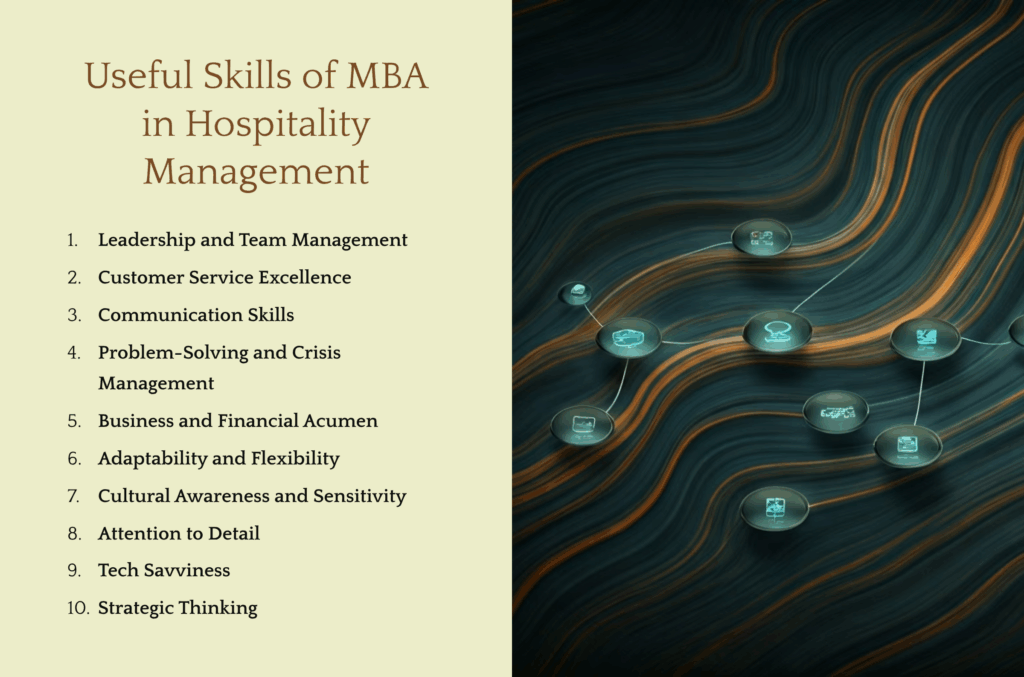
Useful Skills
Leadership and Team Management– An MBA in Hospitality Management prepares students for leadership roles, so having the ability to guide teams, resolve conflicts, and inspire others is critical for success in hospitality operations.
Customer Service Excellence– Since hospitality is all about creating memorable guest experiences, strong customer service skills are vital. An MBA in Hospitality Management enhances your ability to anticipate customer needs and handle guest relations professionally.
Communication Skills– Clear and effective communication—both verbal and written—is key in hospitality. Whether dealing with clients, vendors, or team members, an MBA in Hospitality Management sharpens your communication for business and service settings.
Problem-Solving and Crisis Management– The ability to think on your feet and make quick decisions during unexpected situations is a must. An MBA in Hospitality Management equips you with analytical tools and strategies to tackle real-time challenges efficiently.
Business and Financial Acumen– Understanding budgeting, revenue management, and marketing is crucial for any leadership role in hospitality. An MBA in Hospitality Management combines service industry knowledge with core business principles to build this expertise.
Adaptability and Flexibility– The hospitality industry is fast-paced and ever-changing. An MBA in Hospitality Management requires students to be open to change, adapt quickly to new environments, and handle dynamic situations with ease.
Cultural Awareness and Sensitivity– Hospitality is a global industry serving diverse guests. Being culturally aware helps you connect with international clients and lead multicultural teams—an essential focus area in any MBA in Hospitality Management program.
Attention to Detail-Excellence in hospitality often lies in the small details. From event planning to guest services, an MBA in Hospitality Management trains you to ensure precision in execution, which enhances customer satisfaction.
Tech Savviness– As digital tools and smart technologies become integral to hospitality, being comfortable with software like PMS (Property Management Systems), CRM tools, and data analytics is a plus when pursuing an MBA in Hospitality Management.
Strategic Thinking– Hospitality leaders must think ahead and plan for long-term goals. An MBA in Hospitality Management helps develop strategic planning skills, enabling you to align business operations with market trends and guest expectations.
Conclusion
In today’s globalized and experience-driven economy, an MBA in Hospitality Management stands out as a powerful qualification for those aiming to lead in one of the world’s most dynamic industries. As travel, tourism, and lifestyle services rebound and evolve post-pandemic, the demand for skilled professionals who can blend strategic business knowledge with exceptional service delivery is higher than ever. This degree not only imparts expertise in managing hotel operations, tourism enterprises, and event services, but also cultivates leadership, innovation, and cultural intelligence—key traits in today’s interconnected hospitality environment.
Looking ahead, the hospitality industry is expected to be a major driver of global employment and economic growth, fueled by technology, sustainable travel trends, and rising consumer expectations. An MBA in Hospitality Management equips graduates to adapt to these changes, lead digital transformation, and build customer-centric experiences across sectors. Whether entering corporate hotel chains, luxury resorts, or launching their own ventures, MBA holders are well-positioned to shape the future of hospitality with agility, creativity, and strategic insight.
What career opportunities are available after an MBA in Hospitality Management?
Graduates can work in hotel management, event planning, tourism, food and beverage management, airline and cruise management, and even start their own hospitality ventures. Roles include operations manager, marketing manager, revenue manager, and HR manager.
Is an MBA in Hospitality Management worth it in India?
Yes, with the growing tourism industry and increasing demand for professional managers, this degree offers strong job prospects, international exposure, and lucrative salary packages, especially in luxury and branded hotel chains.
What are the common entrance exams for MBA Hospitality programs in India?
Many institutes accept scores from exams like CAT, MAT, XAT, CMAT, and university-specific entrance tests. Some colleges also offer direct admissions based on merit or interviews.
What skills will I develop during an MBA in Hospitality Management?
Key skills include leadership, customer service, strategic planning, financial management, marketing, communication, and problem-solving—crucial for managing diverse operations in the hospitality sector.
Can I pursue an MBA in Hospitality Management without prior work experience?
Yes, many programs admit fresh graduates. However, internships, practical training, or prior exposure to the hospitality industry can enhance learning and employability.
Authored by, Gagandeep Khokhar Career Guidance Expert
Gagandeep is a content writer and strategist focused on creating high-performing, SEO-driven content that bridges the gap between learners and institutions. He crafts compelling narratives across blogs, landing pages, and email campaigns to drive engagement and build trust.