

Dreaming of creating the next big tech innovation? Becoming a software engineer in India is one of the most rewarding and secure career choices in 2025. The tech industry is changing quickly, and employers are looking for skilled professionals who have strong coding abilities and can solve real-world problems. In this guide, you will find how to become a software engineer in india with the necessary qualifications, skills, and steps to start a successful software engineering career, whether you are a student, a graduate, or making a career change.
A software engineer designs, develops, tests, and maintains software applications, systems, and platforms. They use programming languages, engineering principles, and problem-solving skills to create software that solves real-world problems or improves business efficiency.
Software engineering has emerged as one of India’s most sought-after career paths—and for good reason. With the country rapidly evolving into a global technology hub, the demand for skilled software professionals is booming. Here are some compelling reasons why choosing software engineering as a career in India can be a wise and rewarding decision:
India is home to one of the largest IT industries in the world. From multinational tech giants to innovative startups, the demand for software engineers is consistently high across sectors like finance, healthcare, e-commerce, edtech, and more. Whether you specialize in front-end development, back-end architecture, or full-stack solutions, opportunities are abundant.
Software engineers in India enjoy competitive salaries, with compensation growing significantly as you gain experience and specialize in high-demand technologies like artificial intelligence, cloud computing, blockchain, and data science. Even entry-level roles offer above-average pay compared to many other fields.
Tech companies often promote merit-based growth, allowing engineers to quickly move up the career ladder—from developer to tech lead, solution architect, or CTO. Many Indian software engineers work on international projects or relocate abroad through global firms.
The software industry in India has embraced remote and hybrid work cultures. This flexibility allows for better work-life balance, location independence, and the ability to work for global companies from anywhere in India.
Software engineering constantly evolves. Indian professionals often work with cutting-edge tools and frameworks, allowing continuous learning. From hackathons to open-source contributions, the industry fosters innovation and creativity.
With technical skills in hand, many software engineers in India go on to launch their own startups or freelance globally. The tech ecosystem in cities like Bengaluru, Hyderabad, and Pune provides a strong support network for aspiring tech entrepreneurs.
Software engineering is viewed as a prestigious and future-ready career. Engineers often contribute to building products that impact millions—from educational platforms to healthcare apps, making a meaningful difference in people’s lives.
Explore the stage to become a software engineer in 2025.
How to become a software engineer in India involves a mix of formal education, practical experience, and continuous upskilling. Whether you’re a student planning ahead or a career switcher, follow these steps to become a software engineer.
How to become a software engineer begins after Class 10 by selecting the Science stream, ideally with Mathematics, Physics, and Computer Science. These subjects develop the analytical and technical skills required in programming and software development. Building a strong academic foundation early on helps students grasp complex coding concepts later and prepares them for entrance exams and higher studies in computer-related fields.
If you are curious how to become a software engineer in India after 10th or 12th grade, you can choose computer science as your optional subject, which will help you understand the subject and its applications. To become a software engineer, you typically need a formal degree in a relevant field. After completing Class 12, pursue:
These programs teach you coding, databases, algorithms, and system architecture—the core building blocks of how to become a software engineer in India.
In 2025, the demand for software engineers continues to rise, and mastering multiple programming languages is key to standing out in a competitive job market. Mastering the right programming languages is crucial to how to become a software engineer. Begin with Python, known for its beginner-friendly syntax and versatility. Move to JavaScript, which is essential for front-end and full-stack web development. Languages like Java and C++ are widely used in enterprise-level and backend systems, while SQL is fundamental for database management and queries.
Alongside learning languages, aspiring engineers should explore frameworks, cloud computing tools, and core concepts of information technology. Practicing data structures and algorithms and taking on coding challenges or projects will steadily build technical confidence and problem-solving ability.
As a Software Engineer, technical skills form the foundation of your career. Continuously improving and expanding your technical toolkit is essential to stay competitive and advance in the field. Here’s a list of key technical skills that every software engineer should focus on in 2025:
When exploring how to become a software engineer, real-world experience is just as important as theoretical knowledge. Start building a strong portfolio that showcases your skills and creativity. Include personal projects like apps, websites, or automation tools. Maintain well-documented GitHub repositories to demonstrate your coding proficiency. Take on freelance projects through platforms like Upwork or Fiverr to gain client-based experience. Additionally, contributing to open-source projects shows initiative and collaboration—qualities employers highly value in software engineers.
As a fresher aspiring to become a software engineer, focus on creating a strong, skill-based resume highlighting certifications, projects, and hackathon experience. This resume can open doors to job opportunities on portals, company websites, and through networking. Equally important are internships—they offer real-world exposure, teamwork experience, and practical learning. Target roles in web or app development, QA and testing, data analysis, or backend engineering to gain valuable hands-on experience and boost your employability.
The next step in how to become a software engineer in India is landing your first job. Create a resume, create a good profile on different job portals, post your resume over there, check these websites on a regular basis and apply for the jobs.
Entry-level roles include Junior Software Developer, Backend Developer, Front-End Developer, and Full-Stack Engineer. To succeed, prepare thoroughly for coding interviews by mastering data structures, algorithms, and basic system design. Practice technical tests and coding rounds on platforms like LeetCode or HackerRank, and don’t overlook behavioral or scenario-based questions that assess your problem-solving and communication skills during interviews.
Continuous upskilling is essential to becoming a successful software engineer. Earn certifications in in-demand technologies like Cloud Computing (AWS, Google Cloud, Azure), DevOps tools (Docker, Jenkins, Kubernetes), or specialized fields such as Cybersecurity, Data Science, or AI/ML. These certifications will keep you updated with the latest industry trends and enhance your credibility, making you a more competitive candidate for top roles in the software engineering field.
Networking is crucial in how to become a software engineer in India, helping you secure job referrals, find mentors, and join learning communities. To network effectively, create a strong LinkedIn profile and join tech meetups, hackathons, and developer forums. Participate in GitHub, Reddit tech threads, and Discord communities to engage with like-minded professionals, share knowledge, and stay updated with industry trends, which will open doors to job opportunities and career growth.
Understanding how to become a software engineer involves more than just coding—it’s about building a mindset of continuous learning, problem-solving, and collaboration. You can thrive in one of India’s most promising career fields with the right strategy and persistence.
Read More:- How to Become a Software Architect
Choosing the right course is crucial if you’re serious about mastering how to become a software engineer. India offers a wide range of software engineering courses—from full-time degrees to short-term certifications—catering to beginners, college students, and working professionals. Below are some of the best options:
When choosing a course, consider factors like curriculum relevance, faculty expertise, placement support, peer learning, and cost. No matter your educational background, there’s a learning path that fits your goal of how to become a software engineer in India.

Here is a list of soft and technical skills required in the software profile. Mentioning these engineering skills can boost your resume.
| Technical Skills | Soft Skills |
| C programming Language | Verbal Skills |
| C++ | Written Skills |
| Web Languages: HTML, CSS, JAVAScript | Interpersonal skills |
| Python | Analytical Mind |
| Databases: Oracle, MySQL and Git | Creative Problem-Solving Skills |
| Data Structures and Algorithms | Team Building Skills |
| Machine Learning | Networking Skills |
The career journey of a software engineer is dynamic, flexible, and full of growth opportunities. Whether aiming for technical mastery, leadership roles, or entrepreneurship, the path offers multiple directions. Here’s a look at the typical career path of a software engineer in India and beyond:
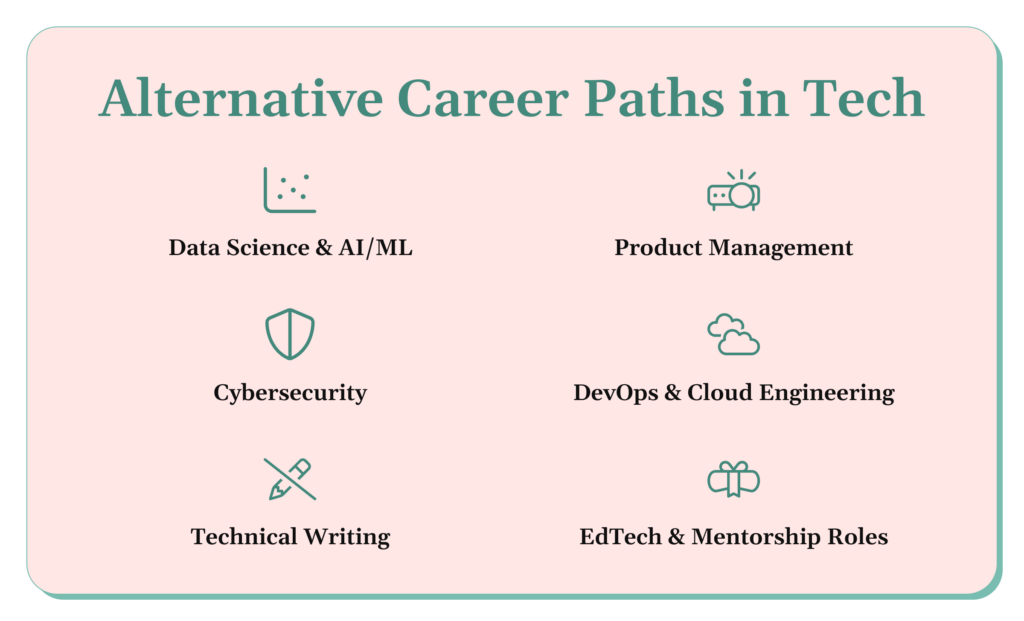
With a foundation in software engineering, professionals can also branch out into:
The career path of a software engineer is not fixed—it’s highly customizable based on your interests, skills, and goals. Whether you aspire to be a coding expert, a tech leader, or a startup founder, software engineering opens doors to a future-ready, high-growth career.
Here is a list of top employers who offer software engineer jobs.
| Recruiters | Average Salary |
| Oracle Financial Services | INR 11.3 LPA |
| HCL Technologies | INR 4.8 LPA |
| Infosys | INR 8.4 LPA |
| Microsoft | INR 13 LPA |
| INR 22 LPA | |
| TCS | INR 7.5 LPA |
| Samsung | INR 16.1 LPA |
| Intel | INR 14 LPA |
| Adobe | INR 10 LPA |
| Cisco | INR 18 LPA |
| Deloitte | INR 8 LPA |
| IBM | INR 10 LPA |
| Cognizant | INR 8.4 LPA |
Software engineers in India typically earn ₹8.5 LPA on average, with entry-level salaries ranging from ₹3.5 – ₹6 LPA. Mid-level professionals earn ₹7 – ₹15 LPA and senior engineers can earn ₹15 – ₹25+ LPA. Leadership roles like Engineering Managers or CTOs often make ₹30 LPA to ₹80+ LPA. Expertise in cloud technologies, AI/ML, and DevOps can significantly increase earning potential.
To pursue a career as a software engineer, you must have a Bachelor’s degree in Computer Science or a related field. A minimum of 60% in your 12th grade (with Mathematics, Physics, or Computer Science) is typically required to qualify for top engineering colleges through entrance exams like JEE or MHT CET.
Yes, you can! In today’s skill-driven tech world, a formal degree is not mandatory to become a software engineer. Many self-taught professionals have built successful careers through alternate paths.
With the right skills, consistency, and a solid portfolio, you can become a software engineer—even without a degree.
Challenges in a Software Engineering Jobs
While software engineering is a rewarding field, it comes with its own set of challenges. Being aware of these can help you prepare and grow more effectively.
1. Rapidly Evolving Technology
Tech trends change fast—what’s in demand today may become outdated tomorrow. Continuous learning is essential to stay relevant.
2. High Pressure & Tight Deadlines
Projects often come with tight delivery timelines, which can lead to long working hours and burnout if not managed well.
3. Debugging & Problem-Solving Stress
Tracking bugs and fixing complex issues can be frustrating and mentally exhausting, especially under pressure.
4. Work-Life Balance
Depending on the company and role, maintaining work-life balance—especially during releases or critical updates—can be challenging.
5. Communication Gaps
Working in cross-functional teams or with clients across time zones can lead to misunderstandings if communication isn’t clear.
6. Job Market Competition
While demand is high, so is competition. Standing out requires strong skills, projects, and interview readiness.
Overcoming these challenges requires adaptability, resilience, collaboration, and a passion for continuous learning.
Future Scope of Software Engineering in India
The future of software engineering in India looks incredibly bright. As digital transformation accelerates across sectors, the demand for skilled software professionals continues to grow at an unprecedented rate.
1. Expanding Job Market
India is expected to add millions of tech jobs by 2030, driven by growth in AI, cloud computing, data science, cybersecurity, and automation.
2. Thriving Startup Ecosystem
With India becoming a global startup hub, software engineers are increasingly in demand for building innovative tech products and solutions.
3. Global Work Opportunities
Indian developers are working remotely or relocating abroad for top roles in the US, Europe, and Southeast Asia, thanks to global hiring trends.
4. Rise of Emerging Technologies
Opportunities are expanding in areas like AI/ML, blockchain, IoT, AR/VR, and quantum computing, offering exciting new career paths.
5. Government & Private Sector Digitization
Massive initiatives like Digital India, UPI, and smart cities are fueling the need for skilled software professionals at every level.
With strong technical skills and adaptability, software engineers in India can look forward to a high-growth, future-proof career in the years ahead.

Pursuing a career as a software engineer offers many opportunities in India’s growing tech sector. By mastering popular programming languages, gaining practical experience, and keeping up with industry trends, you’ll create a solid foundation for lasting success. Continuous learning and connecting with industry experts are crucial for thriving in this fast-changing field. Start your journey today and reach your full potential as a software engineer in 2025 and beyond.
Strong coding skills, problem-solving ability, and continuous learning in programming and software tools.
Example: Building real-world projects using Python or Java.
Tip: Focus on hands-on practice, not just theory.
Actually, a 12th pass can be a software engineer if he/she learns programming through degrees, diplomas and self-study by self-learning from online courses.
Example: A student who skips a degree but learns coding through bootcamps, doing freelancing projects along the way
Tip: Start as early as possible, practice coding, and build a good portfolio to show the software engineering skills you have.
In India, software engineers earn about ₹4–12 LPA on average. In the US, programmer salaries range from $80,000–$120,000.
Example: A fresh graduate in India would earn only ₹4–6 LPA, but a software engineer with experience at a premier tech company earns over ₹20 LPA.
Tip: Keep updating your skills – new technologies and new certifications often give you higher pay.
Anyone who has strong programming ability, problem-solving skills, and knowledge of software tools qualifies, no matter their degree.
Example: A B.Tech student or even a self-taught coder with strong projects.
Tip: The key to getting hired is a portfolio that demonstrates your skills. It is more important than certificates.
Learn programming (Python, R), mathematics (linear algebra, statistics), and artificial intelligence concepts like machine learning, deep learning, and data science.
Example: A computer science student understands machine learning libraries (TensorFlow, PyTorch) and gets a job in AI development.
Tip: Get real AI projects—uber-practical experience is the best way to distinguish yourself in the marketplace.
Course prices vary—short online coding courses might start from ₹5,000 – ₹50,000 and full-time degrees like B.Tech could cost around ₹2 – 6 lakhs a year in India.
Example: A student paid ₹40,000 for a 6-month Python + Data Science bootcamp and was ready for work.
Tip: Pick a course based on your career goal—don’t pay a lot of money if a shorter program will develop the same skills.