Need to take time off but unsure how to ask for it the right way? Writing a good leave application is crucial in 2025’s fast-paced academic and professional world. Whether you’re a student needing a few days away from classes or an employee asking for approval for a personal break, your application sets the tone for clear communication and mutual respect.
In this expert-approved guide, you’ll find the latest formats, practical tips, and real-world examples to help you write effective leave applications for any situation. Based on HR best practices and current workplace expectations, we’ll show you how to express your needs politely, include essential details, and keep your professionalism. This way, your request gets processed smoothly and is received well. Whether you’re new to formal communication or looking to improve your skills, this article will give you the knowledge and confidence to handle leave requests with ease in 2025 and beyond.
An application for leave in office is a formal written request made by an employee to take time off from work for a specific period. It outlines the reason for absence, duration of leave, and the intended dates. This document ensures proper communication and approval as per organizational protocols.
A casual leave application for office is usually submitted when an employee needs time off for personal matters or unforeseen situations such as attending a family function, personal errands, or emergency situations. Casual leave is generally short-term and doesn’t require extensive documentation. While writing an application for leave, it’s important to mention the reason clearly and ensure that the work will not be affected during the absence.
An application for sick leave is submitted when an employee is unwell and unable to attend work due to health reasons. This type of leave typically requires a medical certificate if the absence extends beyond two or three days. The leave application for office should mention the nature of the illness (in brief), the expected duration of absence, and a request for approval. It’s also helpful to offer to update or delegate tasks if necessary.
An application for leave under earned or privilege leave is planned and usually taken for vacations, long-term travel, or personal projects. This type of leave is accrued over time and can be used for extended breaks. When drafting this leave application for office, the employee should give ample notice and mention the start and end dates clearly, ensuring that workflow continuity is maintained.
Maternity and paternity leaves are special types of leave applications for office that support employees during the birth or adoption of a child. A maternity leave application typically includes the expected due date and the duration of leave, supported by a doctor’s note. Similarly, a paternity application for leave outlines the requested days off and offers support arrangements for ongoing tasks.
This application for leave is written during unfortunate circumstances like the death of a close family member. Bereavement leave allows employees time to grieve and handle necessary family responsibilities. A leave application for office in such a case should be respectfully worded and indicate the relationship with the deceased and the dates of absence requested.
Some companies offer study leave for employees pursuing higher education or certifications. A formal leave application for office in this case must mention the course name, institution, and duration of the leave. Employees are often expected to provide proof of enrollment and assure management of a return date.
Compensatory or comp-off leave is granted when an employee has worked extra hours or on holidays. This application for leave typically refers to the specific extra work done and requests equivalent time off. It’s a common leave application for office in sectors where weekend or overtime work is expected occasionally.
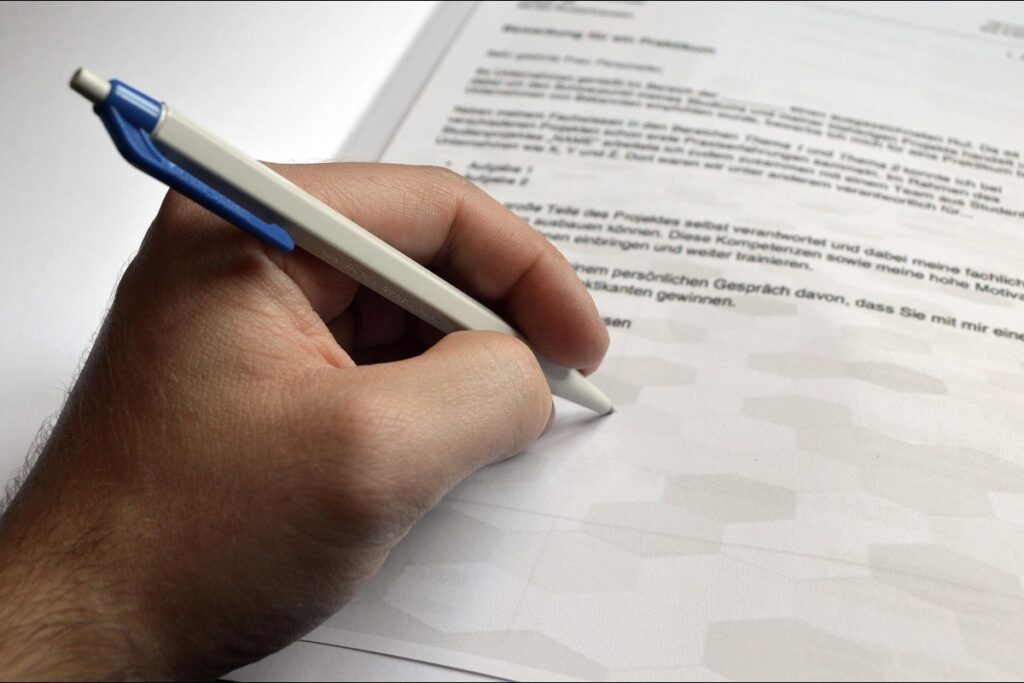
A well-structured leave request reflects professionalism and ensures clarity. Below are the key aspects that must be included in a leave application:
The first step in how to write application for leave is crafting a clear subject line and an appropriate salutation. The subject should immediately convey the purpose of the email or letter—such as “Application for Leave for Personal Reasons” or “Application for Sick Leave.” Follow this with a formal salutation like “Dear [Manager’s Name]” or “Respected Sir/Madam.”
An important element in any application for leave is stating the reason for taking time off. Whether it’s due to illness, a family event, or personal obligations, be concise but honest. While drafting this section, avoid overly personal details but provide enough context so your manager understands the necessity of the leave.
The next critical aspect in how to write application for leave is mentioning the exact dates of your absence. Clearly specify the start and end dates and include the total number of days. If the dates are tentative, mention that and offer flexibility if possible. This helps your team plan around your absence.
A professional application for leave should always include a mention of how your work will be managed in your absence. Whether you’re delegating tasks to a colleague or completing pending work before you leave, including this information assures your employer that operations won’t be disrupted.
If you’re reachable during your leave for urgent matters, include your contact details. This demonstrates responsibility and can be very helpful for smooth coordination. In how to write application for leave, adding a line such as “I will be available via email/phone in case of any emergency” shows your commitment.
Always end the application for leave with a polite closing and your signature. Phrases like “Thank you for your consideration” or “Looking forward to your approval” are appropriate. Sign off with “Sincerely” or “Yours faithfully,” followed by your full name, job title, and employee ID if required.
Under the Maternity Benefit Act, 1961, female employees are entitled to 26 weeks of paid maternity leave for the birth of their first two children. For the third child onwards, the leave duration is 12 weeks. This leave can be availed before and after childbirth.
Sick leave policies vary by company, but under the Factories Act, 1948, employees working in factories are entitled to 12 days of paid sick leave per year. Many organizations offer 7 to 15 days of sick leave annually to cover illness or medical emergencies.
Casual leave is usually provided for urgent or unforeseen matters like personal errands or family emergencies. While not governed by central law, most companies offer 7 to 12 days of casual leave annually, typically with prior approval.
Earned leave accumulates based on the number of days worked, usually 1 day for every 20 days worked. Employees can encash or carry forward these leaves. This type of leave is used for planned vacations or extended breaks.
If employees work on a public holiday, they are entitled to compensatory off or overtime pay as per the Factories Act or company policy. Additionally, companies provide a fixed number of paid public holidays each year.
Subject: Application for Casual Leave on [Date]
Respected Sir/Madam,
I am writing this application for leave to request casual leave for [mention date] due to a personal commitment that requires my attention. I will ensure that all my ongoing tasks are updated before my absence and my colleague [Colleague’s Name] is informed to handle any urgent matters.
I kindly request you to grant me leave for the mentioned day. Thank you for your consideration.
Sincerely,
[Your Name]
[Designation]
[Contact Information]
Subject: Application for Sick Leave from [Start Date] to [End Date]
Respected Sir/Madam,
I am writing to submit an application for sick leave as I am currently unwell and advised rest by my doctor. I would like to request leave from [Start Date] to [End Date] to recover fully.
I have informed [Colleague’s Name] to look after any urgent matters during my absence. A medical certificate will be provided if required. Kindly grant me sick leave for the mentioned period.
Sincerely,
[Your Name]
[Designation]
[Contact Information]
Subject: Application for Leave from [Start Date] to [End Date]
Respected Sir/Madam,
This is to submit my leave application for office requesting earned leave from [Start Date] to [End Date] for personal reasons. I am planning this in advance to ensure minimal disruption to work.
All my current responsibilities will be completed before I leave, and [Colleague’s Name] has agreed to manage urgent tasks during my absence.
Looking forward to your approval.
Sincerely,
[Your Name]
[Designation]
[Contact Information]
Subject: Application for Maternity Leave from [Start Date]
Respected Sir/Madam,
I am writing this application for leave to formally request maternity leave starting from [Start Date], as per medical advice. I intend to avail [Number of Weeks/Months] of maternity leave in accordance with company policy.
I will ensure a proper handover of duties to my colleague [Colleague’s Name] before the leave period begins. Kindly grant me maternity leave as requested.
Sincerely,
[Your Name]
[Designation]
[Contact Information]
Subject: Application for Paternity Leave from [Start Date]
Respected Sir/Madam,
I would like to apply for paternity leave from [Start Date] to [End Date] due to the expected arrival of my child. This application for leave is to ensure I can support my family during this important time.
All duties will be delegated to [Colleague’s Name], and I will be available over phone or email for urgent queries.
Kindly approve my request.
Sincerely,
[Your Name]
[Designation]
[Contact Information]
Subject: Application for Bereavement Leave
Respected Sir/Madam,
I regret to inform you of the passing of my [relation] and request bereavement leave from [Start Date] to [End Date] to attend the funeral and support my family.
This leave application for office is being submitted with a heavy heart, and I hope for your understanding and approval.
Sincerely,
[Your Name]
[Designation]
[Contact Information]
Subject: Application for Study Leave from [Start Date] to [End Date]
Respected Sir/Madam,
I am pursuing [Course/Certification Name] and would like to request study leave from [Start Date] to [End Date] to prepare for final examinations. This application for leave is important for my professional development and skill enhancement.
All necessary documents related to the course and schedule are attached. Please consider my request.
Sincerely,
[Your Name]
[Designation]
[Contact Information]
Subject: Application for Compensatory Leave on [Date]
Respected Sir/Madam,
I am writing this application for leave to request a compensatory day off on [Date], as I had worked on [mention the extra workday or holiday]. I have coordinated with my team to ensure that all current assignments remain on track.
Kindly grant me compensatory leave for the mentioned date.
Sincerely,
[Your Name]
[Designation]
[Contact Information]
Subject: Request to Work from Home
Dear [Manager’s Name],
Due to [reason – e.g., mild illness, family emergency], I request permission to work from home on [date(s)]. I will be available online and reachable via phone/email throughout the day to ensure all tasks are completed efficiently.
Please let me know if this is acceptable.
Thank you,
[Your Name]
| Do’s | Don’ts |
| ✅ Use a clear and relevant subject line (e.g., Application for Leave) | ❌ Avoid vague or missing subject lines |
| ✅ Start with a formal greeting (e.g., Respected Sir/Madam) | ❌ Don’t use overly casual or informal language |
| ✅ Clearly mention the reason for leave in a concise manner | ❌ Don’t overshare personal or irrelevant details |
| ✅ Specify the exact dates and duration of leave | ❌ Don’t leave out the start and end date of your leave |
| ✅ Offer a handover plan or mention work delegation | ❌ Don’t assume your absence will go unnoticed without preparation |
| ✅ Keep the tone polite and professional | ❌ Don’t sound demanding or entitled in your application for leave |
| ✅ Provide contact information if you’re reachable | ❌ Don’t ignore the need for accountability during your absence |
| ✅ Close the letter/email with gratitude and a formal sign-off | ❌ Don’t forget to include your name, designation, and other details |
| ✅ Proofread the application for grammar and clarity | ❌ Don’t send the leave request with spelling or formatting errors |
| ✅ Follow up if required, especially for long-term leave | ❌ Don’t assume approval without confirmation |
Read More: 6 Essential Tips: Leave Application Format
Writing a clear and respectful leave application is an important skill. It helps you maintain professionalism and build trust in any academic or workplace setting. By using the right format, including all necessary details, and being open in your communication, you improve your chances of getting your request approved without confusion or delays.
Effective leave applications go beyond simply asking for time off. They show your responsibility and respect for others’ schedules. Keep improving your communication skills, stay informed about organizational policies, and seek feedback from mentors or HR professionals when needed. With the right approach, you will be ready to manage any leave request smoothly and confidently in 2025 and beyond.
Evaluate numerous career choices to choose the right career path for yourself. Dive into our guide on Career Advice.

Read More: Leave Application Tips
To write a leave application, begin with your address and the date. Next, include the recipient’s details and a formal greeting. In the body, clearly state the reason for your leave and how long you will be gone. End politely with your signature. Keep it brief and professional.
To apply for a 1-day school holiday, write a leave application to the principal. Include your name, class, date of absence, reason for the leave, and a polite closing with your signature. Keep it short and respectful.
To write a 2-day leave application, address it to your principal or manager. Include your name, position or class, the dates you will be absent, the reason for your absence, and a polite closing with your signature. Keep the message clear, short, and professional.
To request leave in an office, send a formal leave application or email to your manager. Include your name, job title, leave dates, reason for absence, and a polite closing. Make sure the request is professional, clear, and sent on time.
To request a leave through a message, keep it short, polite, and clear. Include your name, title or class, the dates you need off, and the reason. For example: “Hello [Manager/Teacher], this is [Your Name]. I am requesting leave on [dates] because of [reason]. Thank you.”
A short leave application is a clear request for a brief absence, usually lasting a few hours or just one day. It should include your name, your title or class, the date(s) of your leave, the reason for your absence, and a polite closing. This keeps the message straightforward and professional.
Common types of leave include:
1. Casual Leave (CL): For personal reasons or short-term absence.
2. Sick Leave (SL): For illness or medical emergencies.
3. Earned/Privilege Leave (EL/PL): Accumulated leave for planned vacations.
4. Maternity/Paternity Leave: For childbirth and childcare.
5. Bereavement/Compassionate Leave: For loss of a family member.
6. Study/Training Leave: For education or professional development.
7. Unpaid Leave: Leave without pay for personal reasons.
8. Special/Optional Leave: For festivals, elections, or organization-specific reasons.