


Want to make a lasting impression in your follow-up interview? Mastering interview etiquette is vital for job seekers who want to stand out in 2025’s competitive market. Good etiquette goes beyond just having the correct answers. It involves how you present yourself, communicate, and interact with interviewers from the moment you arrive (or log in) until you leave.
Every detail matters, from dressing appropriately and greeting confidently to listening actively and following up with appreciation. This guide will take you through the main principles of interview etiquette. It includes helpful tips, real-world examples, and the latest digital etiquette for virtual interviews. Whether you’re just starting or have years of experience, these strategies will help you build credibility, increase your confidence, and turn every interview into a step toward career success.
Interview Etiquette refers to displaying respectful and professional customs and behaviors in a job interview while providing evidence of successful alignment with the role and cultural fit for the organization. Interview etiquette includes everything from preparation and appearance to verbal and follow-up communication.
When introducing yourself in an interview, start with a confident greeting, state your name, briefly highlight your professional background, and express enthusiasm for the opportunity.
1. Prepare Thoroughly: Research the company, common interview questions, and align your answers with the role’s goals. Preparation helps you respond confidently and accurately, showing you’re diligent and invested in the opportunity.
2. Present Yourself Professionally: Dress appropriately and organize your materials neatly. A professional appearance and demeanor create a strong first impression and help you feel more confident throughout the interview.
3. Use Positive Body Language: Maintain good posture, eye contact, and a friendly handshake. These nonverbal cues project confidence, help manage nervousness, and build a connection with the interviewer.
4. Speak Clearly and Concisely: Communicate your ideas using structured, detailed sentences with simple and formal language. Clarity helps the interviewer understand your qualifications and professionalism.
5. Highlight Your Strengths: Steer the conversation toward your relevant skills and experiences. Linking them to the job requirements shows how you can directly contribute to the organization’s success.
6. Show Gratitude: Thank the interviewer sincerely at the end and follow up with a personalized thank-you note. This thoughtful gesture leaves a lasting impression and reflects your appreciation and professionalism.
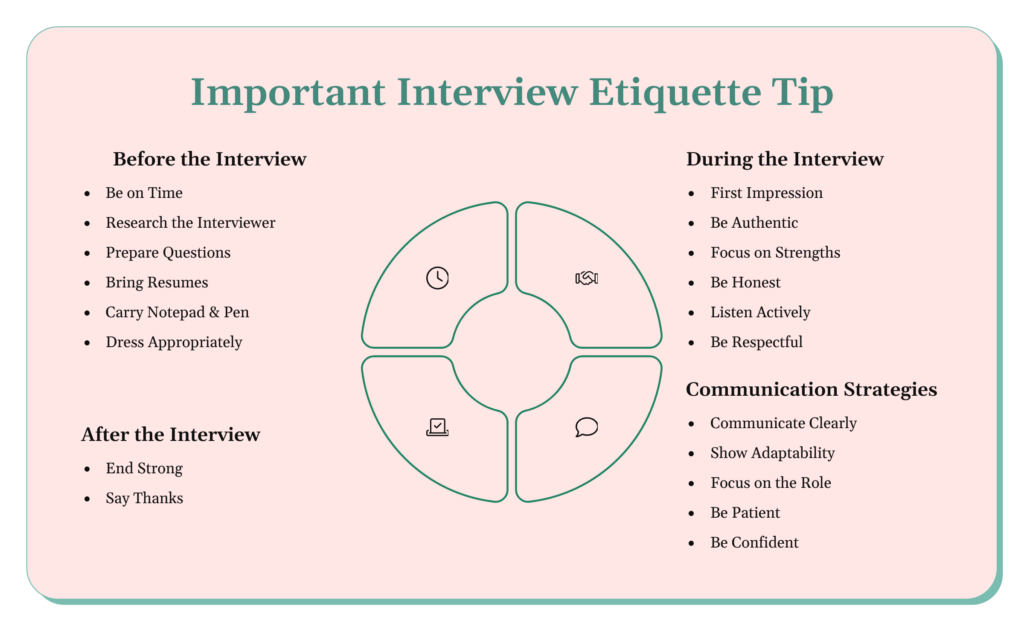
One of the most important interview tips is the value of punctuality. Arriving on time shows professionalism, respect, and enthusiasm for the opportunity. Aim to reach the interview location at least 10 to 15 minutes before the scheduled time. This allows you to settle in, gather your thoughts, and prepare yourself mentally for the conversation.
Taking the time to research the interviewer is an essential part of interview preparation. Knowing the interviewer’s name, along with ensuring you understand the correct spelling and pronunciation, shows attention to detail and professionalism. It reflects your enthusiasm, preparedness, and genuine interest in the role and the company.
A helpful job interview tip is to prepare a short list of thoughtful questions in advance. Asking questions during the interview shows the interviewer that you are genuinely interested in the role and the company. It demonstrates your initiative, enthusiasm, and commitment to understanding the organization and its goals.
However, avoid preparing overly basic or generic questions that may suggest a lack of research or effort. Instead, focus on insightful and relevant questions that reflect your understanding of the company and the position while showing your curiosity and professionalism.
One must carry 2-3 copies of one’s resume and cover letter to an interview. Sometimes, one may even be required to submit one’s resume to multiple people. Thus, one must carry copies of resumes and documents in an organized manner.
It is one of the tips for job interviews that helps prepare for the future. It would help if you carried a notepad and pen to jot down your thoughts after the interview. You must write down everything you remember and your impression of the interview.

Greetings are a crucial point in job interview etiquette. It would help to greet the interviewer with a smile and a handshake. You must also maintain eye contact and try not to stare. It reflects confidence and is one of many successful job interview tips.
Generic topics bring life to the interview. One must never jump right into business, but try to ease into it. You can start by asking generic questions to build rapport. In case of confusion, you may simply follow the interviewer’s lead.
While it’s natural to want to appear confident during an interview, trying to hide nervousness can be insincere and may negatively impact your performance. If done appropriately, admitting your nervousness to the interviewer is a part of good interview etiquette. You can mention it calmly and professionally during the conversation, such as saying, “I’m a little nervous, but I’m very excited about this opportunity.”
This approach can help relieve your stress and create a more comfortable and open environment for both you and the interviewer. It shows honesty, self-awareness, and the ability to manage emotions—qualities that employers often appreciate. Being transparent about your feelings allows you to connect better with the interviewer and focus on presenting your skills and qualifications effectively.
Maintaining focus on yourself during an interview is one of the most effective interview practices. During the conversation, emphasize your skills, eagerness to learn, and the unique qualities and attributes you bring to the role. Demonstrating confidence in your abilities can leave a strong impression on the interviewer.
It’s important to avoid apologizing for any lack of experience. Instead, shift the focus toward what you can contribute to the organization and how your strengths align with the requirements of the role. By highlighting your willingness to grow, adapt, and contribute, you can turn any perceived gaps into opportunities to showcase your determination and potential.
Lies and exaggerations might seem like an easy way to impress an interviewer, but they can backfire and damage your credibility in the long run. Always strive to be as honest and transparent as possible during the interview process. Speaking the truth builds trust and demonstrates integrity, which are qualities employers value highly.
Active listening is a vital part of interview etiquette. Paying attention to your interviewer shows respect, professionalism, and genuine interest in the conversation. If something is unclear, don’t hesitate to ask for clarification or request a restatement to ensure you fully understand the question or context.
However, it’s important to stay focused and stick to the topic throughout the interview. Asking relevant questions or seeking clarification should always align with the flow of the conversation and the role you are being considered for. Active listening not only helps you respond thoughtfully but also leaves a positive impression on the interviewer.
Disregarding anyone in an interview is not just bad interview etiquette but also a missed opportunity to learn and engage. Make sure to listen attentively to everyone on the panel. Each person brings unique perspectives and insights, and respecting their contributions can help you make a more positive impression. Remember, showing respect and consideration to all participants reflects your professionalism and interpersonal skills. Ensure that you listen to everyone on the panel.
Interviewers are interested in candidates who can express themselves clearly and effectively. It doesn’t matter if they speak slowly or correct themselves during the conversation. What truly stands out is their grammatical fluency. Proper grammar reflects a candidate’s ability to communicate professionally and effectively, which is a key aspect of good interview etiquette. Mastery of grammar not only showcases attention to detail but also indicates respect for the interview process and the interviewers. This fluency can leave a positive impression and demonstrate your readiness for the role.
While personal questions might not always be part of the standard interview, they often come up. It’s crucial to handle these questions without losing composure, demonstrating good interview etiquette. Staying calm and composed shows your ability to navigate unexpected queries professionally. This is an important tip for a successful interview, as it reflects your readiness and adaptability in any situation. Being prepared for personal questions also indicates your confidence and poise, essential traits for making a positive impression.
One should never ask about the benefits or salary of a job during the interview. This approach reflects poor interview etiquette and indicates a lack of preparation. Instead, it’s advisable to research beforehand using salary and career websites to gain a rough idea of the compensation. This demonstrates professionalism and a genuine interest in the role and company, rather than just the financial aspects. Proper research helps you make informed decisions and allows you to focus on showcasing your skills and fit for the position during the interview.
One must never expect a job offer after the first interview. It’s essential to understand that companies often conduct multiple interviews before making a hiring decision. This approach ensures they thoroughly evaluate candidates. Demonstrating good interview etiquette involves being patient and understanding that the hiring process can be extensive. Proper preparation and a positive attitude across all interview stages can significantly enhance your chances of success. Remember, each interview is an opportunity to showcase your skills and fit for the role.
Closing an interview with a smile and an enthusiastic attitude is key. Show good interview etiquette by asking about the next steps, thanking the interviewer, and expressing genuine interest in the job. This reflects your courtesy and kindness, leaving a lasting positive impression. Demonstrating enthusiasm and appreciation can set you apart from other candidates and show that you are excited about the opportunity.
A thank-you note to the interviewer is a must after an interview. Irrespective of whether it was good or bad, one must always express gratitude. This part of the interview can reflect good interview etiquette and make a difference.
Confidence is vital in all interviews. Whether it is a job interview or an interview for college admissions, everyone will pick a confident candidate over others. Thus, one must always be self-confident and optimistic during interviews.
It is an underrated interviewing tip, but a good outfit can make a huge difference. It reflects a candidate’s confidence and effort put into the interview. Proper dressing helps them stand out from others and crack the interview easily.
Your body language and eye contact significantly impact how you are perceived during an interview. Maintaining an upright posture, offering a firm yet natural handshake, and using open gestures signal confidence and professionalism. Avoid fidgeting, slouching, or crossing your arms, as these can indicate nervousness or defensiveness.
Eye contact is equally important—it shows attentiveness and sincerity. Make steady eye contact when speaking and listening, but avoid prolonged staring, which may come off as intimidating. Instead, use natural breaks to look away briefly and maintain a relaxed demeanor. Nodding occasionally and mirroring the interviewer’s body language subtly can also create a positive connection. When combined with clear speech and a composed presence, effective body language and eye contact can leave a lasting impression and boost your chances of success.
Virtual interviews have become a common part of the hiring process, requiring candidates to adapt their approach for a digital setting. To create a strong impression, follow these essential etiquette tips:
By following these virtual interview etiquette tips, you can make a strong impression and increase your chances of success.
Pro Tip: Always research the company thoroughly—showing genuine interest in the organization is one of the smartest interview etiquette moves you can make!
Interviews are a comprehensive process, but with proper interview etiquette, anyone can succeed. Mastering interview etiquette involves understanding the nuances of the interview process and implementing successful interview tips. It’s essential to thoroughly read and implement these tips to make a positive impression on the interviewer. Practicing interviews is another valuable strategy that can significantly boost your confidence and prepare you for a wide range of questions.
One of the key aspects of interview etiquette is to remain composed and professional, regardless of the situation. This means listening carefully to every question, responding thoughtfully, and demonstrating your qualifications and enthusiasm for the role. Additionally, understanding the company culture and aligning your answers to reflect your compatibility with their values can further enhance your chances of success. Preparation is key, so start refining your skills today.
By focusing on interview etiquette and continuously improving your approach, you can increase your chances of landing your desired job. Remember, each interview is an opportunity to learn and grow, so don’t wait to get started!
Ace your job interviews with tailored tips for a great first impression! Explore our guide on Interview Tips.
Excelling in interview etiquette can really set you apart from the competition. By focusing on details like punctuality, polite communication, and a professional appearance, you demonstrate respect for your interviewers and the opportunity in front of you. In 2025’s changing job market, digital etiquette is just as important as in-person manners, so be ready for both.
Remember, your behavior before, during, and after the interview all shapes the impression you make. Keep practicing, ask for feedback, and adjust your approach to each situation. With the right etiquette, you’ll build trust, show your professionalism, and increase your chances of landing your dream job.

Interview etiquette refers to the professional behavior, manners, and communication skills that create a positive impression during interviews.
Example: Greet the interviewer with a firm handshake and a smile.
Tip: Always address the interviewer respectfully, using “Mr.” or “Ms.” unless invited to use their first name.
Good etiquette demonstrates professionalism, respect, and confidence. This helps you stand out among other candidates.
For example, a candidate who listens without interrupting builds a stronger rapport.
Tip: Practice active listening by nodding and responding thoughtfully.
Dress in formal or business casual attire based on the company culture. Clean, neat, and well-fitted clothes make a strong impression.
Example: Wear a blazer and formal shoes for a corporate job interview.
Tip: When unsure, opt for slightly more formal instead of casual.
Greet with a smile, make eye contact, and offer a polite handshake or greeting based on cultural norms.
Example: Say, “Good morning, thank you for the opportunity,” while shaking hands.
Tip: Match the interviewer’s energy; be firm but not aggressive.
Sit upright, make good eye contact, and avoid fidgeting to demonstrate confidence and attentiveness.
Example: Keep your hands relaxed on your lap instead of crossing your arms.
Tip: Record a practice interview to see and improve your posture.
Answer clearly, stay concise, and avoid negative comments about past employers.
Example: Instead of saying “My boss was terrible,” say “I was looking for more growth opportunities.”
Tip: Always frame answers positively or constructively.