
Starting a new job? It’s important to understand the probation period to ensure a smooth and successful transition. The probation period is a specific timeframe where employers assess your performance, adaptability, and fit within the company. In 2025’s changing job market, knowing what to expect and how to do well during probation can help you secure your position and prepare for long-term growth. This guide covers the basics, benefits, and best practices of probation periods so you can navigate this important phase of your career with confidence.
In this guide, we will explore what is probation period in job, its significance, legal considerations, outcomes, and best practices to help students and job seekers successfully navigate this crucial phase.
A probation period is a temporary evaluation phase where employers and employees assess each other. It applies to fresh graduates, entry-level hires, and experienced professionals.
Unlike permanent roles, a probationary period does not guarantee complete job security. Employers monitor employees based on performance, adaptability, and work ethics. If they fail to meet expectations, they may face termination with short notice.
For students and first-time job seekers, understanding what is probation period in job is essential. It helps them learn what skills are needed and how to meet job expectations. It also allows them to identify key skills required to secure a permanent position.
The duration of a probation period varies across industries and company policies:
Some organizations extend probation to provide employees with additional training and time for improvement. This is common when an employee shows potential but lacks specific skills.
However, when the employees do not meet expectations, they can have their employment terminated early in the probationary period. Employers do this based on performance reviews, conduct, and general fit within the company.
Knowledge of what probation means can help fresh graduates and students set realistic expectations and prepare for the challenges and surprises of the workplace.
Employees on probation have essential rights, including:
Keep in mind that probationary employees often receive fewer benefits than permanent staff. Some companies may offer reduced medical coverage, fewer paid leave days, and less job security during probation. Before signing any probation contract, read the company policies carefully. Ask HR about your salary, benefits, and contract terms to ensure you fully understand your rights.
Knowing what is probation period and understanding your rights can help you navigate this time smoothly.
A probation period helps employers decide if a new hire is the right fit. It allows them to evaluate performance before making a long-term commitment. This period ensures that only capable and well-suited employees become permanent staff.
Key benefits for employers include:
During this phase, companies use structured performance reviews. These assessments help them decide whether employees meet expectations and align with the company culture.
Simply put, it is a trial phase that helps businesses select the right talent while ensuring workplace efficiency. During this time, managers:
Employees who meet performance benchmarks move into permanent roles. Those who do not meet expectations may have their contracts extended or terminated.
Understanding the probation period meaning helps both employers and employees. It ensures a smooth transition into long-term employment.
A probation period is an excellent career growth opportunity, especially for fresh graduates and first-time job seekers. Employees develop new skills, gain experience, and adjust to the workplace environment during this phase.
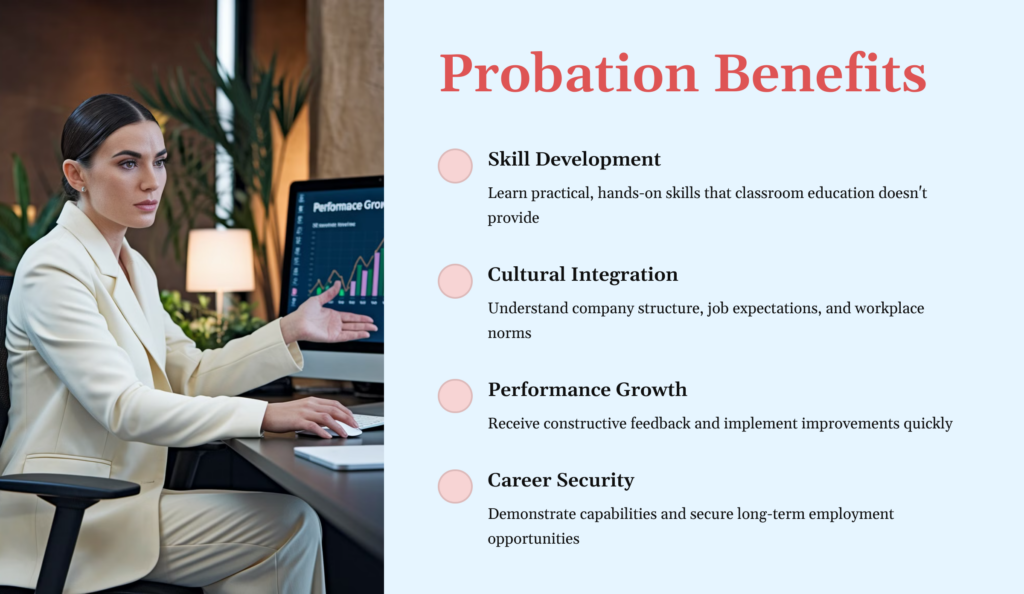
For students entering the workforce, knowing what is probation period in job helps them prepare for challenges. It allows them to showcase their potential, build strong connections, and create career stability.
Succeeding in a probationary period increases the chances of long-term career success—employees who perform well during this stage open doors to better opportunities and future growth.
During a probation period, employers check if employees meet job expectations. They focus on:
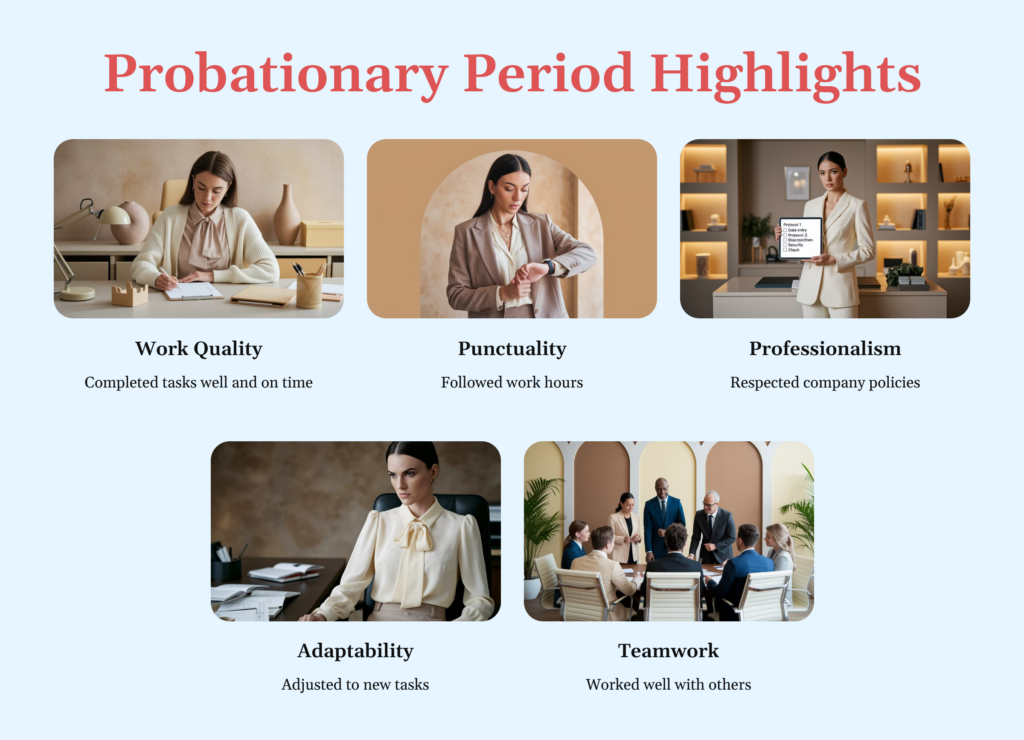
Employers track performance through regular feedback. Employees who meet expectations have a better chance of getting a permanent role. Those who struggle may get extra training, extended probation, or termination.
Training and support help employees learn new skills and settle into their roles during probation. Companies run programs that show new hires what is expected and help them improve their work.
Good training and clear guidance make the probation period a time for growth and confidence. Employees get practical experience, improve their skills, and learn to handle workplace challenges. Companies offering substantial support help probationary employees adjust faster work and move smoothly into permanent roles.
Transparency in job roles and performance expectations is key to a successful probationary period. The companies should:
For employees, knowing what is probation period in job helps them align their efforts with employer expectations. Clear communication during the probation period ensures a smooth transition to permanent employment.
A successful probation period leads to:
For freshers, it is a milestone- completing a probation period- regarding secure job stability and future growth opportunities. The better you perform during probation (whatever that may be), the more sure the transition into long-term employment.
Sometimes, employers extend the probationary period due to:
An extended probation period allows employees to prove their capabilities but delays job security and benefits. To increase their chances of successful confirmation, employees should clarify probation expectations and areas for improvement.

Not all employees complete their probation period successfully. Termination may occur due to:
However, employees can:
Understanding what is probation period helps employees prepare, perform, and secure long-term job prospects. For students and freshers, excelling in the probationary period is key to career progression and job stability.
Excelling during the probationary period is crucial for securing permanent employment. Employees should focus on:
Understanding the probation period in a job helps fresh graduates and entry-level professionals align with employer expectations. Employees increase their chances of securing a permanent role by being proactive, taking initiative, and showing enthusiasm.
Maintaining a learning mindset and being receptive to training ensures a smooth transition into the workforce. Employees should also document their progress and highlight achievements during reviews.
Employers must communicate expectations during the probation period to help employees perform well. A structured approach ensures new hires understand their roles and develop their skills.
A well-organized probation period benefits both employers and employees. Open communication about what is probation period, job roles, and company expectations helps employees adapt and perform better.
Instead of focusing only on weaknesses, employers should recognize employee strengths and guide them toward improvement. A well-managed probationary period creates a positive work environment where employees feel supported and motivated.
The probationary period has challenges that employees, especially fresh graduates and first-time job seekers, must endure. These problems mainly include:
To overcome these challenges, an employee needs to:
Understanding what is probation period in job helps employees prepare mentally and professionally, ensuring a smoother transition into full-time roles.
Employers also encounter difficulties when managing probationary employees. Key challenges include:
To address these issues, employers should:
A well-managed probation period allows companies to retain top talent while minimizing hiring risks, ensuring long-term success for both the employee and employer.
| Aspect | Private Sector | Public Sector |
| Typical Duration | 3 to 6 months | 6 months to 1 year |
| Purpose | Assess skills, adaptability, and cultural fit | Ensure compliance with regulations and job requirements |
| Evaluation Criteria | Performance, work ethics, technical skills | Higher job security but not guaranteed until the completion |
| Training & Support | Mentorship, structured training, performance reviews | Strictly structured training, written assessments, field training |
| Job Security | Lower job security compared to the public sector | Termination is possible if standards are not met |
| Termination Policies | Can be terminated if expectations are unmet | Termination possible if standards are not met |
| Extension Possibility | Probation may be extended for improvement | Probation may be extended for further evaluation |
With the rise of remote work, companies have modified probationary period policies to adapt to virtual environments. Key changes include:
The meaning of what is probation period has evolved, with companies focusing on flexibility, self-discipline, and independent problem-solving skills. Employees must demonstrate efficiency in virtual settings to secure permanent roles.
The probation period is more than just a trial. It’s your chance to learn, grow, and show your value to the organization. Understanding expectations, seeking feedback, and taking initiative will raise your chances of confirmation and career growth. Stay focused, stay positive, and use this time to highlight your strengths in 2025’s competitive workplace.
Excelling in a probationary period is key to career progression for students and first-time job seekers. By building strong work ethics, seeking feedback, and improving continuously, they can adapt to professional environments and secure long-term success in their chosen field.
Read more: Top 30 HR Interview Questions for Freshers with Answers
A new employee typically gets a probation period to assess his/her suitability for the role.
Example: A software developer, when newly recruited, might be given a 6-month probation period.
Tip: Give it your full dedication as it helps you secure confirmation in the role.
Some organizations may choose to give a new employee a year-long probation, although it typically ranges from 3 to 6 months.
Example: Probation for the role of marketing executive is generally set up for 6 months, post which the employee stands a chance for confirmation.
Tip: To ensure clarity and avoid confusion, please make a note to get the stipulated probation tenure mentioned clearly in your offer letter.
For the initial probation period, you may receive a slightly lower salary and benefits as compared to permanent employees.
Example: During the probation period, some companies pay ₹25,000 per month, which increases after the confirmation.
Tip: Ensure you verify the salary and benefits during the probation period before you join.
Confirmation is when the company officially makes you a permanent employee after a successful probation period.
Example: After 6 months of good performance, a manager confirms you as a permanent staff member.
Tip: Keep track of performance feedback to improve your chances of confirmation.
If performance is unsatisfactory, the employer may extend probation or terminate employment.
Example: A trainee who misses deadlines repeatedly may not get confirmed.
Tip: Use probation to learn quickly, adapt, and improve your skills.
You have basic employment rights, but some benefits, like leaves, bonuses, or insurance, may be limited.
Example: You can claim your salary and legal benefits even during probation.
Tip: Review your probation terms in the company policy to understand your rights.