

The role of an IAS officer is one of the most prestigious and impactful career paths in India. As the administrative backbone of the country, IAS officers are entrusted with the critical task of implementing government policies, maintaining law and order, and ensuring the effective delivery of public services. Every year, lakhs of aspirants compete in the UPSC Civil Services Examination to secure a position that offers not just a job, but a lifetime of service and leadership.
To truly understand the work of an IAS officer, consider the journey of Tina Dabi. Securing the top rank in the UPSC CSE 2015, her career exemplifies the responsibilities of an IAS officer, from implementing grassroots welfare schemes in rural Rajasthan to leading complex administrative efforts. Her story inspires thousands, showcasing the direct impact an officer can have on national progress.
This comprehensive guide will delve deep into the IAS officer powers and duties, the attractive salary structure, the step-by-step career path, and the unique challenges and rewards that define this esteemed service.
The full form of IAS is the Indian Administrative Service. It is one of the premier All India Services, alongside the IPS and IFoS. An IAS officer is a central government official selected through the highly competitive UPSC Civil Services Examination. They are responsible for public administration, policy implementation, and play a pivotal role in the governance of the country at the district, state, and national levels.
So, what does an IAS officer do? The role of an IAS officer is multifaceted, blending administration, leadership, and public service. At its core, the work of an IAS officer involves:
In short, the duties of an IAS officer make them the crucial link between the government and the citizens.
Example: During the COVID-19 pandemic, District Magistrates across India demonstrated the critical nature of IAS officer powers and duties by managing lockdowns, organizing testing, and ensuring oxygen supply – showcasing how what an IAS officer does directly affects public welfare.
The authority of an IAS officer is derived from various legal statutes. Understanding these IAS officer powers and duties is key to understanding their effectiveness.
In essence, there are nearly 300 laws that define the IAS officer power on a case-by-case basis, making their role both powerful and accountable.

The roles and responsibilities of an IAS officer evolve significantly throughout their career.
The first major posting after training. The primary duties of an IAS officer here include maintaining law and order, overseeing development projects, and revenue administration within a sub-division. For instance, an SDM is responsible for issuing various licenses, conducting revenue court cases, and managing local elections.
This is where the work of an IAS officer becomes highly visible and critical. The DM is the chief administrator of the district, responsible for implementing all policies, overseeing elections, managing disasters, and ensuring overall development. A famous example is the role of an IAS officer like Armstrong Pame, who orchestrated the construction of a 100-km road in Manipur without government funds, showcasing innovative problem-solving.
At the state secretariat, an officer heads entire departments (e.g., Education, Health). Their role shifts from implementation to policy formulation, budgeting, and advising state ministers. They translate political vision into administrative action.
At the apex, IAS officers work in various ministries. They help frame national policies, manage the country’s administration, and represent India in international forums. The Cabinet Secretary is the highest-ranking IAS position. For example, the responsibilities of an IAS officer at this level could involve shaping the National Education Policy or representing India at climate change conferences.
Your role as an IAS officer works in a government-owned Public Sector Undertaking in a high-level administrative role. IAS officers can hold key positions to oversee and regulate PSUs. They may be involved in policy-making, decision-making, and monitoring of the performance of PSUs.
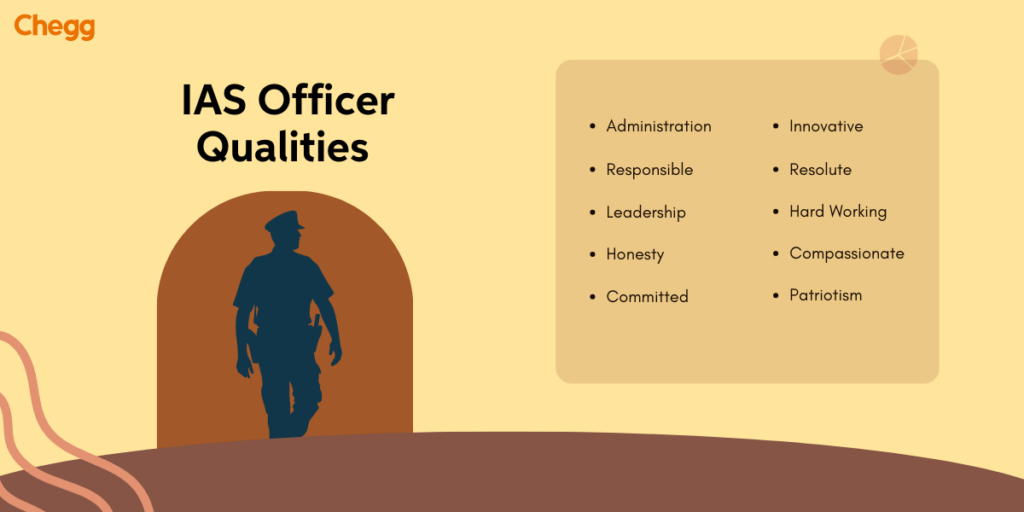
The role of an IAS officer is to make, carry out, and oversee government-controlled policies. Laws like the Essential Commodities Act, the Drug Licenses Act, and the Arms Act allow IAS officers to implement rules in various situations.
These are the main laws that deal with IAS officer powers and duties. There are nearly 300 laws that describe IAS powers on a case-by-case basis.
IAS Officers get a great job because of how hard they work and how well they plan. The training they get at LBSNAA (Lal Bahadur Shastri National Academy of Administration) is the first step in their lives. They move up to positions with more responsibility.
Step-by-Step Career Path:
The attractive IAS salary and benefits package matches the immense responsibilities of the position. The 7th Pay Commission structured a transparent and progressive compensation system:
Career Perks Include:
The career progression begins with training at LBSNAA, followed by roles as SDM, District Magistrate, Commissioner, and Secretary – each promotion bringing greater IAS officer power and broader responsibilities of an IAS officer.
The starting basic pay for entry-level IAS officers is Rs. 56,100, with additional allowances such as Dearness Allowance (DA), House Rent Allowance (HRA), and Travel Allowance (TA). Salaries increase with experience. The basic pay for a Cabinet Secretary is set at Rs. 2,50,000.
| Post | Pay Level | Basic Pay (Approx.) |
|---|---|---|
| Assistant Secretary | 10 | ₹56,100 |
| Deputy Secretary | 11 | ₹67,700 |
| District Magistrate | 12 | ₹78,800 |
| Director | 13 | ₹1,18,500 |
| Joint Secretary | 14 | ₹1,44,200 |
| Additional Secretary | 15 | ₹1,82,200 |
| Secretary | 17 | ₹2,25,000 |
| Cabinet Secretary | 18 | ₹2,50,000 |
The commission established a new Pay Matrix system featuring 18 horizontal levels to handle pay fixation for MACP or promotions. Each level also includes a vertical range for annual increment-based pay adjustments. For more details, you can refer to the 7th Pay Commission Report PDF.
The IAS (Indian Administrative Service) is not just a job-it is a commitment to public service and nation-building. From handling law and order at the district level to shaping national policies at the central level, IAS officers play a crucial role in India’s governance.
In 2025, becoming an IAS officer continues to be a dream career for millions of aspirants due to its high respect, job security, perks, and the opportunity to directly impact society. However, the path demands dedication, discipline, and resilience.
The role of an IAS officer represents a powerful blend of authority, responsibility, and service. Understanding what an IAS officer does reveals a career dedicated to public welfare and national development. The IAS officer powers and duties enable meaningful change-making, while the IAS salary ensures dignity and stability in serving the nation. For those passionate about leadership and committed to service, the IAS offers an unparalleled opportunity to shape India’s future through one of the most respected and impactful career paths available.
Evaluate numerous career choices to choose the right career path for yourself. Dive into our guide on Career Advice.
The role of an IAS officer includes implementing government policies, maintaining law and order, managing public administration, collecting revenue, conducting inspections, and ensuring the delivery of services to citizens. They also play a key role in developmental administration and serve in various capacities within the government, such as district collectors or in central government departments.
An IAS officer’s salary in India starts at approximately ₹56,100 per month at the entry-level (Junior Scale) and can go up to around ₹2,50,000 or more per month at the highest levels (Director and above), depending on experience and seniority. Additionally, IAS officers receive various allowances and benefits, which can significantly increase their overall compensation.
An IAS officer’s duties include:
Implementing government policies and programmes.
Maintaining law and order in the district.
Collecting revenue and managing government finances.
Conducting inspections and overseeing development programmes.
Advising the government on policy matters.
Ensuring the implementation of welfare schemes.
Representing the government in various meetings and events.
Managing disaster response and crisis situations.
Supervising the work of subordinate officers and staff.
Promoting good governance and public service delivery.
The main power of an IAS officer lies in their authority to implement government policies, manage administrative functions, and oversee public welfare programs, making crucial decisions that impact governance and development at various levels.
The state or central government controls IAS officers through their respective administrative departments. They are accountable to senior officers, including the Chief Secretary, the Chief Minister or Governor (at the state level), and central ministries or departments.
The most powerful job of the IAS (Indian Administrative Service) is the District Collector or District Magistrate.
The primary role of the IAS (Indian Administrative Service) is to manage the administrative functions of the government and implement policies at various levels.