

A well-written recommendation letter for students can open doors to top universities, scholarships, and exciting careers. As competition grows in 2025, admissions committees and employers look beyond grades. They want to understand a student’s character, achievements, and potential. A strong recommendation letter adds a personal touch. It showcases unique strengths, academic success, and contributions both inside and outside the classroom. If you’re a teacher, counselor, or mentor, knowing how to write an effective letter is important. The best recommendations are honest, specific, and aimed at the student’s goals.
This helps them stand out among many applicants. Are you ready to help your students shine? Let’s look at the key elements and expert tips for writing impactful recommendation letters that leave a lasting impression.
A recommendation letter typically entails the following main features:
A recommendation letter for students is important to show their strengths, abilities, and potential. Here’s why:
Here is a list of individuals you might consider asking-
It is crucial to provide your recommender with context about the master’s program and your career aspirations when requesting a recommendation letter for students.
Be specific about what you want the student’s recommendation letter to highlight, ensuring it aligns with what the admissions committee seeks.
If you have just finished university or are still in college, you can get a good letter of recommendation from your professor. For a letter of recommendation for a student, one should find teachers and university or high school students who know them well.
If you have not been in grad school for a long time but have worked closely in a job related to your master’s program, you can ask your boss or old boss to write a letter about you. They can say how you work and what specific skills you have. A letter of recommendation for masters program from an employer can elevate your chances of selection.
Asking for a recommendation letter for students is an important step in applying for a master’s program. Ensure you give the recommender ample time to craft a thoughtful letter that reflects your strengths.
If you know important people who recognize your academic abilities and potential, like a teacher or boss, they can write a letter of recommendation for masters program.
When requesting a letter of recommendation from a past employer or professor, it is essential to follow these steps:
Step 1: To request a letter of recommendation for students, one must find the right person who knows them well and can say good things about them. This might be a teacher, boss, or someone who greatly helped them. You want someone who can write a strong letter about your research experiences, your skills and achievements, and what you’re good at.
Step 2: Make a formal request. Once you have identified the right person, it is crucial to request a letter of recommendation for masters program formally. This can be done through email or in person. In your request, explain the letter’s purpose and why you think the person is the right fit to write the specific letter used. Also, provide the person with all the necessary information, such as the deadline, the format of the letter, and any other requirements.
Step 3: Provide all the universities with the necessary information. This will make the letter-writing process more straightforward for international universities and the recommender. This includes your resume, transcripts, and any other relevant documents.
Step 4: After requesting a letter of recommendation from a grad school for a master’s program, it is essential to follow up with the specific college and the recommender to ensure they have received all the necessary information and check on the letter’s progress. However, giving the particular school and recommender enough time to get further information and write the letter is also essential.
It is essential to understand the critical role a well-articulated recommendation letter for students plays in your overall application to a master’s program.

Read More: Formal Letter Format For Your Daily Use And Application
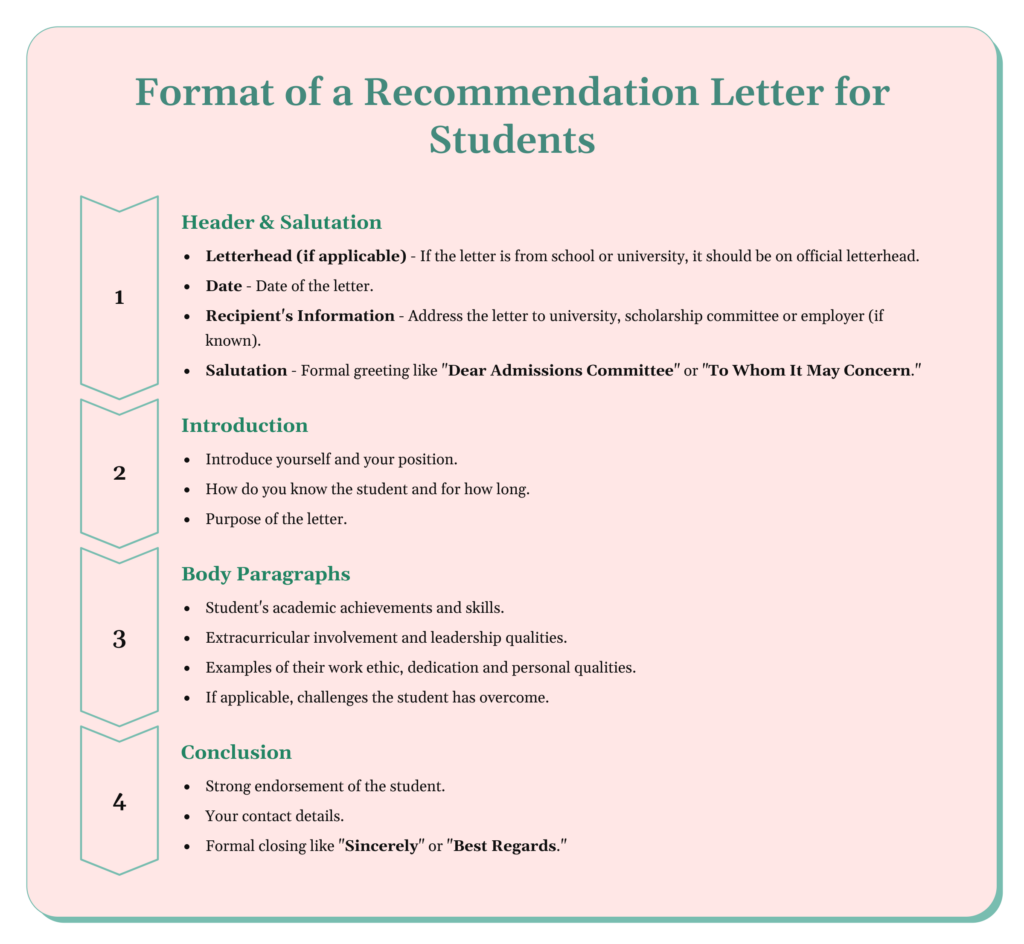
A recommendation letter for students follows a standard format with certain components that make it work. Below is a breakdown of the format and samples for different situations.
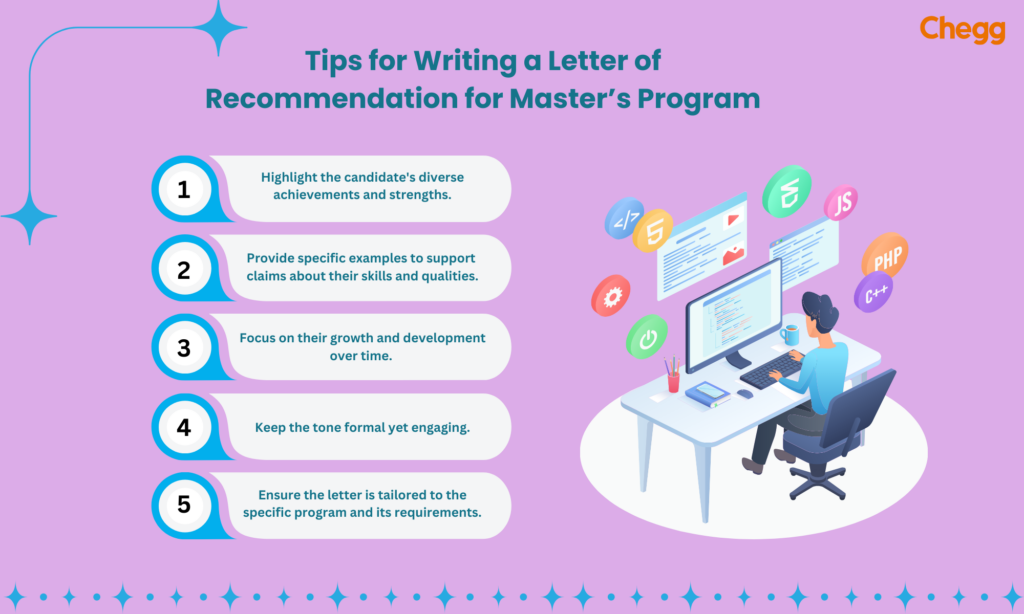
A strong letter of recommendation for a master’s program should emphasize teamwork, communication, and problem-solving skills, supported by specific anecdotes and examples. Highlight the candidate’s teamwork through instances where they collaborated on projects, detailing their role and impact.
Showcase effective communication by citing examples of how they conveyed complex ideas clearly, such as in presentations or research discussions. Address their problem-solving abilities by describing the challenges they tackled and outlining their approach and innovative solutions. Additionally, convey their passion for the field and commitment to growth, personalizing the letter with genuine belief in their potential. Such details can leave a lasting impression on the admissions committee.
The introduction should briefly overview the writer’s relationship with the recommended individual, including how long they have known each other and in what context. This section should also state the purpose of the student’s grad school performance letter and what program or job the individual the graduate school student’s performance letter is applying for.
Sample:
I’m writing to suggest Alice Doe for enrollment in your psychology master’s program. I’ve known Alice for three years, during which time she has a master’s application, has taken several of my classes, and worked as a research assistant in my lab. Alice would be a great and valuable addition to your program.
The opening paragraph or body of the letter should provide specific examples of the individual or job title’s strengths and accomplishments, highlighting their qualifications for the program or job. It is essential to be as detailed and concrete as possible, providing specific examples demonstrating the individual’s abilities, writing skills, and character. The writer should also address any potential weaknesses or areas for improvement but positively frame them and offer suggestions for how the individual can address them.
Sample:
“Alice is an exceptionally talented student with a keen intellect and a passion for research. She consistently earned top grades in my courses and demonstrated a sophisticated understanding of psychological theory and research methods. As a research assistant in my lab at my previous university, student Alice was a dedicated, highly motivated, and reliable team member and student who contributed significantly to our research projects. She also presented her research at several conferences and was awarded a prestigious research grant from the university.
While Alice is an excellent student, she can be reserved in group settings. However, she has made significant strides in this area, participating more actively in group discussions and collaborating effectively with her peers. She will continue growing and developing her interpersonal skills in your program.”
Highlighting particular examples in the recommendation letter for students can significantly bolster your application and provide context for your achievements.
A structured and clear recommendation letter for students should highlight key achievements and strengths relevant to the master’s program you are applying to.
The conclusion of a letter of recommendation to a sincere student for a master’s program should summarize the letter’s key points and reiterate the writer’s strong endorsement of the individual’s personal qualities. It should also provide contact information for the writer in case the recipient needs further information or has any additional questions.
Sample:
“I wholeheartedly recommend Alice for admission to your master’s program in Psychology. She is an outstanding student and researcher who would make a valuable contribution to your program. If you have any further questions, please do not hesitate to contact me.”
Here is a good sample letter of recommendation for students applying for master’s programs
A well-crafted letter of recommendation can greatly strengthen a student’s application and provide compelling evidence of their suitability for the program.

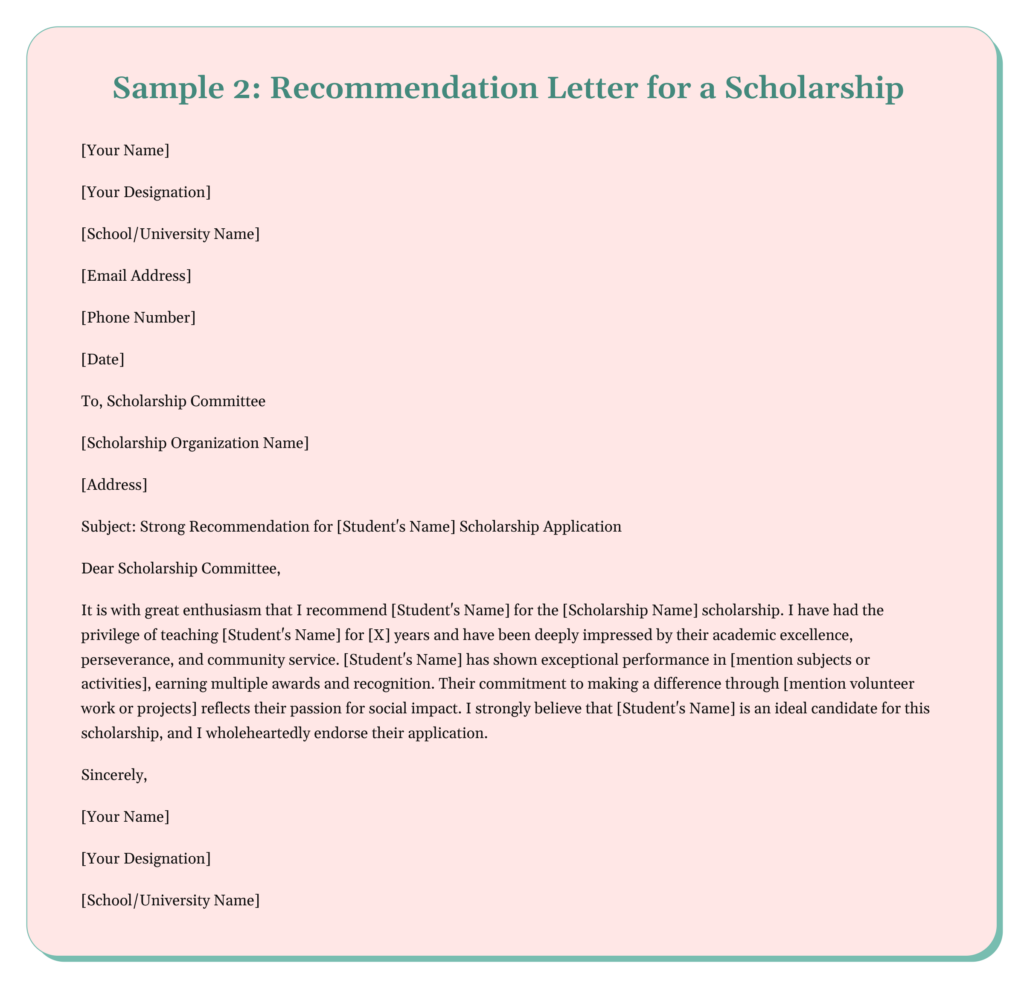
To enhance your master’s application, a recommendation letter for students should reflect your unique qualities and readiness for advanced studies.
A strong recommendation letter for students can provide the admissions committee with insights that your grades and test scores alone cannot convey.
Ensuring your letter is compelling and persuasive and provides the necessary information to the selection committee is essential. Here are some dos and don’ts to help you write a strong letter of recommendation for masters program –
Dos:
Don’ts:
In today’s competitive academic and professional world, a well-written recommendation letter can be a crucial part of a student’s journey toward their ideal program or career. By providing honest, specific, and personalized insights, recommenders give admissions committees and employers a complete view of a student’s strengths, achievements, and potential. This goes far beyond what grades or test scores can show.
As we approach 2025 and beyond, being genuine and paying attention to detail are vital for standing out in applications. Take the time to customize each letter for the opportunity, emphasizing qualities that make the student unique. Your careful support could open doors for students and help them achieve their best goals.
Evaluate numerous career choices to choose the right career path for yourself. Dive into our guide on Career Advice.
A Letter of Recommendation (LOR) for a master’s program is a document written by a professor, employer, or mentor who knows you well academically or professionally. It highlights your skills, achievements, character, and potential to succeed in the master’s course.
Example: If you apply for an MSc in Data Science, your professor might mention your statistics grades, research skills, and ability to manage complex projects.
Tip: Always choose recommenders who know you personally and can provide specific examples of your strengths, rather than offering generic praise.
A Letter of Recommendation for a master’s program should include:
Introduction: The recommender’s relationship to the student.
Academic strengths: The student’s performance in important subjects, research, or projects.
Skills and qualities: Critical thinking, leadership, teamwork, and communication.
Achievements: Awards, internships, or special contributions.
Personal traits: Integrity, curiosity, and adaptability.
Strong endorsement: Reasons why the student is a good fit for the master’s program.
For example, instead of just saying “She is hardworking,” a professor could write, “She consistently ranked in the top 5 of my finance class and led a team project that won first prize.”
Tip: Encourage your recommender to provide specific examples, as they make your application stand out.
The best people to write LORs for a master’s program are professors or employers who know your work well.
For example, a professor who guided your final-year project can highlight your research skills.
Tip: Choose recommenders who can share specific stories, not just general praise.
Yes, recommendation letters are crucial for master’s programs. They give universities an outsider’s view of your skills, character, and potential beyond grades and test scores.
Example: A strong letter from your project guide highlighting your research skills can make you stand out from other applicants.
Tip: Focus on quality over quantity. Two strong, detailed letters are better than three generic ones.
A Letter of Recommendation for students going abroad to study is a document created by a professor, teacher, or employer. It focuses on students’ academic abilities, skills, character, and achievements. This letter helps international universities see students’ potential and fit for their selected course.
For instance, if you’re applying for a master’s in Computer Science abroad, your professor might discuss your strong coding skills, research projects, and teamwork during hackathons.
Tip: Choose recommenders who know you well and can provide specific, real examples. This makes your LOR authentic and impactful.
A reference letter shows a candidate’s skills, achievements, and character for jobs or further studies.
Example: A manager might write that you increased team efficiency by 20% through leadership and problem-solving.
Tip: Always ask people who know you well and can provide specific examples. This makes the letter more credible and effective.