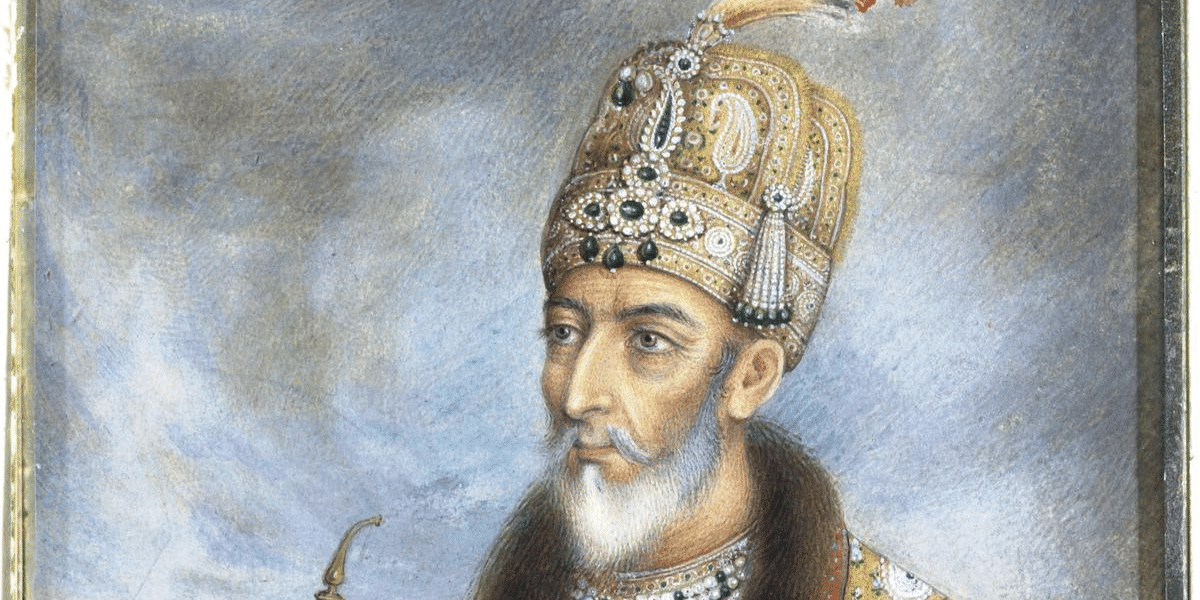
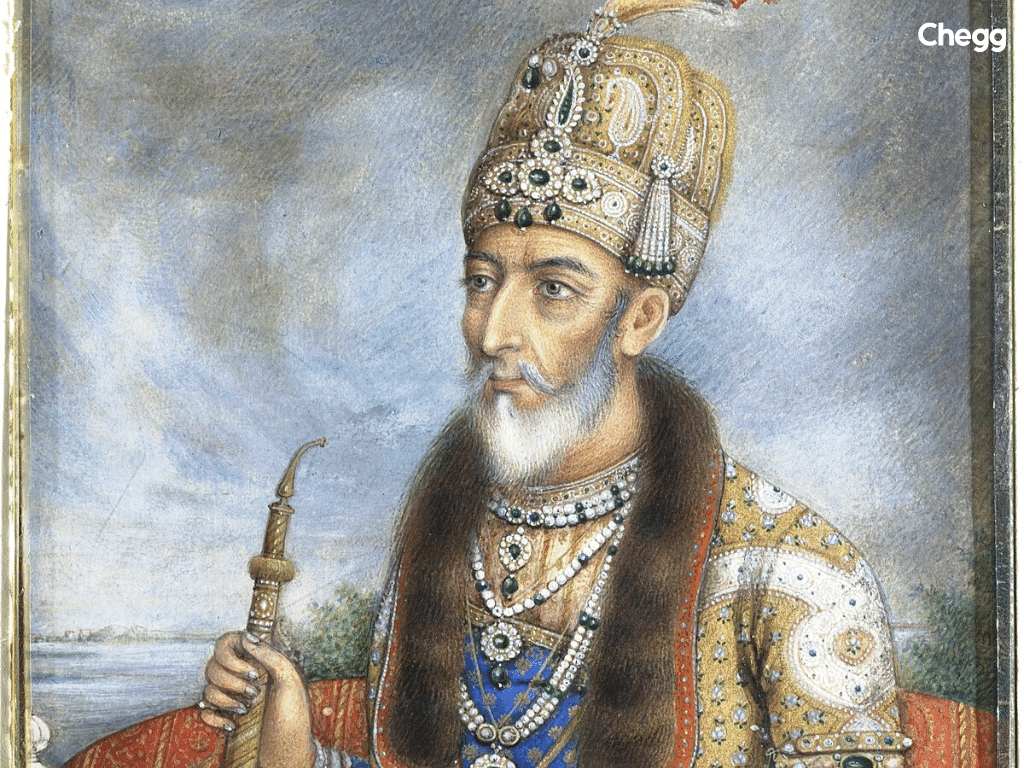
Bahadur Shah II (Bahadur Shah Zafar), who reigned from 1837 to 1857, was the final ruler of the Mughal Empire. Crowned after his father, Akbar Shah II, his rule was largely symbolic as real power had shifted to the British East India Company. During the 1857 rebellion, he was declared the symbolic leader by Indian rebels. After the revolt’s failure, the British exiled him to Rangoon, where he died in 1862, marking the end of the Mughal dynasty in India.
This article explores Bahadur Shah II’s life, highlighting his role as the final ruler of the Mughal dynasty, his symbolic leadership during the Indian Rebellion of 1857, and the lasting resonance of his legacy in India’s historical narrative.
In the mid-19th century, a significant chapter in Indian history unfolded. Bahadur Shah II ascended the throne in 1837 when the Mughal Empire’s power waned as British control expanded. Born as Abu Zafar Siraj-ud-din Muhammad, he became the leader of an empire grappling with internal strife and increasing British dominance. His reign symbolized the twilight of the Mughal Empire, marking the end of an era as British influence in India grew stronger.
Read More: Unveiling The Ahom Dynasty: Legacy Of A Mighty Empire
Bahadur Shah II, born on October 24, 1775, in Delhi, was the son of Akbar Shah II and Lal Bai. Raised in the royal atmosphere of the Red Fort, he received an education in arts, culture, and literature. As a young prince, he showed a keen interest in poetry, eventually becoming a notable poet under the pen name “Zafar.”
Growing up during the decline of the Mughal Empire, Bahadur Shah witnessed the empire’s dwindling power and the increasing dominance of the British East India Company. He was not initially in line for the throne, but due to the disqualification of his elder brother, he ascended the throne in 1837 after his father’s death. His reign marked the symbolic end of Mughal rule in India, as the empire’s authority had largely been reduced to Delhi by this time.
The Mughal empire began with Babur, who was rеlatеd to Gеnghis Khan and Timur. Hе bеcamе thе rulеr aftеr winning thе First Battlе of Panipat in 1526. But it was Akbar, thе grandson of Babur and the third Mughal еmpеror, who made thе empire thrive. During his time as rulеr, thе еmpirе grеw culturally and administratively, and became more secular. Akbar’s grandson Shah Jahan built incrеdiblе structurеs like the Taj Mahal, which made a mark in the history of the empire.

Read More: Top 10 Biggest Ports in India: A Comprehensive List
The Mughal Dynasty ruled India for centuries, leaving behind a grand legacy. Here’s a quick look at the key Mughal emperors:
This period saw a decline in Mughal power, with multiple emperors ruling for short durations. Here’s a list for reference:
Bahadur Shah Zafar was the last Mughal emperor. He was born to Mughal Emperor Akbar Shah II and Lal Bai on October 24, 1775, in Delhi. He was the second son of the family. His birth name was Abu Zafar Sirajuddin Muhammad Bahadur Shah. His father initially did not consider him to be his successor.
He bеcamе thе rulеr of a Mughal Empirе that was not as powerful as it oncе was. Hе changеd his namе to Bahadur Shah Zafar. His rule was significant bеcausе it rеprеsеntеd both a symbol of thе past and thе decline of the empire. His family linеagе tracеd back to Babur, who foundеd thе Mughal dynasty, and Akbar, renowned for his cultural and administrativе achiеvеmеnts.
As the last Mughal Emperor, Bahadur Shah II carriеd not only thе rеsponsibilitiеs of a rulеr but also thе rich history of the empire that spannеd gеnеrations, from glorious hеights of powеr to thе eventual dеclinе of thе еmpirе.
| Name of Emperor | Birth Year |
|---|---|
| Babur | 1483 |
| Humayun | 1508 |
| Akbar | 1542 |
| Jahangir | 1569 |
| Shah Jahan | 1592 |
| Aurangzeb | 1618 |
| Bahadur Shah I | 1643 |
| Jahandar Shah | 1661 |
| Farrukhsiyar | 1683 |
| Alamgir II | 1699 |
| Muhammad Shah | 1702 |
| Shah Alam II | 1728 |
| Ahmad Shah Bahadur | 1725 |
In the 1800s, the British East India Company became very powerful in India, gaining control over various regions. This period marked increasing discontent among the Indian population due to the harsh policies and actions of the British. Amidst this unrest, Bahadur Shah II, the last Mughal Emperor, emerged as a symbolic figure of authority. However, his empire, once powerful, had weakened considerably. The Mughal Empire’s decline contrasted with the growing dominance of the British, profoundly altering the course of Indian history.
The Indian Rebellion of 1857, also known as the Sepoy Mutiny or First War of Independence, marked a major turning point in Indian history. While it began as a mutiny of Indian soldiers (sepoys) in the British East India Company’s army, it quickly spread across northern and central India and gained a nationalistic character. Amidst this revolt, Bahadur Shah II, the last Mughal emperor, emerged as a symbolic leader of the movement, lending it much-needed legitimacy.
Despite being largely powerless in practical terms, his involvement gave the rebellion a unifying figurehead under whom Indians regardless of region or religion could rally. Although he was initially hesitant to take up leadership, pressure from rebel soldiers and his role as the symbolic heir of India’s imperial past left him little choice.
Delhi, which was then a decaying shadow of its former glory under the Mughals, became the central focus of the uprising. The British understood the strategic and symbolic significance of the city and launched a determined counterattack.
In exile, Bahadur Shah Zafar lived a lonely and secluded life far from the land he once ruled, his empire reduced to memory. With his court disbanded and stripped of all dignity, he spent his final years in a small, guarded enclosure, mostly forgotten by the world.
By late 1862, Zafar’s health began to rapidly decline. In his final days, even consuming food became difficult due to throat paralysis. His death marked the definitive end of the Mughal Empire, which had once ruled much of the Indian subcontinent.
After the collapse of the Mughal Empire, the lineage of Bahadur Shah Zafar faded into obscurity. While many of his descendants lived in poverty or anonymity for generations, some families in modern India and abroad still trace their ancestry to the last emperor.
While they may not hold titles, their existence serves as a living reminder of an empire that once shaped Indian history.
The fall of the Mughal Empire and the life of Bahadur Shah II offer profound and enduring lessons. The concept of “imperial overreach” becomes evident the empire’s grandeur and influence surpassed its practical capacities. This overextension led to internal fragmentation and made the empire vulnerable to external pressures, ultimately contributing to its decline.
Historical narratives are rarely shaped by a single cause; instead, they result from a complex interplay of interconnected factors. This intricate tapestry challenges simplistic interpretations and encourages a deeper exploration of history to truly understand its essence.
Bahadur Shah II’s legacy highlights the complexities of power, identity, and historical narrative. It teaches us that history is often shaped by multifaceted factors, reminding us to consider both the grandeur and imperfections of the past. His life serves as a poignant reminder of the challenges faced by leaders in times of transition and upheaval, prompting reflection on the enduring impact of colonialism and the struggle for cultural preservation.
Bahadur Shah II stands as a significant figure in history, prompting reflection on our identity, the preservation of traditions, and national pride. His life symbolizes a poignant moment when a powerful era ended and foreign rule began, marking a pivotal shift in our country’s future.
His story invites us to delve into the complex history where greatness and flaws intertwine. His legacy serves as a reminder of the fleeting nature of power and underscores how historical figures continue to influence us long after their time, leaving a lasting impact on our collective memory.
In history, Bahadur Shah II stands as a significant and enduring figure. His life story illustrates the rise and fall of the Mughal Empire, from its powerful peak to its tragic decline. He is also closely linked to the Indian Rebellion of 1857, where he became a symbol of resistance against colonial oppression and a catalyst for significant change. His legacy goes beyond merely recording past events; it represents a profound narrative capturing the struggles, hopes, and complexities of humanity’s journey.
Read More:
The last Mughal Emperor of India was Bahadur Shah II (Bahadur Shah Zafar). He ruled from 1837 to 1857 and was deposed by the British after the Revolt of 1857. His exile to Rangoon marked the official end of the Mughal Empire in India.
Bahadur Shah II bеcamе a symbolic leader of the Indian Rеbеllion of 1857. His rеluctant еndorsеmеnt lеnt crеdеncе to thе uprising against British colonial rulе, making him a focal point of rеsistancе.
Bahadur Shah II’s rulе occurrеd against thе backdrop of a dеclining Mughal Empirе and thе rising influеncе of thе British East India Company. His nominal authority strugglеd to navigatе this shifting landscapе.
Prince Mirza Mughal, son of the last Mughal emperor, Bahadur Shah Zafar, and Sharaf ul-Mahal Sayyidani, was a leading figure from Central Delhi during the Uprising of 1857.
The British deposition of the 19th and the last Mughal emperor, Bahadur Shah II, in 1858 marked the end of the Mughal Empire, replaced by the British Raj.
The first Mughal emperor was Babur (1483–1530). He founded the Mughal Empire in 1526 after defeating Ibrahim Lodi at the First Battle of Panipat. Babur’s victory marked the beginning of Mughal rule in India, which lasted for over 300 years.
The seventh Mughal emperor was Farrukhsiyar, who ruled from 1713 to 1719, though not widely detailed in general sources, this numbering follows traditional chronology
Descendants of Bahadur Shah Zafar still reside in India mainly in Delhi, Kolkata, and Hyderabad often facing economic hardship. One notable person is Sultana Begum, widow of a great-grandson, who lives in a slum in Kolkata and survives on a small pension
Jahangir (Nur‑ud‑din Muhammad Salim) became emperor after Akbar’s death in 1605, ascending the throne as the fourth Mughal emperor, ruling until 1627