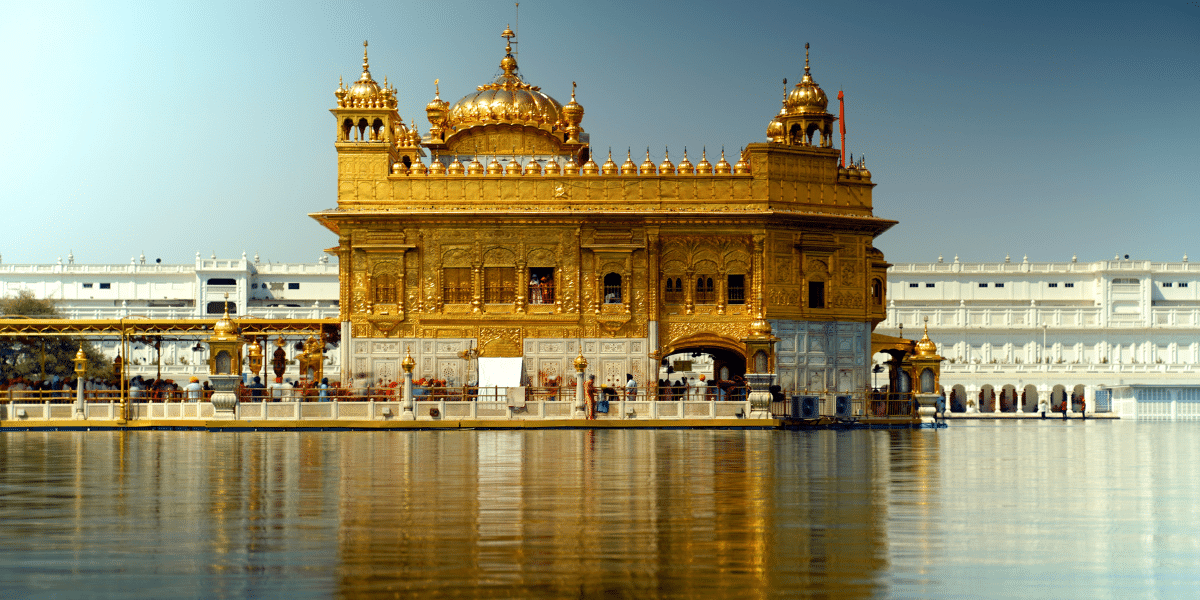
The Golden Temple, also known as Sri Harmandir Sahib, is the most significant spiritual shrine for the Sikh community in Amritsar, Punjab, India. Revered globally, it features a striking gold-covered dome, a white marble base, and a surrounding sacred pool (Amrit Sarovar). Founded by Guru Ram Das and completed by Guru Arjan Dev, the temple symbolizes equality, spiritual unity, and selfless service. With four entrances welcoming all, a 24-hour langar (free kitchen), and daily Gurbani recitations, it remains a living embodiment of Sikh values and heritage.
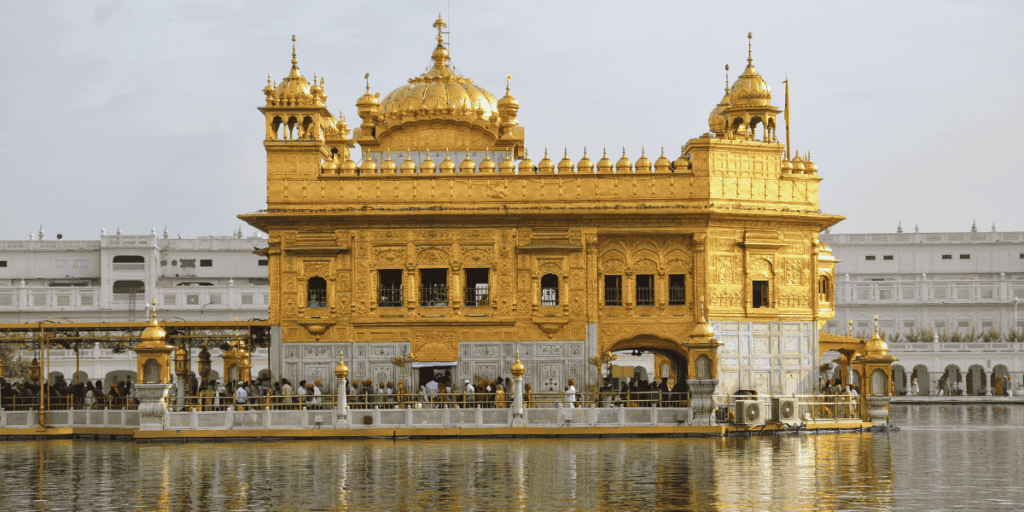
Millions of people come to the Golden Temple in Punjab for enlightenment every year. A person visiting the Amritsar Golden Temple also visits many other attractive locations, such as the Wagha Border and Jhaliawala Bagh.
Over the centuries, the Golden Temple has witnessed periods of both creation and reconstruction:
These historical events stand as a testament to the resilience of the Sikh faith and the enduring importance of the Golden Temple as a symbol of peace, unity, and spirituality.
Guru Amar Das, the third Sikh Guru, first proposed building the Golden Temple. He chose a special piece of land named Guru da Chakk, which means “the Guru’s village.” Later, he asked his disciple, Guru Ram Da, to build the temple in a better location.
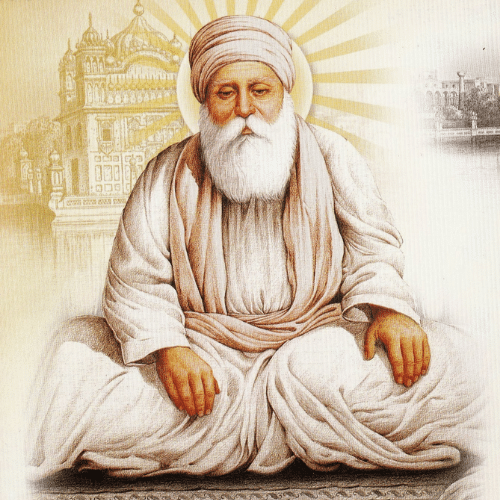
Guru Ram Das, who became the fourth Sikh Guru in 1574, found a perfect spot for the temple and also dug a sacred pool there. He invited people from all over the country-traders, scholars, and hardworking folks to settle around the temple. This area soon became known as Ramdaspur, which is now called Amritsar.
The temple became even more famous during the time of Guru Arjan, the fifth Sikh Guru. Construction of the temple happened between 1574 and 1604, a time mentioned in an old Sikh text called Mahima Prakash Pathak, written in 1741. The book also shares stories about the lives of the ten Sikh Gurus.
Inside the Golden Temple are many important Sikh scriptures, including parts of the Sukhmani Sahib, a sacred prayer written by Guru Arjan. He also declared that Amritsar would be the main place of pilgrimage for all Sikhs.
Established in 1574 by Guru Ram Das, the fourth Guru of the Sikhs, the temple aimed to promote unity among people of all faiths. In 1604, Guru Arjan Singh, the fifth Sikh Guru, erected the first Harmandir Sahib. The foundation stone was said to have been laid by a Muslim Sufi named Mian Mir, reflecting the temple’s inclusive ideology. In addition, Guru Arjan built the four entry gates, which stand for inclusiveness.
Foreigners, particularly Afghan invaders, frequently tried to destroy this symbol of Indian unity. However, Punjab’s resilient rulers successfully preserved and restored it. Maharaja Ranjit Singh substantially remodeled the temple between 1801 and 1839, using marble and copper. The exterior was then covered in gold leaf, earning it the nickname “Golden Temple.
Even during the turmoil of India’s independence in 1984, when the Indian Army clashed with enemy forces, the Harmandir Sahib suffered damage. Yet, both it and the Akal Takht were swiftly restored.
The Shiromani Gurudwara Parbandhak Committee oversees the temple’s management, which is headquartered north of the pool, ensuring its upkeep and operation.
| Aspect | Details |
|---|---|
| Name | Golden Temple (Harmandir Sahib) |
| Location | Amritsar, Punjab, India |
| Religion | Sikhism |
| Ticket Price | Free |
| Timings | Open 24 hours, every day |
| Main Attraction | Housing the Guru Granth Sahib, the Sikh holy scripture |
| Significance | Pre-eminent spiritual site of Sikhism |
| Architecture | Radiant white marble structure |
Guru Ram Das procured the land for the site, with two accounts surrounding its acquisition. One narrative, documented in a Gazetteer record, suggests that Sikh donations totaling 700 rupees facilitated the purchase from the residents and proprietors of the village of Tung. Alternatively, another version suggests Emperor Akbar bestowed the land upon Guru Ram Das’s wife.
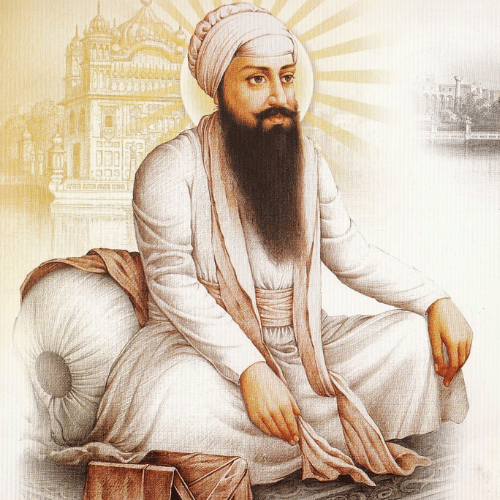
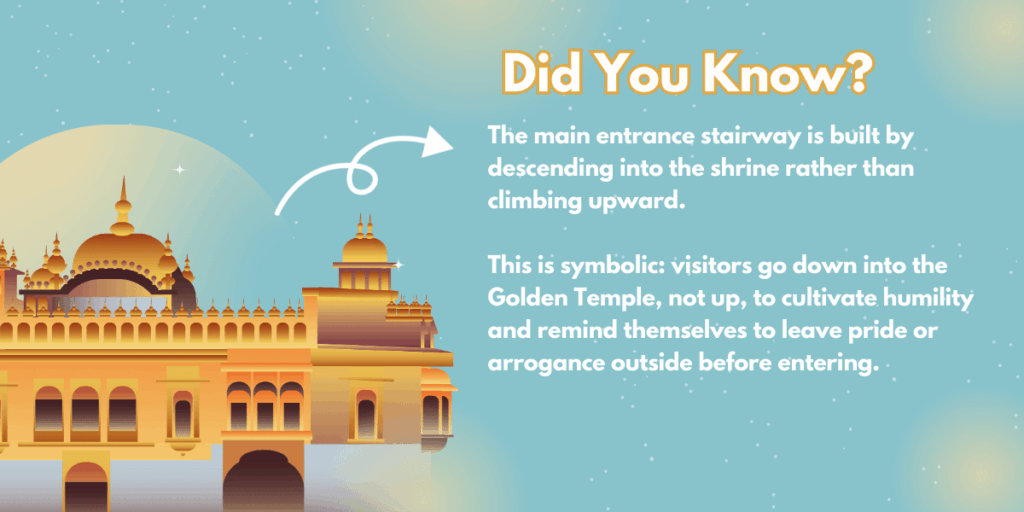
In 1581, Guru Arjan initiated the construction of the Gurdwara. Throughout the eight-year construction period, the pool remained devoid of water, symbolizing humility and the necessity to relinquish one’s ego before encountering the Guru. Emphasizing inclusivity, Guru Arjan ensured the gurdwara compound was accessible from all sides.
In 1589, builders completed the gurdwara primarily using bricks. Although there is speculation that Guru Arjan invited Sufi saint Mian Mir to lay the foundation stone, historical evidence is lacking. After its inauguration, the pool was filled with water. On August 16, 1604, Guru Arjan completed the first version of the Sikh scripture and installed a copy of the Adi Granth in the gurdwara, appointing Baba Buddha as the first Granthi.
The Harmandir Sahib features two primary entrances, complemented by four entrances on each side, symbolizing religious equality for people of all backgrounds. Central to its design is an artificial pool called the “Sarovar,” representing the Supreme Creator God from which all existence originates. The temple boasts three doors: one facing west towards the setting sun, another facing east towards the rising sun, and a third northeast-facing door known as “Guru ka Ghati,” symbolizing Guru Nanak Dev’s departure. Additionally, there’s a south-facing door named “Aamna ka Ghati,” representing the convergence of three rivers. Translating to “the abode of Shiva,” the Harmandir Sahib is where divine harmony and peace converge.
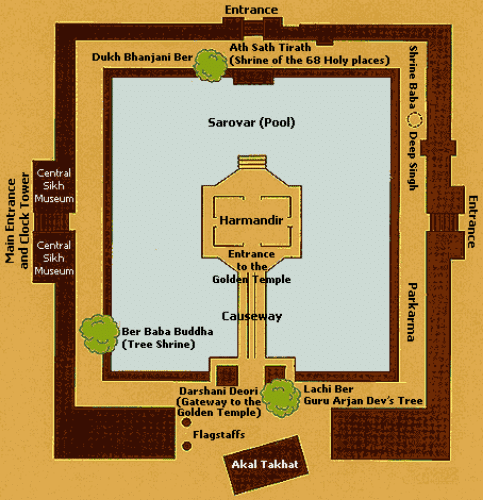
A crystal bridge links the temple to an ancient structure, once a site for Sikh martial arts training, now home to the Akal Takht, a tribunal for religious and military matters. A meticulously crafted garden surrounds the temple, showcasing lush greenery, fountains, and ornate pathways. Educational buildings house classrooms, lecture halls, and libraries filled with religious and literary texts. To the east stand two towering minarets connected by an adorned bridge, originally covered in gold but damaged during religious persecution.
Many people mistakenly believe that the Golden Temple is made entirely of gold due to its impressive gold-plated exterior. However, the temple is not constructed from solid gold.
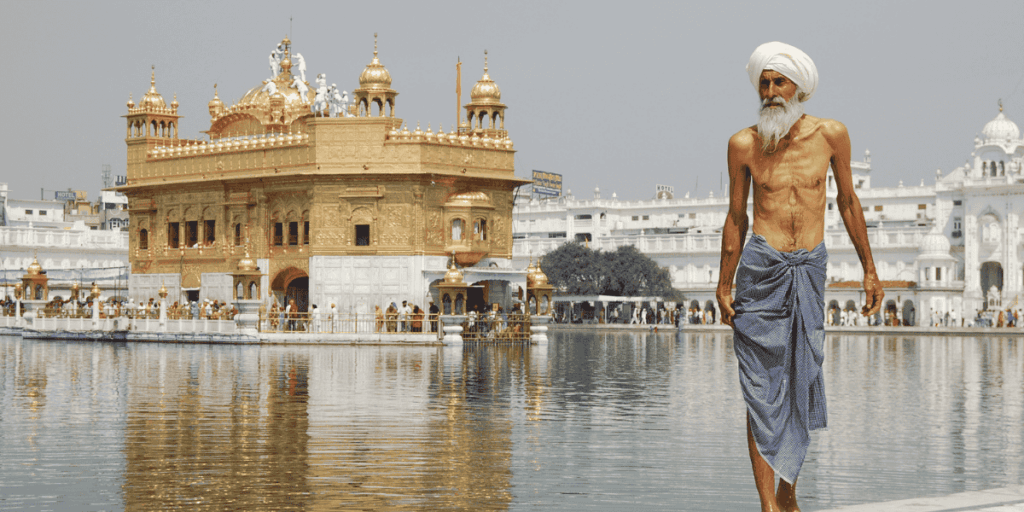
The structure and material used to make the temple comprise bricks, marble, and other materials beneath the gold. The craftsman used this blend of bricks, marbles, etc., to give the temple structural stability and artistic richness.
Amrit Sarovar, also called the “Pool of Nectar,” lies at the center of the Golden Temple and holds immense spiritual significance. People from every background come and put their feet in the Sarovar, teaching us unity. It is believed that the Sarovar waters, like the Ganga, provide divine teachings and spiritually cleanse the soul. Pilgrims participate in a sacred tradition of dipping in the Sarovar to purify both body and soul.
The Amrit Sarovar of the temple is made from Indian marble. Its water is pure and crystal clear, making it easy to see big fish inside it. The pure water of this Sarovar makes a person meditate and connect with their inner selves. The Amrit Sarovar gives equality, humility, and spiritual rejuvenation.
People say that the Harmandir Sahib is the heart of the Golden Temple and the “House of God”. The inner sanctum inside the Golden Temple has Guru Granth Sahib, the eternal Sikh scripture, placed under a canopy.
The daily rituals start with a melodious recitation of Gurbani. People come here daily to read and sing from the holy book of Guru Granth Sahib. Every person visiting the temple helps prepare and serve the food in the langar. This special temple is not just about the outer architectural marvel but also about the devotion, unity between people, and divine connection.
Imagine having a book that is a guide for your soul. The Guru Granth Sahib is a book for Sikh followers. It is not just words on pages but a living guide with wisdom, prayers, and teachings. Inside the Golden Temple, this special book sits in a place of honor.
Every day, people around the country gather to read from the Bible, which gives them peace. They recite the book word by word, sing its verses, and listen to its teachings. Reading the Bible is like having a conversation with something greater than yourself. The book teaches people essential things, like kindness, honesty, and helping others in every situation.
This Gurudwara is renowned globally for its expansive community kitchen, known as the Guru Ram Das Langar. This dining facility generously provides free meals to thousands of visitors daily, who sit on the floor to eat. Regardless of wealth, religious affiliation, gender, or any other factor, the Gurudwara serves food to all.
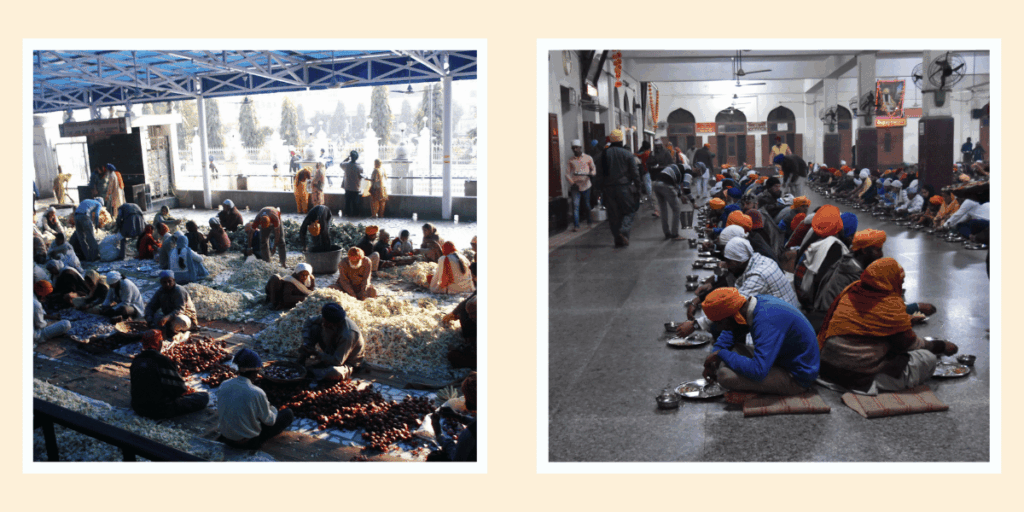
Harmandir Sahib, among the largest Sikh Gurdwaras, operates a free kitchen serving up to 100,000 individuals daily, focusing on vegetarian fare to cater to diverse dietary needs. This tradition of hospitality stems from the teachings of Guru Nanak Dev Ji in the 15th or 16th century, emphasizing equality and humanity over divisions of religion, caste, or gender.
To reach the heart of the temple, worshippers traverse a causeway over the surrounding pool. Sikhs may partake in a purifying bath in the water from the exterior platform, while temple staff carry buckets of water along the walkways to aid worshippers. Before entering, all guests must remove their footwear and cleanse their feet in a separate pool.
During the early 17th century, some Mughal emperors, like Jahangir, appreciated the growing influence of the Sikh community. However, later rulers, particularly Aurangzeb, saw the Sikhs as a threat, leading to hostility and the targeting of key Sikh centers, including Sri Darbar Sahib in Amritsar (also known as the Golden Temple).
In the 18th century, the temple suffered significant damage multiple times due to Afghan invasions. Despite these challenges, the Sikh community remained resilient and restored the Gurudwara after each attack.
Each time the temple was damaged, the Sikh community rallied to rebuild it. Maharaja Ranjit Singh, the founder of the Sikh Empire in the early 19th century, played a key role in restoring and beautifying the temple. Under his rule, the temple’s upper dome was covered in gold foil over copper, giving it the iconic appearance that earned it the name “Golden Temple.”
Under Ranjit Singh’s reign, Amritsar flourished as a hub of Sikh power and a center for trade, further cementing the city’s significance.
A defining feature of the Golden Temple is its Langar, a free community kitchen that provides meals to all visitors, regardless of religion, caste, or background. Guru Nanak Dev Ji, the founder of Sikhism, initiated this practice of offering food as a service to humanity, embodying equality and kindness.
The Golden Temple is not just a religious site; it’s a cultural and historical symbol of Punjab and India. Golden Temple architecture, spiritual atmosphere, and deep-rooted history draw millions of visitors from across the globe each year.
The Indian military conducted Operation Blue Star between June 1 and 8, 1984, severely damaging the Golden Temple. The aim was to remove militant Sikh leader Jarnail Singh Bhindranwale and his followers from the Golden Temple complex in Amritsar, Punjab. Prime Minister Indira Gandhi decided to launch the attack.
In July 1982, Harchand Singh Longowal, the president of the Sikh political party Akali Dal, invited Bhindranwale to reside at the Golden Temple to evade arrest. The government claimed that Bhindranwale subsequently turned the Golden Temple into an armory and his headquarters.
After negotiations with the militants failed, Indira Gandhi ordered the army to launch Operation Blue Star on June 1, 1984. The operation also involved attacks on other Sikh temples across Punjab. Military units and paramilitary forces surrounded the Golden Temple on June 3, 1984. Skirmishes began on June 5th, leading to a three-day battle that ended on June 8th. Following the operation, a “cleaning campaign” called Operation Woodrose was initiated across Punjab.
The Golden Temple, the holiest Sikh shrine, is a place of spiritual significance and communal harmony. Open to all, regardless of faith, caste, or race, the temple welcomes visitors to partake in its sacred rituals.
The Golden Temple embodies the Sikh principles of equality, inclusivity, and service to humanity. It is a place where people from all walks of life come together to seek spiritual solace and connect with their faith.
The good news is that the Golden Temple is open 24 hours a day, 7 days a week, so there’s no single “best” time to visit. However, sometimes it may be more suitable for you than others, depending on what you’re looking for in your experience.
Here’s a table of tourist spots near the Golden Temple:
| Tourist Spot | Distance from Golden Temple | Highlights |
|---|---|---|
| Jallianwala Bagh | 450 meters | Memorial for the 1919 massacre, with a museum showcasing the Indian independence movement. |
| Akal Takht | Within the complex | A Hindu temple dedicated to Goddess Durga, known as the “Silver Temple” for its architecture. |
| Partition Museum | 1 km | Dedicated to the history and human impact of the 1947 Partition of India. |
| Durgiana Temple | 1.5 km | Museum showcasing artefacts from the reign of Maharaja Ranjit Singh, including weapons and paintings. |
| Gobindgarh Fort | 2.5 km | Historic fort from the 18th century, featuring museums, cultural shows, and a light-and-sound show. |
| Maharaja Ranjit Singh Museum | 3.5 km | Museum showcasing artifacts from the reign of Maharaja Ranjit Singh, including weapons and paintings. |
| Wagah Border | 30 km | A historic fort from the 18th century, featuring museums, cultural shows, and a light-and-sound show. |
| Ram Tirath Ashram | 11 km | A historic fort from the 18th century, featuring museums, cultural shows, and a light-and-sound show. |
The Golden Temple in Amritsar symbolizes unity, community, and spirituality. It is Amritsar’s spiritual oasis, inviting people to immerse themselves in its serene Ambience.
The Golden Temple provides a multi-experience, attracting individuals to the recitation of the Guru Granth Sahib, the coolness and purity of the water of Amrit Sarovar, or the heartwarming Langar tradition. We can conclude that the temple made by the hardship of the craftsmen is a wonderful wonder. The teachings of the Guru have made this wonder a place of faith.
Read More:-
The Golden Temple, or Sri Harmandir Sahib, stands as one of the most revered Sikh gurdwaras in Amritsar, Punjab. Its origins trace back to the late 16th century when Guru Ram Das, the fourth Sikh Guru, began building the sacred pool, or Sarovar, and laid the foundation for the shrine. The structure was later completed under the guidance of Guru Arjan Dev, the fifth Sikh Guru, who also enshrined the first compiled version of the Guru Granth Sahib within its sanctum. This landmark has since become a spiritual and cultural symbol for Sikhs worldwide.
The Golden Temple is the primary gurdwara, or house of worship, in Sikhism and the most significant pilgrimage site for Sikhs. It is situated in the city of Amritsar in the state of Punjab, in the northwest of India.
The Golden Temple, or Harmandir Sahib, was founded in 1581 by Guru Arjan, the fifth Sikh Guru, in Amritsar, Punjab. It was designed as a spiritual center open to people of all faiths, symbolizing equality and humility. Maharaja Ranjit Singh adorned the temple’s sanctum with gold plating in the early 19th century. Over the centuries, it has become a sacred pilgrimage site and a symbol of Sikh heritage.
Inside the Golden Temple, you will find the Sikh scripture called the Guru Granth Sahib. Sikhs hold this holy book in utmost reverence, considering it their “eternal guru” and central to their religious ceremonies and rituals.
The Golden Temple, or Harmandir Sahib, is not part of the traditional Seven Wonders of the World. Rather, it is considered one of the Seven Wonders of India.
Yes, the Golden Temple is open 24 hours a day, including at night.
Yes, the Golden Temple is made of gold, as it is covered with 24-carat pure gold on its upper floors and domes. Approximately 750 kilograms of gold were used during its major renovation in the early 2000s, giving it the iconic appearance that led to its popular name.
The Golden Temple, also known as Harmandir Sahib, is situated in Amritsar, in the state of Punjab, India. It is the most sacred pilgrimage site in Sikhism and annually attracts millions of visitors from around the world.
The Golden Temple’s real name is Harmandir Sahib or Sri Harmandir Sahib, which translates to “The Abode of God.” The Sikh community also commonly refers to it as Darbar Sahib.