Success is about personal growth, finding balance between work and life, and making a difference in the world. Think about what truly matters to you.
What are your career goals that will change as you grow and try new things? That’s normal, and it’s a good thing. Flexibility helps you discover paths you might not have imagined.
Networking is about forming genuine relationships with mentors and peers. These connections can help you grow and even lead to surprising opportunities.
Table of Contents
Did you know that setting clear career goals can make you 42% more likely to reach them? But what are your career goals, and why define them? When you define your goal, you create a plan to stay motivated and focused. It’s a proven way to move forward with confidence. Whether you’re looking for a promotion, moving to a new industry, or working on personal growth, it will be easier to track progress if you have clear goals.
Whether you are a student looking at job options or a professional considering your next move, setting career goals gives your journey direction. Career goals are specific objectives that guide your learning, growth, and decisions during your work life. They can be as immediate as getting an internship this year or as long-term as becoming a company CEO. Defining your goals helps you stay focused, motivated, and true to your personal and professional values.
In this blog, you’ll find over 10 examples of career goals for different situations. You’ll also get simple, actionable tips to create and achieve your goals. Let’s work together to determine a career path that fits your skills, interests, and dreams. Read on to see your career goals that you can easily reach.
What Are Career Goals?
Career goals are specific objectives that guide your professional journey. They show what you want to achieve in your career, whether gaining specific skills, reaching a certain job title, working in a particular industry, or making a meaningful impact.
Types of Career Goals
1. Based on Timeframe
Short-Term Career Goals
You can reach these goals within a few weeks to 1 or 2 years. They serve as stepping stones toward your long-term ambitions.
Examples:
Completing an online certification course
Improving your presentation skills
Updating your resume or LinkedIn profile
Attending networking events
Long-Term Career Goals
These take several years, often 5 to over 10, and involve major milestones in your career.
Examples:
Becoming a department head or executive
Starting your own business
Earning a doctoral degree
Moving into a new industry
2. Based on Career Purpose
Performance-Based Goals
These goals aim to boost job performance and productivity.
Examples:
Increasing sales by 20% this quarter
Reducing project delivery time by 15%
Managing a significant project from start to finish
Skill Development Goals
These focus on gaining new skills or mastering existing ones.
Examples:
Learning advanced Excel functions
Mastering a programming language like Python
Becoming skilled in public speaking
Financial Goals
These relate to your earning potential or reaching financial milestones.
Examples:
Earning a specific annual salary
Saving enough to invest in higher education
Negotiating a raise or promotion
Educational Goals
These involve formal or informal education to advance your career.
Examples:
Completing an MBA
Attending professional workshops or webinars
Earning industry-specific certifications
3. Based on Development Area
Leadership Goals
These focus on taking on supervisory or strategic roles.
Examples:
Becoming a team leader within 2 years
Mentoring junior staff
Leading initiatives across different teams
Networking Goals
These target building professional relationships and increasing visibility.
Examples:
Joining a professional association
Attending 3 industry conferences each year
Connecting with 5 new professionals every month
Personal Development Goals
These combine personal growth with professional impact.
Examples:
Improving work-life balance
Building emotional intelligence
Managing stress effectively
Examples of Career Goals
Advance to a leadership position
Change careers and become an expert
Improve your networking skills.
Run a company.
Become a mentor and a thought leader.
Gain valuable skills, achieve a promotion, and earn a certification.
Experience career stability.
Measure performance and learn a new technology.
Create a career goal and gain an internship.
Focus on communication and improving processes.
Work on time management skills and increase your salary.
Manage or lead successfully.
Discover your career path.
Build your brand, earn another degree, and receive recognition for your expertise.
Why Having a Career Goal Matters
Having a clear career goal is more than just a good idea. It’s essential for personal and professional growth. Here’s why it matters:
Provides Direction and Purpose
Without a goal, your career may drift aimlessly. A career goal acts like a compass, guiding your actions, decisions, and efforts toward a clear future. It helps you understand:
What does success mean to you?
What roles or industries match your ambitions?
What steps to take next?
Example: To become a data scientist, you must focus on statistics, coding, and machine learning.
Boosts Motivation and Focus
Knowing where you’re headed makes you more likely to stay motivated. Career goals:
Inspire consistent effort.
Help you stay focused amidst distractions.
Encourage you to push past challenges.
Think of your goal as fuel that drives your daily efforts.
Supports Better Decision-Making
With a career goal in mind, it’s easier to:
Choose relevant jobs or projects.
Say no to opportunities that don’t fit.
Invest time and resources wisely.
Example: if your long-term aim is leadership, you might choose roles that offer managerial experience.
Improves Personal and Professional Growth
Career goals often require learning new skills, adjusting to changes, and seeking feedback. This leads to:
Continuous self-improvement.
Development of transferable skills.
Increased self-confidence.
Increases Career Satisfaction and Stability
Having goals makes your career feel meaningful. You’re not just working for a paycheck but building a future. This contributes to:
Higher job satisfaction.
A greater sense of achievement.
Long-term career stability and resilience.
Helps Measure Progress
Career goals provide a clear standard for success. You can:
Track how far you’ve come.
Adjust your strategy if needed.
Celebrate small wins along the way.
Progress tracking turns long journeys into manageable steps.
How to Achieve Your Career Goals
Setting goals is just the first step. Achieving them requires consistent action. Here are some tips to help you succeed:
Break it down. Divide big goals into smaller tasks.
Stay organized. Use goal-tracking apps or keep a career journal.
Find a mentor. Learn from someone who has already walked the path.
Stay flexible. Your goals may evolve; be ready to revise them.
Celebrate small wins. Acknowledge progress to stay motivated.
Pro Tip: Set monthly or quarterly career check-ins with yourself to track progress.
How to Set SMART Career Goals
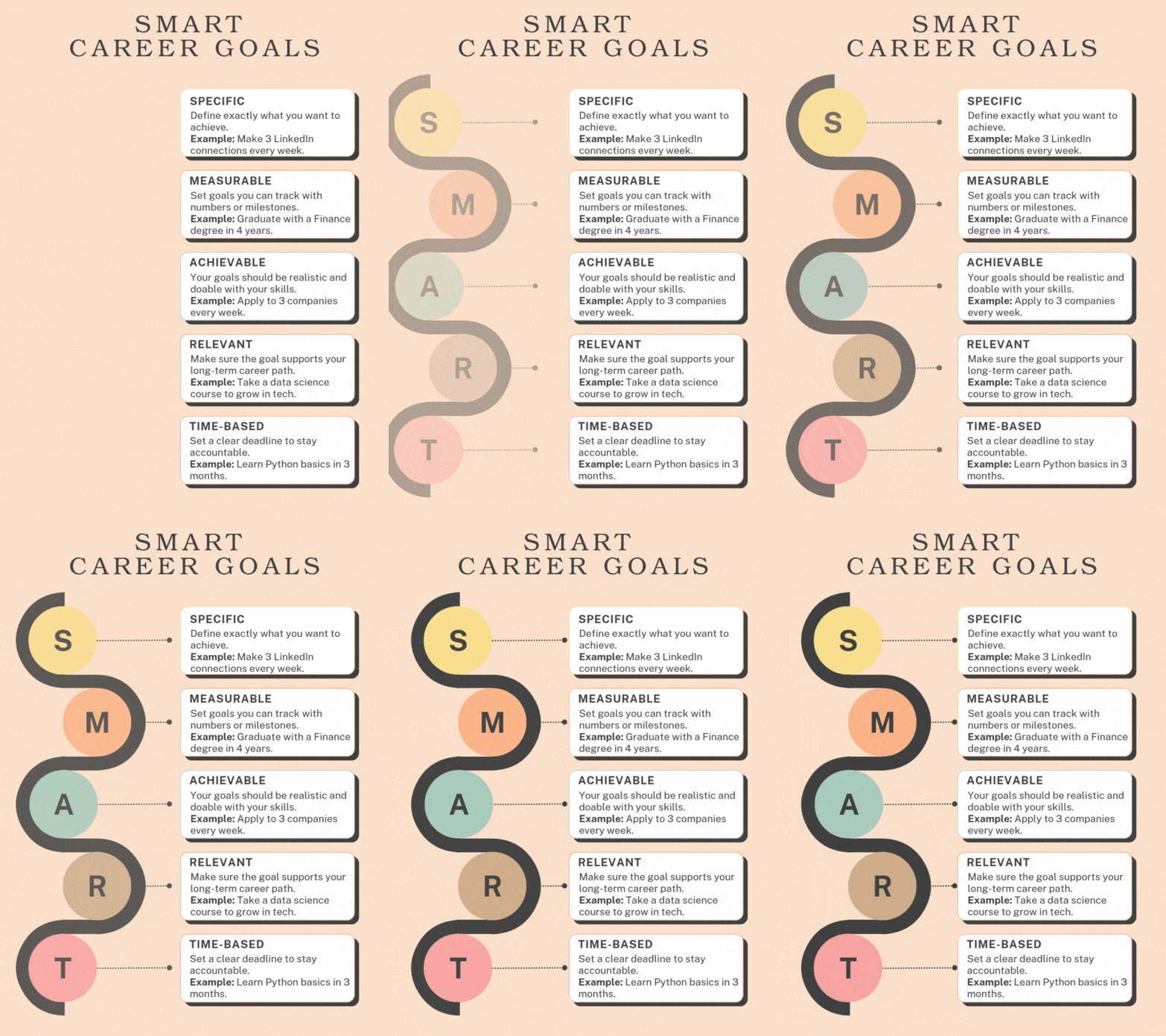
Setting clear goals is essential, but setting SMART goals makes them achievable. SMART stands for:
S – Specific: Define exactly what you want to achieve. Example: “I want to become a digital marketing manager in the healthcare industry.”
M – Measurable: Make sure your goal can be tracked. Example: “I will complete two certifications in 6 months.”
A – Achievable: Set realistic goals based on your skills and resources. Example: “I will apply to 3 companies each week.”
R – Relevant: Your goal should connect with your long-term ambitions. Example: “This course supports my career plan to enter data science.”
T – Time-bound: Set a deadline to stay accountable. Example: “I will learn Python basics in 3 months.”
You’re more likely to achieve your goals following this SMART structure. You can also track your progress along the way.
Career Goals Examples
Here are some career goals for every stage of your professional journey. Whether you’re just starting, looking to advance, or aiming for leadership, defining your career goals will help you stay focused and motivated. Setting clear short-term and long-term objectives ensures steady growth, enhances your skills, and opens doors to new opportunities.
1. Entry-Level Career Goals
When you first start your career, focus on building a strong foundation. At this stage, your goals should be developing your skills, gaining experience, and understanding your field. Defining what are your career goals early on will help you create a clear path toward growth. Prioritizing learning opportunities, networking, and hands-on experience ensures you build the expertise needed for long-term success.
Master the technical skills in your field. To stand out, focus on mastering technical skills related to your industry. For example, if you’re a software engineer, learn programming languages like Python or Java. If you work in marketing, get comfortable with tools like Google Analytics or SEO strategies.
Gain hands-on experience through internships or entry-level roles. Internships and entry-level jobs are great places to learn. These positions offer real-world experience, help you apply your knowledge, and build practical skills. They also allow you to network with professionals and open doors for future opportunities.
2. Mid-Level Career Goals
After gaining a few years of experience, your goals shift to growing into leadership roles and expanding your expertise. This stage is about solidifying your position and preparing for more responsibilities. Defining what are your career goals at this point helps you stay on track, whether it’s pursuing management training, mentoring junior colleagues, or taking on challenging projects to showcase your leadership potential.
Develop leadership skills and take on team management roles. To move into leadership, learn to manage people, delegate tasks, and solve problems. Taking on supervisory roles or volunteering to lead projects can help you develop these skills and show your team leadership ability.
Pursue advanced certifications or degrees to expand your knowledge. As a mid-career professional, you might want to specialize even further. For example, an IT professional could pursue certifications like AWS or CISSP, while someone in healthcare might consider a master’s degree. These credentials boost your knowledge and increase your credibility.
3. Senior-Level Career Goals
At the senior level, your goals are to significantly impact your organization or industry and leave a lasting legacy. Defining what are your career goals at this stage may include mentoring future leaders, driving innovation, or influencing company strategy. Whether it’s becoming a thought leader, expanding your network, or contributing to industry advancements, your focus is on making a meaningful difference.
Drive organizational growth by contributing to strategic decisions. Senior professionals often shape the future of their organizations. You might lead key initiatives, improve processes for efficiency, or help guide expansion. These efforts push the company forward and establish you as a key decision-maker.
Mentor and inspire the next generation of professionals. Sharing your knowledge with younger colleagues is rewarding. Mentoring helps you give back to the industry and strengthens your leadership abilities. It also positions you as a thought leader, solidifying your reputation in the field.
How to Answer “What are your career goals?”
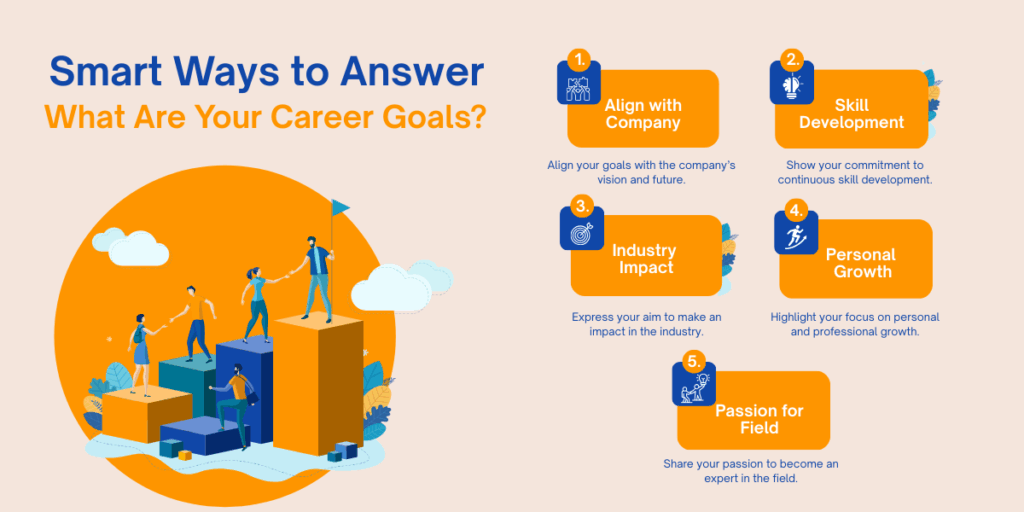
One of the fresher’s most common interview questions is about their career goals. Here are some practical ways to respond:
Align with the Company: “My immediate goal is to secure a position where I can use my skills in [relevant area] while learning from experienced professionals. In the long run, I want to grow into a leadership role where I can mentor others and drive innovation in the field.”
Focus on Skill Development: “My main career goal is continuously expanding my skill set. I’m particularly interested in developing my expertise in [specific skills relevant to the job], which I believe will be important for advancing my career in this industry.”
Emphasize Industry Impact: “I want to impact the [industry name] sector significantly. My goal is to work on projects that push the boundaries of what’s possible and contribute to major advancements.”
Highlight Personal Growth: “My career goal is to find a role that challenges me and offers opportunities for personal and professional growth. I’m excited about the chance to take on more responsibilities and develop my leadership skills over time.”
Express Passion for the Field: “My ultimate career goal is to become a recognized expert in [specific industry area]. I’m passionate about [aspect of the job] and aim to contribute meaningfully to the field through innovative solutions and thought leadership.”
Remember, when answering interview questions about your career goals, be honest, realistic, and enthusiastic about your chosen path.
Clear Goals Will Help You Grow!
Setting clear career goals is key to success. It provides direction, helps you track progress, and keeps you motivated. Defining your career goals allows you to break them into achievable steps, making growth more manageable. Clear goals also ensure your actions align with your passions and values, making long-term commitment easier and more fulfilling. A strong response to “What are your career goals?” highlights your long-term vision, skills, and how you plan to grow while contributing to the company’s success.
Remember to keep track of your goals often. As your ambition keeps changing, you can also decide on your goals. As your career keeps moving forward, your goals will shift as well. But if you can act on and reassess it, that will help you stay focused. By now you must have figured out what are your career goals. But remember that defining your career goals is not just about what you want to achieve but also about who you wanna become.
Align Your Career Goals with Your Brand
Every goal you set becomes part of your professional identity. Whether it’s your resume, LinkedIn profile, or elevator pitch, your career goals shape your brand.
Showcase your goals in your summary or bio sections.
Share your learning journey on social media, like LinkedIn.
Let your resume reflect a clear direction with relevant achievements.
Remember, the more your goals match your brand, the more confidently you can present yourself to recruiters and employers.
How to Talk About Career Goals in Interviews
In job interviews, you’ll often be asked, “What are your career goals?” Here’s how to respond:
Match your goals with the company’s mission.
Example: “My goal is to grow into a team lead role. I see this company offering strong mentorship.”
Show long-term thinking with short-term steps.
Example: “In the next two years, I want to master data analysis. This role will help me build those skills.”
Be honest but optimistic. Avoid being vague or overly ambitious.
Keep your answer focused, realistic, and relevant to the job you’re applying for.
Things to Avoid When Answering, “What are your career goals?”
When discussing your career goals in an interview, there are some common mistakes to avoid:
Being Too Vague: Avoid general comments like “I want to be successful” or “I hope to grow with the company.” These don’t give any real insight into your aspirations.
Focusing Solely on Money: While financial stability is essential, don’t focus on salary. Instead, highlight your desire for professional growth, skill development, and field contribution.
Setting Unrealistic Goals: As a newcomer, saying you want to be CEO in five years may seem naive or overly ambitious. Set realistic goals that demonstrate a clear understanding of how careers progress.
Neglecting Company Fit: Don’t talk about goals that don’t relate to the job or company you’re interviewing for. Always try to connect your aspirations with the opportunity you are considering.
Appearing Uncommitted: Avoid giving the impression that you view the job as merely a stepping stone. Having long-term goals beyond the current role is fine, but show genuine interest and commitment to the position you’re applying for.
Overemphasizing Personal Benefits: While personal growth matters, balance this by explaining how your goals will benefit and help the company succeed.
Lack of Flexibility: Don’t present your goals as permanent or unchangeable. Show that you’re willing to adjust them as you learn and grow in your career.
Failing to Explain the ‘Why’: Don’t just list your goals; explain why they matter to you. This adds depth to your answer and gives the interviewer insight into your motivations.
Comparing Yourself to Others: Avoid framing your goals to outdo colleagues or competitors. Focus on your growth and how you can contribute to the field.
Neglecting Immediate Goals: While long-term aspirations are essential, mention short-term goals that demonstrate you’re prepared to contribute immediately to the role you’re applying for.
Conclusion
Setting clear career goals isn’t just about planning; it’s how you gain control of your future. Whether you want to land your first internship, climb the corporate ladder, or start your own business, your goals serve as a personal GPS that guides every step.
Remember, your goals don’t need to be perfect; they just need to be meaningful. Start small. Stay flexible. Track your progress. Celebrate your successes. Most importantly, believe in your potential.
Now that you know how to create SMART goals, choose the right path, and match your ambitions with your personal brand, the next move is up to you. So grab a notebook, think about your passions, and write down your next big goal. Your future self will appreciate it.
Frequently Asked Questions (FAQ’s)
What are the career goals?
Career goals are specific objectives that individuals set to achieve in their professional life. They may include seeking promotions, acquiring new skills, transitioning to a different industry, achieving work-life balance, or pursuing further education. Setting clear career goals helps to focus efforts and measure progress towards professional aspirations.
What are your career goals for the next five years?
Over the next five years, I want to take on a leadership role. In this position, I can mentor others, help with decision-making, and develop my skills in [your field]. I plan to keep learning and achieving meaningful results.
What is your goal’s best answer?
My goal is to keep growing in my career by improving my skills, working on challenging projects, and making a meaningful contribution to my organization. I want to move into a leadership role where I can impact and help my team develop.
What are your career goals with answer?
My career goals include advancing my expertise in my field, taking on leadership responsibilities, and contributing to organizational growth. I aim to continuously learn, innovate, and make a meaningful impact through my work over the next few years.
What is the best answer to your future goal?
A good answer to “What are your future goals?” should be clear, specific, and related to the job and the company’s needs. It should show you understand your career path and how this position fits into it. Make sure to highlight both your short-term and long-term goals. It’s essential to be realistic, express a desire to learn and grow, and explain how your goals can help the organization.
Authored by, Rashmi Jaisal Career Guidance Expert
Rashmi is a Content Strategist who creates research-driven content focused on education, higher education policy, and online learning. She brings an energetic blend of expertise in technology, business, and literature, sparking fresh perspectives and engaging narratives. Outside of work, she’s a passionate traveler who enjoys journaling and curating visual inspiration through Pinterest boards.