Ophthalmology may be an exciting career choice if you are passionate about eye health and want to make a meaningful impact on people’s lives. Learning how to become an ophthalmologist involves a structured path of education, training, and hands-on clinical experience.
Becoming an ophthalmologist-a medical specialist in eye and vision care-requires extensive preparation, often spanning 12 to 14 years after high school. The journey typically begins with earning a bachelor’s degree, followed by four years of medical school. This is then supplemented by a one-year internship and a three-year residency in ophthalmology. Once you earn your medical doctorate (MD or DO), you can apply for a medical license and board certification to practice. Many ophthalmologists also choose to undergo one to two years of fellowship training to gain advanced expertise in subspecialties such as cornea, retina, or pediatric ophthalmology.
With this rigorous process, ophthalmologists are highly skilled in diagnosing, treating, and managing complex eye conditions. For example, Dr. Ananya Sharma, a board-certified ophthalmologist in Delhi, shared that her additional fellowship in pediatric ophthalmology not only expanded her career opportunities but also allowed her to contribute meaningfully to children’s vision care in underserved communities.
This comprehensive guide will walk you step by step through the qualifications, skills, and career opportunities you need to succeed in this rewarding medical field.
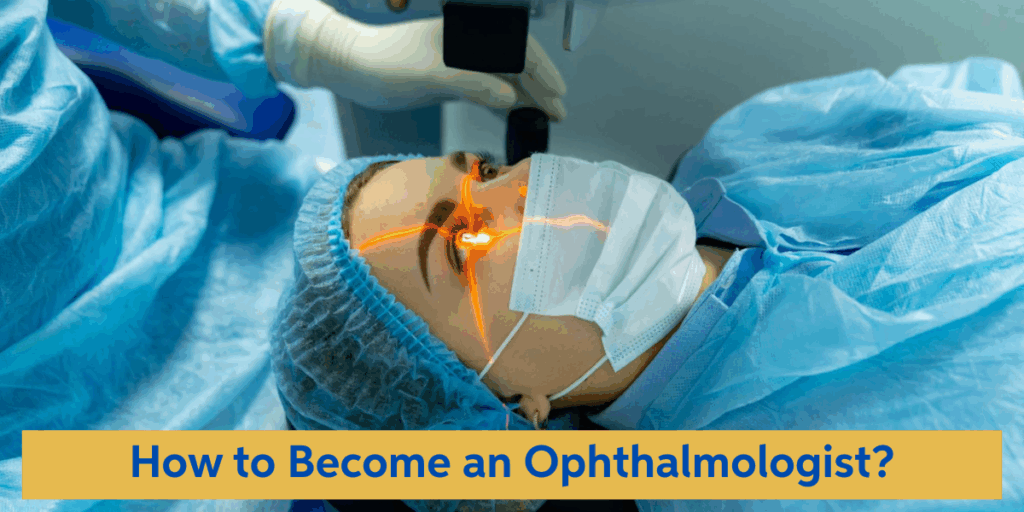
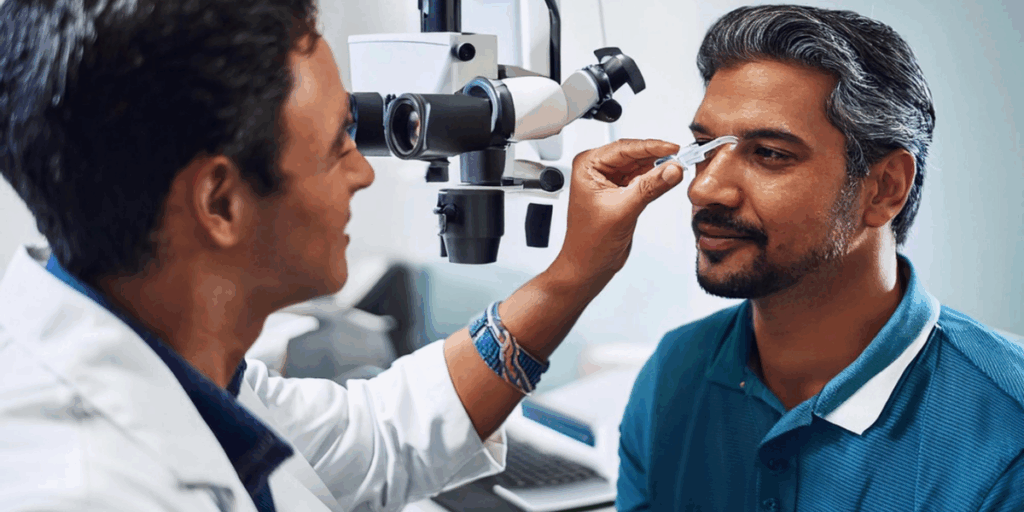
Wondering how to become an ophthalmologist in India? It’s a rewarding yet challenging career that requires years of rigorous education, hands-on training, and a strong commitment to patient care. Ophthalmologists are medical doctors who specialize in eye and vision care. They diagnose and treat eye conditions, prescribe medications, and perform complex surgeries to restore or improve eyesight.
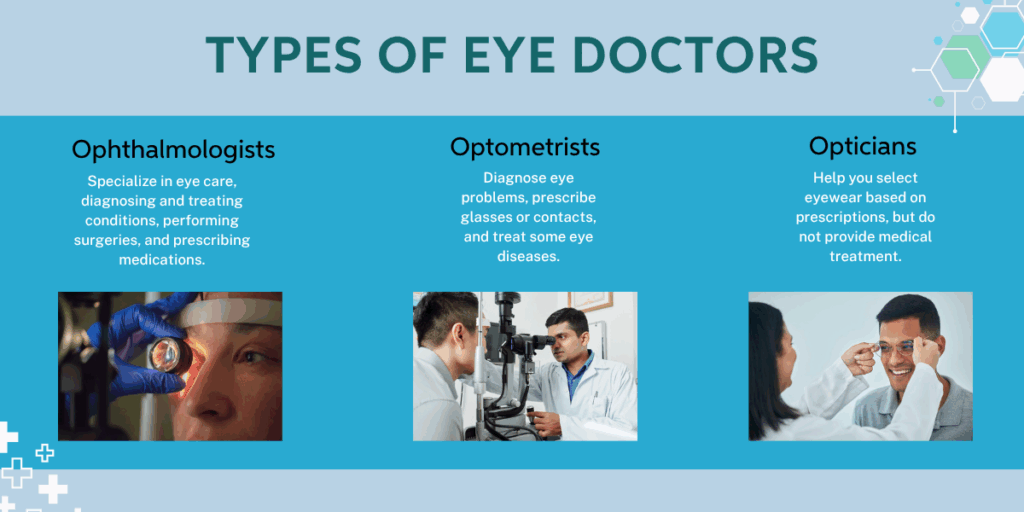
Unlike optometrists or opticians, ophthalmologists complete advanced medical training, allowing them to handle everything from regular checkups to critical eye diseases and surgical interventions. With an MD or MS in Ophthalmology, they provide complete eye care, often becoming trusted specialists in hospitals, private clinics, or research centers.
Case Example: Dr. Kavita Sharma, now a senior ophthalmologist at AIIMS Delhi, recalls her 12-year journey-from cracking NEET, completing MBBS, and then pursuing MS Ophthalmology. Today, she performs over 300 surgeries annually, including cataract and corneal transplants, showcasing how dedication and continuous learning shape success in this field.


An eye doctor has important tasks and responsibilities. Let’s see what they do:
Example: A patient with diabetic eye disease may require long-term monitoring, laser treatment, and counseling on managing diabetes-tasks only a trained ophthalmologist can provide effectively.
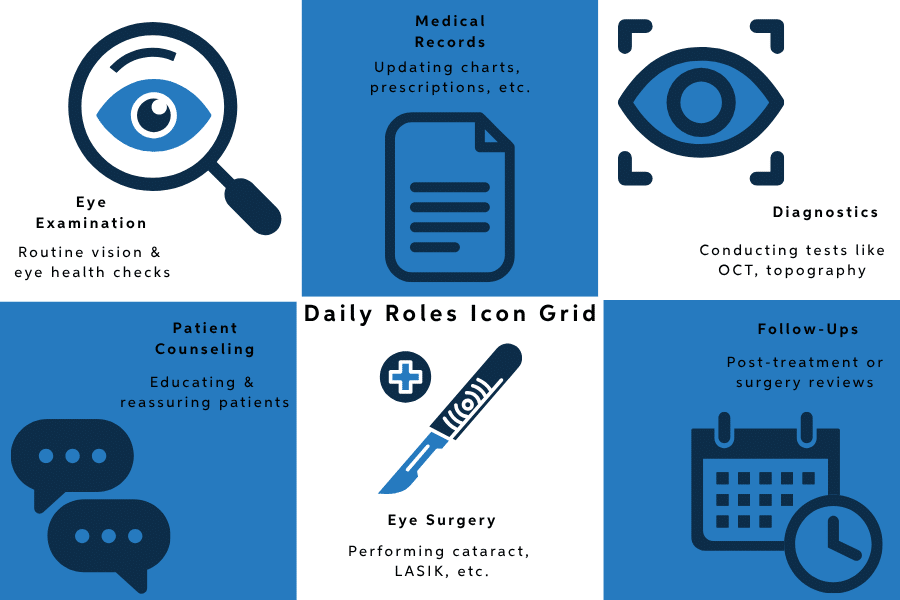
The daily tasks and responsibilities of an ophthalmologist can differ based on their level of experience and the specific organization they work for. Additionally, the scope of their role may change depending on their area of specialization. Here are some common daily activities an ophthalmologist might engage in:

Lets discuss the path how to become an ophthalmologist in India is as follows:
Register with the State Medical Council, where you earned your MBBS after finishing the internship.
The scope of becoming an ophthalmologist is vast and rewarding, both in India and internationally. With the increasing demand for eye care due to rising screen time, aging populations, and lifestyle-related vision issues, ophthalmology offers excellent career prospects.
Qualified ophthalmologists can work in:
Super-specializations such as cornea, retina, pediatric ophthalmology, or glaucoma further expand opportunities. Additionally, ophthalmologists can build careers in teaching, surgical innovation, and international health organizations. The career is not only stable and high-paying but also allows professionals to make a meaningful impact on patients’ lives.
Case Insight: According to WHO, nearly 2.2 billion people worldwide have vision impairment, which highlights the growing demand for qualified ophthalmologists.
Once you complete your 12th grade, you have the option to study different courses related to optometry. Here are some popular choices:
These courses give you the necessary skills and knowledge to work in optometry and help people care for their eyes.
To succeed as an ophthalmologist, professionals must master a blend of technical expertise and interpersonal abilities. Here are the essential skills needed to thrive in this field:
Strong communication is vital in delivering effective patient care. Ophthalmologists must clearly explain diagnoses, treatment options, and potential risks, enabling patients to make informed decisions. Empathy and active listening also play a critical role in understanding symptoms and building trust with patients from diverse backgrounds.
Ophthalmology demands extreme precision, especially during eye exams and surgical procedures. Even the smallest oversight can impact a patient’s vision. Whether prescribing lenses or performing delicate surgeries, ophthalmologists must maintain focus and accuracy to ensure the best outcomes.
Excellent customer service is a hallmark of a good ophthalmologist. Dealing with patients of all age groups and temperaments requires patience, compassion, and the ability to build rapport. A professional, reassuring demeanor enhances the patient’s experience and confidence in the care provided.
Ophthalmologists often juggle multiple responsibilities, including consultations, diagnostics, surgeries, and administrative work. Efficient time management ensures that each patient receives adequate attention without compromising the quality of care.
Ophthalmologists must interpret diagnostic tests and correlate them with patient-reported symptoms to arrive at accurate conclusions. Strong analytical skills are crucial in identifying conditions, crafting treatment plans, and responding effectively in urgent or complex cases.
Ophthalmologists can be found in both public and private healthcare settings. They might specialize in a single area or work in multi-specialty clinics and hospitals, whether government-run or privately owned. On average, they see around 100 patients each week, focusing on diagnosing and treating various eye conditions. Their work often involves long hours, and they may need to put in extra time for surgeries or to provide patient care.
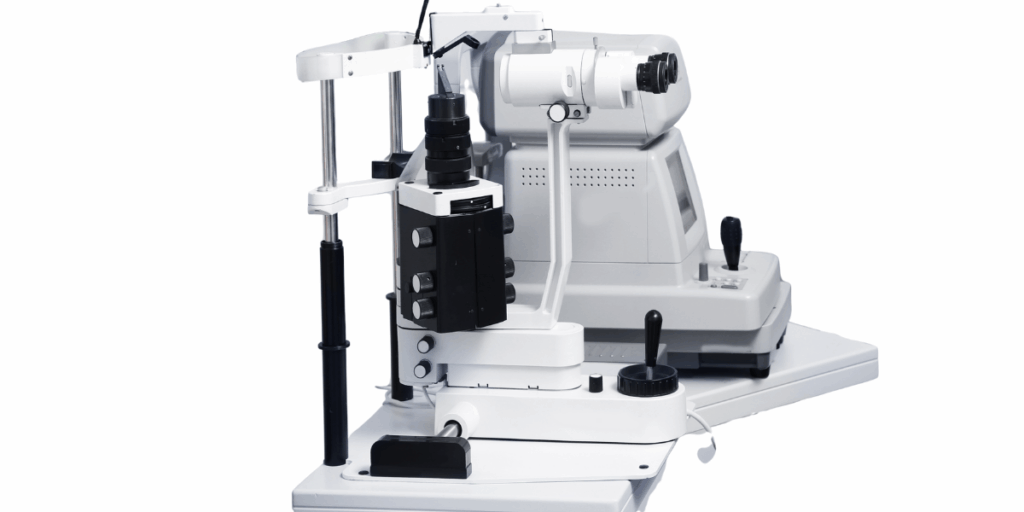
The job of an ophthalmologist is quite challenging and often requires them to be on call at all hours. They dedicate a significant portion of their time to caring for patients, while also handling administrative duties like keeping patient records, which can vary based on their level of experience.
Many things can affect how much money an eye doctor usually earns. Some of these factors include where they work, how long they’ve been working, the type of eye care they provide, what they specialize in, and how the healthcare system in their country works.
How to Become an Ophthalmologist, It’s important to know that the income numbers are estimates and may vary depending on location, demand, and other circumstances.
These figures provide a general idea of the income levels of ophthalmologists at different stages of their careers, but it’s important to remember that individual circumstances can vary. Salary figures source: ambitionbox
This helpful guide has provided valuable information for those interested in How to become an ophthalmologist. It covers the necessary education, training, and skills to pursue this rewarding career. By following the guidance outlined in this guide and continuously seeking professional development, aspiring ophthalmologists can embark on a fulfilling journey to provide exceptional eye care and make a significant impact on their patients’ lives.
Becoming the best ophthalmologist in India calls for commitment, a solid academic foundation, and continuous study of the eye. It’s important to remember that although the path may present challenges, the positive impact you’ll have on the lives of many individuals will make it all worthwhile. So, start today and pave the way for exceptional eye care!
Evaluate numerous career choices to choose the right career path for yourself. Dive in to our guide on Career Advice.
To become an ophthalmologist, you need to be dedicated and undergo significant education. Begin by earning a bachelor’s degree with an emphasis on pre-med courses. Then, proceed to medical school to obtain either an MD or DO degree. Following that, you’ll need to complete a four-year residency in ophthalmology. Some individuals may opt for additional specialization through fellowships. It’s important to gain practical experience, keep up with the latest developments in the field, and secure the required certifications along the way. Ultimately, a strong commitment to patient care and a passion for lifelong learning are vital for a thriving career in ophthalmology.
If you’re passionate about eye health and dedicated to continuous learning, ophthalmology is not just a career-it’s a calling.
Yes, an MBBS is necessary to pursue a career in ophthalmology.
Here’s how to become an ophthalmologist after 12th: First, after finishing 12th grade, you should go to a medical training college that is well-known and approved. There, you will study to get a medical degree called an MBBS. How to Become an Ophthalmologist after completing the MBBS program, you can take entrance exams for ophthalmology to study it in more detail. You can choose to do either MS or MD in Ophthalmology. You also need to finish a training program and get the right qualifications and licenses.
Becoming an ophthalmologist typically requires 11 to 12 years of study and training. How to Become an Ophthalmologist includes obtaining an MBBS degree, a postgraduate degree in optometry, and an MBBS degree again. It is also necessary to complete a residency program to gain hands-on experience. The duration may vary slightly depending on individual circumstances and specific educational programs.
The highest degree in ophthalmology is typically a Doctor of Medicine (MD) or a Doctor of Osteopathic Medicine (DO), followed by a residency in ophthalmology. Additionally, some ophthalmologists may pursue fellowship training in subspecialties.
Yes, ophthalmologists can pursue further specialization through fellowships in various subspecialties, such as cornea, glaucoma, or oculoplastic. How to Become an Ophthalmologist involves not only completing an MBBS, followed by a postgraduate degree in ophthalmology (MS or MD), but also the opportunity for advanced training in specific areas of eye care.
It typically takes around 12-14 years to become an ophthalmologist. This includes completing an MBBS (5.5 years), followed by an MD/MS in Ophthalmology (3 years), and a residency/fellowship program (3-5 years).
No, to pursue a career in ophthalmology, you need to complete an MBBS degree first, which is a basic requirement for medical specialization in India.
Yes, ophthalmologists generally earn well. Their income can vary based on factors such as experience, location, and type of practice, but they typically have a lucrative career.
Ophthalmology residency typically lasts for 3 years.
To become an ophthalmologist from an optometrist, you’ll need to:
1. Complete a full medical degree (MBBS).
2. Successfully complete the National Eligibility cum Entrance Test (NEET-PG).
3. Secure a residency position in ophthalmology through the Medical Counselling Committee (MCC) process.
The fees for ophthalmology courses vary significantly based on the institution. For MBBS, it can range from ₹10,000 to ₹1,00,000 per year in government colleges and much higher in private colleges. For MD/MS in Ophthalmology, the fees range can be similarly wide.
No, NEET is mandatory for admission to undergraduate medical courses in India, including ophthalmology.