
Are you interested in airplanes, airports, and aviation? A BSc in Aviation could be your entry point to an exciting career. As India’s aviation sector grows quickly in 2025, there is a rising demand for skilled professionals who understand the science, technology, and management behind flight operations.
This degree leads to various roles, including pilot training, air traffic control, airport management, and airline operations. In this guide, you will find everything you need to know about the B.Sc. Aviation course: eligibility, curriculum, top colleges, career prospects, and tips to help you succeed in the aviation industry.
| Degree | Bachelor of Science in Aviation |
| Level | Undergraduate |
| Course Duration | 3 years |
| Semesters | 6 |
| BSc Aviation Eligibility | Minimum 50% aggregate in 10+2 with Maths, Physics, and English as main subjects |
| BSc Aviation Admission Criteria | Merit-Based + Entrance Exams |
| BSc Aviation Fees | INR 1,05,000 – INR 2,03,000 |
| BSc Aviation Salary | INR 5 LPA – INR 6.5 LPA |
| BSc Aviation Colleges | NMS University Indira Institute Aircraft Engineering VELS Institute of Science, Technology, and Advanced Studies |
| BSc Aviation Entrance Exams | JET NPAT BHU UET CUET SUAT |
| BSc Aviation Jobs | Pilot Aviation Line Technician Flight Test Engineer Cargo Manager Service Maintenance Engineer Flight Attendant |

The BSc Aviation course helps students develop a wide range of skills essential for a successful career in the aviation industry. Through a mix of theoretical learning and practical training, students gain technical expertise in aircraft operations, navigation, and maintenance. They also learn about aviation safety regulations, flight planning, and air traffic control, which are crucial for ensuring smooth airline operations.
Apart from technical knowledge, the course focuses on building important soft skills like communication, teamwork, and problem-solving. Students develop strong decision-making abilities, leadership qualities, and time management skills, which help them handle challenges in real-world aviation scenarios. The program also enhances analytical thinking and attention to detail, both of which are vital in aviation careers. With these skills, graduates can explore various opportunities in professional piloting, aviation management, and aerospace industries, making them well-prepared for the dynamic and ever-evolving aviation sector.
Candidates can check a general outline of the admission process for BSc Aviation courses in India below:
BSc Aviation offers a diverse range of subjects designed to educate and inspire students in the field of aviation. The course provides a strong foundation in essential concepts, ensuring students gain the knowledge and skills needed for a successful career. With a mix of theoretical and practical learning, the program prepares students for various roles in the aviation industry.
The coursework covers a wide range of topics, including physics, mathematics, and general science, which are crucial for understanding aircraft operations and aerodynamics. These subjects help students develop analytical and problem-solving skills, essential for handling real-world challenges in aviation. By studying these core areas, students gain a deeper understanding of aviation technology, safety regulations, and management principles, making them well-equipped for future opportunities in the industry.
Here is how the topics are spread out –
The first two semesters start with the basics. The year’s focus is on the basics of maths, physics, and science. As communications is an essential part of education, the first year also includes English.
| Subjects. |
| Aviation Mathematics. |
| Aviation Physics (Part 1). |
| Aviation Science (Part 1). |
| Indian Heritage and Culture. |
| English (Part 1). |
| Aircraft Awareness and Simulator Practicals. |
| Second Language Paper (Part 1). |
| Aircraft Awareness and Simulator Practicals. |
Year 2 focuses on a deeper study of aviation, physics, and science. Students learn the basics of computers and English.
| Subjects. |
| Aviation Physics (Part 2). |
| Aviation Science (Part 2). |
| English (Part 2). |
| Computer Applications in the Aviation Industry. |
| Second Language Paper (Part 2). |
| Aviation English Computer Practicals. |
| Environmental Science. |
| Aviation English Computer Practicals. |
The final year includes the scientific and technical aspects of the course. The focus is physics, science, air navigation, and plane maintenance.
| Subjects. |
| Aviation Physics (Part 3). |
| Aviation Science (Part 3). |
| Aviation Physics (Part 4). |
| Aircraft Ground Handling and Safety Practicals. |
| Aviation Science (Part 4). |
| Aircraft Inspection Procedures. |
| Air Navigation and Regulation. |
| Aircraft Inspection Procedures. |
Choosing the right college for a BSc in Aviation is crucial for building a strong foundation in the field. Many top colleges offer this program with a well-structured curriculum that combines theoretical knowledge and hands-on training. These institutions provide modern facilities, experienced faculty, and industry exposure to help students gain practical skills in aviation operations, aircraft maintenance, and air traffic control.
Leading aviation colleges focus on key subjects like aerodynamics, navigation, flight safety, and aviation management. They also offer internship opportunities and partnerships with airlines, allowing students to gain real-world experience. A good aviation college ensures that graduates are well-prepared for careers as pilots, aviation managers, or aerospace specialists. By choosing a reputed institution, students can enhance their learning experience and improve their job prospects in the competitive aviation industry.
| College Name | Overview | Average Fee | Average CTC | Top Recruiters |
| NIMS University, Rajasthan. | With affiliation from ASSOCHAM, offering PhD and undergraduate level degrees in all popular streams. | INR 1,05,000. | INR 5,00,000. | IBM. Ericsson India Pvt. Ltd. HCL. |
| VELS Institute of Science, Technology and Advanced Studies, Chennai. | This university offers all types of UG, PG, and doctoral degrees in almost 14 different fields. The campus is spread over 30 acres of land. It is one of the top 10 private engineering colleges in Tamil Nadu. | INR 2,30,000. | INR 6,00,000. | HindustanAeronautics. Camabata Aviation. SpiceJet. |
| Indira Institute of Aircraft Engineering, Pune. | Leading private institute offering aircraft maintenance engineering education in Aviation. | INR 4,30,000. | INR 6,50,000. | Airports Authority of India. HindustanAeronautics.Jet Airways. |
| Pune Institute of Aviation Engineering, Pune. | Live practicals, in-house aircraft training modules, and a nationally-acclaimed schedule. | INR 4,25,000. | INR 3,00,000. | Jet Airways.Hindustan Airlines. |
| Hindustan Institute of Technology and Science, Chennai. | Highly acclaimed private university with the broadest selection of undergraduate and graduate degrees. | INR 2,59,000. | INR 5,00,000. | Urja Net. Adani |
BSc Aviation graduates have numerous career opportunities both within and beyond the aviation industry. They can choose to enter the workforce immediately after graduation or pursue higher education to specialize further in aviation. Higher studies allow graduates to enhance their knowledge, improve their career prospects, and secure higher-paying positions in the industry.
The two leading fields of education for BSc Aviation graduates are as follows.
MSc in Aviation
MSc in Aviation is a postgraduate degree designed for students who want to gain a deeper understanding of the aviation industry. This program builds on the concepts learned during the BSc Aviation course and provides advanced knowledge in areas such as flight operations, aerodynamics, aviation safety, and air traffic management. Students also get exposure to research and technological advancements in aviation. Completing an MSc in Aviation opens up career opportunities in aviation research, airline operations, airport management, and aviation consultancy.
MBA in Aviation Management
An MBA in Aviation Management is a specialized business degree that focuses on the administrative and industrial aspects of aviation management. This course equips students with essential management skills, including leadership, strategic planning, finance, and marketing, all tailored to the aviation industry. It prepares graduates for managerial roles in airlines, airport authorities, aviation consulting firms, and logistics companies. An MBA in Aviation Management helps professionals take on leadership positions, ensuring smooth airline operations, business development, and efficient airport management.
BSc Aviation graduates enter an industry filled with numerous opportunities at all service levels. Fresh graduates often receive job offers with competitive salaries soon after completing their studies. The aviation sector provides a wide range of career paths for BSc Aviation graduates, allowing them to explore various roles in both technical and managerial positions.
Leading industries hiring BSc Aviation graduates include:
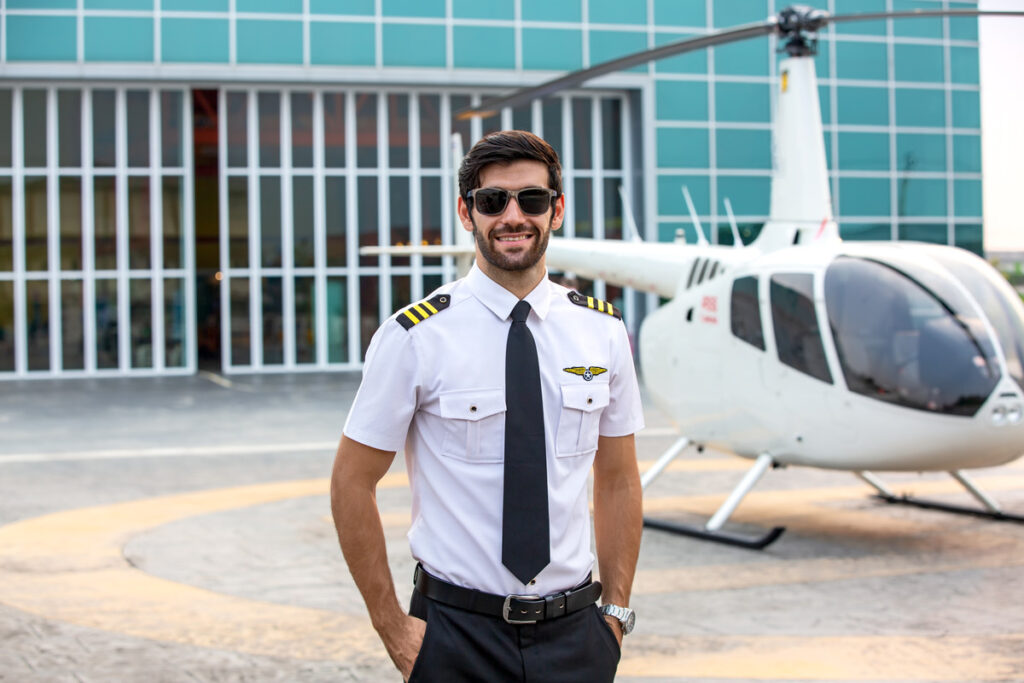
Pilots, also known as aviators, operate an aircraft. The responsibilities of a pilot include, of course, flying planes. They also analyze flight plans, understand routes and weather conditions, and calculate vehicle fuel requirements. To become a pilot, one needs to complete the training hours. Pilots must also pass mandated tests and get an industry-specific license with certification.
Flight test engineers are in charge of the flight’s safety. They oversee the buildup and engineering of an aircraft and perform operations on prototypes. Their duties include preparing test planes, working with engineers, and testing aircraft sensors and recording systems. They must document the aviation results of every flight.
Service maintenance engineers install and maintain equipment on an aircraft and conduct routine maintenance checks. Job duties include looking after the servicing and upkeep of planes. They also work with pilots and engineers to weed out possible issues with the machinery.
Average Annual Salary: INR 4,00,000.
An aircraft maintenance engineer performs repairs on planes. They are responsible for the maintenance of aircraft machinery. Job duties include diagnosing the structural and technical deformities of an aircraft. They also conduct crucial repairs on the system. Added duties include checking the aircraft’s mechanic and hydraulic systems. They schedule routine updates in the system.
Operations managers oversee the day-to-day functioning of the aircraft. They are responsible for checking a business’s products and services. These individuals ensure quality control in the areas of purchasing, manufacturing, and storage. They analyze lapses in performance and improve the aviation company/team’s business processes.
| Air India | Go Air |
| Vistara | Yatra |
| Spice Jet | Airbnb |
| Air Asia | Airport Authority of India |
Choosing a B.Sc. in Aviation is a smart move for anyone who loves flight and wants to join one of India’s most exciting industries. This program combines theory and practical training. Graduates get ready for great jobs in airlines, airports, logistics, and aviation management.
Staying updated with current industry trends, earning relevant certifications, and developing strong communication skills will help you attract employers. As the aviation sector keeps growing, your B.Sc. in Aviation can open doors to a future full of opportunities, adventure, and professional success in 2025 and beyond.

Do you enjoy sharing knowledge? Sign up to become a Q&A expert at Chegg; earn money by answering questions from students worldwide! Work anywhere, at any time, at your convenience. You can get global academic exposure and meet experts from diverse fields. Build a strong peer network and a great career trajectory.
BSc Aviation is a three-year undergraduate program. It covers aviation science, air navigation, meteorology, and management skills for the aviation industry.
For example, a student learns both flying theory and airport operations in the program.
Tip: Make sure the college is approved by the DGCA (Directorate General of Civil Aviation).
Students must finish 10+2 with Physics and Mathematics, usually with at least 50 to 60% marks.
Example: A Class 12 PCM student with 65% can apply for the course.
Tip: Start reviewing Physics and Maths early. They are the foundation of aviation studies.
Graduates can work as pilots, flight attendants, ground staff, air traffic controllers, or in aviation management.
For example, a BSc Aviation graduate may be hired as a flight operations officer at an airline.
Tip: To improve job opportunities, gain internships in airports or airlines.
Freshers can earn ₹3 to 6 LPA. Experienced professionals, like pilots and managers, can earn much more.
For example, a ground staff officer earns about ₹4 LPA, while pilots earn significantly more with experience.
Tip: Build strong communication skills; they are very valuable alongside technical knowledge.
Some well-known institutions include Hindustan Institute of Technology & Science in Chennai, Bombay Flying Club in Mumbai, and Presidency University in Bangalore.
For example, a student from HITS Chennai got a job in an airline as ground operations staff.
Tip: Always look at placement records before selecting a college.
BSc Aviation provides wider career choices in operations, management, and basic flying. In contrast, pilot training mainly aims at getting a license.
For example: a student who does not take pilot training can still find a role in aviation management after earning a BSc in Aviation.
Tip: If you wish to be a pilot, consider combining a BSc in Aviation with DGCA-approved pilot training.