

Summary
- Outsourcing data annotation works well for high-volume, well-defined tasks that don't need specialist domain knowledge; it stops working once a wrong label gets expensive or the task needs judgement a generic vendor isn't staffed for.
- A widely cited 2008 study found non-expert crowdworkers matched expert-level labels closely on well-defined language tasks, real evidence that outsourcing isn't automatically a quality compromise, for the right kind of task.
- The decision doesn't have to be made once for a whole project; most mature programmes split it task by task and end up running a hybrid rather than picking one extreme.
- Before signing with a vendor, ask about reviewer background, how disagreement between reviewers gets measured and resolved, and how annotators themselves are sourced and treated, not just the price per item.
- Chegg's expert network is built for the domain-specific, judgement-heavy slice of this decision, not positioned as a one-size-fits-all alternative to a generalist vendor.
Data annotation outsourcing makes sense when the work is high-volume, well-defined, and doesn’t depend on expertise your team would need months to build. It stops making sense the moment a wrong label costs more than any time or money outsourcing saved, which happens more often than most vendor pages let on.
Most content written on this question argues one side of it: outsourcing vendors arguing for outsourcing, in-house tooling vendors arguing for keeping it in-house. This article covers both halves honestly, when sending annotation work to an outside team is the right call, when it isn’t, and the handful of questions that actually separate the two.
What “data annotation outsourcing” actually means
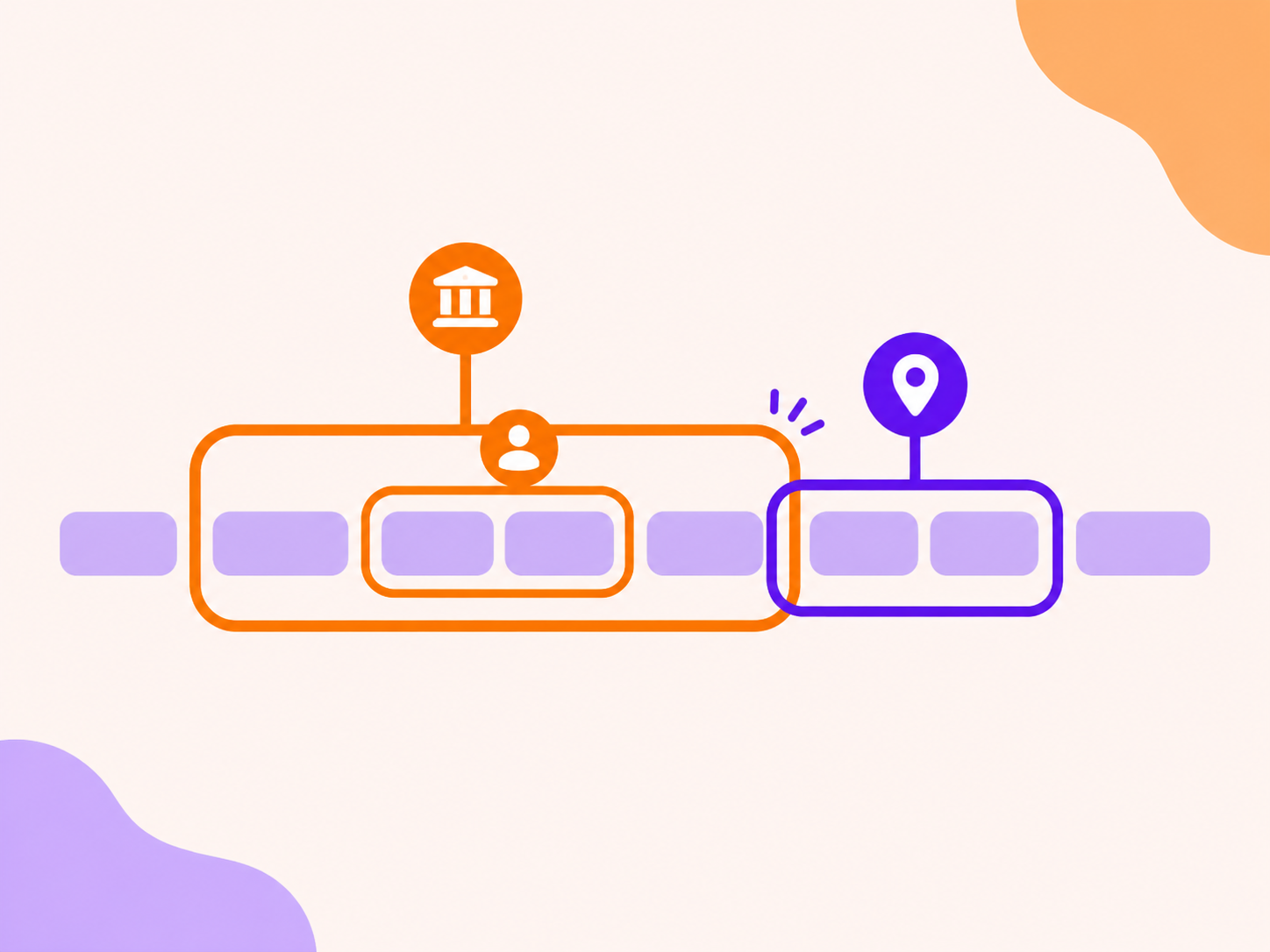
Outsourcing data annotation means paying an external team, a managed service, a crowdsourcing platform, or an expert network, to label and tag your data, rather than hiring and training reviewers in-house. Few organisations actually sit at either extreme. Most end up somewhere on a spectrum, outsourcing part of the work and keeping the rest close, once they’ve worked out which parts of the job genuinely need which approach. What’s commonly sold as data annotation outsourcing services spans everything from basic classification work to highly specialised review, so the label on a vendor’s homepage says little on its own about which end of that range they actually cover.
When outsourcing data annotation makes sense
Four situations make outsourcing a genuinely good call, not just a cheaper one.
- The work is high-volume and genuinely unambiguous. A clear instruction with little room for judgement, classifying support tickets by category, tagging product images by colour, scales well with an outside team precisely because there’s little room for the kind of call that needs deep context nobody handed them.
- You need capacity you don’t have, and won’t need permanently. A one-off dataset build or a seasonal spike in volume rarely justifies hiring and training an in-house team you’ll then have to keep busy once the spike passes.
- The task doesn’t require a specific professional background your own team would take months to build. General sentiment tagging and basic image classification don’t usually need a reviewer with formal domain training behind them.
- Keeping the work in-house would pull your own team away from what they’re actually there to do. Annotation is rarely the core skill of a product or ML team; outsourcing the mechanical part of it frees that team for the part only they can do.
There’s real research behind the first point specifically, not just intuition. A widely cited 2008 study tested non-expert crowdworkers against existing expert-labelled benchmarks across five language tasks and found their labels agreed closely with the expert gold standard on most of them, closely enough that training a model on the non-expert labels performed about as well as training it on the expert ones (Snow, O’Connor, Jurafsky & Ng, 2008). The result holds specifically for tasks that are genuinely well-defined. It’s one of the better pieces of actual evidence that outsourcing isn’t an automatic quality compromise, provided the task is the kind this result describes.
When outsourcing doesn’t make sense
The same study that supports outsourcing for well-defined tasks is also the clearest argument against outsourcing the ones that aren’t: the agreement it found held for tasks with little ambiguity, not for every task. Four situations where keeping the work closer tends to pay off:
- The data is domain-specific enough that a wrong label is expensive. Medical imaging, legal documents, and financial data all carry a real cost when a reviewer without the right background makes a confident, wrong call, and that cost usually surfaces later, as rework, not at the point the label was first applied.
- The task genuinely requires judgement, not just pattern-matching. Robotics and multimodal data, synchronising sensor streams and judging what a camera feed and a LiDAR scan are jointly describing, needs reviewers who understand the domain well enough to catch cases a generic instruction sheet doesn’t anticipate.
- Content and context need real cultural or linguistic judgement. Moderating content for tone, intent, or regional nuance is a different skill from tagging an image, and a vendor built around volume rarely staffs for it.
- Data sensitivity or IP concerns make an external handoff a real risk, not a hypothetical one. Proprietary data, regulated data, or anything that needs strict access control raises the bar for who gets to see it before a single label is ever applied.
Robotics and multimodal data is a useful example because the failure mode is specific: sensor streams that look fine individually can still be mislabelled relative to each other by a reviewer who doesn’t understand how the sensors relate.
Moderating content is the clearer example on the judgement side: the same phrase can be entirely fine in one context and genuinely harmful in another, a distinction no fixed instruction sheet fully covers.
None of this means outsourcing fails on these tasks outright. It means a generic, volume-optimised vendor is the wrong fit for them, regardless of price. The same outsourcing decision that works well for a simple classification task can go badly wrong applied unchanged to a specialised one.
In-house vs outsourcing: a quick way to decide
The decision is rarely all-or-nothing, and it doesn’t need to be made once for an entire project. It can be made task by task, using the same four questions each time:
- High-volume and genuinely unambiguous? Outsource it.
- Needs a specific professional background, medical, legal, technical? Keep it in-house, or use an expert network built for that domain specifically, not a generalist vendor.
- Spiky or one-off volume? Outsource rather than hiring a team you’ll struggle to keep busy once the spike passes.
- Is a wrong label expensive and hard to catch after the fact? Build in a layer of domain-matched review regardless of who does the first pass.
What to ask before signing with an outsourcing vendor
Any data annotation outsourcing company worth signing with can answer a short, concrete list of questions, the kind that filters out most of the risk before a contract is signed.
- Do your reviewers have the specific background this task needs, not just general annotation experience?
- How do you measure agreement between reviewers, and what happens when they disagree?
- What does your quality-control process actually check, and how often?
- How are your annotators sourced and treated? A credible vendor can answer this with specifics, pay structure, working conditions, not just a general reassurance.
The second question is worth pushing on specifically, because an answer that measures agreement between reviewers is answering a real question, not giving a reassurance. A vendor with no real process for catching and resolving disagreement is a real risk to the project, regardless of what they charge per item.
That fourth question matters for a reason beyond ethics. Partnership on AI, a coalition that includes several major AI labs, publishes a set of sourcing guidelines built specifically around fair pay and working conditions for data enrichment workers (Partnership on AI, Data Enrichment Sourcing Guidelines). A vendor with nothing useful to say when asked about this usually hasn’t thought carefully about the rest of their quality process either; the two tend to track together in practice, not because one causes the other, but because both come from the same underlying level of operational care.
One more thing worth knowing before comparing proposals: whether a vendor calls this work “labelling” or “annotation” tells you nothing useful on its own. What matters is whether they can answer the questions above with specifics, not which word is on their homepage.
A quick example
Say a product team needs two different batches of data labelled: ten thousand user-submitted photos tagged by which product category they show, and two hundred clinical scan images that need a diagnosis-relevant region marked. The first is the outsourcing case: clear categories, low ambiguity, a volume an in-house team would struggle to clear quickly without pulling people off other work. The second isn’t, not because two hundred is a small number, but because getting the marked region wrong on even a handful of those scans is a meaningfully worse outcome than getting a product photo mistagged, and nothing about outsourcing changes that arithmetic.
The mistake worth avoiding isn’t outsourcing either task on its own; it’s applying the same vendor, the same instruction sheet, and the same quality bar to both, because the two tasks don’t actually carry the same risk. Treating them identically because they’re both technically “annotation” is where the real cost shows up later, not in either decision taken by itself.
The hybrid model most teams actually land on
In practice, few teams pick a single answer and stop there. The pattern that shows up repeatedly: outsource the high-volume, well-defined slice of the work to keep cost and turnaround predictable, and route anything domain-specific, sensitive, or judgement-heavy to a smaller team with the right background, whether that’s in-house or an outside expert network built for exactly that purpose. The split isn’t fixed either; it tends to move as a project matures, the easy cases get handled quickly, and what’s left over is disproportionately the harder judgement calls that justify keeping a smaller, more specialised layer in place even after the bulk of the volume has been cleared.
How Chegg fits into this decision
Chegg doesn’t try to be the generalist vendor for every type of annotation work, and doesn’t position itself that way. The network is built around subject-matter experts matched to the domain a project actually needs, medical, legal, technical, rather than a single generalist reviewer pool asked to handle everything that comes in.
That’s a deliberate answer to the “when it doesn’t make sense” half of this article. For high-volume, well-defined work, a generalist vendor is often the right, cheaper call, and it’s worth saying that plainly rather than pretending otherwise. For the harder slice, where domain expertise and measured reviewer agreement actually matter, that’s the part Chegg is built for.
Key takeaways
- Outsourcing data annotation works well for high-volume, well-defined tasks that don’t need specialist domain knowledge; it stops working once a wrong label gets expensive or the task needs judgement a generic vendor isn’t staffed for.
- A widely cited 2008 study found non-expert crowdworkers matched expert-level labels closely on well-defined language tasks, real evidence that outsourcing isn’t automatically a quality compromise, for the right kind of task.
- The decision doesn’t have to be made once for a whole project; most mature programmes split it task by task and end up running a hybrid rather than picking one extreme.
- Before signing with a vendor, ask about reviewer background, how disagreement between reviewers gets measured and resolved, and how annotators themselves are sourced and treated, not just the price per item.
- Whether a vendor calls the work “labelling” or “annotation” isn’t a meaningful signal either way; whether they can answer the questions above with specifics is.
FAQs
Is outsourcing data annotation cheaper than doing it in-house?
Usually, yes, for high-volume, well-defined work, where the hiring, training, and management overhead you avoid outweighs a vendor’s margin. For highly specialised or sensitive data, that calculation often flips once rework from mismatched expertise gets factored in.
What’s the biggest risk of outsourcing data annotation?
Mismatched expertise on tasks that genuinely needed it: generic reviewers applying a one-size instruction sheet to data that actually needed a specific background. It shows up later as quality that’s expensive to fix, rather than something cheap to get right the first time.
Can I outsource some annotation tasks and keep others in-house?
Yes, and in practice this is what most teams do. The split works best decided per task, by volume, ambiguity, and how costly a wrong label would be, rather than as a single policy covering an entire project.
How do I evaluate a data annotation outsourcing vendor?
Ask about reviewer background specific to your domain, how reviewer disagreement is measured and resolved, and how annotators are sourced and treated. A vendor that answers all three with specifics, not reassurance, is usually the safer choice regardless of price.
Is outsourced data annotation secure for sensitive or proprietary data?
It depends entirely on the vendor’s access controls and data-handling practices, not on outsourcing itself. Ask directly rather than assuming; this is one of the clearest cases where a generic vendor and a vendor built for regulated data genuinely differ.
Does it matter whether a vendor calls the work “data labelling” or “data annotation”?
No, not on its own. The terms are used interchangeably across the industry, and the choice usually reflects a vendor’s house style, not a real difference in what they do or how well they do it.