

Summary
- Content moderation is the process of reviewing user-generated content against a platform's rules and deciding whether it stays up, gets restricted, or gets removed.
- It's a different idea from censorship: moderation applies a platform's own, published rules consistently, not one person's opinion about what's acceptable to say.
- Most real moderation systems combine automated detection with human review, since the hardest cases rarely come down to what a rule alone can resolve.
- A 2026 study of 4.3 million Reddit moderation decisions found moderators disagree with each other on roughly one in seven cases, concentrated in the genuinely ambiguous ones.
- At Chegg, content moderation is one version of a broader pattern: judgment-heavy review work staffed by the same vetted expert-reviewer model used across the AI data services line.
Content moderation is the process of reviewing content that users post to a platform and deciding whether it stays up, gets restricted, or gets removed, based on a defined set of rules rather than one reviewer’s personal opinion. Every platform that lets people post text, images, video, or audio needs some version of this, whether that’s a social network, a marketplace, a dating app, or a comment section under a news article.
This article covers what content moderation actually means, how it’s different from censorship, the different ways platforms actually do it, who does the work, and why the hardest part of the job has very little to do with spotting an obvious rule violation.
What is content moderation?
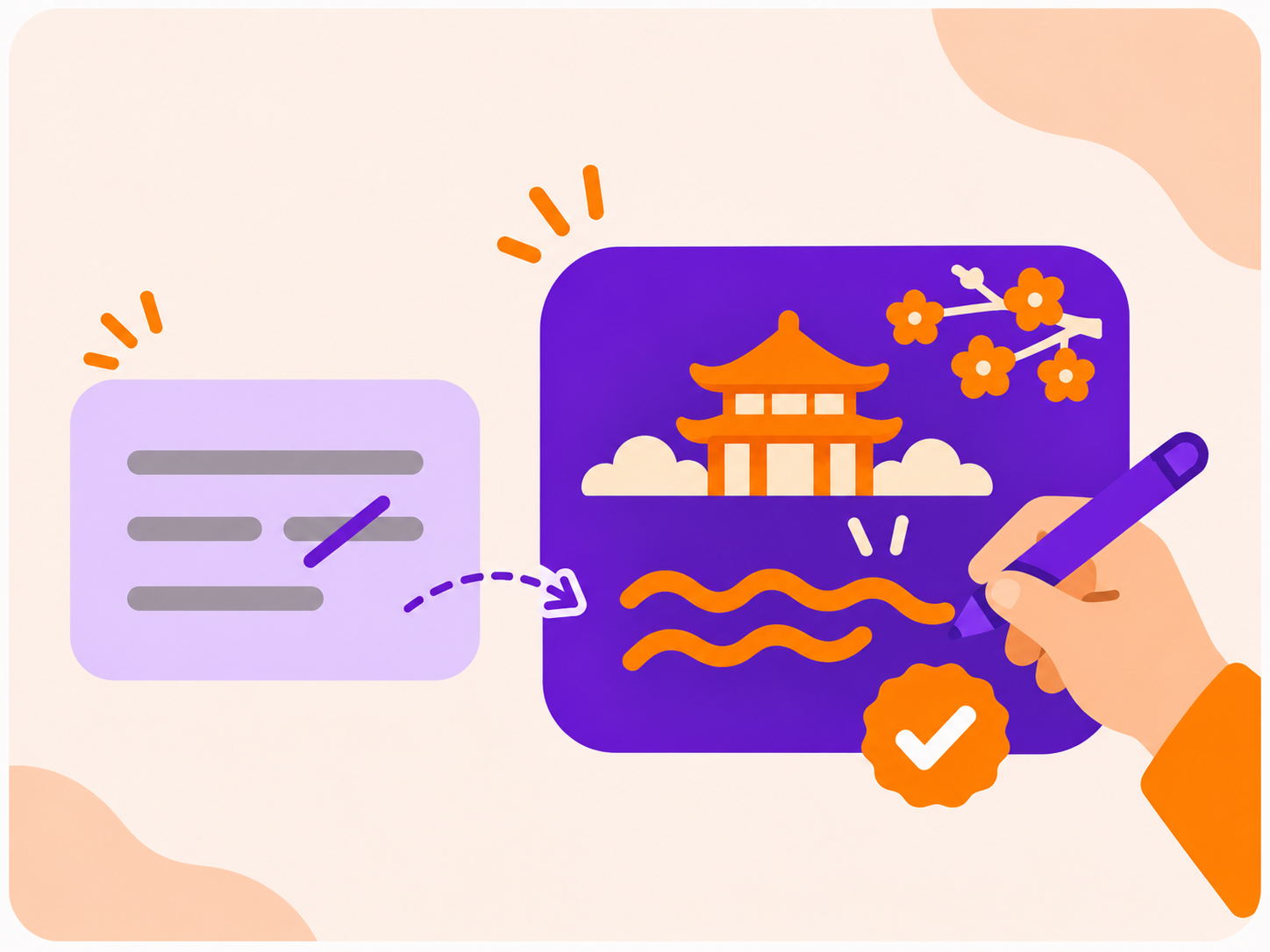
In plain terms, content moderation means checking content, a post, a photo, a comment, a video, against a platform’s own rules (usually called community guidelines, terms of service, or a content policy) and taking one of three actions: leave it up, restrict it somehow (an age gate, a warning label, reduced visibility), or remove it. The rules themselves vary by platform, but the job is the same everywhere: apply a written standard consistently, at scale, to content nobody on the review team actually created.
The word covers a wide range of actual work. It can mean an automated filter catching an image before anyone sees it. It can mean a person reviewing a comment a user reported. It can mean a community’s own volunteer moderators enforcing rules they wrote themselves. All three are content moderation; they just sit at different points on a spectrum of who’s doing the reviewing and how much judgment the job involves.
Content moderation vs. censorship: what’s the real difference?
The two get confused constantly, and the difference actually matters. Content moderation applies a platform’s own, pre-stated rules, consistently, to content posted on that platform. A private company deciding what can run on its own product is closer to a magazine deciding what it will and won’t print than it is to a government restricting what someone can say.
Censorship, in the sense people usually mean it, is a government or other powerful authority suppressing speech, often with no clear published standard and no process to appeal. The confusion usually comes from two directions: platforms don’t always publish their rules clearly enough for the distinction to be obvious, and some rules genuinely are applied inconsistently, which looks a lot like arbitrary censorship even when that’s not the intent. A platform that wants to be taken seriously on this question needs to get specific: a written policy, a way to see which rule a removal was based on, and a way to appeal it.
Why content moderation matters
Without it, a platform that lets anyone post anything eventually becomes unusable, not because most people misuse it, but because a small amount of genuinely harmful content (harassment, scams, graphic violence, child exploitation material) can make a product unsafe for everyone else far faster than good content accumulates. Moderation is also what keeps a platform within the law in most jurisdictions it operates in, and what keeps advertisers and partners willing to be associated with it.
None of that makes moderation purely defensive. Done well, it’s also one of the clearest signals of trust a platform can offer a user: that the space they’re in has been looked after, that obvious bad actors get removed, and that reporting something that’s wrong actually does something. Consider a marketplace app: a single scam listing left up for a day can cost real buyers real money and trigger a wave of refund disputes and bad reviews, damage that outlasts the listing itself by months.
What goes into a content moderation policy
Every moderation decision traces back to a written policy, usually called community guidelines or a content policy. A policy that’s doing its job covers a few things specifically: clear definitions of what’s prohibited, not just a list of banned words, but the actual intent behind the rule, concrete examples of what does and doesn’t violate it, and a defined escalation path for cases the examples don’t clearly cover.
The examples matter more than most platforms treat them. A rule that just says no harassment leaves every reviewer to define harassment on their own, which is exactly the kind of inconsistency that shows up as disagreement between reviewers later. A policy that includes real, worked examples, including the genuinely close calls, gives reviewers something concrete to measure a new case against instead of a judgment call made from scratch every time.
Good policies also get revised. A rule written before a new kind of content existed, AI-generated images, for instance, usually has a gap the first time that content shows up, and platforms that treat a policy as a living document, updated the moment a real gap is found, catch far fewer of these gaps late.
How content moderation actually works
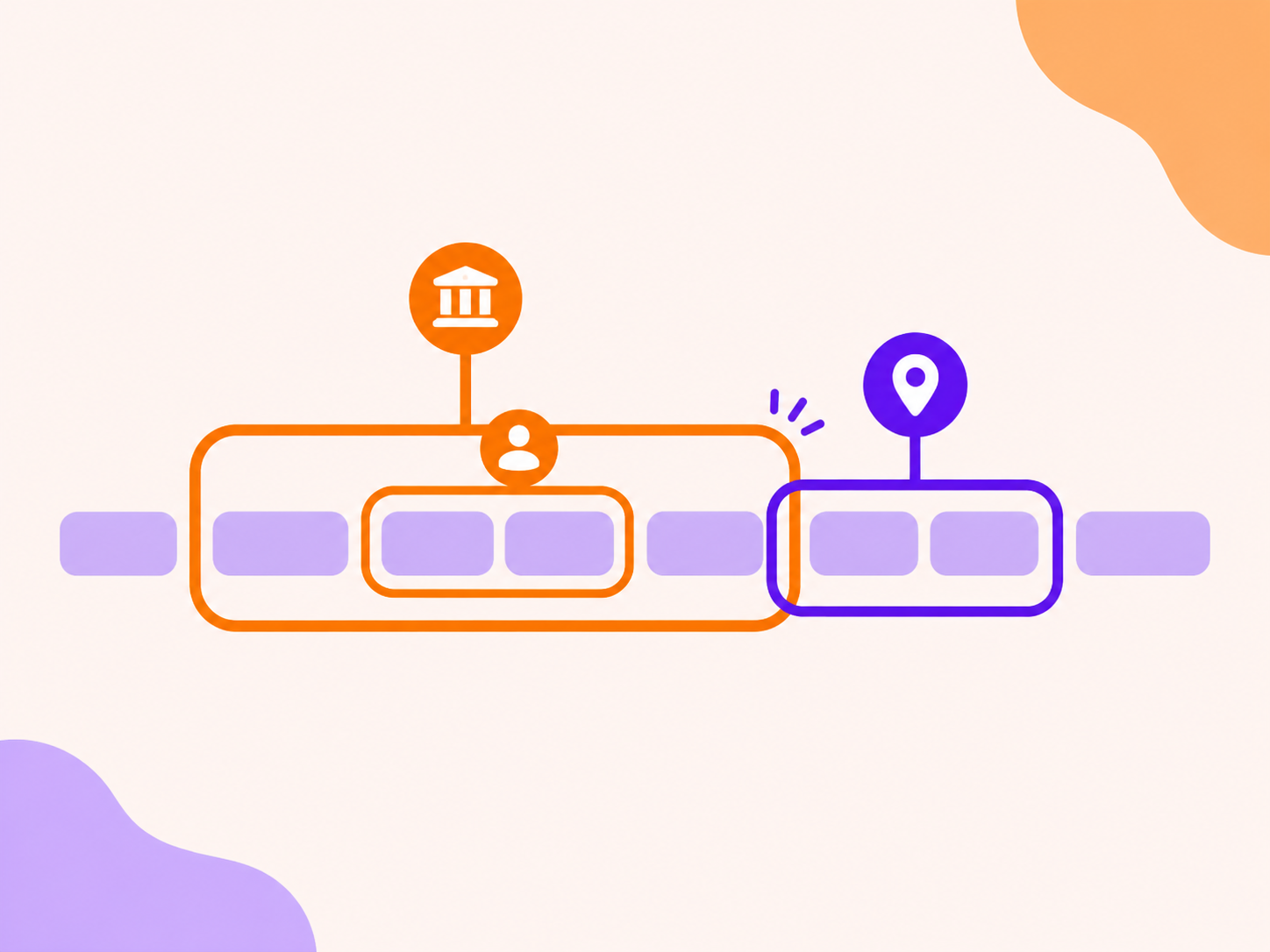
In practice, moderation happens through a mix of these approaches, usually layered together rather than relying on just one:
Pre-moderation
Content is reviewed before it ever becomes visible to other users. This is the strictest option, since nothing harmful ever reaches an audience, but it’s also the slowest, and it doesn’t scale to platforms where people expect to post instantly. It shows up most on platforms with a narrow, specific use case, a children’s app holding every comment for review before a child could ever see it, a regulated industry’s forum, where the risk of one bad post is worth the delay.
Post-moderation
Content goes live immediately and gets reviewed afterward, either on a sample basis or in response to a report. This is the default on most large platforms, since it matches how users expect to post, the way a photo appears on a social feed the instant you share it but can still be taken down hours later once it’s reviewed, which means harmful content can be visible for some period of time before it’s caught.
Reactive moderation
Content stays up until a user reports it, and review only happens in response to that report, the way a harassing reply under a news article sits there until enough readers flag it. It relies entirely on users to flag problems, which means it catches less than active review would, but it’s cheap to run and is often layered on top of the other approaches rather than used alone.
Automated moderation
A system, a keyword filter, an image classifier, a machine learning model trained on examples of violating content, screens posts automatically, either removing obvious violations outright or routing uncertain ones to a person, the way a short clip gets muted or pulled within seconds of its audio matching a copyrighted song. This is what makes moderation possible at the volume most platforms actually operate at. A person alone can’t review everything posted to a platform with millions of daily posts.
Distributed moderation
Some platforms hand moderation to their own users: Reddit’s subreddit moderators, Stack Overflow’s community flagging and voting, Wikipedia’s editor review. It scales well and puts judgment in the hands of people who understand a specific community’s norms, but it also means moderation quality varies enormously from one community to the next, and the people doing it are usually unpaid.
What kinds of content need moderation?
The format of the content changes what moderation actually involves:
Text
Comments, posts, messages, reviews. The fastest to scan automatically, a keyword or pattern match catches a lot, but also the easiest to game: slightly altered spelling, coded language, or a comment that swaps letters for symbols to dodge a slur filter, context only a human would catch.
Images
Photos and graphics get checked for anything from nudity and violence to copyright violations and brand misuse, the kind of photo that gets pulled from a feed within seconds of being flagged. Automated image classifiers have gotten genuinely good at flagging the obvious cases, which is most of why image moderation scales as well as it does.
Video
The hardest format by volume: a ten-minute video can’t be judged from a thumbnail, and a few seconds of graphic violence buried in an otherwise ordinary upload can sit in one frame out of thousands. Automated tools usually sample frames and flag timestamps for a human to actually watch, rather than reviewing a video the way a person would.
Audio and livestreams
Live content is the extreme case: there’s no backlog to review, only a feed happening in real time, which means a broadcast can get cut off mid-stream only after viewers have already seen whatever triggered the takedown. This is why platforms with heavy live content invest specifically in near-real-time detection rather than relying on the same after-the-fact review used for static posts.
A quick example
Say a photo-sharing app gets a new upload. An automated image classifier scans it on the way in and flags it as a possible policy violation, not a certain one, just a confidence score above a threshold. That flag routes the image to a queue for a human reviewer rather than removing it outright, since the model isn’t certain enough to act alone. A reviewer opens it, checks it against the platform’s actual written policy, not their own instinct about what looks wrong, and makes a call: leave it up, apply an age restriction, or remove it. If the image is genuinely ambiguous, something the policy doesn’t clearly cover, it gets escalated to a second reviewer or a specialist rather than left to one person’s read of an unclear case.
That handoff, a model flags it, a person with the actual standing to judge decides the ambiguous cases, is the same basic shape as human-in-the-loop review used anywhere else in AI: the system handles the volume, a person handles the judgment call the system can’t make on its own.
Who does content moderation, and why it’s harder than it looks
The actual job looks nothing like matching a word against a banned list. A real content moderation decision often comes down to context a rule can’t fully anticipate: is this a genuine threat or dark humor between friends, is this medical information or misinformation, is this satire or harassment dressed up as a joke. A reviewer needs to know the platform’s actual policy well enough to apply it consistently, not just have an opinion about what feels wrong.
That difficulty shows up in the data, not just anecdotally. A 2026 study of 4.3 million moderation decisions across 24 Reddit communities found moderators disagreed with each other on roughly one in seven cases, concentrated almost entirely in exactly the ambiguous situations described above, not the obvious ones. The same research found that current AI language models struggle with these disputed cases specifically, and that improving the models further isn’t a reliable fix: the hard cases need a person with real standing to make the call, not a better classifier (Alipour et al., 2026, doi:10.1609/icwsm.v20i1.42625).
The job also carries a real cost most explainers skip. A 2023 qualitative study of commercial content moderators found that reviewers regularly exposed to the most severe material reported symptoms consistent with repeated trauma, comparable to what’s reported in emergency-service and caring professions, not a minor occupational hazard (Spence et al., 2023, doi:10.5817/CP2023-4-8). Staffing this work well means real support and real training, not just hiring enough people to clear a queue.
Is content moderation done by AI or by humans?
Both, in practice, almost everywhere that does it at real scale. Automated systems handle volume: the clear-cut majority of content that’s either obviously fine or obviously violating, decided in milliseconds. People handle judgment: the minority of genuinely ambiguous cases where context matters and the cost of getting it wrong is real. Platforms that claim to be fully automated are usually underselling how much human review is actually happening behind the scenes, and platforms that rely only on humans can’t operate at modern content volumes at all.
The ratio shifts by platform and by how much is at stake in a wrong call, but the pattern holds everywhere: automation for scale, a person for the cases that actually require judgment. A large platform’s automated systems might resolve the overwhelming majority of flagged posts without a human ever seeing them, reserving review for the fraction where context genuinely changes the call, a graphic image that turns out to be wartime journalism, a threat that turns out to be a quote from a book.
How this work actually gets done at Chegg
Content moderation is one specific version of a broader pattern Chegg already runs: judgment-heavy review work that can’t be reduced to a rule a machine can apply on its own. The same network of vetted subject-matter experts used across Chegg’s AI data services work, tested against a real graded standard before they review a single example, is the model this kind of work requires too, not whoever’s available, but someone with the standing to make a genuinely ambiguous call.
Every reviewer’s judgment is checked against a written guideline, and disagreement between reviewers is tracked as an actual number, not assumed away. That matters specifically here: the Reddit study above found disagreement concentrated in exactly the hardest cases, which means a vendor who isn’t measuring agreement has no real way of knowing whether their hardest calls are actually being made well.
A buyer evaluating a content moderation vendor’s claim of human review can’t verify that claim from the outside without asking how reviewers are trained, how disagreement is measured, and what happens when a case is genuinely ambiguous. Those answers, not a vague assurance that someone looks at it, are what separate review that holds up from review that only looks that way.
Key takeaways
- Content moderation means reviewing user-generated content against a platform’s own stated rules and deciding whether it stays up, gets restricted, or gets removed.
- It’s different from censorship: moderation applies a platform’s own published rules consistently; censorship, in the usual sense, is a government or authority suppressing speech without a clear standard or appeal process.
- Real moderation systems combine automated detection for scale with human review for judgment, layered across pre-moderation, post-moderation, reactive, automated, and distributed approaches.
- The hardest part of the job is rarely an obvious rule violation. A 2026 study found moderators disagree with each other on roughly one in seven cases, concentrated in the genuinely ambiguous ones.
- Who reviews the content matters as much as whether it’s reviewed at all: trained, supported reviewers measured against a real standard produce different results than an unsupported queue of whoever’s available.
FAQs
What’s the difference between content moderation and censorship?
Content moderation applies a platform’s own, pre-stated rules consistently to content on that platform, similar to a publication deciding what it will print. Censorship, in the usual sense, is a government or other authority suppressing speech, generally without a clear published standard or a way to appeal. The confusion often comes from platforms not publishing their rules clearly enough, or applying them inconsistently, which looks like arbitrary censorship even without that intent.
Is content moderation done by AI or by humans?
Both, at any real scale. Automated systems handle the high-volume, clear-cut majority; people handle the genuinely ambiguous minority where context and judgment matter. Fully automated or fully human-only moderation is rare in practice.
What are the main types of content moderation?
Pre-moderation (reviewed before going live), post-moderation (reviewed after going live), reactive moderation (reviewed only after a user reports it), automated moderation (screened by a system), and distributed moderation (handled by a platform’s own community). Most real systems layer several of these together rather than relying on just one.
Why is content moderation hard if the rules are already written?
Because the hardest cases are the ones the rules don’t clearly cover: context-dependent situations where intent, tone, or circumstance change whether something violates a policy. A 2026 study of Reddit moderators found disagreement concentrated almost entirely in these ambiguous cases, not the clear-cut ones.
Does content moderation work the same way for livestreams as it does for regular posts?
No. Livestreams have no backlog to review; moderation has to happen in or near real time, which is why platforms with heavy live content invest specifically in fast automated detection rather than relying on the same after-the-fact review used for static posts.
What industries actually need content moderation?
Any platform with user-generated content: social media, marketplaces, dating apps, gaming communities, comment sections, forums, and increasingly AI products that let users generate or upload content of their own.