

While the Sumerians created the first counting system, Scientists generally agree that people have widely used fundamental calculations such as addition, subtraction, multiplication, and division for over 4,000 years. Several facts and pieces of evidence about mathematics existed before mathematicians made their discoveries so that no single person can claim the invention of mathematics.
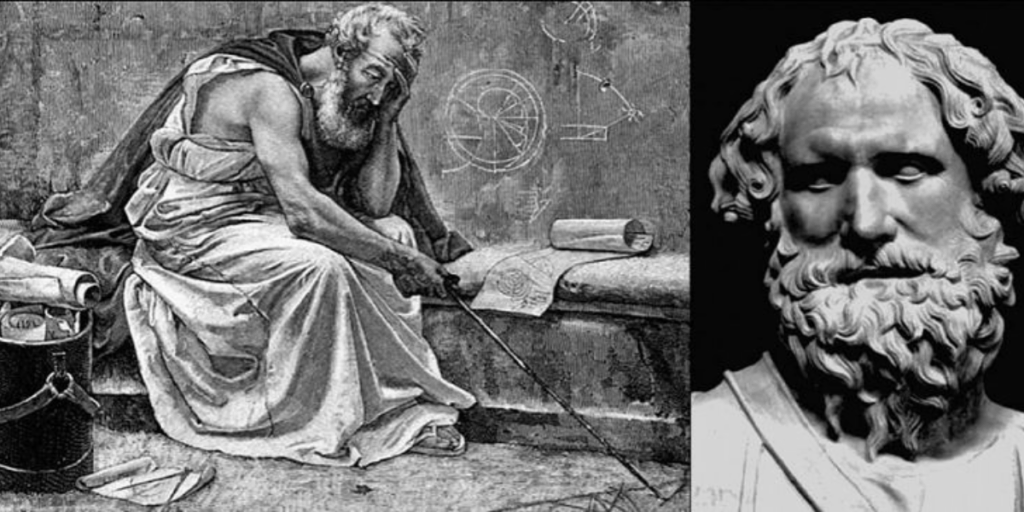
The word “mathematics” comes from the Greek term “mathema,” which means “knowledge.” Greek mathematicians received credit for the advancement of mathematics. Mathematicians worldwide have contributed to various aspects of the field, demonstrating that not just one person created mathematics. Although no single person can claim the title of inventor of mathematics, many frequently celebrate Archimedes as the father of mathematics.
Mathematics was not “discovered” by a single person but instead developed over millennia through the contributions of various cultures and individuals. Early humans likely began with basic counting and measurement. Ancient civilizations like the Sumerians, Egyptians, and Babylonians contributed foundational concepts like number systems and geometry. Greek mathematicians such as Euclid and Pythagoras significantly advanced geometry and theory.
In India, Aryabhata introduced the concept of zero, and scholars, such as Al-Khwarizmi, developed algebra during the Islamic Golden Age. The European Renaissance brought further developments, with figures like Descartes and Newton contributing to algebra, calculus, and geometry.
Mathematics evolved gradually, with contributions from different civilizations and thinkers rather than being “discovered” by one individual.
During the Scientific Revolution (16th to 18th centuries), mathematics was not so much “invented” as significantly advanced and formalized, building on centuries of prior work. This period saw mathematics become a crucial tool for understanding the natural world, particularly in physics, astronomy, and engineering.
“When was math discovered?” rather than “When was it invented?” implies that math may not have been created but uncovered and understood, similar to physical laws. Many believe that mathematics existed before humans discovered and applied it. Often, people acknowledge that ancient societies such as those in Greece, India, China, Egypt, and Mesopotamia pioneered mathematical concepts. Therefore, one could argue that humans did not invent mathematics; they discovered it, like other scientific fields.
The “Father of Mathematics” title is a respectful nod to those intellectual giants whose work laid the bedrock for modern mathematical understanding. However, attributing such a monumental field to one individual or even a group can be misleading. So, what is math? Mathematics is a river fed by numerous tributaries from various epochs and regions.
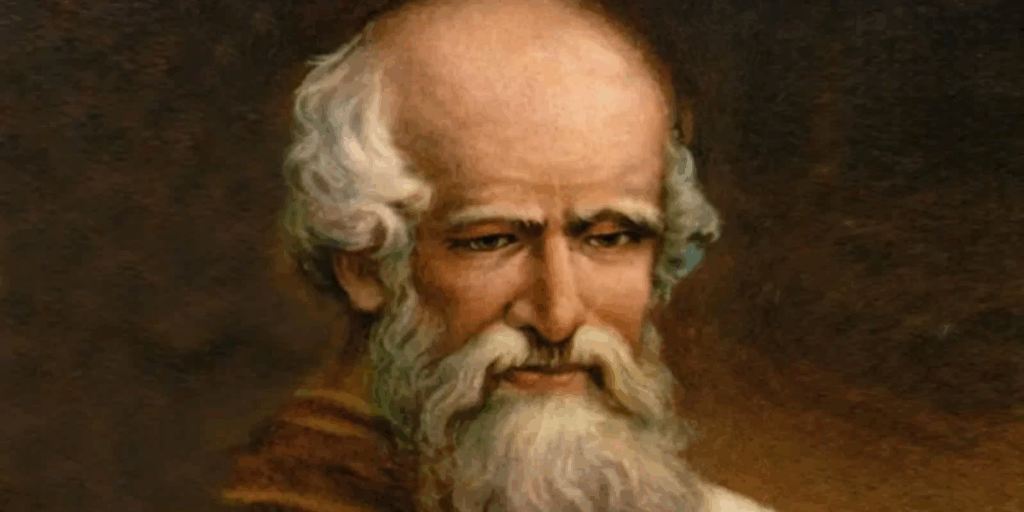
Euclid, the ancient Greek mathematician, is frequently credited with this title due to his influential work, “Elements.” This thirteen-volume work of art established the benchmark for mathematical rigor and proof while methodically presenting the knowledge of the time. Is it accurate to refer to him or anyone else as the only father of mathematics?
The mathematics concept had no creator or a single point of origin. Instead, it originated independently in several prehistoric societies worldwide. Early humans employed fundamental mathematical concepts to count, measure, and arrange their daily activities, such as keeping track of time, figuring out crop yields, and measuring distances.
| Number | Arabic-Indic | Eastern Arabic-Indic (Persian and Urdu) | Devanagari (Hindi) | Chinese | Tamil | Roman | Brahmi (Indian) |
| 0 | ٠ | ۰ | ० | 〇 | ௦ | N/A | 𑁦 |
| 1 | ١ | ۱ | १ | 一 | ௧ | I | 𑁧 |
| 2 | ٢ | ۲ | २ | 二 | ௨ | II | 𑁨 |
| 3 | ٣ | ۳ | ३ | 三 | ௩ | III | 𑁩 |
| 4 | ٤ | ۴ | ४ | 四 | ௪ | IV | 𑁪 |
| 5 | ٥ | ۵ | ५ | 五 | ௫ | V | 𑁫 |
| 6 | ٦ | ۶ | ६ | 六 | ௬ | VI | 𑁬 |
| 7 | ٧ | ۷ | ७ | 七 | ௭ | VII | VII |
| 8 | 8 | ۸ | ٨ | 八 | ۸ | VIII | ८ |
| 9 | 9 | ۹ | ٩ | 九 | ۹ | IX | ९ |
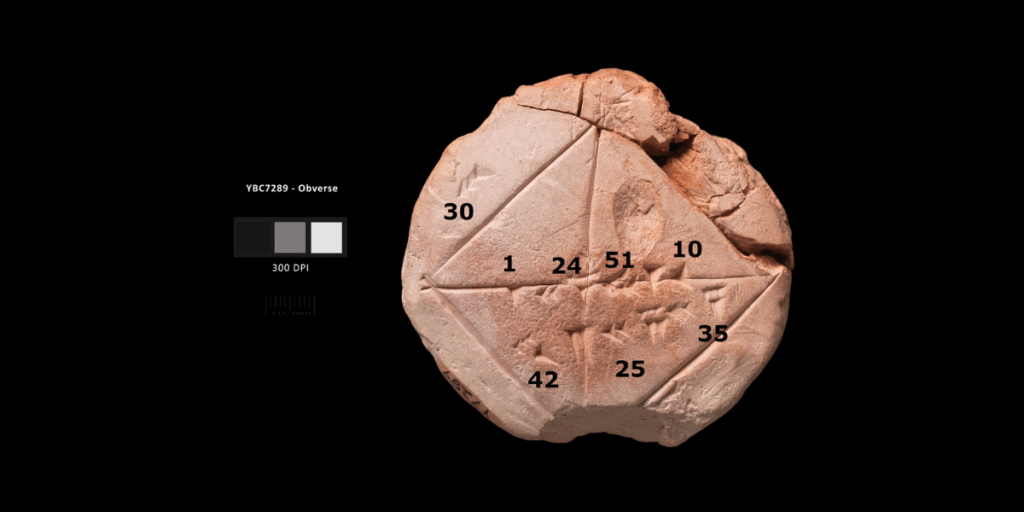
It represents the mathematical practices of the people living in ancient Mesopotamia (present-day Iraq) from the era of the Sumerians until the advent of Christianity. The earliest written records of mathematical activity come from the Sumerians, the first to form a civilization in Mesopotamia around 3000 BCE. They created an elaborate measurement system. By 2500 BCE, they were inscribing clay tablets with division and geometry problems and multiplication charts. Records of Babylonian numerals also originate from this period.
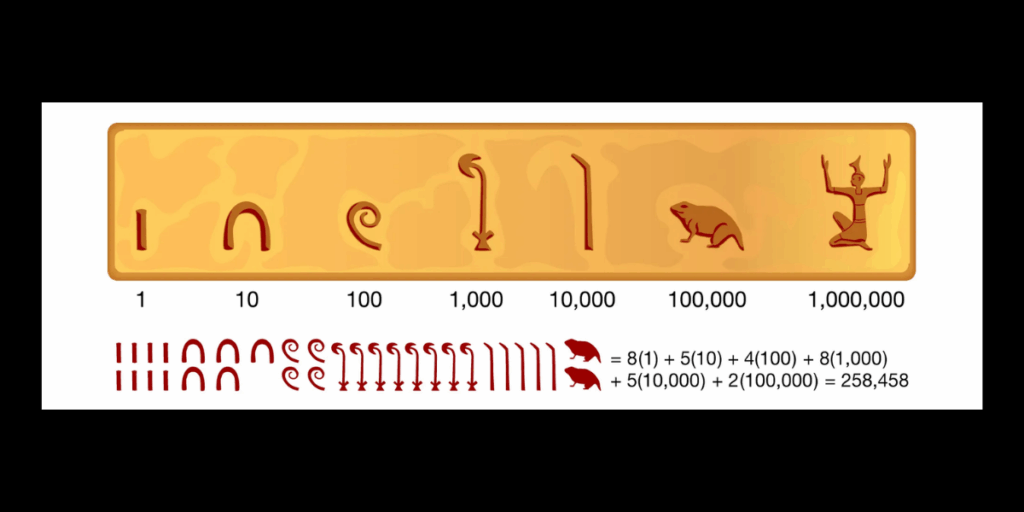
The most comprehensive piece of Egyptian mathematical literature is the Rhind papyrus, which dates back to around 1650 BCE but likely replicates an older text from the Middle Kingdom (2000-1800 BCE). Named after its scribe Ahmes, it functions as a textbook for mathematics and geometry. Beyond formulas for calculating areas and methods for multiplication, division, and managing unit fractions, it demonstrates knowledge of composite and prime numbers, arithmetic, and geometry. It also includes strategies for resolving simple linear equations and calculating arithmetic and geometric progressions.
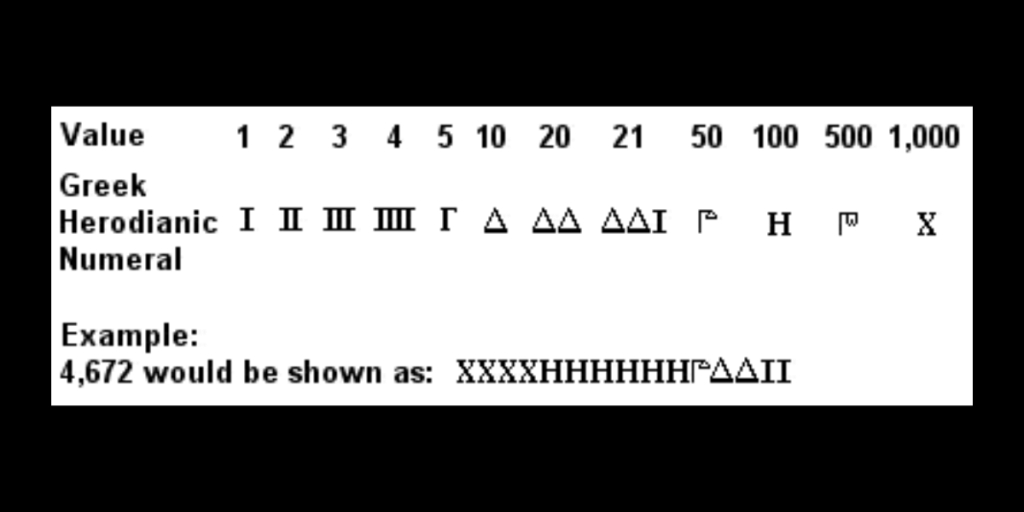
Greek mathematicians employed deductive reasoning, unlike earlier civilizations that relied on inductive reasoning from observations. They used strict proofs and logic based on definitions and axioms to validate their findings, possibly drawing inspiration from Babylonian and Egyptian math, although the degree of influence remains debated.
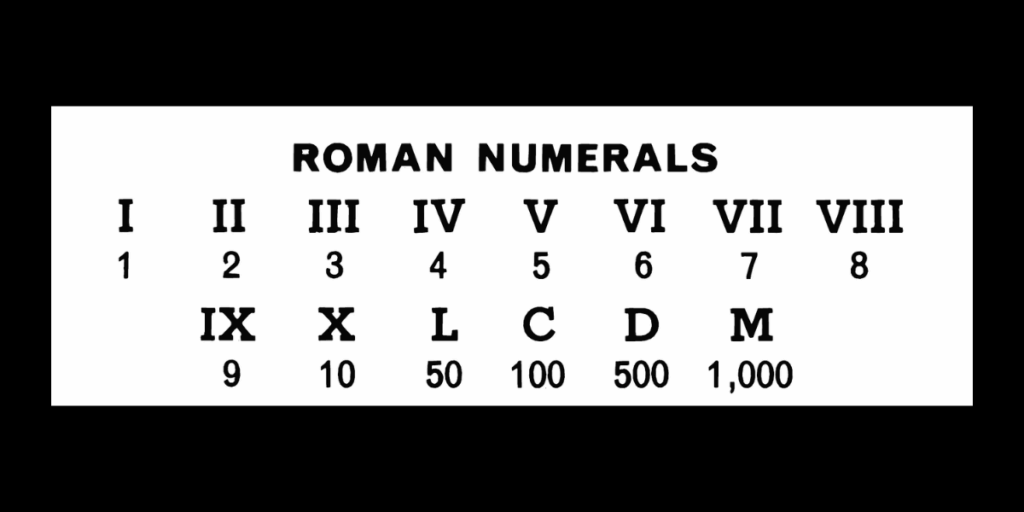
Greek mathematical principles were revitalized during the Roman era. Basic math was crucial in devising the Roman calendar, which initially had 356 days with an intercalary year. Romans excelled in applying math for financial oversight and tax collection for the Treasury.
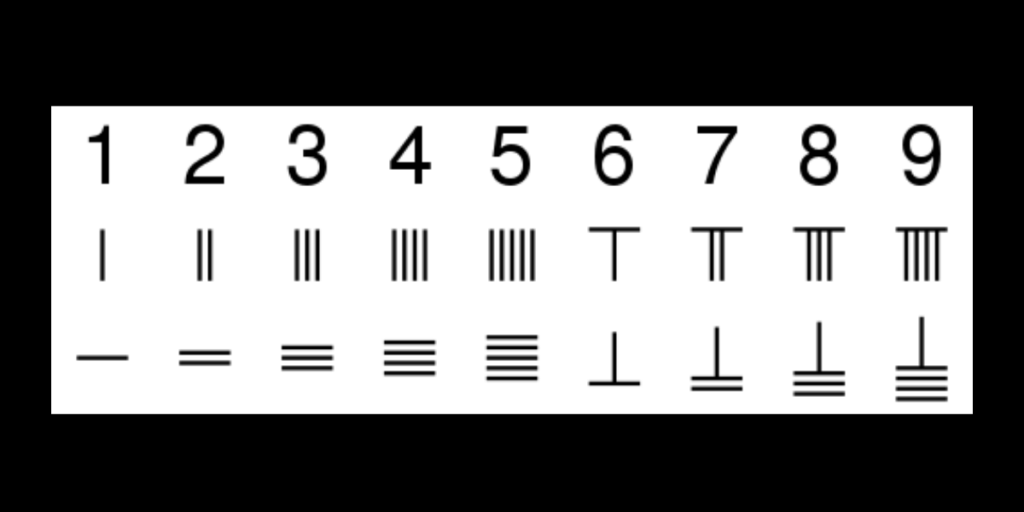
The earliest Chinese mathematical records are the Tsinghua Bamboo Slips, dating from around 305 BC and showcasing the first decimal multiplication table. Chinese math is distinguished by ‘rod numerals,’ a decimal system using unique symbols for numbers 1-10 and additional symbols for tens’ powers.
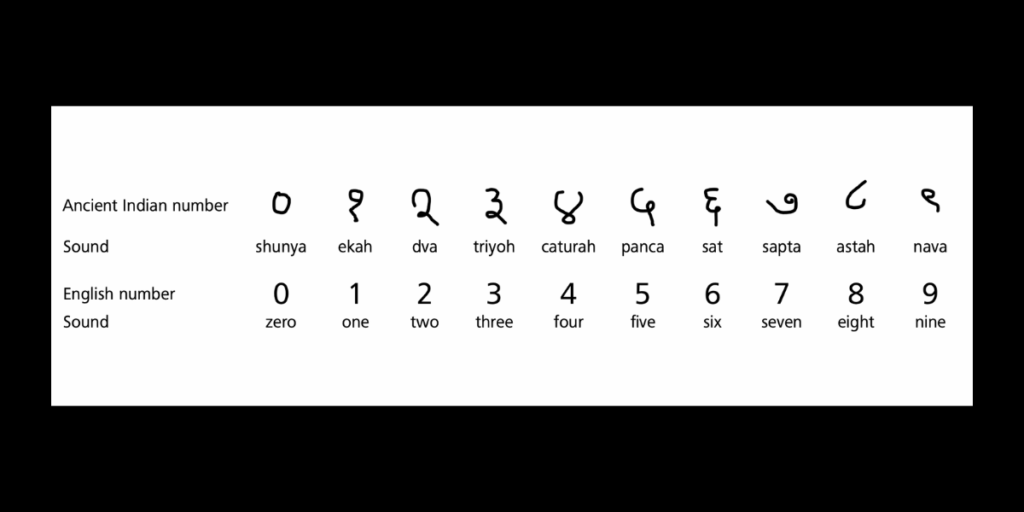
Religious texts from the 8th century B.C. to the 2nd century A.D. contain the surviving Indian mathematical writings detailing altar construction in various shapes and presenting advanced concepts such as the Pythagorean theorem, precise calculations of square roots, and lists of Pythagorean triples.
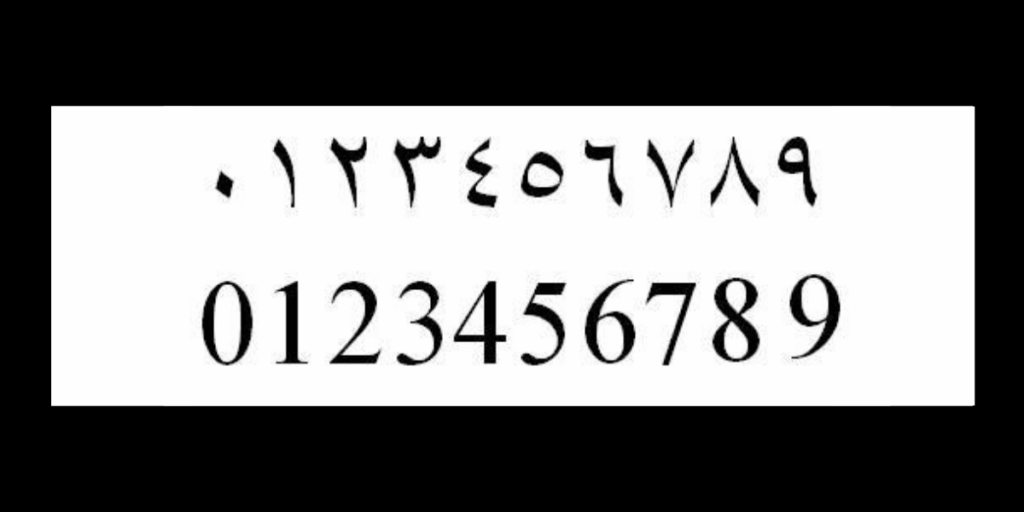
The preservation and advancement of mathematics are often attributed to the Islamic world. In the 9th century, the Islamic Empire made significant mathematical contributions from Persia to parts of India. While Arabic was the primary language for mathematical texts, it was not Arabs but scholars like the Persian mathematician Muhammad ibn Musa al-Khwarizmi who made notable advancements, including works on Hindu-Arabic numerals and algebraic methods.
Ancient civilizations made significant contributions to the development of mathematics, shaping it into the discipline we know today. Each civilization introduced unique concepts and methods that enhanced mathematical understanding.
One of the earliest known counting systems originated with early civilizations, which used tally marks and symbols to keep track of quantities. This foundational practice created number systems that allowed for more complex calculations.
Another crucial advancement came from societies that used geometry to solve practical problems. They developed techniques for measuring land, building structures, and calculating areas, which were essential for agriculture and architecture. These early mathematicians recognized patterns in shapes and numbers, paving the way for geometric principles still in use today.
Introducing concepts like place value and zero marked significant milestones in mathematical history. By representing numbers in a more structured way, they made calculations more efficient and laid the groundwork for advanced arithmetic.
Often encapsulated in symbols, numbers, and equations, this aspect of mathematics is more than just an abstract discipline. It is a language, a logic tool, and a way to model and understand the universe’s many complexities. The essence of mathematics is deeply rooted in its utility and profound impact on micro and macro scales. If you are wondering what basic mathematics means, then this is it.
Modern mathematics has seen the contributions of many influential mathematicians who have shaped various branches of the field, including algebra, analysis, topology, number theory, and applied mathematics. Some key mathematicians of modern times, along with their contributions, include:
India has been the cradle for numerous eminent mathematicians who have significantly contributed to the field. Here are some notable Indian mathematicians:

Also revered as Bhaskaracharya, Bhaskara authored the seminal work ‘Siddhanta Siromani’. He proposed that dividing any number by zero results in infinity and that infinity added to any number remains infinity.
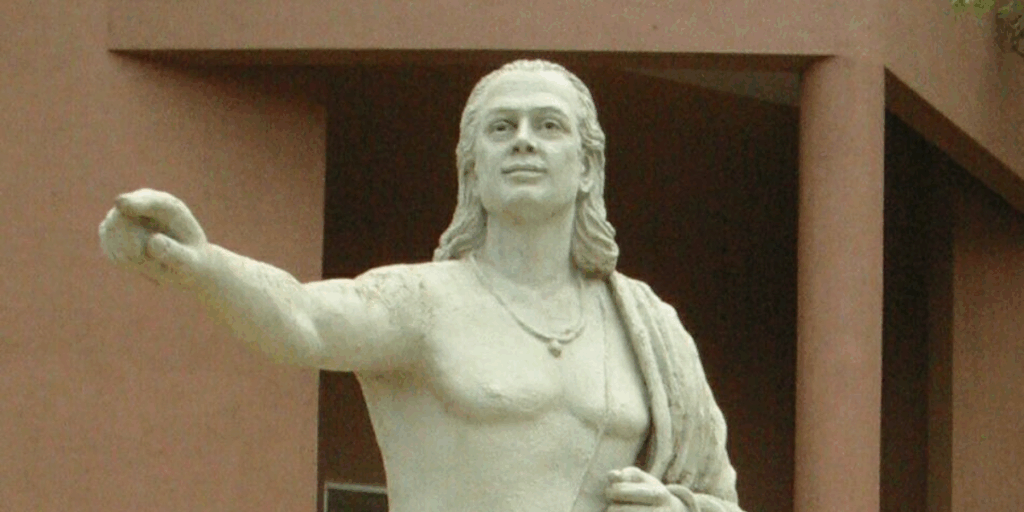
A celebrated astronomer and mathematician, Aryabhatta penned the texts ‘Aryabhatiyam’ and ‘Surya Siddhanta.’ He asserted the year comprises 365 days and advanced the place value system.

A pivotal figure in modern Indian mathematics, S. Ramanujan’s legacy includes the Hardy-Ramanujan-Littlewood circle method, studies on Elliptic functions, continued fractions, and the Rogers-Ramanujan identities.

SN Bose is renowned for his contributions to quantum mechanics, including the Bose-Einstein condensate, Bose-Einstein statistics, and Bose-Einstein correlations.

Famously known as the ‘Human Computer,’ Shakuntala Devi achieved fame for her ability to perform rapid and complex mental calculations, earning multiple world records.
Who invented maths or Mathematics, a vast and profound discipline that transcends mere numbers and symbols, is still a mystery. Its roots, embedded deeply within early human endeavors, grew organically, fed by myriad cultures and minds across millennia. As we trace back the question “Who invented maths?”, we’re embarking on a journey through human civilization. This universal language, continuously improved and expanded, demonstrates humanity’s innate desire to comprehend, quantify, and influence the world.
Read More:-
The first civilization to create a numbering system was the Sumerians. Many scientists view addition, subtraction, multiplication, and division as some of the simplest and oldest mathematical operations people have used for over 4,000 years.
Aryabhata, whose notable works include Aryabhaṭiya and Arya-Siddhanta, was considered the first prominent mathematician-astronomer of the classical age. In his work on the “place value system,” he used letters to represent numbers and state attributes.
Aryabhatta, a renowned mathematician and astronomer of his era, is credited for creating zero in India. Zero was a stand-in number for the famous scientist. Aryabhatta brought zero to mathematics in the fifth century by introducing it to the decimal number system.
“The Father of Mathematics” is the Greek mathematician Archimedes. He substantially contributed to the field’s development, earning him the “Father of Mathematics.” A circle’s measuring computation is one of Archimedes’ most famous ideas.
A single person did not create mathematics; it evolved through contributions from various cultures dating back to ancient Mesopotamia and Egypt.
Muhammad ibn Musa al‑Khwārizmī, a 9th-century Persian scholar, wrote Al-Jabr, laying the foundations for algebra – the term itself comes from this work.