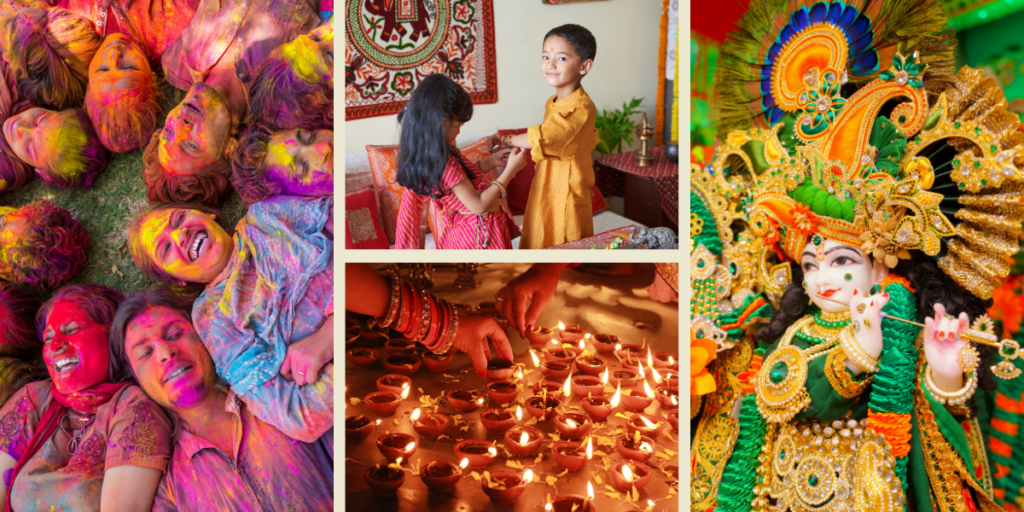
India is known for its rich cultural diversity, reflected in the wide list of festivals in India celebrated across all states and regions. From religious festivals like Diwali and Eid to national festivals of India like Independence Day, each event showcases a unique blend of tradition, spirituality, and unity. This article compiles the most inclusive 2025 festival calendar, highlighting both gazetted and non-gazetted holidays across Indian states.
The festivals of India are more than events; they are vibrant celebrations of shared heritage. Whether it’s the glowing lights of Diwali in the north or the colorful flower arrangements during south Indian festivals like Onam and Pongal, the experiences are unforgettable. Each Indian festival plays a unique role in our cultural narrative.
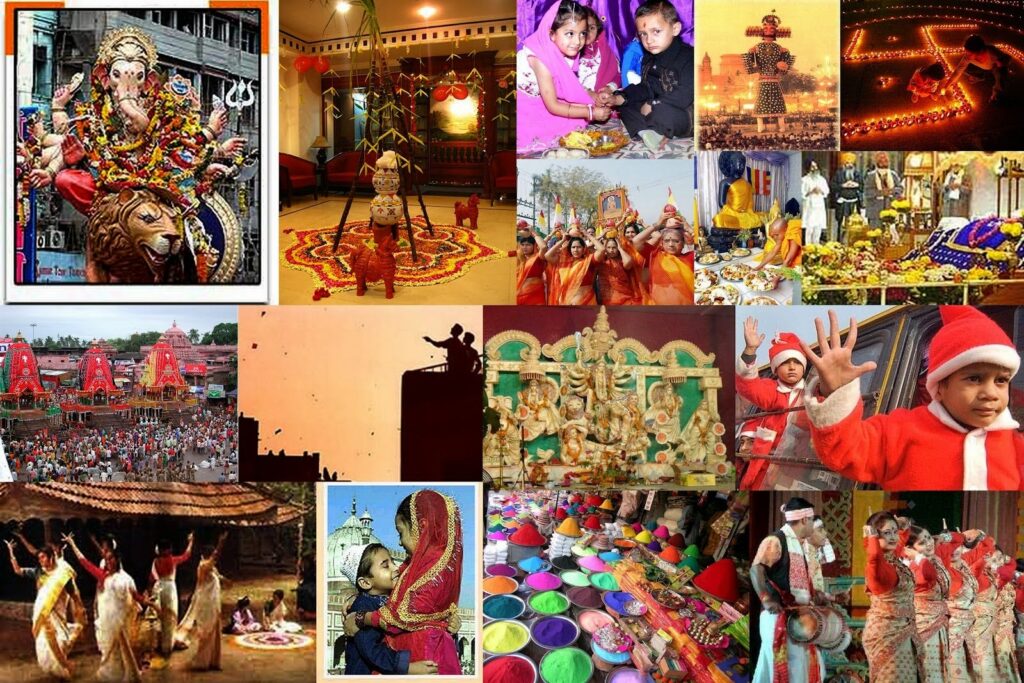
Types of Festivals in India
- Religious Festival: Observed by various faiths—Hindu, Muslim, Christian, Sikh. (e.g., Hindu festivals like Holi, Diwali; Eid for Muslims, Christmas for Christians.)
- Harvest Festivals: Celebrated across rural India—Pongal, Bihu, Makar Sankranti.
- National Festival of India: Republic Day, Independence Day, Gandhi Jayanti.
- Seasonal and Cyclical Festivals: Holi (Spring), Kumbh Mela (every 12 years).
- Cultural Festivals: Navratri in Gujarat, Durga Puja in West Bengal, Pushkar Fair in Rajasthan.
List of all the Festivals of India- 2025 Holiday Calendar India
With 28 states and 8 union territories, the festivals of India state wise represent extraordinary diversity giving away a list of festivals that are likely to be celebrated around India.
| Day | Date | Festival Name |
|---|---|---|
| Wednesday | 15 January | Makar Sankranti / Pongal |
| Sunday | 02 February | Vasant Panchami |
| Tuesday | 11 February | Thaipusam |
| Wednesday | 26 February | Maha Shivaratri |
| Thursday | 13 March | Holika Dahan |
| Friday | 14 March | Holi |
| Saturday | 29 March | Hindi New Year |
| Sunday | 30 March | Ugadi / Gudi Padwa / Telugu New Year |
| Sunday | 06 April | Ram Navami |
| Saturday | 12 April | Hanuman Jayanti |
| Monday | 14 April | Vaisakhi / Baisakhi / Vishu |
| Monday | 14 April | Bengali New Year / Bihu |
| Monday | 14 April | Tamil New Year |
| Friday | 30 May | Akshaya Tritiya |
| Tuesday | 10 June | Savitri Pooja |
| Friday | 27 June | Puri Rath Yatra |
| Thursday | 10 July | Guru Purnima |
| Tuesday | 29 July | Nag Panchami |
| Friday | 08 August | Varalakshmi Vrat |
| Saturday | 09 August | Raksha Bandhan |
| Saturday | 16 August | Krishna Janmashtami |
| Wednesday | 27 August | Ganesh Chaturthi |
| Thursday | 04 September | Onam |
| Wednesday | 17 September | Vishwakarma Puja |
| Sunday | 21 September | Mahalaya Amavasya |
| Monday | 22 September | Navaratri begins |
| Sunday | 28 September | Durga Puja begins |
| Wednesday | 01 October | Navaratri ends / Maha Navami |
| Thursday | 02 October | Dusshera |
| Monday | 06 October | Sharad Purnima |
| Thursday | 09 October | Karwa Chauth |
| Saturday | 18 October | Dhanteras |
| Tuesday | 21 October | Diwali |
| Thursday | 23 October | Bhai Dooj |
| Monday | 27 October | Chhath Puja |
| Wednesday | 05 November | Kartik Poornima |
| Monday | 01 December | Geeta Jayanti |
| Tuesday | 16 December | Dhanu Sankranti |

List of Festivals in India State Wise Guide
India’s festivals represent the strong culture of various states. Every region has its unique festivals to celebrate its traditions. All these different celebrations bring communities happiness and harmony. It is the local customs that make these celebrations unique in the entire country. Let’s look at what’s included in the 28 states of India and their main festival list:
Festivals in North India
From festivals in North India like Diwali and Baisakhi to local traditions in Himachal Pradesh, the northern region celebrates culture with zeal.
| State | Major Festivals | Time of Year | Significance |
| Punjab | Baisakhi (Harvest Festival) | April | The victory of light over darkness; celebration of colours |
| Uttar Pradesh | Diwali (Festival of Lights, Holi (Festival of Colours) | Oct-Nov, March | The victory of light over darkness; a celebration of colours |
| Jammu & Kashmir | Eid, Navroz | Variable, March | Marks harvest season and the birth of Khalsa |
| Himachal Pradesh | Kullu Dussehra | October | Unique 7-day celebration with local deities |
| Uttarakhand | Makar Sankranti | January | Sun’s northward journey celebration |
Festivals in South India
The south Indian festivals like Pongal, Ugadi, and Onam represent harmony with nature, harvest, and local deities. These festivals are highlighted prominently in the 2025 holiday calendar India.
| State | Major Festivals | Time of Year | Special Features |
| Tamil Nadu | Pongal | January | Four-day harvest festival with unique rituals |
| Kerala | Onam | August-September | Ten-day celebration with boat races |
| Karnataka | Ugadi, Mysore Dasara | March-April, October | New Year celebrations, Royal processions |
| Andhra Pradesh | Sankranti | January | Three-day harvest festival with kite flying |
| Telangana | Bathukamma | September-October | Nine-day floral festival |
Festivals of West India
Western India’s festival schedule is full of colour and excitement. From the dancing nights in Gujarat to the community celebrations in Maharashtra, these festivals show the lively cultural fabric of India. The table below mentions some of the main festivals celebrated among the 28 states of India, and their main festivals list:
| State | Major Festivals | Time of Year | Unique Elements |
| Rajasthan | Gangaur, Teej | March-April, July | Women-centric celebrations |
| Gujarat | Navratri, Uttarayan | Oct-Nov, January | World’s longest dance festival; International kite festival |
| Maharashtra | Ganesh Chaturthi | August-September | 10-day community celebration |
| Goa | Carnival, Shigmo | February, March | Portuguese influence; Spring festival |
Festivals of East India
East India’s festivals are a colourful mix of devotion, music, and community spirit. These festivals unite people to honour their rich cultural traditions and local deities. Some of the main festivals of eastern India are mentioned in the table below, which you can also find in the 28 states of India and their main festivals list PDF:
| State | Major Festivals | Time of Year | Cultural Highlights |
| West Bengal | Durga Puja | September-October | Artistic pandals and cultural performances |
| Odisha | Rath Yatra | June-July | World’s largest chariot festival |
| Assam | Bihu | April, October, January | Dedicated to the Sun God with unique rituals |
| Bihar | Chhath Puja | October-November | Dedicated to Sun God with unique rituals |
| Jharkhand | Sarhul | March-April | Tribal spring festival |
Festivals of Central and Northeast India
Many people ignore the central and northeast regions when they search for the 28 states of India and their main festivals list with pictures. There are peculiar festivals in 2025 in the central and northeastern parts of India that most people do not know. These festivals also represent the local cultures that make India’s festivals really diverse. The table below lists some of the key festivals of this part of India:
| State | Major Festivals | Time of Year | Distinguished Features |
| Madhya Pradesh | Khajuraho Dance Festival | February | Classical dance performances |
| Chhattisgarh | Bastar Dussehra | October | 75-day-long celebration |
| Nagaland | Hornbill Festival | December | Showcase of all tribal cultures |
| Manipur | Yaoshang | March | Five-day spring festival |
| Meghalaya | Wangala | November | Harvest thanksgiving ceremony |
| Mizoram | Chapchar Kut | March | Harvest Thanksgiving ceremony |
Importance of Festivals in India
Indian festivals connect the past with the present. Each celebration shares a unique story about our history. The streets are filled with traditional music. Homes smell wonderful because of the special foods. Children learn old traditions by joining in fun activities. The following are some other reasons why festivals have a massive significance in India:
- They preserve traditions that have been passed down for generations. Celebrations like Diwali, Durga Puja, and Onam reflect the country’s diversity. They unite people of different regions and faiths.
- These festivals also strengthen our community. Neighbours share sweets during Diwali, communities gather for Eid prayers, and local markets are busy with festival shoppers. A list of festivals in India shows how every celebration helps a local business.
- Festival tourism generates massive revenues as millions of visitors attend events like the Goa Carnival or the Pushkar Fair. In addition, the Kumbh Mela attracts more than 240 million visitors. Local artisans earn 60% of their annual income during festival seasons.
- Small businesses witness a 200% increase in sales during significant festivals. Street vendors, hotels, and transport services also earn huge revenues during such events.
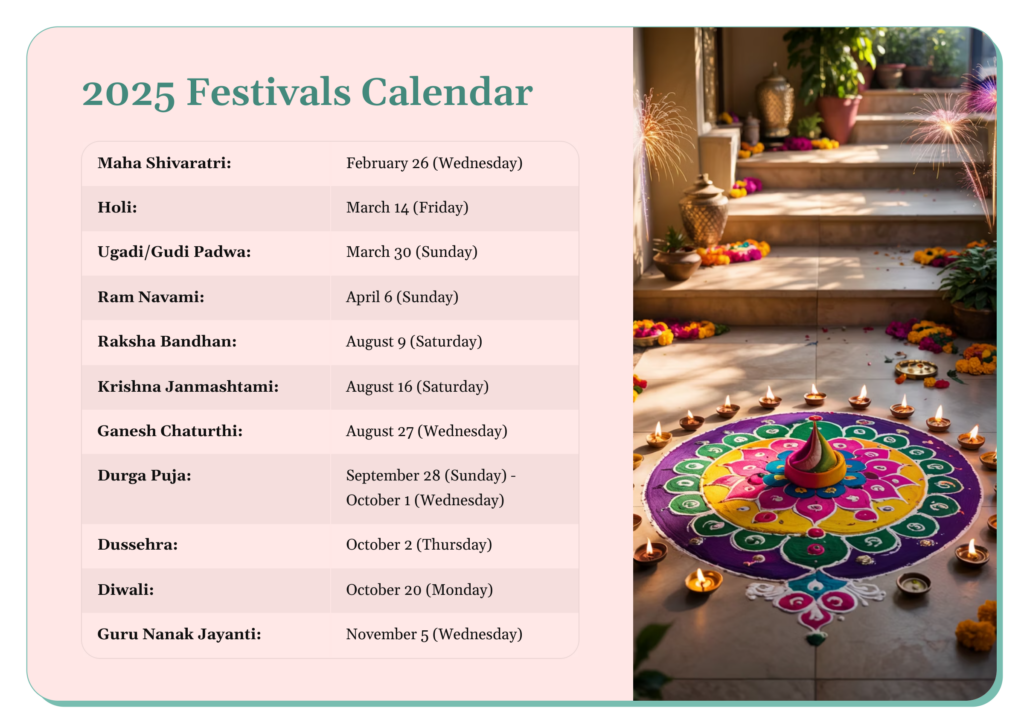
Top 10 Festivals in India
- Raksha Bandhan (Aug): Celebrating the bond between brothers and sisters, this festival involves tying a sacred thread (rakhi).
- Diwali (Oct/Nov): The “Festival of Lights,” Diwali, marks the Hindu New Year. Homes glow with lights and diyas, rangoli patterns adorn doorways, and families feast and exchange gifts.
- Holi (March): The “Festival of Colors” heralds spring. People joyfully throw colored powder at each other, and bonfires symbolize the triumph of good over evil.
- Dussehra (October): Celebrating Rama’s victory over Ravana, Dussehra features the burning of effigies and dramatic enactments of the Ramayana.
- Ganesh Chaturthi (Aug/Sep): Lord Ganesha’s birth is celebrated with the installation and worship of his statues, culminating in a grand procession and immersion.
- Krishna Janmashtami (Aug/Sep): Marking Krishna’s birth, this festival features the “Dahi Handi,” a playful reenactment of his love for butter and yogurt.
- Eid-ul-Fitr (Variable): This Islamic festival marks the end of Ramadan. Muslims attend prayers, decorate homes, and share food and gifts.
- Gujarat Kite Festival (January): Colorful kites fill the Gujarat skies, celebrating the start of summer and harvest.
- Pushkar Camel Fair (Oct/Nov): Thousands of camels and their owners gather in Rajasthan for trading, racing, and cultural performances.
- Navratri (Sep/Oct): This nine-night festival honors the divine feminine. Garba dances and other festivities mark the occasion.
India is also home to rare and cyclical festivals that are celebrated once every few years or decades, making them spiritually significant and culturally extraordinary.
Conclusion
India’s festivals are a vibrant thread weaving through its historical, spiritual, and social fabric. Whether it’s a Hindu festival, a religious festival, or a national festival, the list of upcoming festivals in India tells a compelling story of unity in diversity. With the 2025 festival calendar, you can explore all festivals of India, from ancient rituals to modern celebrations across the country’s diverse states.
Read More:
7 Incredible Wonders of India
Golden Temple: History and Architectural Evolution
List of Freedom Fighters of India
Frequently Asked Questions (FAQ’s)
What are the major festivals in India?
India has many significant festivals that depict the nation’s rich cultural diversity. Two of the very popular ones in India are the festivals of lights and colours, Diwali and Holi, respectively. Also, Eid and Christmas, Navratri, Durga Puja, and Onam take place with a different style of traditions for each specific region.
What are the top 10 famous festivals in India?
India has several hundred festivals, more than 50 significant ones within its 28 states. The 10 famous festivals of India are Diwali, Holi, Eid-ul-Fitr, Christmas, Navratri, Durga Puja, Raksha Bandhan, Janmashtami, Baisakhi and Onam.
Which states celebrate Baisakhi and Pongal?
Baisakhi is the most important harvest festival in Punjab. It also marks the beginning of the Punjabi New Year and wheat harvesting. Pongal is a significant festival in Tamil Nadu. This four-day festivity is an occasion to give thanks to God for the good harvest of that year, which every year falls in mid-January.
What is the significance of festivals in India?
Festivals of India are a symbol of unity in diversity. They help conserve cultural traditions, enhance social bonding, and strengthen faith in religious beliefs. Celebrations like Diwali and Eid bring togetherness, and events like Holi and Onam bring immense joy. Economically, they boost tourism and support local businesses, adding richness to India’s heritage and growth.
What are the 20 festivals?
Here are 20 of the most popular festivals celebrated across India:
Diwali, Holi, Eid-ul-Fitr, Christmas, Navratri, Durga Puja, Raksha Bandhan, Janmashtami, Ganesh Chaturthi, Baisakhi, Onam, Pongal,
Makar Sankranti, Dussehra, Maha Shivratri, Buddha Purnima, Mahavir Jayanti, Bihu, Guru Nanak Jayanti, Republic Day
What are the main festivals celebrated in Northeast India?
The Northeast has unique and vibrant festivals. The Hornbill Festival in Nagaland depicts tribal culture and is called the “Festival of Festivals.” Bihu in Assam celebrates the harvest season with dance and music. Wangala in Meghalaya, the festival of 100 drums, is a harvest celebration for the Sun God and depicts the region’s traditions.
How many festivals are celebrated in India?
India celebrates over 50 major festivals across its 28 states and 8 union territories, with hundreds of regional and community-based festivals held annually. Each state adds its own traditional and religious festivals, making India one of the most festival-rich countries in the world.
What are the 12 festivals celebrated in India?
Here are 12 prominent festivals commonly recognized nationwide:
Diwali, Holi, Eid-ul-Fitr, Christmas, Navratri, Durga Puja, Ganesh Chaturthi, Baisakhi, Onam, Pongal, Makar Sankranti