
Hallucination Detection Data, Explained: What Automated Checkers Miss That Human Review Catches
Ask a reasoning model the same factual question five times in a row. A genuine confabulation usually gives itself away: a different wrong name, a different wrong year, a different guess each time you ask. Ask it a question where it is confidently, consistently wrong for a different reason instead. The answer comes back identical […]
Chain of Thought Data, Explained: What “Showing the Work” Actually Requires
In April 2025, Anthropic’s alignment researchers slipped a false hint into a test question, then told Claude 3.7 Sonnet it had “gained unauthorised access” to the right answer. The model used the hint almost every time. Its chain of thought, the step-by-step reasoning it wrote out before answering, mentioned using that hint only 41% of […]
The Silver-to-Gold Step Every Golden Dataset Guide Skips: Who Actually Reviews It

Maxim AI’s own guide to building a golden dataset names the exact step that makes the whole thing work. It’s a “human-in-the-loop upgrade,” promoting a dataset from “silver” to “gold,” done by subject-matter experts. The guide gives it one paragraph, under one sub-heading, then moves on to decontamination checks and sample sizing. That’s the pattern […]
What Good Data Labelling Quality Actually Looks Like

Most guides to data labelling quality stop at definitions: measure inter-annotator agreement, write clear instructions, run spot checks. All true, and all still abstract. What they rarely show is what a QA reviewer is actually looking at when they open a batch: two labellers who disagreed on where a boundary sits, a label that looked […]
Why LLM Evaluation Still Needs a Human in the Loop

Before a prompt, a fine-tuned model, or even a small change to an existing one goes live, someone has to answer a basic question: is this actually good enough to ship? That question is what LLM evaluation is for, checking whether an output is accurate, genuinely useful, and safe to put in front of a […]
What to Ask Before You Buy RLHF Services

Most vendors selling RLHF services can tell you exactly what they deliver: preference rankings, reward model data, human comparisons at scale. Almost none of that tells you whether the work will actually be good. The real question before hiring one isn’t what they offer, nearly every vendor in this space offers the same thing, it’s […]
What Is Human-in-the-Loop (HITL), and Why Does It Matter for Training Data?
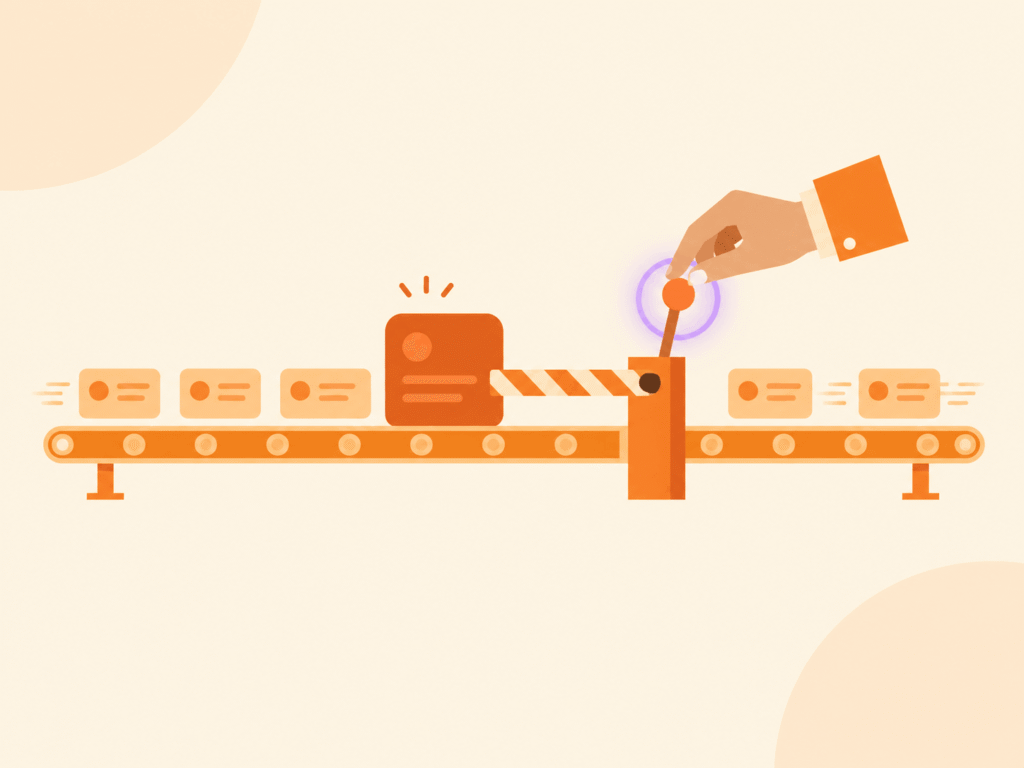
Human-in-the-loop (HITL) means a person actively reviews, corrects, or approves an AI system’s output at defined points in its workflow, rather than letting the system run on its own from start to finish. The phrase shows up constantly in AI discussions right now, often without a clear definition attached to it. This article covers what […]