
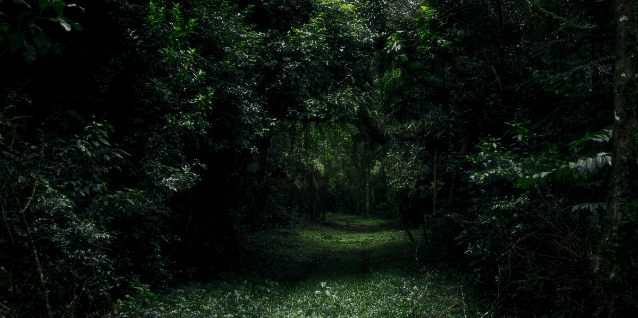
India has a rich variety of forests due to its diverse climate, soil, and geography. According to the Champion & Seth classification (1968), types of forest in India are categorized into six major types: Moist Tropical Forests, Dry Tropical Forests, Montane Subtropical Forests, Montane Temperate Forests, Sub-Alpine Forests, and Alpine Forests. Each type supports unique flora and fauna, ranging from dense rainforests in the Western Ghats to alpine forests in the Himalayas. Understanding these six types of forests helps us appreciate India’s ecological diversity and the role forests play in biodiversity conservation, climate regulation, and local livelihoods.
Here’s the issue, though: farming is responsible for nearly 90% of global deforestation. That’s a huge problem. To tackle it, you need to know what types of forests in India. Forests in India are classified based on factors like climate, soil, altitude, and topography.
In this article, we’ll walk you through the six main types of forests in India. We’ll also break down their subcategories, highlight their most prominent threats, and discuss how the government protects them.
Definition of Forest
Currently, India lacks a single, nationally-accepted definition of a “forest.”
This authority rests with individual state governments, who determine their own definitions.
The prerogative for states to define forests originates from a 1996 Supreme Court order in the case of T.N. Godavarman Thirumulkpad vs. Union of India.
In this judgment, the Court interpreted that the term “forest” must be understood according to its standard “dictionary meaning.”
This interpretation ensures that all statutorily recognised forests are covered, whether they are designated as reserved, protected, or otherwise.
Constitutional and Legal Framework:
- Constitutional Provisions: Forests fall under the Concurrent List of the Indian Constitution, allowing both the central and state governments to legislate on forest-related matters. Article 51A(g) of the Constitution mandates citizens to protect the environment, including forests and wildlife. Furthermore, Article 48A directs the state to protect and improve the environment and safeguard forests and wildlife.
- National Forest Policy (1988): This policy emphasizes environmental balance and sustainable livelihoods as guiding principles for forest management.
- India State of Forest Report (2019): According to the report, tree and forest cover together constitute 24.56% of India’s land area, with the country aiming to achieve 33% forest cover in the long term.
Classification of Forests in India
| Classification Basis | Category | Description |
|---|---|---|
| Administrative Jurisdiction | Reserved Forests | Under strict government control; no public access for commercial activities. |
| Protected Forests | Managed by the government; limited use allowed for locals, like grazing cattle. | |
| Unprotected Forests | No restrictions on usage; accounts for 18% of the Total Forest Area (TFA). | |
| Ownership | State Forests | Fully owned and managed by the government. |
| Community Forests | Managed by local bodies like municipal corporations or village councils. | |
| Private Forests | Privately owned; covers slightly more than 1% of the TFA. | |
| Commercial Value | Merchantable Forests | Accessible forests available for commercial use. |
| Non-Merchantable Forests | Located in remote or high-altitude areas, inaccessible for commercial use. | |
| Composition | Coniferous Forests | Found in the Himalayas and northeastern states, it covers 6.5% of the TFA. |
| Broadleaf Forests | Found in the Himalayas and northeastern states; it covers 6.5% of the TFA. | |
| Temperate Forests | Tropical and subtropical monsoon forests spread across climatic zones. | |
| Canopy Density | Very Dense Forests | Canopy coverage >70%. |
| Moderately Dense Forests | Canopy coverage between 40%-70%. | |
| Open Forests | Sparse canopy coverage ranging from 10%-40%. |
6 Types of Forest in India
These are the 6 significant types of forest in India, depending upon their climatic conditions, vegetation, and distributions. Here we provide a complete overview of the types of forest in India chart:
Tropical Evergreen Forest
Tropical evergreen forests grow in areas that receive a lot of rain and have steady temperatures year-round. They are filled with thick, tall hardwood trees that form several layers. Because of the constant rainfall, these forests stay green all year. They also play an essential role in protecting wildlife.
| Temperature | Between 15°C – 30°C year-round |
| Soil | Nutrient-poor |
| Distribution | Western Ghats, Ganga Delta, Andaman and Nicobar Islands, and North Eastern States |
| Flora | Trees (Mahogany, ebony, rosewood, bamboo), Epiphytes (Orchids), Ferns and Mosses. |
| Fauna | Mammals (Elephants, tigers, rhinos, monkeys), Birds (parrots, hornbills, hummingbirds), Reptiles (snakes, lizards), Amphibians (frogs, toads), Insects (butterflies, ants, and termites). |
Tropical Deciduous Forest
Tropical deciduous forest is India’s most prevalent type of forest, with 65.6% cover. These forests are less dense than tropical evergreen forests; instead, they are a mix of tall and short trees in wet and dry regions. Based on their regions and water availability, these forests are classified in India as moist deciduous forests (37%) and dry deciduous forests (28.6%).
| Temperature | Around 30°C (86°F) |
| Soil | Fertile |
| Distribution | Central India, Northern India, Southern India, Eastern India |
| Flora | Teak, sal, sandalwood, rosewood (shisham), bamboo, acacia, neem, grasses and shrubs |
| Fauna | Mammals (tigers, leopards, deer), Birds (hornbills and migratory birds), Reptiles (snakes and lizards), Amphibians (frogs and toads), Insects (butterflies and other insects) |
Tropical Thorn Forest (Deccan Forest)
Tropical thorn forests are usually found in dry regions. They cover around 2.6% of the forest area, mainly in Rajasthan, Punjab, Haryana, and some dry regions of the Deccan plateau. These forests have long-rooted trees that penetrate the soil for nutrients and water. The leaves of tropical thorn trees are thick and small, helping them minimize water loss.
| Temperature | Between 25°C to 30°C |
| Soil | Dry and nutrient-poor |
| Distribution | Semi-arid regions and some regions of the Deccan Plateau. |
| Flora | Trees (Babul, Khair, Acacias, Cactus, Plums, and Dates), short thorny shrubs and bushes, and climbers. |
| Fauna | Camels, Great Indian bustards, blackbuck, donkeys, blue bull (Nilgai), and desert foxes. |
Montane Forest
Montane forest refer to unique forest ecosystems commonly found in hilly or high-altitude regions. They are characterised by high rainfall, lower temperatures, and lush vegetation. These mountainous forests cover 3.5% of the total forest area and have rich and unique biodiversity.
| Temperature | Between 11°C to 14°C |
| Soil | Fertile |
| Distribution | Himalayas, Western Ghats, Eastern Ghats, and Nilgiri Hills |
| Flora | Oak, birch, Rhododendron, Indian chestnut, blue pine, deodar, maple, and fir |
| Fauna | Musk deer, red panda, snow leopard, Himalayan tahr |
Subtropical Forest
Subtropical forests are the types of forest in India commonly found in the foothills of the Himalayas and other elevated regions. Trees in these forests experience moderate temperatures and average rainfall (between 75 and 125 cm), mainly oak, maple, and pine. These forests are categorized into two types: subtropical broad-leaved hill forests occupy around 0.4% of the total forest area, and subtropical pine forests cover 6.6%.
| Temperature | Between 18°C to 21°C |
| Soil | Fertile |
| Distribution | North-Western Himalayas, Himachal Pradesh, Uttarakhand, Sikkim, and Arunachal Pradesh |
| Flora | Chir pine, Oak, Jamun, Maple, Rhododendron, chestnuts, and a wide range of orchids, shrubs, ferns, and mosses |
| Fauna | Mammals, birds, reptiles, and insects (particularly Kashmir stag, wild sheep, jackrabbit, yak, snow leopard, and squirrels) |
Mangrove Forest
Mangrove forest in India covers 0.15% of the total geographical area. Mangrove forests are a unique ecosystem usually found in intertidal regions (where freshwater and saltwater mix), coastal areas, and river deltas. They help protect coastlines and support unique biodiversity. Mangrove forests are classified into three types: red, black, and white.
| Temperature | Between 26°C to 35°C |
| Soil | Fertile but low-oxygen levels |
| Distribution | Big royal Bengal tiger, Ganges dolphin, olive ridley turtle, saltwater crocodile, and horseshoe crab |
| Flora | Avicennia, Rhizophora, Sonneratia, Canes, Screw pipe, Palms, and Sundari. |
| Fauna | Big royal Bengal tiger, Gangatic dolphin, olive ridley turtle, saltwater crocodile, and horseshoe crab |
Comparative Summary Table
| Forest Type | Rainfall / Climate | Altitude / Zone | Leaf Behaviour | Dominant Trees / Species | Key Threats |
|---|---|---|---|---|---|
| Moist Tropical | Very high rainfall | Lowland / hills | Evergreen / semi-evergreen | Dipterocarpus, Hopea, Mesua | Logging, fragmentation, climate change |
| Dry Tropical | Moderate rainfall, long dry season | Plains / plateaus | Deciduous (shedding) | Teak, Sal, Babul, Acacia | Over-exploitation, grazing, fires |
| Montane Sub-Tropical | Moderate rainfall, cooler | Hill slopes ~500–1500 m | Mixed evergreen / deciduous | Oak, rhododendron, pine | Encroachment, logging |
| Montane Temperate | Moderate to high, cold winters | Mid to higher Himalayas | Evergreen / deciduous mix | Deodar, fir, spruce, oak | Climate shifts, timber removal |
| Alpine / Sub-Alpine | Low–moderate precipitation, snow | High Himalayas | Scrub / no tall trees | Juniper, shrubs, grasses | Climate warming, overgrazing |
| Littoral / Mangrove | Tidal / saline, humid | Coastal, estuaries | Evergreen mangrove species | Avicennia, Bruguiera, Rhizophora | Coastal development, sea-level rise |
Additionally, tropical moist deciduous + dry deciduous forest types together account for more than 60% of India’s forest cover.
According to FAO data, in India: ~ 8.0 % is tropical wet evergreen, ~ 4.1 % semi-evergreen, ~ 37.0 % tropical moist deciduous, ~ 0.6 % littoral & swamp forest, ~ 28.6 % tropical dry deciduous, ~ 2.6 % thorn forest, and so on.
Importance of India’s Forests
Forests are natural terrestrial ecosystems with significant biodiversity. They contribute to several environmental activities and have many economic and cultural significances. Let’s understand them in detail:
Biodiversity
Forests in India are home to many species of plants, animals, and insects. The survival of all these organisms is interconnected, even the dead leaves (litter). On the terrestrial level, these dead leaves are rich in nutrients that help a wide range of flora grow, while under the surface, trees form a fungal network to exchange nutrients. Many microorganisms help decay the dead matter into nutrients.
Climate Regulation
Forests work as natural air purifiers, absorbing much carbon dioxide and releasing oxygen in the daytime. They also absorb harmful greenhouse gases like ammonia and sulfur dioxide, and maintain an oxygen level in the atmosphere. These pollutant gases are stored in the trees’ trunks, branches, leaves, and bark.
Economical Significance
Forests also contribute economically to local communities and the nation as a whole. They offer several timber and non-timber products and encourage ecotourism and forest-based industries. In addition, they provide several medicinal plants used to treat malaria, cancer, and other ailments. Forests are also a good source of raw materials to create products.
Cultural Significance
Forests’ ecological and sociocultural significance extends far beyond their physical presence. Every culture has different beliefs about diverse wildlife species reflected in their stories, arts, and traditions. Many believe forest areas, like nature’s temple, are unique and sacred.
Threats and Conservation Efforts
India’s forests face significant threats from human activities, endangering biodiversity and ecological balance.
Major Threats:
- Deforestation: Clearing forests for agriculture and development destroys wildlife habitats and increases atmospheric carbon.
- Urbanization: Expanding cities fragment forests into isolated patches, displacing wildlife.
- Illegal Logging: Unauthorized timber extraction damages ecosystems and violates community rights.
- Climate Change: Rising temperatures and extreme weather events alter forest ecosystems. Burning fossil fuels has severely affected these factors.
Conservation Initiatives:
- Project Tiger and Project Elephant protect endangered species
- Compensatory Afforestation requires replanting for lost forest land
- Community-led conservation empowers local forest management
These efforts aim to balance ecological protection with sustainable development.
Trends, Challenges & Changes
- According to ISFR 2023, India’s forest + tree cover is 25.17% of area; forest cover alone is ~21.76%.
- Over recent years, there has been modest gain in “very dense forests,” though moderately dense forests declined in some regions.
- Main drivers of forest change: agricultural expansion, urbanization, logging, infrastructure development, climate change, and forest fires
- Climate change poses structural shifts (e.g. warm climate pushing species upward, altered rainfall patterns)
- Fragmentation and habitat connectivity are growing concerns
Government Initiatives
Although human activities primarily affect biodiversity in the forests of India, the government has taken many initiatives to maximize forest conservation. Here’s a look:
- Project Tiger: It is a wildlife conservation project initiated by the Ministry of Environment, Forest, and Climate Change in 1973 to protect the endangered tigers. Under this project, the government has designated 55 conserved areas as tiger reserves.
- Project Elephant: Project Elephant is another wildlife conservation initiative by the Ministry of Environment, Forest and Climate Change, initiated in 1992 to protect endangered Indian elephants. Under this project, the central government provides technical and financial aid to the states to ensure elephants’ longevity and viability in their natural habitats.
- Compensatory Afforestation: This initiative promotes afforestation and regenerative activities as compensation for destroyed forest land diverted to non-forest activities. This initiative puts a price on forests, as companies that use forest resources must pay money to plant new trees.
- Role of Communities: People can play a significant role in forest management. For instance, local people can make rules to protect natural habitats by prohibiting hunting or other activities.
Conclusion
India’s diverse forests, ranging from lush tropical rainforests to unique mangroves and mountain woodlands, are vital treasures that sustain countless species and support human life. Each type of forest plays a crucial role in maintaining ecological balance, preserving biodiversity, and protecting the environment. Understanding the types of forests in India not only deepens our appreciation for nature’s richness but also highlights the importance of conserving these precious ecosystems for future generations. Let’s cherish and protect India’s forests, ensuring they continue to thrive and inspire awe for years to come.
Read More-
Frequently Asked Questions(FAQs)
Where are tropical evergreen forests found in India?
Tropical evergreen forests are found in high-rainfall regions, including the Western Ghats, Ganga Delta, Andaman & Nicobar Islands, and Northeastern states like Assam, Odisha, and Meghalaya. These areas receive over 200 cm of rainfall annually.
What makes mangrove forests unique?
Mangrove forests grow in areas where freshwater meets saltwater. These forests are built to thrive in low-oxygen environments and can absorb nutrients from their surroundings. They also help conserve water and play a key role in supporting marine ecosystems. Mangroves store large amounts of carbon, which helps fight climate change. Despite their importance, mangroves are facing serious threats.
Why are montane forests important for biodiversity?
Montane forests grow in high-altitude areas. They are home to many species that thrive in cooler temperatures and higher rainfall. These forests do more than support wildlife. They help prevent soil erosion, improve water quality, and reduce sediment downstream. They also fix carbon, regenerate soil, and offer a home to various plants and animals.
How do thorn forests adapt to arid climates?
Thorn forests survive in dry regions with less than 70 cm annual rainfall through specialised adaptations. Trees develop roots to access water, grow small, thick leaves to minimise water loss, and develop thorns to protect themselves from animals.
Where are rainforests mainly located?
Rainforests are primarily found near the equator in regions like the Amazon Basin (South America), Congo Basin (Africa), and Southeast Asia.
What are the 4 types of forest?
In India, the four primary forest types based on canopy density are Very Dense Forest (canopy over 70%), Moderately Dense Forest (40-70%), Open Forest (10-40%), and Scrub (less than 10%). Mangrove forests are often reported as a separate, fifth category due to their unique ecological character.
How many forests are classified in India?
Ecologically, India’s forests are classified into six major groups by Champion & Seth: Moist Tropical, Dry Tropical, Montane Subtropical, Montane Temperate, Sub-Alpine, and Alpine. Administratively, they are also classified by canopy density into four types (Very Dense, Moderately Dense, Open, and Scrub).
What is the main forest of India?
The most dominant forest type in India is the Tropical Deciduous Forest, covering the largest geographical area. These forests, including teak and sal trees, are widespread across central India and shed their leaves in the dry season. The Sundarbans is the world’s largest mangrove forest.